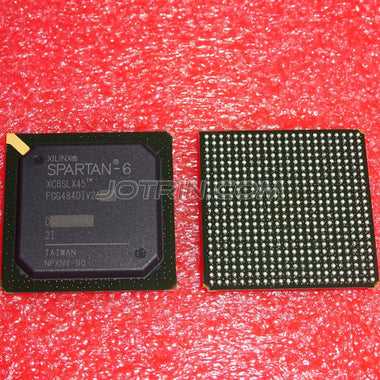
XC7Z030-1FBG676C Equivalents, Replacements, and Cross-Reference Guide
Navigating the complexities of component sourcing is a daily challenge for hardware engineers and procurement specialists. When a specific part like the Xilinx XC7Z030-1FBG676C becomes difficult to find, or when a design requires a different performance or temperature profile, finding a suitable replacement is critical. This guide provides a comprehensive analysis of equivalents, cross-references, and migration strategies for the XC7Z030-1FBG676C System-on-Chip (SoC), helping you make informed decisions to keep your projects on track.

Table of Contents
XC7Z030-1FBG676C Overview and Current Availability
The XC7Z030-1FBG676C is a powerful System-on-Chip (SoC) from the Xilinx (now AMD) Zynq-7000 family. It uniquely integrates a feature-rich dual-core ARM® Cortex®-A9 based Processing System (PS) with Xilinx 28nm Programmable Logic (PL) in a single device. This combination allows for software-driven control and hardware-accelerated performance, making it a popular choice for a wide range of applications including industrial automation, automotive driver assistance, video surveillance, and medical imaging.
Let's break down the part number:
- XC: Commercial Grade device.
- 7Z030: Identifies the specific device within the Zynq-7000 family. The '030' indicates a mid-range device in terms of logic resources.
- -1: This is the speed grade. '-1' is the slowest commercial speed grade. Faster options include -2 and -3.
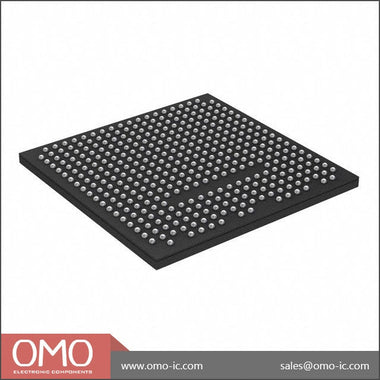
- FBG676: Specifies the package type, which is a 676-ball Fine-Pitch BGA with a 27x27mm footprint. This is a critical detail for PCB compatibility.
- C: Denotes the commercial temperature grade, with a junction temperature operating range of 0°C to 85°C.
Key specifications for the XC7Z030, according to the official datasheet, include 125K logic cells, 265K flip-flops, 900 DSP slices, and 17.6Mb of Block RAM in its programmable logic. The processing system features dual ARM Cortex-A9 cores that can run up to a specific maximum frequency determined by the speed grade. The current supply chain status for many mature semiconductor devices, including members of the Zynq-7000 family, can be volatile. Lead times can extend, and spot-market prices can fluctuate based on global demand. While the Zynq-7000 family is a long-lifecycle product line, supply constraints for specific part number and grade combinations can necessitate exploring alternatives.
Pin-Compatible Equivalents
Finding a true, 100% drop-in replacement for a complex SoC like the XC7Z030-1FBG676C requires careful consideration. A pin-compatible equivalent must share the exact same package (FBG676) and the same device die (7Z030). Variations in speed grade or temperature rating are the most common sources of pin-compatible alternatives.
Upgrading Speed Grade:
The most straightforward replacements are faster speed grades of the same device. The following parts are pin-compatible with the XC7Z030-1FBG676C:
- XC7Z030-2FBG676C: A faster (-2) speed grade.
- XC7Z030-3FBG676C: The fastest (-3) speed grade.
These parts can be used as direct replacements on an existing PCB. Since they are designed to operate at higher frequencies, they will meet the timing requirements of a design originally intended for a slower -1 speed grade part. However, it is crucial to note that faster speed grades may have slightly different power consumption profiles and will typically come at a higher cost. While no software or bitstream changes are required, performing a static timing analysis (STA) with the new part's timing models is a recommended engineering practice to ensure no unforeseen issues arise, particularly in high-speed interfaces.
Changing Temperature Grade:
If your application requires a wider operating temperature range, or if only industrial-grade parts are available, you can use a pin-compatible industrial-grade equivalent:
- XC7Z030-1FBG676I: This part has the same -1 speed grade but is rated for the industrial temperature range (-40°C to 100°C junction temperature).
An industrial ('I') grade part can always replace a commercial ('C') grade part, as it meets and exceeds the thermal requirements. The reverse is not true; using a commercial part in an industrial-temperature environment is not permissible without significant system-level derating and analysis. You can also find faster industrial grades like the XC7Z030-2FBG676I, which would also be a valid, albeit more expensive, pin-compatible replacement.
Important Note: Devices from the same family but with different logic densities, such as the XC7Z020 or XC7Z045, are NOT pin-compatible drop-in replacements, even if they are available in the same FBG676 package. They have different die layouts and I/O bank assignments, requiring a full PCB redesign.
Functional Alternatives (May Require Redesign)
When a pin-compatible replacement isn't available or doesn't meet design goals (e.g., needing more logic resources), you must consider functional alternatives. These parts offer similar capabilities but will require varying levels of redesign effort.
1. Migrating within the Zynq-7000 Family:
If your design is constrained by the 125K logic cells of the XC7Z030 and you need more performance, you can migrate to a larger device in the same family, such as the XC7Z045-1FBG676C. This device offers significantly more programmable logic resources (350K logic cells) in the same FBG676 package. Redesign Effort: Moderate. While the package is the same, the pinout is different. This necessitates a PCB respin. The power delivery network (PDN) will also need to be re-evaluated to support the larger device's power requirements. The major advantage is toolchain and software compatibility. Your existing Vivado projects and Vitis/SDK software can be migrated with relative ease, as the ARM Processing System architecture is identical. The primary work involves re-mapping I/O pins in the hardware design and updating the constraints file.
2. Migrating to a Newer Generation (Zynq UltraScale+):
For a significant performance leap, consider the AMD Zynq UltraScale+ MPSoC family. These devices offer 64-bit quad-core ARM Cortex-A53 processors, often paired with dual-core ARM Cortex-R5 real-time processors, and more advanced programmable logic built on a 16nm FinFET process. Redesign Effort: High. This is a complete architectural shift. It requires a new PCB, a more complex power design with more voltage rails, and a complete software and firmware migration. The toolchain (Vivado/Vitis) remains the same, which helps, but the underlying hardware platform differences are substantial. This is not a simple substitution but a next-generation product redesign.
3. Considering Competing Architectures:
Competitors like Intel (with their Cyclone V SoC or Arria V SoC families) and Microchip (with PolarFire SoC) offer devices that combine ARM cores with FPGA fabric. Redesign Effort: Very High. This path requires the most effort. You will need to learn a new toolchain (e.g., Intel Quartus Prime, Microchip Libero SoC), port your entire HDL codebase (potentially with significant changes), rewrite all software to target the new processor and its peripherals, and design a new PCB from scratch. This is only a viable option when starting a new project or when facing an existential supply chain crisis for your current platform.
Detailed Comparison Table
This table compares the XC7Z030-1FBG676C against its most common pin-compatible and functional alternatives within the Zynq-7000 family. All data is based on official Xilinx/AMD documentation. Note that performance metrics are relative and depend on the specific design implementation.
| Parameter | XC7Z030-1FBG676C | XC7Z030-2FBG676C (Faster Speed) | XC7Z030-1FBG676I (Industrial Temp) | XC7Z045-1FBG676C (Larger Device) |
|---|---|---|---|---|
| Pin Compatible? | Base Part | Yes | Yes | No (Requires Respin) |
| Logic Cells | 125K | 125K | 125K | 350K |
| DSP Slices | 900 | 900 | 900 | 2,020 |
| Block RAM (Mb) | 17.6 | 17.6 | 17.6 | 38 |
| Speed Grade | -1 (Slowest) | -2 (Faster) | -1 (Slowest) | -1 (Slowest) |
| Max PS Clock Freq. | Up to 866 MHz | Up to 1 GHz | Up to 866 MHz | Up to 866 MHz |
| Temperature Grade | Commercial (0°C to 85°C) | Commercial (0°C to 85°C) | Industrial (-40°C to 100°C) | Commercial (0°C to 85°C) |
| Typical Use Case | Original Design | Performance boost, supply replacement | Harsh environment, supply replacement | Feature expansion, performance upgrade |
Video Demonstration
Migration Guide: Switching from XC7Z030-1FBG676C
Successfully migrating to an alternative part, even a pin-compatible one, requires a methodical engineering approach. Rushing the process can lead to costly board respins or field failures. Follow this checklist to ensure a smooth transition.
1. Confirm Pin-for-Pin Compatibility: If you are considering a speed or temperature grade variant (e.g., XC7Z030-2FBG676C or XC7Z030-1FBG676I), your first step is to confirm they are indeed pin-compatible. For the Zynq-7000 family, parts with the same device code (7Z030) and package code (FBG676) are pin-compatible. Never assume this for parts with different device codes (e.g., 7Z020 vs 7Z030). Always consult the official device pinout files from the manufacturer as the ultimate source of truth.
2. Analyze Electrical and Power Requirements: For speed/temp grade swaps, the power supply requirements (voltage rails and tolerances) are typically identical. However, a faster speed grade part might exhibit higher dynamic power consumption. Review your Power Delivery Network (PDN) design and thermal solution. Ensure your voltage regulators can handle any potential increase in transient current demand and that your heatsink/fan solution can still maintain the junction temperature within the specified limits under worst-case load.
3. Re-evaluate Timing Margins: When moving to a faster speed grade (-2 or -3), your existing timing constraints will likely be met with more margin. It is still best practice to run a Static Timing Analysis (STA) in the Vivado Design Suite using the new part's timing model to confirm. This ensures there are no hidden setup/hold issues, especially on complex high-speed interfaces like DDR memory or SERDES. If you were forced to use a slower part (which is not a recommended migration path), a full STA re-validation is mandatory.
4. Software and Firmware Impact: For pin-compatible swaps within the same device (XC7Z030), no changes are needed for your bitstream, bootloaders, or application software. The device ID is the same, and the hardware is functionally identical. If you migrate to a different device size like the XC7Z045, you must recompile your bitstream using a new project targeting the XC7Z045. Your software source code will likely be highly portable, but you will need to regenerate the hardware platform specification (XSA file) and rebuild your Vitis/SDK project against it. For a comprehensive selection of devices, you can Browse Zynq-7000 Series to compare different options.
Where to Source XC7Z030-1FBG676C and Alternatives
In today's market, sourcing high-end components like the Zynq-7000 series requires a multi-faceted strategy. While authorized distributors are the primary channel, their stock can be limited with long lead times. This is where a trusted global distributor like WWDParts.com becomes invaluable.
When sourcing, be vigilant about the risk of counterfeit components. The grey market can be a source for hard-to-find parts, but it carries significant risk. Always seek suppliers who offer traceability and perform rigorous inspection and testing. Look for signs of remarking (blacktopping, altered laser markings) and verify date codes. Using a reputable independent distributor provides a layer of protection through established quality control procedures.
For your immediate needs, you can use our search tool to see real-time availability from a global network of vetted suppliers. This allows you to quickly assess the market and secure the components you need to prevent line-down situations. Check XC7Z030-1FBG676C Inventory & Pricing to get started. By leveraging a broad network, you can often find pin-compatible alternatives like faster speed grades or different temperature ratings that can solve your immediate production needs.
Frequently Asked Questions (XC7Z030-1FBG676C FAQ)
Can I use an XC7Z030-2FBG676C (a -2 speed grade) to replace a XC7Z030-1FBG676C?
Yes, in almost all cases, this is a safe and valid replacement. The XC7Z030-2FBG676C is a faster part and is pin-compatible. It will meet the timing requirements of a design made for the slower -1 grade part. The primary considerations are the potentially higher cost and a slight difference in power consumption, which you should verify against your power budget and thermal design.
Is the XC7Z020-1FBG676C a drop-in replacement for the XC7Z030-1FBG676C?
No, it is absolutely not a drop-in replacement. Although it is part of the same Zynq-7000 family and may be offered in the same FBG676 package, the XC7Z020 has a different internal die with fewer logic resources. This results in a different pinout for I/O and configuration pins. Attempting to use an XC7Z020 on a board designed for an XC7Z030 will not work and may damage the components.
What is the difference between XC7Z030-1FBG676C and XC7Z030-1FBG676I?
The only difference is the temperature grade, as indicated by the final letter. The 'C' part is for the Commercial temperature range (0°C to 85°C junction temperature), while the 'I' part is for the Industrial range (-40°C to 100°C junction temperature). The XC7Z030-1FBG676I can be used as a pin-compatible replacement for the 'C' grade part in any application, as it has a wider and more robust operating range.
If I switch from a -1 speed grade to a -2 speed grade, do I need to recompile my FPGA bitstream?
No, you do not need to recompile the bitstream or change your software. The bitstream for a given device (like the XC7Z030) is compatible across all speed grades and temperature grades of that same device. The device identifies itself with the same ID, and the faster part simply executes the programmed logic with more timing margin. Recompiling is only necessary if you change to a different device, such as the XC7Z045.
My design is failing timing with the XC7Z030-1FBG676C. Will switching to an XC7Z030-2FBG676C fix it?
It is very likely. Moving to a faster speed grade is a common strategy to close timing on a challenging design. The -2 speed grade has shorter internal logic and routing delays, which can provide the extra margin needed to meet your clock frequency requirements. Before committing to a new part, you should first confirm this by changing the target device in your Vivado project to the -2 grade and re-running the implementation and static timing analysis.