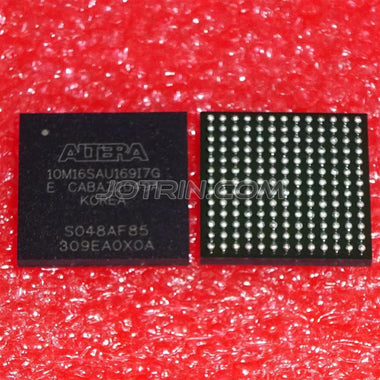
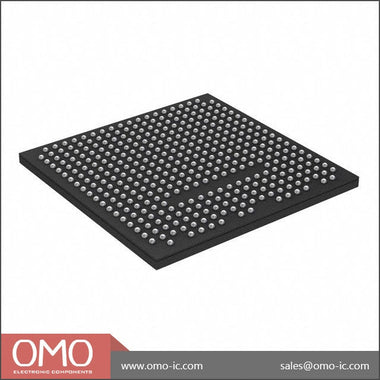
The XC7Z020-2CLG400C is a System-on-Chip (SoC) from the Xilinx Zynq-7000 family, integrating a feature-rich dual-core ARM Cortex-A9 processor-based Processing System (PS) with 28nm Artix-7 based Programmable Logic (PL). This architecture enables software programmability and hardware acceleration on a single device, targeting a wide range of embedded systems. The XC7Z020-2CLG400C is specifically positioned as a mid-range device in the series, offering a balance of processing power, logic density, and I/O capabilities for applications in industrial automation, medical imaging, and advanced driver-assistance systems (ADAS).
Table of Contents
What is the XC7Z020-2CLG400C?
The XC7Z020-2CLG400C is an All Programmable System-on-Chip (AP SoC) that provides a tightly coupled software and hardware design environment. Its core architecture is bifurcated into two main sections: the Processing System (PS) and the Programmable Logic (PL). The PS contains a dual-core ARM Cortex-A9 MPCore processor, Neon™ media-processing engine, and a comprehensive set of hardened peripherals including Gigabit Ethernet, USB 2.0, and memory controllers for DDR3/LPDDR2. The PL is equivalent to a mid-density Artix-7 FPGA, providing a flexible fabric for implementing custom logic, hardware accelerators, and specialized interfaces. These two sections are interconnected via multiple high-bandwidth AXI4 interfaces, enabling efficient data transfer and coherent memory access. This integrated approach reduces BOM cost, power consumption, and board space compared to a multi-chip solution. The device is part of the broader Xilinx Browse Zynq-7000 Series, which offers a scalable portfolio of devices with varying logic densities and processing capabilities.

Pinout Configuration and Packaging
The XC7Z020-2CLG400C is offered in the CLG400 package, which is a 400-pin Chip Scale BGA (CSBGA) with a 17x17mm footprint and a 0.8mm ball pitch. This package is designed for space-constrained applications requiring high I/O density. The 400 pins are functionally categorized into several groups:
- Processing System I/O (MIO): 54 dedicated Multiplexed I/O pins for the hardened peripherals within the PS (e.g., UART, SPI, I2C, CAN, GPIO).
- Programmable Logic I/O (HR & HP): The majority of pins are configurable I/O connected to the PL. These are organized into banks, with High-Range (HR) banks supporting voltages up to 3.3V and High-Performance (HP) banks optimized for high-speed interfaces up to 1.8V.
- Power and Ground Pins: Multiple pins for various power domains (VCCINT, VCCPINT, VCCAUX, VCCO) and ground references, critical for power integrity.
- Configuration Pins: Pins used to select the boot mode and configure the device upon power-up (e.g., JTAG, QSPI, SD).
- Analog Pins: Dedicated pins for the integrated XADC (dual 12-bit, 1 MSPS Analog-to-Digital Converter).
Careful pinout planning is essential during PCB design to optimize signal integrity, especially for high-speed interfaces like the DDR memory bus.
Core Architectural Features
- Dual-Core ARM Cortex-A9 Processor: The Processing System features a dual-core ARM Cortex-A9 MPCore CPU with individual NEON™ and FPU units, capable of symmetric (SMP) or asymmetric (AMP) multiprocessing at clock speeds up to 766 MHz for this speed grade.
- Artix-7 Based Programmable Logic: The PL section provides 85K logic cells, 53,200 Look-Up Tables (LUTs), 106,400 flip-flops, and 220 DSP slices, enabling significant hardware acceleration and parallel processing capabilities.
- High-Bandwidth PS-PL Interconnect: The device utilizes the industry-standard AXI4 interconnect protocol with multiple ports (2x 32-bit General Purpose, 4x 64-bit High Performance, 1x 64-bit Accelerator Coherency Port) to ensure low-latency, high-throughput data exchange between the processor and custom logic.
- Integrated Memory and Peripheral Controllers: The PS includes hardened controllers for a wide range of memories (DDR3, DDR3L, DDR2, LPDDR2) and peripherals (2x Gigabit Ethernet, 2x USB 2.0 OTG, 2x CAN 2.0B, 2x SD/SDIO), reducing development time and PL resource utilization.
Specifications Parameter Table
| Specification | Technical Details |
|---|---|
| Processing System (PS) | Dual-core ARM Cortex-A9 MPCore™ |
| Max PS Clock Frequency | 766 MHz (-2 Speed Grade) |
| Programmable Logic (PL) Cells | 85,000 |
| Block RAM | 4.9 Mb (280 blocks of 18 Kb) |
| DSP Slices | 220 |
| Package | CLG400 (17x17mm, 0.8mm pitch) |
| Operating Temperature Range | 0°C to 85°C (Commercial Grade) |
XC7Z020-2CLG400C Equivalents, Cross Reference, and Lifecycle
The XC7Z020-2CLG400C is an active and widely deployed component with a mature lifecycle status. When considering alternatives, engineers typically look within the Zynq-7000 family for pin-compatible options with different resource counts or performance characteristics.
- Pin-to-Pin Compatible (Smaller PL): The XC7Z010-CLG400 is a direct pin-compatible alternative for designs that require fewer logic resources (28K logic cells vs. 85K). This can be a cost-effective option if the PL utilization in the XC7Z020 is low.
- Pin-to-Pin Compatible (Larger PL): The Zynq-7000 family does not offer a larger, pin-compatible device in the CLG400 package. Upgrading to a device like the XC7Z030 requires a package change (e.g., FBG484) and a board respin.
- Speed/Temperature Grade Variants: The same device is available in different grades. The XC7Z020-1CLG400C is a lower speed grade (667 MHz max), while the XC7Z020-2CLG400I is the industrial temperature grade (-40°C to 100°C) equivalent. These are pin-compatible but have different performance and environmental specifications.
Due to the complexity and long design cycles of SoC-based systems, sourcing from reliable distributors is critical. You can Check XC7Z020-2CLG400C Inventory & Pricing to assess current availability and lead times for project planning.
Typical Application & Circuit Considerations
The XC7Z020-2CLG400C is suited for applications requiring a combination of real-time control, sensor fusion, and high-speed data processing. Common applications include multi-axis motor control, machine vision systems, software-defined radio (SDR), and medical diagnostic equipment.
From a circuit design perspective, several considerations are paramount:
- Power Distribution Network (PDN): The device requires multiple stable power rails (e.g., VCCINT, VCCPINT, VCCAUX, VCCO). A well-designed PDN with low impedance is crucial. This involves using multiple power planes and placing high-quality decoupling capacitors (typically a combination of 10uF, 1uF, and 100nF) as close as possible to the BGA power pins.
- Boot and Configuration: The boot mode is selected via MIO pins. A common configuration is to boot from an on-board QSPI flash memory, which stores the bootloader, bitstream, and application code. The PCB layout should accommodate this flash memory with short, clean traces.
- High-Speed Signal Routing: Interfaces like the DDR3 memory bus and Gigabit Ethernet (RGMII/SGMII) require careful impedance-controlled routing and length matching of differential pairs to ensure signal integrity and meet timing requirements.
Video Demonstration
Frequently Asked Questions (XC7Z020-2CLG400C FAQ)
Q: What is the difference between the Processing System (PS) and Programmable Logic (PL) in the XC7Z020-2CLG400C?
A: The Processing System (PS) is a hardened, fixed-functionality block centered around a dual-core ARM Cortex-A9 processor and its associated peripherals like memory controllers, Ethernet, and USB. It runs software applications like a traditional microprocessor. The Programmable Logic (PL) is a flexible FPGA fabric (based on Artix-7 technology) that can be configured to implement any custom digital hardware circuit, making it ideal for parallel processing, custom interfaces, and hardware acceleration of algorithms that would be too slow in software.
Q: How is data transferred between the PS and PL?
A: Data is transferred through a high-bandwidth AXI4 (Advanced eXtensible Interface) interconnect. The architecture provides several AXI ports for different use cases: AXI_GP (General Purpose) ports are used for control and status register access, AXI_HP (High Performance) ports provide direct, high-throughput access from the PL to the PS DDR memory controller, and the AXI_ACP (Accelerator Coherency Port) allows PL masters to maintain cache coherency with the ARM processors' L1 caches.
Q: What does the "-2CLG400C" suffix signify in the part number?
A: The suffix provides critical information about the specific variant of the device. "-2" indicates the speed grade, which defines the maximum clock frequencies; -2 is faster than the -1 grade. "C" denotes the commercial operating temperature range of 0°C to 85°C junction temperature. "LG400" specifies the package type: a lead-free (LF), 400-pin Chip Scale BGA (CSBGA).
Q: What are the primary power supply rails required for the XC7Z020-2CLG400C?
A: The device requires a multi-rail power solution. The primary rails are VCCINT (1.0V) for the internal PL core logic, VCCPINT (1.0V) for the internal PS core logic, VCCAUX (1.8V) for auxiliary internal logic, and VCCO for the I/O banks. The VCCO voltage is flexible (e.g., 1.8V, 2.5V, 3.3V) and must match the voltage level of the external devices connected to that specific I/O bank. Proper power sequencing during startup is also required.
Q: Can the XC7Z020-2CLG400C boot without an external processor?
A: Yes, the device is designed to be a self-contained, standalone system. The ARM-based Processing System (PS) acts as the master boot controller. Upon power-on reset, the on-chip BootROM executes, reads the boot mode pins, and loads the First Stage Bootloader (FSBL) from a non-volatile memory source like QSPI flash or an SD card. The FSBL then configures the PL with a bitstream and loads the main application software (e.g., U-Boot, Linux, or a bare-metal application) into DDR memory for execution by the ARM cores.