The XC7Z010-1CLG400I is a System-on-Chip (SoC) from the Xilinx Zynq-7000 family, integrating a dual-core ARM Cortex-A9 processor with Artix-7 based programmable logic on a single die. This architecture enables hardware acceleration for software-defined systems, targeting applications in industrial automation, embedded vision, and advanced driver-assistance systems (ADAS). The device provides a balance of processing power and reconfigurable logic for cost-sensitive and power-constrained embedded applications.
Table of Contents
What is the XC7Z010-1CLG400I?
The XC7Z010-1CLG400I is an all-programmable SoC that features a tightly coupled Processing System (PS) and Programmable Logic (PL). The PS is built around a dual-core ARM Cortex-A9 MPCore processor, complete with on-chip memory, external memory interfaces, and a rich set of I/O peripherals including USB, Ethernet, and SDIO. The PL is equivalent to a Xilinx Artix-7 FPGA, providing a flexible fabric of logic cells, DSP slices, and block RAM for implementing custom hardware accelerators, peripherals, and high-bandwidth data processing pipelines. Communication between the PS and PL is facilitated by high-throughput AXI4 interconnects, enabling efficient data exchange and shared memory access. This integrated approach reduces board space, power consumption, and BOM cost compared to a multi-chip solution.

Pinout Configuration and Packaging
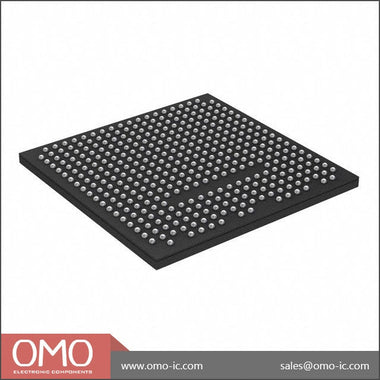
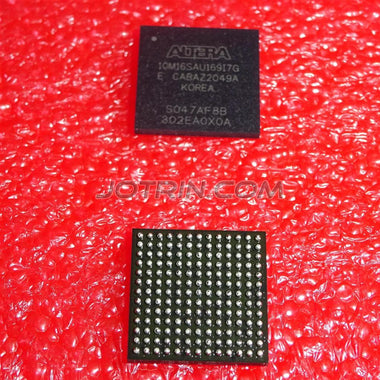
The XC7Z010-1CLG400I is offered in a 400-ball Chip Scale BGA (CLG400) package with a 17x17 mm footprint and a 1.00mm pitch. The pinout is complex, with dedicated pins for the Processing System functions such as the DDR memory interface, power supplies, clock inputs, and peripheral I/O (e.g., USB, Ethernet PHY interface). The remaining pins are flexible I/O connected to the Programmable Logic, organized into banks that can be configured for various I/O standards (e.g., LVCMOS, LVDS). Due to the high density of the BGA package, a multi-layer PCB is required for proper signal routing and power distribution. Engineers must consult the official Xilinx Zynq-7000 documentation for precise pin definitions, bank assignments, and PCB layout guidelines.
Core Architectural Features
- Processing System (PS): Features a dual-core ARM Cortex-A9 MPCore processor operating at up to 667 MHz. Each core includes a NEON media-processing engine and a floating-point unit (FPU), supported by 32KB L1 instruction and data caches, a 512KB unified L2 cache, and 256KB of on-chip memory (OCM).
- Programmable Logic (PL): Based on the 28nm Artix-7 architecture, providing 28K logic cells, 17,600 Look-Up Tables (LUTs), 35,200 flip-flops, and 2.1 Mb of block RAM. This fabric is ideal for implementing parallel processing tasks and custom logic.
- Integrated DSP Slices: Includes 80 dedicated DSP48E1 slices, enabling high-performance, low-power implementation of signal processing algorithms such as FIR filters, FFTs, and correlators directly in hardware.
- Rich Peripheral Set: The PS integrates a comprehensive set of standard peripherals, including a Gigabit Ethernet MAC, USB 2.0 OTG controller, two CAN 2.0B controllers, two SD/SDIO controllers, UARTs, I2C, and SPI interfaces, reducing the need for external components.
- On-Chip Analog (XADC): Features a dual 12-bit, 1 MSPS Analog-to-Digital Converter (XADC) block with on-chip sensors for monitoring die temperature and supply voltages, as well as up to 17 external analog inputs.
Specifications Parameter Table
| Specification | Technical Details |
|---|---|
| Processor Core | Dual ARM Cortex-A9 MPCore |
| Max Processor Frequency | 667 MHz |
| Logic Cells | 28K |
| Block RAM | 2.1 Mbit (60 blocks of 36 Kb) |
| DSP Slices | 80 |
| Total I/O Pins | 125 (Programmable Logic I/O) |
| Operating Temperature Range | -40°C to 100°C (Junction) |
| Package | CLG400 (17x17mm) |
XC7Z010-1CLG400I Equivalents, Cross Reference, and Lifecycle
The XC7Z010-1CLG400I is part of the mature and widely adopted Zynq-7000 family, which remains in active production. When considering alternatives, engineers often look within the same family for scalability. The most common pin-compatible upgrade is the XC7Z020-1CLG400I, which offers significantly more programmable logic resources (85K logic cells, 220 DSP slices) in the identical CLG400 package. This allows a single PCB design to support multiple product tiers. Other variants include different speed grades (e.g., -2, -3 for higher performance) and temperature grades (e.g., commercial 'C' or automotive 'Q'). While these may be pin-compatible, a change in speed grade requires a thorough timing analysis and re-synthesis of the PL design. For new designs, engineers may also evaluate the newer Zynq UltraScale+ MPSoC family for higher performance requirements. Before finalizing a design or sourcing components for production, it is essential to Check XC7Z010-1CLG400I Inventory & Pricing to ensure availability and lifecycle status. You can also Browse Zynq-7000 Series for a comprehensive view of available options.
Typical Application & Circuit Considerations
The XC7Z010-1CLG400I is well-suited for applications requiring a combination of real-time control, data processing, and flexible interfacing. Common uses include industrial motor control, machine vision systems, medical imaging, and software-defined radio. From a hardware design perspective, the power delivery network (PDN) is critical. The device requires multiple voltage rails (e.g., VCCINT for the core, VCCAUX for auxiliary logic, VCCO for I/O banks, VCCPINT for the PS core) that must be properly sequenced during power-up and power-down. Each power rail demands robust decoupling, with a combination of bulk and high-frequency ceramic capacitors placed as close as possible to the BGA balls to minimize impedance. For designs utilizing the external DDR memory interface, PCB layout requires strict impedance control (typically 40Ω single-ended, 80Ω differential) and trace length matching for data, address, and clock lines to ensure signal integrity at high speeds.
Video Demonstration
Frequently Asked Questions (XC7Z010-1CLG400I FAQ)
Q: What does the "-1CLG400I" suffix in the part number signify?
A: The suffix provides key information about the device variant. The "-1" indicates the speed grade, which is the slowest and lowest power grade for this device. "C" is an internal code. "LG" specifies the package type, which is a lead-free (RoHS compliant) BGA. "400" is the pin count of the package. Finally, the "I" denotes the industrial operating temperature range, which is rated for a junction temperature of -40°C to 100°C, making it suitable for harsh environments.
Q: How is data transferred between the Processing System (PS) and Programmable Logic (PL)?
A: Data transfer is managed by a set of AXI (Advanced eXtensible Interface) interconnects. There are several types: four 32-bit AXI General Purpose (GP) ports for register access and low-to-medium bandwidth transfers. Four 64-bit AXI High Performance (HP) ports provide direct PL access to the DDR memory controller for high-throughput data streaming. Lastly, a 64-bit Accelerator Coherency Port (ACP) allows the PL to access the PS cache, simplifying the implementation of coherent hardware accelerators.
Q: Can the Programmable Logic (PL) operate without the Processing System (PS) being booted?
A: The standard boot process for a Zynq-7000 device involves the PS booting first from a source like QSPI flash or an SD card. The First Stage Bootloader (FSBL), running on the ARM core, is responsible for configuring the PL by loading its bitstream. Therefore, in a typical design, the PL is not operational until configured by the PS. While advanced, non-standard configurations exist for PL-only operation, the intended and most common use model is for the PS to manage and control the PL.
Q: What are the primary considerations for designing a power delivery network (PDN) for the XC7Z010?
A: A robust PDN is critical for stable operation. Key considerations include: 1) Providing multiple, isolated voltage rails as specified in the datasheet (VCCINT, VCCAUX, VCCO, etc.). 2) Implementing the correct power-on and power-off sequence to prevent latch-up or damage. 3) Using a low-impedance PCB layout with solid power and ground planes. 4) Placing a distributed network of high-frequency decoupling capacitors (typically 0.1uF and 0.01uF) as close as physically possible to the BGA supply pins to handle transient current demands.
Q: What is the function of the XADC block in the XC7Z010?
A: The XADC is a flexible, on-chip mixed-signal block. It contains two independent 12-bit, 1 Million Sample Per Second (MSPS) Analog-to-Digital Converters. Its primary function is system monitoring; it can measure the internal die temperature and on-chip power supply voltages (VCCINT, VCCAUX, etc.) to ensure the device is operating within safe limits. Additionally, the XADC provides up to 17 external analog input channels that can be used to digitize signals from external sensors, eliminating the need for a separate ADC component in many applications.

Alan Carter
Senior Hardware Engineer & Component Specialist
Alan has over 15 years of expertise in embedded systems design, FPGA architecture, and global semiconductor supply chains. He specializes in component cross-referencing, lifecycle management, and helping OEMs navigate supply shortages.