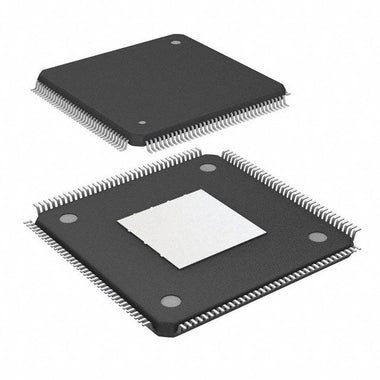
XC7Z010-1CLG400I Equivalents, Replacements, and Cross-Reference Guide
Navigating the electronic component supply chain can be challenging, especially when a specific part like the Xilinx XC7Z010-1CLG400I faces allocation, long lead times, or lifecycle changes. For hardware engineers and procurement professionals, finding a suitable replacement is critical to keeping production lines running and meeting project deadlines. This guide provides a comprehensive analysis of equivalents, substitutes, and cross-reference options for the XC7Z010-1CLG400I, covering everything from pin-compatible drop-ins to functional alternatives that may require a board redesign.

Table of Contents
XC7Z010-1CLG400I Overview and Current Availability
The XC7Z010-1CLG400I is a System-on-Chip (SoC) from the Xilinx (now AMD) Zynq-7000 family. This device uniquely integrates a dual-core ARM Cortex-A9 based Processing System (PS) with Artix-7 based Programmable Logic (PL) on a single die. This tight integration allows for software-driven control and hardware-accelerated performance, making it a popular choice for a wide range of applications including industrial automation, medical imaging, automotive driver assistance, and embedded vision systems.
Let's break down the part number:
- XC7Z010: Identifies the device as a Zynq-7000 family member, specifically the Z-7010 model.
- -1: Represents the slowest speed grade. Faster options (-2, -3) are also available.
- CLG400: Specifies the package type, a 400-pin Chip Scale BGA with a 17x17mm footprint.
- I: Indicates the industrial temperature grade, with a junction temperature range of -40°C to 100°C.
Key specifications for the XC7Z010, according to the official Zynq-7000 SoC (DS190) datasheet, include 28K logic cells, 2.1Mb of Block RAM (240KB), and 80 DSP slices in its programmable logic. The processing system features a dual-core ARM Cortex-A9 processor that can operate up to 667 MHz for the -1 speed grade. It is equipped with a rich set of peripherals like UART, CAN, USB, SPI, I2C, and Gigabit Ethernet.
The Zynq-7000 family is a mature product line. While it remains in active production and is widely designed-in, its popularity can lead to supply constraints for specific part number and package combinations. The XC7Z010-1CLG400I, being an entry-level industrial-grade part, is often in high demand. Engineers facing allocation or end-of-life (EOL) notices for other components in their design may seek to secure their SoC supply chain by identifying viable alternatives well in advance.
Pin-Compatible Equivalents
For engineers, the ideal replacement is a pin-compatible, drop-in part that requires minimal to no redesign. Fortunately, the Zynq-7000 family offers several options within the same CLG400 package that are pin-for-pin compatible with the XC7Z010-1CLG400I.
Important Note: There are no pin-compatible, drop-in replacements for the XC7Z010-1CLG400I from other manufacturers like Intel (Altera) or Microchip. The Zynq architecture is unique, and switching to a competitor's SoC will always necessitate a full board redesign.
Within the Xilinx/AMD portfolio, the following options exist:
-
Different Speed Grades: The most straightforward substitution is to use a faster speed grade of the same device.
- XC7Z010-2CLG400I: This is the next faster speed grade. It is a direct, pin-compatible replacement. In almost all cases, a design that works on a -1 speed grade will work on a -2. The faster part provides more timing margin. However, it is crucial to re-run Static Timing Analysis (STA) in the Vivado Design Suite to ensure all timing constraints are still met. The -2 part will typically have a higher unit cost.
- XC7Z010-3CLG400I: The fastest speed grade available for this device. It is also pin-compatible and offers the most timing slack, but at the highest price point.
-
Different Temperature Grades:
- XC7Z010-1CLG400C: This is the commercial-grade version (0°C to 85°C junction temperature). While it is pin-compatible, it is NOT a suitable replacement for the industrial-grade 'I' part if the end product must operate in harsh environments below 0°C or above 85°C. Using a 'C' part in an 'I' application is a common cause of field failures.
-
Larger Pin-Compatible Devices: Xilinx designed the Zynq-7000 family to allow for migration within the same package.
- XC7Z020-1CLG400I: This is a larger device with significantly more programmable logic resources (85K logic cells vs. 28K). It is fully pin-compatible with the XC7Z010 in the CLG400 package. This is an excellent option if the XC7Z010 is unavailable and the budget allows. However, this is not a "drop-in" replacement in the truest sense. While the PCB remains unchanged, you must change the target device in your Vivado project to the XC7Z020 and re-synthesize, re-implement, and generate a new bitstream. Failure to do so will result in a non-functional system.
When considering these options, the primary engineering task is verification. For speed grade changes, timing verification is key. For device size changes, a full software/gateware recompilation is mandatory. Power consumption may also increase slightly with a larger device or faster speed grade, so a review of the Power Delivery Network (PDN) is advisable.
Functional Alternatives (May Require Redesign)
If no pin-compatible Zynq-7000 parts are available, or if a strategic shift to a different technology is desired, several functional alternatives exist. These devices offer a similar blend of processor cores and FPGA fabric but are not pin-compatible and will require a complete hardware and software redesign.
1. Intel (formerly Altera) Cyclone V SoC Family:
The Cyclone V SoC is the most direct competitor to the Zynq-7000. These devices also feature a dual-core ARM Cortex-A9 processor system (called the HPS - Hard Processor System) integrated with Cyclone V FPGA fabric. A part like the 5CSEBA5U19I7N offers a comparable feature set. Migrating to a Cyclone V SoC involves:
- Hardware Redesign: A new PCB layout is required due to different package footprints and pinouts. The power supply sequencing and rail requirements will also differ, necessitating a new PDN design.
- Software Porting: All software, from the first-stage bootloader to the operating system (e.g., Linux) and user applications, must be ported. This involves moving from the Xilinx Vitis/SDK/PetaLinux toolchain to the Intel SoC EDS and Quartus Prime software.
- IP Migration: Any Xilinx-specific IP cores used in the programmable logic (e.g., AXI interconnects, memory controllers, DSP blocks) must be replaced with their Intel equivalents from the IP Catalog.
2. Microchip PolarFire SoC FPGA Family:
The PolarFire SoC family is a newer alternative that stands out by using a multi-core RISC-V processor complex instead of ARM. This offers a license-free ISA but represents a significant architectural shift. Migrating to a PolarFire SoC requires even more effort than moving to an Intel SoC:
- Complete Toolchain and Ecosystem Change: The entire development environment shifts to Microchip's Libero SoC Design Suite. The software ecosystem around RISC-V, while growing rapidly, may be less mature than the ARM ecosystem for certain applications.
- Major Software Rearchitecture: Porting from ARM Cortex-A9 to a RISC-V architecture is not a simple recompilation. It requires deep expertise in embedded systems and potentially significant code changes, especially in low-level drivers and OS-dependent code.
3. Discrete Processor + FPGA Solution:
Another strategy is to decouple the processing system and programmable logic. An engineer could pair a standalone application processor (e.g., NXP i.MX 8M series, STMicroelectronics STM32MP1 series) with a separate, small FPGA (e.g., a Xilinx Artix-7, Lattice MachXO3). This approach provides flexibility but loses the high-bandwidth, low-latency connection between the PS and PL that is the hallmark of the Zynq architecture. Communication would typically occur over a slower bus like SPI, I2C, or a parallel bus if the pin count allows, which may not be suitable for all applications.
Detailed Comparison Table
This table provides a side-by-side comparison of the XC7Z010-1CLG400I against a pin-compatible upgrade and a functional alternative from a competitor. Specifications are based on manufacturer datasheets.
| Parameter | XC7Z010-1CLG400I (Baseline) | XC7Z020-1CLG400I (Pin-Compatible Upgrade) | Intel Cyclone V SE A4 (5CSEBA4U19I7N) |
|---|---|---|---|
| Manufacturer | Xilinx / AMD | Xilinx / AMD | Intel / Altera |
| Processor System | Dual-core ARM Cortex-A9 MPCore | Dual-core ARM Cortex-A9 MPCore | Dual-core ARM Cortex-A9 MPCore |
| Max PS Clock Freq. | 667 MHz | 667 MHz | Up to 925 MHz |
| Logic Cells / Elements | 28K | 85K | 40K LEs |
| Block RAM | 2.1 Mb | 4.9 Mb | 3,468 Kbits |
| DSP Slices / Blocks | 80 | 220 | 87 (18x18 Multipliers) |
| Package | CLG400 (17x17mm) | CLG400 (17x17mm) | U484 (19x19mm) |
| Pin Compatible? | N/A | Yes | No |
Migration Guide: Switching from XC7Z010-1CLG400I
Successfully migrating away from the XC7Z010-1CLG400I requires a systematic approach. The level of effort depends entirely on the chosen replacement path. Here is a checklist to guide your engineering validation process.
Scenario 1: Migrating to a Pin-Compatible Zynq-7000 Device (e.g., XC7Z020-1CLG400I)
-
Hardware Verification:
- Footprint: Confirm the package (e.g., CLG400) is identical. For the XC7Z020-1CLG400I, it is.
- Pinout: Verify pin-for-pin compatibility using the official Xilinx documentation. The Zynq-7000 family is designed for this migration path.
- Power: The larger XC7Z020 device may have slightly higher static and dynamic power consumption. Review your power budget and the thermal design. Your existing Power Delivery Network (PDN) is likely sufficient, but it's prudent to double-check, especially if your design is power-constrained.
-
Software/Firmware Verification:
- Toolchain: Open your project in the Xilinx Vivado Design Suite.
- Target Device Change: The most critical step. Change the project's target part from XC7Z010 to XC7Z020.
- Rebuild: Perform a full project recompilation: re-run synthesis, implementation (place & route), and generate a new bitstream.
- Software BSP: In Vitis or the SDK, update the hardware platform specification with the new hardware definition file (XSA) exported from Vivado and rebuild the Board Support Package (BSP) and all applications.
- Test: Thoroughly re-test all functionality on the new hardware, paying close attention to timing-sensitive interfaces.
This path preserves your PCB investment and significantly reduces engineering effort compared to a full redesign. You can explore the full range of device options to find a suitable fit. Browse Zynq-7000 Series to see other devices in the same family.
Scenario 2: Migrating to a Functional Alternative (e.g., Intel Cyclone V SoC)
This is a major undertaking equivalent to a new product design.
- System Architecture: Re-evaluate your entire system. The partitioning of tasks between software (PS/HPS) and hardware (PL/FPGA) may need to change based on the new device's capabilities.
- Hardware Redesign: This is non-negotiable. You will need to create a new schematic and layout for the new SoC, including its unique pinout, power supply requirements, and supporting components (e.g., clocking, memory).
- Software Porting: This is often the most time-consuming part. You must port your bootloader, operating system, drivers, and application code to the new hardware and new vendor toolchain (e.g., Xilinx PetaLinux to Intel SoC EDS).
- FPGA Design Migration: All FPGA logic must be migrated. This involves replacing Xilinx-specific primitives and IP cores with equivalents from the new vendor's library and re-running the entire FPGA design flow (synthesis, P&R, timing analysis).
Where to Source XC7Z010-1CLG400I and Alternatives
During times of supply chain disruption, sourcing components requires diligence. The XC7Z010-1CLG400I is a high-value, complex component that is a frequent target for counterfeiters and improper handling.
Authorized Distributors: The safest channel is always through authorized distributors. They receive parts directly from the manufacturer, ensuring authenticity and proper storage. However, during shortages, they may have limited stock and long lead times.
Independent Distributors: Trusted independent distributors like WWDParts play a crucial role in sourcing hard-to-find components. A reliable independent distributor will have robust quality control and anti-counterfeit inspection processes, including visual inspection, X-ray analysis, and decapsulation when necessary. They can access a global network of stocked inventory that is not visible to the authorized channel.
Sourcing Best Practices:
- Avoid consumer-to-consumer platforms like eBay and unvetted sellers on AliExpress for production components. The risk of receiving counterfeit, remarked, or damaged parts is extremely high.
- Always request traceability documentation (e.g., Certificate of Conformance) when possible.
- Be wary of offers that are "too good to be true." Unusually low prices on a constrained part are a major red flag.
WWDParts provides access to global inventory for many Zynq-7000 devices. You can Check XC7Z010-1CLG400I Inventory & Pricing to see current availability from our network of vetted suppliers.
Video Demonstration
Frequently Asked Questions (XC7Z010-1CLG400I FAQ)
Can I use a XC7Z010-2CLG400I to replace a XC7Z010-1CLG400I?
Yes, this is generally a safe and common substitution. The XC7Z010-2CLG400I is the same device in a faster speed grade. It is pin-compatible and will drop into the same PCB footprint. Because it is faster, it provides more timing margin for your design. However, as a best practice, you should always re-run static timing analysis (STA) in Vivado to confirm that all timing constraints are still met, although it's highly likely they will be.
Is the XC7Z020-1CLG400I a drop-in replacement for the XC7Z010-1CLG400I?
Physically, yes, but not functionally without changes. The XC7Z020-1CLG400I is in the same CLG400 package and is pin-compatible, so you do not need to change your PCB. However, it is a larger device with more logic resources. You must open your Vivado project, change the target device from the Z-7010 to the Z-7020, and then re-compile the entire design to generate a new bitstream. Without this step, the device will not function correctly.
What is the difference between the XC7Z010-1CLG400I and the XC7Z010-1CLG400C?
The final letter in the part number indicates the temperature grade. The 'I' suffix denotes the Industrial grade, which is qualified for a junction temperature range of -40°C to 100°C. The 'C' suffix denotes the Commercial grade, with a range of 0°C to 85°C. They are not interchangeable if your product is intended for environments that fall outside the commercial temperature range. Using a commercial part in an industrial application can lead to premature field failures.
Are there any non-Xilinx drop-in replacements for the XC7Z010-1CLG400I?
No, there are no direct pin-compatible, drop-in replacements from other manufacturers like Intel or Microchip. The Zynq-7000 architecture, its specific pinout, and power structure are proprietary to Xilinx/AMD. Any functional alternative from a competitor will have a different package, pinout, and power requirements, necessitating a complete board redesign and significant software porting effort.
What is involved in migrating from a Zynq-7000 to an Intel Cyclone V SoC?
Migrating from a Xilinx Zynq-7000 to an Intel Cyclone V SoC is a major engineering project. It requires a complete hardware redesign, including a new PCB layout for the different footprint and a new power delivery network. On the software side, you must port everything from the bootloader and Linux BSP to your applications, moving from the Xilinx Vitis/PetaLinux toolchain to Intel's Quartus and SoC EDS. Furthermore, all Xilinx-specific FPGA IP cores in your programmable logic must be replaced with functional equivalents from Intel's IP library.