XC7Z010-1CLG400I Application Guide: From Datasheet to Working Circuit
When designing a compact, high-performance industrial machine vision system, the challenge is to balance real-time image processing with complex control and communication tasks. The Xilinx XC7Z010-1CLG400I System-on-Chip (SoC) is an ideal solution, handling high-speed data acquisition and pixel-level processing in its programmable logic while running a full operating system and network stack on its dual-core ARM processor. This integrated approach reduces board space, power consumption, and system latency compared to a traditional two-chip (CPU + FPGA) solution. This guide will walk through the key design considerations for integrating this powerful device into a real-world application.

Table of Contents
Application Context: Where XC7Z010-1CLG400I Fits in the System
In a modern industrial machine vision system, the XC7Z010-1CLG400I acts as the central processing hub. Let's consider a system designed for quality inspection on a manufacturing line. The overall block diagram includes an image sensor, the Zynq SoC, DDR memory, non-volatile flash memory, a power management subsystem, and an Ethernet interface for communication with the factory network.
The XC7Z010-1CLG400I is uniquely positioned to manage this entire workflow. Its architecture is split into two main sections: the Processing System (PS) and the Programmable Logic (PL).
The Programmable Logic (PL) side interfaces directly with the high-speed image sensor, typically via a MIPI CSI-2 or parallel CMOS interface. The PL's FPGA fabric is perfectly suited for the massively parallel, high-throughput tasks required for initial image processing. A typical pipeline implemented in the PL might include:
- Image Sensor Interface: A custom or IP-based core to deserialize and decode the raw data stream from the sensor.
- Bayer Debayering: Converting the raw Bayer pattern data into a full-color (RGB) image.
- Color Space Conversion (CSC): Transforming the image from RGB to a more useful space like YUV for further processing.
- Real-time Filtering: Applying 2D convolution filters for noise reduction or edge enhancement using the dedicated DSP slices within the PL.
- Direct Memory Access (DMA): An AXI VDMA (Video Direct Memory Access) core efficiently moves the processed image frames from the PL's stream-based pipeline into the main DDR memory, making it accessible to the PS.
The Processing System (PS) side, featuring a dual-core ARM Cortex-A9 processor, runs a higher-level software stack. It typically boots a Linux operating system (like PetaLinux) from a QSPI flash memory device. The PS handles:
- System Control: Managing the boot process, configuring the PL, and controlling the overall application state.
- Advanced Algorithms: Once an image frame is in DDR memory, the ARM cores can run more complex, non-real-time algorithms like object detection using OpenCV libraries, optical character recognition (OCR), or barcode reading.
- Communication: The PS manages the integrated Gigabit Ethernet MAC, running a TCP/IP stack to send inspection results (pass/fail), processed images, and telemetry data to a central server or HMI. It also handles commands received from the network.
- Storage and Logging: Interfacing with SD cards or flash memory to log events, store configuration settings, or save images of defective parts.
This tight integration of PS and PL via high-bandwidth AXI interconnects is the key advantage. The PL offloads the ARM cores from the deterministic, high-rate processing, freeing them to manage the system's intelligence and connectivity. This partitioning results in a system that is both highly responsive and highly flexible.
Core Specifications for This Application
For our industrial machine vision application, certain specifications of the XC7Z010-1CLG400I are particularly critical. The following table highlights these parameters and their relevance, based on the official Xilinx Zynq-7000 SoC Data Sheet (DS190).
| Parameter | Value | Application Relevance |
|---|---|---|
| Processing System (PS) | Dual-core ARM Cortex-A9 MPCore | Provides the processing power to run a Linux OS, network stack (TCP/IP), and complex vision libraries like OpenCV for high-level decision making. |
| Max PS Clock Frequency | 667 MHz (-1 speed grade) | Determines the execution speed of the software running on the ARM cores. A higher frequency allows for more complex algorithms or faster response times. |
| Logic Cells | 28K | Defines the size of the image processing pipeline that can be implemented in the PL. Sufficient for a multi-stage pipeline including sensor interface, debayering, and filtering. |
| Block RAM | 2.1 Mb | Crucial for buffering image lines or entire frames within the PL pipeline, preventing data loss and enabling efficient data flow between processing stages. |
| DSP Slices | 80 | Hardware multipliers that accelerate mathematical operations. Essential for implementing real-time 2D filters (convolution, correlation) for edge detection and noise reduction. |
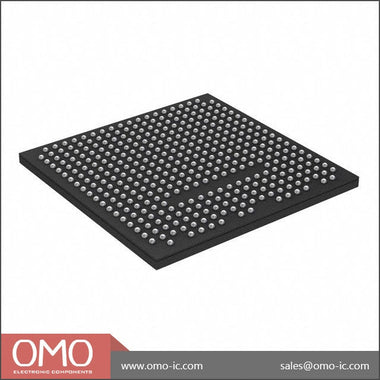
| Package | CLG400 (400-ball Chip Scale BGA) | A compact package suitable for space-constrained designs. Requires careful PCB layout and assembly, but offers good I/O density. |
| Temperature Grade | Industrial ('I') | Specifies a junction temperature range of -40°C to 100°C, making the device suitable for deployment in harsh factory environments without climate control. |
| I/O Voltage Standards | Supports LVCMOS, LVDS, etc. | Flexibility to interface with a wide variety of image sensors (LVDS, parallel CMOS) and peripherals like Ethernet PHYs and memory. |
Reference Circuit and Component Selection
Designing a stable and reliable board around the XC7Z010-1CLG400I requires careful attention to several key subsystems. A robust design is not just about connecting the pins; it's about providing a clean power, a stable clock, and reliable memory interfaces.
Power Subsystem: The Zynq-7000 SoC requires multiple voltage rails. The primary rails include VCCINT (core logic), VCCBRAM (Block RAM), VCCAUX (auxiliary logic), VCCO (I/O banks), and several rails for the PS side like VCCPINT and VCCPAUX. A common mistake for first-time designers is underestimating the complexity of the Power Delivery Network (PDN). Using a dedicated Power Management IC (PMIC), such as those from Texas Instruments or Analog Devices specifically designed for Xilinx FPGAs, is highly recommended. These PMICs integrate multiple buck regulators and LDOs, provide the correct power-on sequencing required by the Zynq, and reduce board space compared to a discrete solution. Each rail must be heavily decoupled with a combination of bulk capacitors (e.g., 10-47uF) and high-frequency ceramic capacitors (e.g., 0.1uF, 0.01uF) placed as close as possible to the BGA balls.
Memory Interface: For the PS to run Linux, external DDR memory is mandatory. The XC7Z010 supports DDR3, DDR3L, and DDR2. DDR3L is often preferred for its lower power consumption. The interface is high-speed and requires a controlled impedance layout (typically 40-50 ohm single-ended). Traces for the data, address, and clock groups must be length-matched to ensure proper timing margins. The Xilinx Vivado design tools provide guidance and can export layout constraints to assist with this critical task. Failure to follow these strict layout rules is a primary cause of system instability.
Boot and Configuration: A common boot method is to use a Quad-SPI (QSPI) NOR flash device. The Zynq's internal BootROM will read the boot mode from the MIO[8:2] pins on power-up. When configured for QSPI boot, it will load the First Stage Bootloader (FSBL) from flash into the On-Chip Memory (OCM). The FSBL then initializes the DDR controller and loads the subsequent stages of the boot process (e.g., U-Boot, the Linux kernel, and the PL bitstream) into DDR memory. A 256Mb or 512Mb QSPI flash is typically sufficient. Ensure the chosen flash device is supported by the Xilinx tools.
Clocking: The PS requires a stable clock input (typically 33.33 MHz or 50 MHz) for its internal PLLs to generate the CPU and peripheral clocks. The PL may use this clock or have its own dedicated oscillators for specific interface requirements (e.g., a 200 MHz differential oscillator for a high-speed ADC interface). Use low-jitter oscillators and route clock signals carefully, avoiding stubs and noisy digital areas.
As you can see, the XC7Z010 is the heart of the system, but it relies on a carefully selected ecosystem of supporting components. You can Browse Zynq-7000 Series to see other variants that might be a better fit if your logic or processing requirements differ.
Design Pitfalls and How to Avoid Them
A complex SoC like the XC7Z010-1CLG400I offers immense capability, but also presents several design challenges. Awareness of these common pitfalls during the design phase can save weeks of frustrating debug time.
| Common Mistake | Symptom | Fix |
|---|---|---|
| Inadequate Power Decoupling | System is unstable, random crashes under load, JTAG chain drops, PL logic errors. | Follow Xilinx's decoupling recommendations (Xilinx Power Estimator and UG475). Use a mix of capacitor values (10uF, 1uF, 0.1uF, 0.01uF) per rail. Place small caps as close to the BGA balls as possible, often on the back side of the PCB directly under the package. |
| Incorrect Boot Mode Pin Strapping | Device does not boot after power-on. Console shows no output. JTAG may or may not be accessible. | Carefully check the pull-up/pull-down resistors on the MIO[8:2] pins against the Zynq-7000 TRM (UG585) for your desired boot mode (JTAG, QSPI, SD, NAND). Ensure pull resistors are strong enough (e.g., 4.7kΩ) and not fighting other components. |
| DDR3 Layout Violations | System fails to boot, memory tests fail intermittently, or Linux kernel panics randomly. | Use a PCB layout tool with constraint management. Strictly enforce trace length matching for data/strobe/address groups. Maintain controlled impedance (e.g., 50Ω single-ended, 100Ω differential) and reference a solid ground plane. Run signal integrity simulations (e.g., HyperLynx) if possible. |
| PS-PL Clock Domain Crossing (CDC) Errors | Data corruption between the processor and FPGA logic. Unpredictable behavior in the PL. | Never pass a signal between asynchronous clock domains without proper synchronization logic (e.g., a two-stage flip-flop synchronizer for single-bit signals or an asynchronous FIFO for multi-bit data buses). Vivado's timing analysis tools will flag these issues if constraints are set correctly. |
Beyond these specific issues, a general pitfall is failing to utilize the resources provided by Xilinx (now AMD). The Zynq-7000 Technical Reference Manual (TRM, UG585) is an essential document that details the architecture and register-level operation of the device. The Hardware User Guides for 7 Series FPGAs (e.g., UG475 for package and pinout information) are also critical. Ignoring these documents and relying solely on example designs can lead to subtle errors. Always start a design by reading the relevant documentation for the power, clocking, and configuration sections. A few hours of reading can prevent weeks of board re-spins and debugging.
Performance Optimization Tips
Once the basic system is functional, the next step is to optimize it for performance, power, and thermal efficiency.
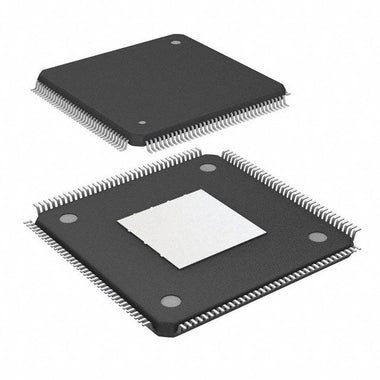
Thermal Management: The XC7Z010-1CLG400I, especially in an industrial environment, will generate significant heat. The 'I' grade specifies a maximum junction temperature of 100°C. To stay below this, a robust thermal solution is non-negotiable. The CLG400 package is a BGA, which transfers heat primarily through the solder balls to the PCB. A key technique is to place an array of thermal vias directly under the package's central ground pad, connecting to internal ground planes and a large copper area on the bottom side of the PCB. This allows the PCB itself to act as a heat spreader. For high-load applications or high ambient temperatures, a heatsink mounted to the top of the package is necessary. Use a quality thermal interface material (TIM) to ensure good contact.
Performance Tuning: The true power of Zynq is offloading tasks from the PS to the PL. Profile your software application running on the ARM cores. Identify computational bottlenecks—these are often loops performing mathematical operations on large data sets (like image filters). These are prime candidates for acceleration in the PL. Using High-Level Synthesis (HLS) tools, you can even write these hardware accelerators in C/C++ and synthesize them into RTL. Connecting these accelerators to the PS via AXI interfaces allows the software to simply write data to a memory-mapped location, trigger the accelerator, and read back the result, freeing up the CPU for other tasks.
Power Optimization: Use the Xilinx Power Estimator (XPE) spreadsheet early in the design cycle to get a realistic estimate of power consumption. This informs the design of the power supply. In the PL, use clock gating to automatically turn off clocks to unused or idle portions of the logic. In the PS, leverage Linux power management features like `cpufreq` to scale the processor frequency down when the system is idle, and `cpuidle` to put the cores into low-power sleep states.
Related Components and Accessories
A successful XC7Z010-1CLG400I design depends on a well-chosen set of peripheral components. For the power subsystem, consider PMICs like the TI TPS65086x series or Analog Devices ADP505x family, which are specifically designed to meet the power and sequencing requirements of Xilinx SoCs. For DDR3L memory, chips from Micron, Samsung, or ISSI are commonly used; always check the supported parts list in the Vivado Memory Interface Generator (MIG) tool. For boot flash, a QSPI NOR flash from Micron (N25Q series) or Spansion (S25FL series) is a reliable choice.
For connectivity, a Gigabit Ethernet PHY like the Microchip KSZ9031RNX or TI DP83867 is required to interface with the Zynq's RGMII interface. Finally, ensure you have the necessary programming and debug hardware, such as a Xilinx Platform Cable USB II or a Digilent JTAG-HS3, for interacting with the device during development. Sourcing these critical components can be challenging, but a reliable distributor can ensure you have access to genuine parts. You can Check XC7Z010-1CLG400I Inventory & Pricing to secure the core of your design.
Video Demonstration
Frequently Asked Questions (XC7Z010-1CLG400I FAQ)
What is the main difference between the Processing System (PS) and Programmable Logic (PL) in the XC7Z010-1CLG400I?
The Processing System (PS) is a hardened, fixed-function block containing a dual-core ARM Cortex-A9 processor and standard peripherals like Ethernet, USB, and memory controllers. It's designed to run software, operating systems like Linux, and handle complex control flow. The Programmable Logic (PL) is the FPGA fabric, which is a blank slate of configurable logic cells, DSP blocks, and RAM that you can program to create custom hardware circuits. The key advantage is using the PL for high-speed, parallel tasks (like video processing) and the PS for sequential, software-driven tasks (like network communication).
How do I power the XC7Z010-1CLG400I correctly?
Powering the XC7Z010 requires multiple voltage rails with a specific power-on sequence as defined in the datasheet (DS190). Key rails include VCCINT (core), VCCAUX (auxiliary), VCCO (I/O banks), and several PS-specific rails. Using a dedicated Power Management IC (PMIC) designed for Xilinx devices is strongly recommended as it simplifies the design, ensures correct sequencing, and saves board space. Additionally, proper decoupling with a mix of bulk and ceramic capacitors close to the BGA pins is critical for system stability.
What is the typical boot process for a Zynq-7000 system?
A typical boot process starts with the on-chip BootROM reading the boot mode pins (MIO pins). If configured for QSPI boot, the BootROM loads the First Stage Bootloader (FSBL) from the external QSPI flash into the On-Chip Memory (OCM). The FSBL then initializes critical hardware like the DDR memory controller. After that, it loads the user application, which could be a bare-metal program, or more commonly, a second-stage bootloader like U-Boot, the PL bitstream, and a full OS like Linux, from flash into the main DDR memory before transferring execution control.
Can I use the XC7Z010 for real-time video processing?
Yes, the XC7Z010 is exceptionally well-suited for real-time video processing. The Programmable Logic (PL) is ideal for implementing a high-throughput video pipeline directly from a sensor. You can build or use IP cores for tasks like MIPI CSI-2 reception, debayering, color space conversion, and applying filters using the built-in DSP slices. This pipeline can process video in real-time with very low latency, passing the processed frames to the ARM cores in the Processing System (PS) for higher-level analysis, storage, or network streaming.
What development tools are needed for the XC7Z010-1CLG400I?
Development for the Zynq-7000 platform requires the AMD Xilinx unified software platform, which consists of several tools. The Vivado Design Suite is used for designing, simulating, and implementing the hardware logic in the PL. The Vitis Unified Software Platform is used for developing the software that runs on the ARM cores in the PS, including bare-metal applications and Linux device drivers. For embedded Linux development, the PetaLinux Tools provide a complete, automated workflow for building, customizing, and deploying a Linux distribution for the Zynq platform.

Alan Carter
Senior Hardware Engineer & Component Specialist
Alan has over 15 years of expertise in embedded systems design, FPGA architecture, and global semiconductor supply chains. He specializes in component cross-referencing, lifecycle management, and helping OEMs navigate supply shortages.