XC7K410T FPGA: Datasheet, Pinout, Equivalents, and Specs
The Xilinx XC7K410T FPGA stands as a formidable solution in the Kintex-7 family, engineered to deliver an optimal balance of high-end performance, power efficiency, and cost-effectiveness. It targets applications that demand significant signal processing capability, high-speed serial connectivity, and substantial logic density without escalating to the cost structure of the Virtex-7 series. As a result, the XC7K410T has become a cornerstone component for next-generation systems in telecommunications, medical imaging, and aerospace and defense markets.
What is the XC7K410T?
The XC7K410T is a high-performance Field-Programmable Gate Array (FPGA) from AMD-Xilinx, belonging to the Kintex-7 family. Manufactured on a 28nm HKMG (High-K Metal Gate) process, this device provides a significant leap in performance-per-watt over previous generations. The Kintex-7 architecture is specifically designed to bridge the gap between the lower-cost Artix-7 family and the ultra-high-bandwidth Virtex-7 family. The XC7K410T is the sweet spot within this family, offering over 400K logic cells, a vast array of DSP resources, and high-speed serial transceivers, making it an ideal platform for computationally intensive tasks.

Its core architecture is built upon the foundational 6-input Look-Up Table (LUT) structure, providing greater logic efficiency and flexibility compared to older 4-input LUT designs. This is complemented by a rich fabric of configurable logic blocks (CLBs), advanced clock management, and substantial on-chip memory. The primary market for the XC7K410T includes applications requiring parallel data processing and high-bandwidth data movement, such as 4G/5G wireless infrastructure, medical ultrasound equipment, broadcast video switchers, and real-time radar signal processing systems. The device's ability to integrate complex digital signal processing algorithms and high-speed interfaces like PCI Express and 10 Gigabit Ethernet onto a single chip dramatically reduces system BOM cost, power consumption, and board footprint.
Pinout Configuration and Packaging
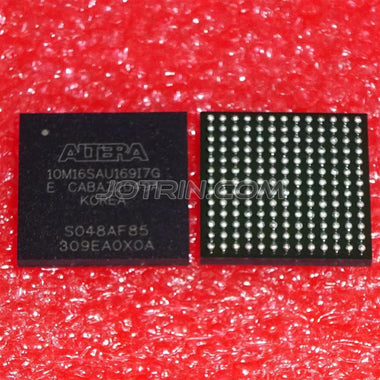
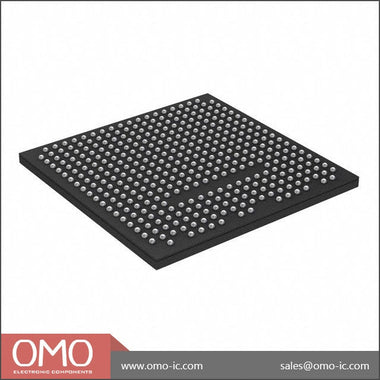
The XC7K410T is offered in various Fine-Pitch Ball Grid Array (FBG/FFG) packages to accommodate different design constraints related to PCB space, I/O count, and thermal performance. Common packages include the FFG900 (900 balls, 31x31mm) and FBG676 (676 balls, 27x27mm). The BGA format necessitates advanced PCB design techniques, including multi-layer boards (typically 8 layers or more), microvias, and precise via-in-pad or dog-bone fanout strategies for routing signals from the dense ball grid.
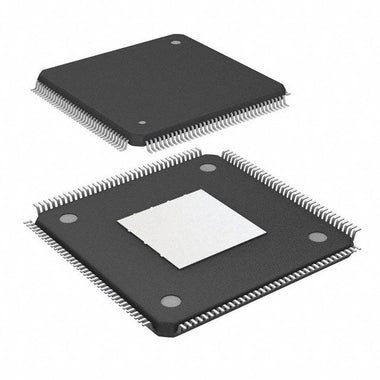
A critical feature of these packages is the central ground slug or heat spreader, which is essential for thermal management. This slug must be soldered directly to a large ground plane on the PCB with an array of thermal vias to effectively dissipate heat generated during high-utilization operation. The I/O pins are organized into banks, primarily High-Performance (HP) and High-Range (HR) banks. HP banks are optimized for high-speed memory interfaces like DDR3/DDR4, supporting voltages up to 1.8V. HR banks are more versatile, supporting a wider range of I/O standards up to 3.3V, making them suitable for general-purpose I/O and legacy interfaces. Careful pinout planning during the schematic design phase is crucial to align I/O standards with the correct bank types and to minimize signal integrity issues like crosstalk by strategically placing signals and ground pins.
Core Architectural Features
- DSP Slices: The XC7K410T is heavily optimized for digital signal processing, featuring a large number of dedicated DSP48E1 slices. Each slice contains a 25x18 bit two's complement multiplier, a 48-bit accumulator, and a pre-adder. This dedicated hardware allows for the high-throughput, low-latency implementation of complex algorithms like Finite Impulse Response (FIR) filters, Fast Fourier Transforms (FFTs), and correlators, consuming significantly fewer logic resources and less power than equivalent implementations in general-purpose fabric.
- Clock Management: Sophisticated clocking is managed by Clock Management Tiles (CMTs). Each CMT includes a Mixed-Mode Clock Manager (MMCM) and a Phase-Locked Loop (PLL). These blocks are fundamental for robust system design, providing capabilities such as frequency synthesis (multiplying and dividing input clocks), jitter filtering to clean up noisy clock sources, and phase shifting for precise clock alignment and deskewing across the chip. This ensures reliable timing closure for high-frequency designs.
- High-Speed Transceivers: The device integrates multiple GTX serial transceivers, each capable of data rates up to 12.5 Gb/s. These transceivers are highly configurable and support a wide range of industry-standard protocols, including PCI Express (Gen1/Gen2), 10 Gigabit Ethernet (10GBASE-KR/XAUI), Serial RapidIO, CPRI, and OBSAI. The XC7K410T also includes integrated blocks for PCIe, enabling a direct, hardened IP implementation of up to an x8 Gen2 endpoint or root port, simplifying design and saving logic resources.
- Block RAM (BRAM): The XC7K410T provides a substantial amount of on-chip memory in the form of 36Kb Block RAMs. These are true dual-port memory blocks, meaning they can be read from and written to simultaneously from two independent clock domains. Each 36Kb BRAM can also be configured as two independent 18Kb BRAMs. This memory is essential for data buffering, implementing FIFOs for clock domain crossing, and storing coefficients or lookup tables for algorithms.
- Power Efficiency: Built on the 28nm HPL process, the XC7K410T offers exceptional power efficiency. It operates with a core voltage (VCCINT) of 1.0V, with a lower-power 0.9V option available for certain speed grades. The Vivado Design Suite provides advanced tools for power analysis and optimization, enabling features like intelligent clock gating that automatically disables clock signals to unused portions of the logic, dramatically reducing dynamic power consumption. Separate I/O bank voltages (VCCO) allow the FPGA to interface with a wide variety of external components without requiring external level-shifters.
Specifications Parameter Table
| Specification | Technical Details |
|---|---|
| Logic Cells | 406,720 |
| Configurable Logic Blocks (CLBs) / LUTs | 63,550 CLBs / 254,200 LUTs |
| DSP Slices (DSP48E1) | 1,540 |
| Block RAM (BRAM) | 28,620 Kb (795 x 36Kb blocks) |
| Maximum I/O Pins | 500 (dependent on package) |
| Transceivers | 16 x GTX Transceivers |
| Transceiver Speed | Up to 12.5 Gb/s (GTX) |
| PCI Express Support | Integrated block for up to x8 Gen2 |
| Core Voltage (VCCINT) | 1.0V or 0.9V |
| I/O Voltage (VCCO) | 1.2V to 3.3V (HR Banks), 1.2V to 1.8V (HP Banks) |
XC7K410T Equivalents and Alternatives
Selecting the right FPGA is a critical design decision involving a trade-off between resources, performance, cost, and power. When considering the XC7K410T, engineers should evaluate alternatives both within the Xilinx portfolio and from competitors.
- Xilinx XC7K325T: This is a smaller device within the same Kintex-7 family. An engineer should choose the XC7K325T if their design fits within its ~326K logic cells and 840 DSP slices. It offers a significant cost reduction and lower static power consumption, making it ideal for applications that are cost-sensitive and do not require the full processing power of the XC7K410T. If your design utilization is below 70% on the XC7K410T, migrating down to the XC7K325T is a viable cost-optimization strategy.
- Xilinx XC7K480T: As the next step up, the XC7K480T offers more resources (~478K logic cells, 19

Alan Carter
Senior Hardware Engineer & Component Specialist
Alan has over 15 years of expertise in embedded systems design, FPGA architecture, and global semiconductor supply chains. He specializes in component cross-referencing, lifecycle management, and helping OEMs navigate supply shortages.
Frequently Asked Questions (FAQs)
What is the typical factory lead time for the XC7K410T-2FFG900I?
Factory lead times for the XC7K410T can fluctuate significantly based on global supply chain conditions, typically ranging from 20 to 52+ weeks. For immediate needs, it is recommended to check authorized distributor stock or specialized independent distributors who may have inventory on hand for faster delivery.
Are there any direct, pin-compatible replacements for the XC7K410T?
There are no direct drop-in replacements from other manufacturers. Within the Kintex-7 family, other devices like the XC7K325T in the same package may be software-compatible if the design does not fully utilize the XC7K410T's resources. However, this requires a design re-synthesis, timing re-validation, and potentially a new bitstream. Migrating to a different FPGA family or manufacturer requires a full board redesign.
How many logic resources, specifically logic cells, CLB flip-flops, and LUTs, are in the XC7K410T?
The XC7K410T is equipped with 406,720 logic cells. This comprises 254,200 6-input Look-Up Tables (LUTs) and 508,400 Control Logic Block (CLB) flip-flops. Additionally, it contains 1,540 DSP slices for signal processing applications.
What is the maximum data rate of the GTX transceivers on the XC7K410T, and how many are available in the FFG900 package?
The integrated GTX transceivers on the XC7K410T support high-speed serial communication with data rates up to 12.5 Gb/s per lane. In the FFG900 package variant, there are 16 GTX transceivers available for use.
What is the current production lifecycle status for the XC7K410T?
The Xilinx/AMD Kintex-7 family, including the XC7K410T, is in "Active" production and is fully supported. While newer families like Versal may be recommended for new designs seeking optimal performance-per-watt, the XC7K410T remains a viable and manufactured component for existing and ongoing projects. Always confirm the latest status directly with AMD/Xilinx for long-term production planning.
What are the key differences between the FFG900, FBG900, and FFG1156 packages for the XC7K410T?
The primary differences are physical size, pin count, and available user I/O. The FFG900 (31x31mm) and FBG900 (31x31mm, lead-free version) are 900-pin packages offering up to 500 user I/O pins. The FFG1156 (35x35mm) is a larger 1156-pin package that provides up to 600 user I/O pins, making it suitable for designs requiring more external connectivity.
What power supply voltages are required to operate the XC7K410T?
The XC7K410T requires several distinct power rails for operation. The core logic voltage (VCCINT) is a nominal 1.0V. The auxiliary internal voltage (VCCAUX) is 1.8V. The I/O banks (VCCO) are flexible, supporting standards from 1.2V to 3.3V. The GTX transceivers require their own supplies, typically MGTAVCC at 1.0V and MGTAVTT at 1.2V.
Can the XC7K410T be programmed with an encrypted bitstream, and what security features does it offer?
Yes, the XC7K410T supports robust security features to protect intellectual property. It allows for 256-bit AES-GCM bitstream encryption with HMAC authentication, which prevents unauthorized copying and reverse engineering. It also includes a unique 57-bit Device DNA identifier that can be used to lock a specific design to a single physical FPGA device.
Looking for XC7K410T Inventory?
We offer competitive pricing, full traceability, and fast shipping for the XC7K410T and related components.
Check Stock & Request Quote