XC7A35T-1CPG236C Datasheet, Pinout, Equivalents, and Specs
The XC7A35T-1CPG236C is a field-programmable gate array (FPGA) from the Xilinx (now AMD) Artix-7 family, engineered to deliver high performance-per-watt for cost-sensitive, high-volume applications. It solves the challenge of implementing custom digital logic, parallel processing, and complex interfacing in a compact and power-efficient package. By providing a flexible fabric of configurable logic blocks, memory, and digital signal processing (DSP) resources, this device allows hardware engineers to move beyond the limitations of traditional microcontrollers and ASICs for tasks requiring significant computational throughput and customized I/O.

Table of Contents
What is the XC7A35T-1CPG236C?
The XC7A35T-1CPG236C is a specific device within the broader AMD-Xilinx Artix-7 family, which is built on a 28nm HPL (High-Performance, Low-Power) process technology. This process node represents a significant step in balancing performance capabilities with stringent power budgets, making it a suitable choice for battery-powered devices, thermally constrained enclosures, and high-volume products where operational cost is a factor. The part number itself provides key information: XC7A35T identifies it as an Artix-7 device with approximately 35k logic cells, the -1 indicates the standard performance speed grade, CPG236 specifies the package type and pin count, and the final C denotes a commercial temperature grade.
At its core, the XC7A35T is a sea of programmable logic resources. It contains 33,280 logic cells organized into 5,200 slices. Each slice is a powerful building block containing four 6-input look-up tables (LUTs) and eight flip-flops. These LUTs are highly versatile and can be configured as a single 6-input function, two 5-input functions with shared inputs, or even as distributed RAM, providing granular memory resources throughout the fabric. This architecture allows for the efficient implementation of both wide and narrow logic functions.
Beyond general-purpose logic, the XC7A35T integrates specialized hardware blocks to accelerate common functions. It includes 1,800 Kbits of fast, dual-port Block RAM. This memory is essential for buffering data, implementing FIFOs, and creating internal data stores for processors or state machines. For computationally intensive tasks, the device features 90 dedicated DSP slices (DSP48E1). These are not simple multipliers; each slice contains a 25x18 multiplier, a pre-adder, and a 48-bit accumulator, making them ideal for implementing digital filters (FIR, IIR), Fast Fourier Transforms (FFTs), and other signal processing algorithms with high throughput and deterministic latency. The integration of these hardware blocks frees up the general-purpose logic fabric and provides a more power- and area-efficient solution than a purely LUT-based implementation.
Finally, the device is equipped with five Clock Management Tiles (CMTs), each containing a Mixed-Mode Clock Manager (MMCM). These are critical for managing the complex clocking requirements of modern digital systems. The MMCMs can be used for clock synthesis (frequency multiplication and division), jitter filtering to clean up noisy clock sources, and phase shifting for fine-grained timing adjustments, ensuring the system meets its timing constraints.
Pinout Configuration and Packaging
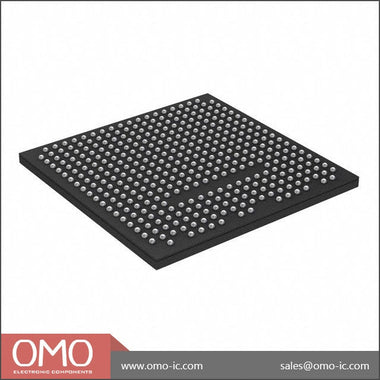
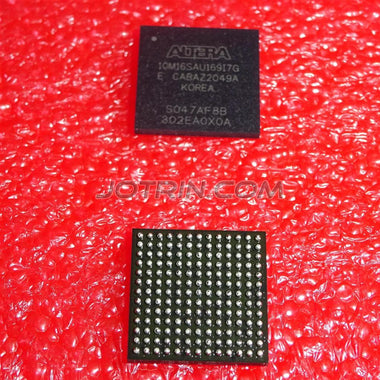
The XC7A35T-1CPG236C is offered in the CPG236 package. This is a 236-ball Chip-Scale Package (CSP) Ball Grid Array (BGA) with a 13x13 grid and a 0.8mm ball pitch. The CSP BGA format provides a high I/O density in a very small physical footprint (13x13 mm), making it an excellent choice for space-constrained designs. However, the fine pitch requires more advanced PCB manufacturing and assembly processes, typically involving via-in-pad or micro-via technology for routing signals from the inner balls.
The 236 pins are not all user I/O. A significant number are dedicated to power, ground, and configuration. Key pin categories include:
- Power Pins: Multiple pins are dedicated to the various power rails required by the FPGA. These include VCCINT (core logic, 1.0V), VCCAUX (auxiliary internal logic, 1.8V), VCCO (I/O banks, configurable from 1.2V to 3.3V), and VCCBRAM (Block RAM power, typically tied to VCCINT). A robust power delivery network with extensive decoupling on the PCB is non-negotiable for stable operation.
- Ground Pins (GND): A large number of ground pins are provided to ensure a low-impedance return path for signals and power, which is critical for signal integrity and minimizing electromagnetic interference (EMI).
- Configuration Pins: These pins control how the FPGA loads its configuration bitstream upon power-up. Key pins include the mode pins (M0, M1, M2) to select the configuration mode (e.g., Master SPI, Slave Serial), PROGRAM_B (to initiate a reconfiguration), and DONE (indicates successful configuration).
- JTAG Pins: The standard JTAG test access port (TDI, TDO, TCK, TMS) is provided for programming, in-circuit debugging using tools like the Vivado Logic Analyzer, and boundary-scan testing.
- Clock Input Pins: The CPG236 package provides access to dedicated global clock input pins (MRCC - Multi-region Clock Capable, and SRCC - Single-region Clock Capable). These pins are connected to low-skew, low-jitter internal clock routing networks and are the proper entry points for system clocks.
- User I/O Pins: After accounting for all dedicated pins, the CPG236 package provides a maximum of 150 user I/O pins. These are organized into I/O banks, with each bank having its own VCCO supply pin. This allows different banks to interface with components operating at different voltage levels (e.g., one bank at 3.3V for a sensor, another at 1.8V for DDR memory).
Due to the complexity, a full pinout diagram is not practical here. Engineers must refer to the official Xilinx documentation and use the Vivado I/O Planning tools to assign signals to physical pins, a process that involves balancing timing constraints, signal integrity, and PCB routability.
Core Architectural Features
- 6-Input LUT Architecture: The fundamental logic element is the 6-input look-up table (LUT). This provides significant flexibility over older 4-input LUT architectures, allowing more logic to be packed into a single LUT. Each LUT can also be configured as two 5-input LUTs with shared inputs, or as a small 64x1-bit RAM or a 32-bit shift register (SRL32), enabling highly efficient implementation of various logic structures.
- DSP48E1 Slices: The device contains 90 dedicated DSP slices. Each slice is a hardened IP block featuring a 25x18 two's complement multiplier, a 48-bit accumulator, and a pre-adder. This architecture is optimized for high-speed arithmetic operations common in digital signal processing, such as filtering, convolution, and correlation, providing performance that is orders of magnitude higher and more power-efficient than a soft implementation in general logic.
- 18Kb/36Kb Block RAM: The XC7A35T provides a total of 1,800 Kbits of true dual-port Block RAM, organized as 50 blocks of 36Kb. Each 36Kb block can be used as two independent 18Kb blocks. These blocks support various data widths and can be configured as FIFOs with built-in status flags, saving logic resources and simplifying design. This substantial on-chip memory is critical for data buffering in applications like video processing and packet switching.
- Advanced Clock Management (CMT): The device features five Clock Management Tiles, each containing a Mixed-Mode Clock Manager (MMCM) and a Phase-Locked Loop (PLL). These blocks provide sophisticated clock management capabilities, including frequency synthesis (both integer and fractional), clock deskew to compensate for PCB trace length differences, jitter filtering for noisy clock sources, and fine-grained phase shifting. This ensures a robust and reliable clocking scheme for complex, high-speed designs.
- SelectIO Technology: The I/O blocks support a wide variety of single-ended and differential signaling standards, such as LVCMOS, HSTL, SSTL, and LVDS. Each I/O pin includes a programmable delay element (IDELAY/ODELAY), allowing for precise per-pin timing adjustments to meet setup and hold requirements for high-speed interfaces. This flexibility allows the Artix-7 to connect directly to a vast range of external components without requiring external level-shifting or timing-correction circuitry.
Specifications Parameter Table
| Specification | Technical Details |
|---|---|
| Logic Cells | 33,280 |
| Slices | 5,200 |
| Total Block RAM | 1,800 Kbits (50 blocks of 36Kb) |
| DSP Slices (DSP48E1) | 90 |
| Maximum User I/O | 150 (in CPG236 package) |
| Core Voltage (VCCINT) | 1.0V (Nominal) |
| Auxiliary Voltage (VCCAUX) | 1.8V (Nominal) |
| Operating Temperature Range | Commercial Grade (Tj = 0°C to 85°C) |
XC7A35T-1CPG236C Equivalents, Cross Reference & Lifecycle
The XC7A35T-1CPG236C is an active, in-production component. When considering alternatives, it's important to differentiate between drop-in replacements and functionally similar parts that require design changes.
A direct, near-equivalent would be another variant of the XC7A35T in the same CPG236 package. For example, the XC7A35T-2CPG236C offers a higher speed grade (-2) for designs that are failing to meet timing with the -1 grade. For applications requiring operation in harsher environments, an industrial-grade version like the XC7A35T-1CPG236I (with a -40°C to 100°C junction temperature range) could be used, though it is not a direct substitute for a commercial-grade design without re-evaluating timing across the wider temperature range.
If a design requires more logic resources, a migration path exists within the Artix-7 family to the XC7A50T. However, this is not a drop-in replacement. While it shares the same architecture and can be targeted by the same Vivado project with a device change, it has more resources and may come in a different package, necessitating a complete PCB re-layout. Conversely, if a design is resource-underutilized, the smaller XC7A15T could be considered for cost reduction, again requiring a design and layout update.
For procurement professionals and engineers managing component lifecycle, it is crucial to verify current stock levels and lead times. Check XC7A35T-1CPG236C Inventory & Pricing to get the latest availability information for your production and prototyping needs.
Typical Applications & Circuit Considerations
The XC7A35T-1CPG236C's blend of low power, small form factor, and significant processing capability makes it suitable for a wide range of embedded systems.
Industrial and Machine Vision: In factory automation, the FPGA can implement real-time motor control loops (generating precise PWM signals), interface with multiple sensors using custom protocols, and perform high-speed image pre-processing from a camera sensor. The 90 DSP slices are invaluable for applying image filters (e.g., Sobel, Gaussian blur) or color space conversions in the hardware pipeline before the data is sent to a host processor, offloading the CPU and reducing system latency.
Software Defined Radio (SDR): For cost-sensitive SDR applications, the XC7A35T can implement the digital front-end. It can perform digital down-conversion (DDC) or digital up-conversion (DUC), using the DSP slices to implement numerically controlled oscillators (NCOs) and FIR filters for channel selection and pulse shaping. Its parallel nature allows it to process I/Q data streams at high rates.
Medical and Scientific Instrumentation: Portable medical devices like handheld ultrasound scanners or patient monitors benefit from the Artix-7's low power consumption. The FPGA can be used for beamforming calculations, data acquisition from ADCs, and driving custom displays, all within a tight power and thermal budget.
Circuit Design Considerations: Successfully integrating the XC7A35T requires careful PCB design. Power Delivery: A multi-rail power supply is needed. The 1.0V core voltage (VCCINT) can draw significant transient current. A Power Delivery Network (PDN) with a low impedance path is critical. This involves using a multi-layer PCB with dedicated power and ground planes, and a well-planned decoupling capacitor strategy. This typically includes a mix of bulk capacitors (e.g., 10-100µF) near the voltage regulator and a spread of smaller ceramic capacitors (e.g., 1µF, 0.1µF, 0.01µF) placed as close as possible to every power pin of the BGA. Configuration: A non-volatile memory, typically a SPI flash chip, must be placed on the board to store the FPGA's configuration bitstream. The FPGA will automatically read from this flash upon power-up. Signal Integrity: For high-speed interfaces like LVDS, controlled impedance routing on the PCB is mandatory. Trace lengths for differential pairs must be matched to prevent skew. The Vivado I/O planner should be used early in the design process to group related I/O signals and place them optimally to simplify PCB routing. The extensive family of Artix-7 devices offers a scalable solution for many projects; you can Browse Artix-7 Series to find the perfect fit for your logic and I/O requirements.
Video Demonstration
Frequently Asked Questions (XC7A35T-1CPG236C FAQ)
What development tools are used for the XC7A35T-1CPG236C?
The primary development environment for the XC7A35T-1CPG236C is the AMD-Xilinx Vivado Design Suite. This comprehensive software package includes everything needed for the design flow: HDL synthesis, implementation (place and route), static timing analysis, power analysis, and bitstream generation. It also includes the Vivado Logic Analyzer for in-circuit debugging and supports high-level synthesis (HLS) for designers who prefer to work in C/C++.
What is the difference between the Artix-7 and Spartan-7 series?
Artix-7 and Spartan-7 are both cost-optimized FPGA families, but they target slightly different application spaces. The Artix-7 series, including the XC7A35T, is optimized for higher performance and offers more features like a greater number of DSP slices and, in larger devices, high-speed serial transceivers. The Spartan-7 series is focused on being the most cost-effective option, prioritizing I/O density and low power for applications that are less computationally intensive.
What does the "-1CPG236C" part of the model number mean?
This suffix contains critical information about the device variant. The "-1" is the speed grade, with lower numbers representing standard performance and higher numbers (e.g., -2, -3) indicating faster performance. "CPG236" defines the package: "C" for chip-scale, "PG" for plastic BGA, and "236" for the number of pins. The final "C" indicates the commercial temperature grade, which has a junction temperature operating range of 0°C to 85°C.
How are FPGAs like the XC7A35T-1CPG236C programmed?
FPGAs are volatile, meaning they lose their configuration when power is removed. They can be programmed in two main ways. For development and debugging, a JTAG programmer (like a Xilinx Platform Cable USB) is used to load the bitstream directly into the device. For a finished product, the bitstream is stored in an external non-volatile memory, typically a low-cost SPI flash chip, and the FPGA automatically loads the configuration from this flash chip upon power-up.
What are the main power supply rails for this FPGA?
The XC7A35T-1CPG236C requires several distinct power rails for proper operation. The most important are VCCINT (1.0V nominal) for the internal core logic, VCCAUX (1.8V nominal) for auxiliary logic like the JTAG and clock management blocks, and one or more VCCO rails for the user I/O banks. The VCCO voltage is flexible (typically 1.2V to 3.3V) and is set by the designer to match the voltage level of the external components connected to that I/O bank.