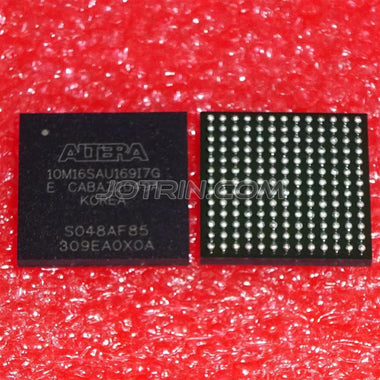
XC7A100T-1CSG324C Equivalents, Replacements, and Cross-Reference Guide
Finding a suitable replacement for a specific Field-Programmable Gate Array (FPGA) like the Xilinx XC7A100T-1CSG324C can be a critical task, especially during supply chain disruptions or for end-of-life product redesigns. As a senior hardware engineer, I understand the complexities involved—it's rarely a simple swap. This guide provides a detailed technical breakdown of potential equivalents, from direct pin-compatible options to functional alternatives that require more significant engineering effort. We will cover the necessary considerations, including timing, power, software, and package compatibility, to help you make an informed decision for your hardware design.

Table of Contents
XC7A100T-1CSG324C Overview and Current Availability
The XC7A100T-1CSG324C is a popular FPGA from the AMD-Xilinx 7 Series, specifically the Artix-7 family. These devices are designed to deliver high performance-per-watt, making them suitable for a wide range of cost-sensitive and high-volume applications, including software-defined radio, machine vision, and industrial control. Understanding the part number is key to finding alternatives:
- XC7A100T: This defines the core device. '7A' signifies the Artix-7 family, and '100T' indicates the device size, which offers a substantial amount of logic resources.
- -1: This is the speed grade. '-1' is the slowest commercial speed grade, offering the lowest performance but often at a lower cost.
- CSG324: This specifies the package. It's a 324-pin Chip Scale BGA with a 15x15 mm footprint and a 0.8 mm pitch. This package is crucial for identifying pin-compatible replacements.
- C: This denotes the temperature grade, which is Commercial (0°C to 85°C junction temperature).
Based on the official Xilinx DS181 datasheet, the XC7A100T provides a robust set of features:
- Logic Cells: 101,440
- CLB Flip-Flops: 126,800
- Block RAM: 4,860 Kbits
- DSP Slices: 240
- Maximum User I/O: 210 in the CSG324 package
In terms of lifecycle and availability, the Artix-7 family is a mature and widely adopted product line. It is still in active production and is not designated as end-of-life (EOL) at the time of writing. However, like all semiconductor components, it is subject to global supply chain dynamics, including lead time extensions and allocation. For new designs, engineers might consider newer families like Artix UltraScale+ for better longevity, but for existing products, finding a compatible 7-series part is often the most practical path. The XC7A100T-1CSG324C remains a workhorse for many applications, but having a replacement strategy is a prudent engineering practice.
Pin-Compatible Equivalents
For an engineer facing a line-down situation, a pin-compatible, drop-in replacement is the ideal solution. For the XC7A100T-1CSG324C, true drop-in replacements are limited to other variants of the same XC7A100T device within the CSG324 package. Any deviation in device family or size, even if in the same package, will require a new bitstream and is not a drop-in replacement.
1. Speed Grade Variations: The most common pin-compatible swap is changing the speed grade. You can replace the '-1' (slowest) grade with a faster one:
- XC7A100T-2CSG324C: A faster speed grade. This is a safe upgrade. The existing bitstream for the -1 part will work, and the design will simply have more positive timing slack.
- XC7A100T-3CSG324C: The fastest commercial speed grade. This is also a safe upgrade from a -1 part and offers the highest performance.
Important Note on Downgrading: Replacing a faster part (e.g., -2) with a -1 is not a guaranteed drop-in. The design must be re-evaluated using Static Timing Analysis (STA) in the Vivado Design Suite to ensure it still meets timing with the slower device. A new implementation run is almost always required.
2. Temperature Grade Variations: You can substitute a commercial grade part with an industrial grade one:
- XC7A100T-1CSG324I / XC7A100T-2CSG324I: The 'I' indicates Industrial grade, rated for -40°C to 100°C. An 'I' grade part is more robust and can always replace a 'C' grade part. The reverse is not true if the application environment exceeds the commercial temperature range.
3. Low Power Variants:
- XC7A100T-L1CSG324I / XC7A100T-L2CSG324I: The 'L' denotes a low-power variant, binned for lower static power consumption. While pin- and bitstream-compatible, their timing characteristics can be slightly different from standard parts. It is best practice to re-run timing analysis when switching to or from an 'L' variant.
What is NOT a Pin-Compatible Drop-in?
It is critical to understand that other Artix-7 devices in the same CSG324 package, such as the XC7A75T-CSG324 or XC7A50T-CSG324, are not drop-in replacements. While they share the same physical footprint and pinout, they are smaller devices with fewer internal resources. Using them requires changing the target device in the Vivado project and generating a completely new bitstream, assuming the design fits into the smaller FPGA. There are no larger Artix-7 devices (e.g., XC7A200T) available in the CSG324 package, so there is no pin-compatible upgrade path to a larger device within the family.
Functional Alternatives (May Require Redesign)
When a pin-compatible part is unavailable or a design refresh is planned, we must look at functional alternatives. These are FPGAs with similar logic capacity, performance, and I/O count, but from different families or manufacturers. This path always requires a full PCB redesign and a complete rewrite of the implementation constraints and potentially some IP.
1. Within the AMD-Xilinx Portfolio:
- Spartan-7 Family: If the Artix-7 was over-specified for the application, migrating to a Spartan-7 device (e.g., XC7S100) could be a cost-reduction measure. Spartan-7 is optimized for I/O and connectivity at a lower cost point, but with lower performance and fewer logic resources compared to a similar-sized Artix-7. This requires a new board layout and a full project migration in Vivado.
- Artix UltraScale+ Family: For new designs or significant upgrades, migrating to the newer Artix UltraScale+ family (e.g., AU10P) is the recommended path. These devices offer significantly better performance-per-watt, more advanced features, and a longer product lifecycle. This is a major engineering effort, requiring adoption of the latest Vivado tools, new IP versions, and a complete hardware and firmware redesign.
2. Competing Manufacturers:
- Intel (Altera) Cyclone Series: The Intel Cyclone V or Cyclone 10 LP families are the direct competitors to Artix-7. A device like the Cyclone 10 LP 10CL120YF484C8G offers a comparable number of Logic Elements (~120K). This migration is a massive undertaking. It requires switching from Vivado to the Intel Quartus Prime design suite, porting all HDL, replacing all Xilinx-specific IP (like MMCMs, Block RAMs) with Intel equivalents, creating new timing constraints from scratch, and designing a new PCB for the completely different package and pinout.
- Lattice Semiconductor ECP5/CertusPro-NX: Lattice FPGAs are strong contenders in low-power and small form-factor applications. An ECP5 device like the LFE5UM5G-85F offers 84K LUTs and SERDES capabilities that could match the Artix-7's function. This requires moving to the Lattice Diamond or Radiant software tools and a full hardware redesign.
- Microchip PolarFire: Known for low power consumption and security features, the Microchip PolarFire family offers devices like the MPF100T that are functionally in the same class as the XC7A100T. This path necessitates using Microchip's Libero SoC Design Suite and, like all cross-vendor migrations, a complete redesign of the hardware and firmware.
Choosing a functional alternative is a strategic decision. It's not a quick fix but an opportunity to modernize a design, reduce costs, or secure a more stable supply chain for the future. The engineering investment is significant and must be factored into the decision.
Detailed Comparison Table
The following table provides a side-by-side comparison of the XC7A100T-1CSG324C with a pin-compatible speed grade upgrade, a smaller pin-compatible family member, and a functional alternative from a competing manufacturer. All specifications are based on official manufacturer datasheets.
| Parameter | XC7A100T-1CSG324C | XC7A100T-2CSG324C (Faster Speed Grade) | XC7A75T-1CSG324C (Smaller Device) | Intel Cyclone 10 LP 10CL120YF484C8G (Functional Alternative) |
|---|---|---|---|---|
| Manufacturer | AMD-Xilinx | AMD-Xilinx | AMD-Xilinx | Intel |
| Logic Cells / Elements | 101,440 | 101,440 | 75,520 | 119,680 LEs |
| Block RAM | 4,860 Kbits | 4,860 Kbits | 3,600 Kbits | 3,981 Kbits |
| DSP Slices / Multipliers | 240 | 240 | 180 | 378 (18x18 multipliers) |
| Package | CSG324 (15x15mm) | CSG324 (15x15mm) | CSG324 (15x15mm) | F484 (23x23mm) |
| Max User I/O | 210 | 210 | 210 | 347 |
| Pin Compatible? | - | Yes | Yes (but not bitstream compatible) | No |
| Redesign Required? | - | No | No PCB redesign, but requires new bitstream | Yes (Full HW/SW redesign) |
Migration Guide: Switching from XC7A100T-1CSG324C
Successfully migrating from an XC7A100T-1CSG324C to an alternative requires a systematic approach. Follow this engineering checklist to minimize risks and ensure a smooth transition.
Step 1: Identify the Replacement Category
First, determine if you are using a pin-compatible equivalent or a functional alternative.
-
Pin-Compatible: Another
Alan Carter
Senior Hardware Engineer & Component Specialist
Alan has over 15 years of expertise in embedded systems design, FPGA architecture, and global semiconductor supply chains. He specializes in component cross-referencing, lifecycle management, and helping OEMs navigate supply shortages.