XC7A200T-2FBG484I FPGA: Datasheet, Pinout, Equivalents, and Specs
The XC7A200T-2FBG484I is a high-density Field-Programmable Gate Array (FPGA) from the Xilinx (now AMD) Artix-7 family. Positioned as a mid-range device, it provides a substantial balance of logic resources, digital signal processing (DSP) capability, and high-speed serial connectivity. This combination makes it suitable for cost-sensitive applications that require significant computational performance and bandwidth without the power consumption or cost of higher-tier FPGA families like Kintex-7 or Virtex-7.
What is the XC7A200T-2FBG484I?
The XC7A200T-2FBG484I is a specific variant of the Artix-7 series, manufactured on a 28nm High-K Metal Gate (HKMG) process technology. This process node is fundamental to its low static and dynamic power consumption characteristics. The device is targeted at a broad range of markets, including industrial automation, machine vision, medical imaging, and communications infrastructure. Its architecture is optimized for high-throughput applications by integrating a large number of logic cells, dedicated DSP slices, Block RAM (BRAM), and high-speed GTP transceivers, all within a single monolithic die.

Pinout Configuration and Packaging
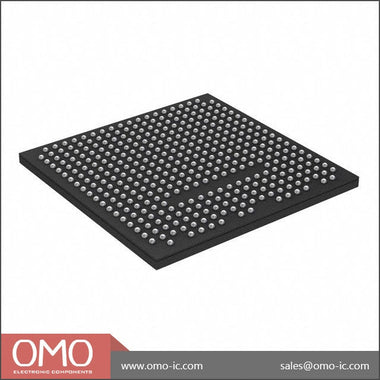
The XC7A200T-2FBG484I is offered in the FBG484 package, a 484-ball Fine-Pitch Ball Grid Array (FBGA) with a 1.0mm ball pitch. This package provides a high I/O-to-footprint ratio, essential for complex designs. The pinout is strategically organized into multiple I/O banks, including both High-Range (HR) and High-Performance (HP) banks, supporting various I/O standards up to 3.3V and 1.8V, respectively. A significant number of pins are dedicated to power (VCCINT, VCCAUX, etc.) and ground (GND) to ensure a stable Power Distribution Network (PDN) and maintain signal integrity for high-speed interfaces. Thermal management is a key consideration; the package is designed to be used with proper PCB thermal dissipation techniques, such as thermal vias and airflow, to manage the heat generated during high-utilization operation.
Core Architectural Features
- DSP Slices: The device contains a high quantity of DSP48E1 slices. Each slice includes a 25x18 multiplier, an accumulator, and a pre-adder, optimized for implementing high-performance digital filters, Fast Fourier Transforms (FFTs), and other computationally intensive signal processing algorithms directly in hardware.
- Clock Management: Features multiple Clock Management Tiles (CMTs), each containing a Mixed-Mode Clock Manager (MMCM) and a Phase-Locked Loop (PLL). These blocks provide advanced clocking capabilities, including clock synthesis, jitter filtering, frequency multiplication/division, and phase shifting, which are critical for managing complex timing domains within a system.
- High-Speed Transceivers: Integrated with up to sixteen 6.6 Gb/s GTP serial transceivers. These transceivers are highly configurable and support a wide range of protocols such as PCI Express (Gen1/Gen2), Serial RapidIO, and 10 Gigabit Ethernet (XAUI), enabling direct connection to high-speed data links without external PHY components.
- Block RAM (BRAM): Provides a substantial amount of on-chip, true dual-port static RAM organized in 36 Kb blocks. These blocks can be configured as two independent 18 Kb RAMs and are ideal for implementing data buffers, FIFOs, and processor memory, reducing the need for external memory components.
- Power Efficiency: Built on a 28nm HKMG process with a core voltage of 1.0V, the device offers low static and dynamic power consumption. It incorporates features like fine-grained clock gating and multiple power domains to allow designers to minimize power usage based on application requirements.
Specifications Parameter Table
| Specification | Technical Details |
|---|---|
| Logic Cells | 215,360 |
| LUTs (Look-Up Tables) | 134,600 |
| DSP Slices | 740 |
| Block RAM (BRAM) | 13,140 Kb |
| Maximum User I/O Pins | 285 (in FBG484 package) |
| Transceiver Speed | Up to 6.6 Gb/s (GTP) |
| Core Voltage (VCCINT) | 1.0V |
| Package | FBG484 (23x23 mm) |
| Speed Grade | -2 (Higher performance) |
| Temperature Grade | Industrial (-40°C to 100°C Junction) |
XC7A200T-2FBG484I Equivalents, Cross Reference, and Lifecycle
The XC7A200T-2FBG484I is part of the Artix-7 family, which is in the "Active" production phase and is recommended for new designs, with long-term availability projected by AMD/Xilinx. When considering alternatives for supply chain resilience, several options exist:
- Pin-to-Pin Compatible (Migration): Within the Artix-7 family, devices in the same package (FBG484) offer a migration path. For instance, the lower-density XC7A100T-FBG484I is pin-compatible for many I/O assignments, allowing a design to scale down if resource utilization permits. Moving from a XC7A100T to a XC7A200T is also a common upgrade path. However, designers must consult the Xilinx migration guidelines (UG475), as power pin and specific function pin differences may exist, requiring PCB verification. A change in speed grade (e.g., from -2 to -1) is a direct drop-in replacement, offering a cost reduction at the expense of maximum performance.
- Functional Competitor (Not Pin-Compatible): For new designs, a functional equivalent from a different manufacturer is the Intel (formerly Altera) Cyclone V GX family, such as the 5CGXFC7D6F27I7N. This device offers a comparable number of logic elements, DSP blocks, and 6.144 Gb/s transceivers. It is critical to note that this is not a drop-in replacement; it requires a complete redesign of the PCB and porting of the HDL code due to different architectures, pinouts, and development tools (Intel Quartus Prime vs. Xilinx Vivado).
For purchasing managers facing long lead times, exploring pin-compatible migration options within the Artix-7 FBG484 family is the most direct strategy to mitigate production delays.
Typical Application & Block Diagram Considerations
The XC7A200T-2FBG484I is frequently deployed in systems requiring high-bandwidth data processing and connectivity. Common applications include:
- Machine Vision: Interfacing with multiple high-resolution CMOS sensors via LVDS or MIPI CSI-2, and performing real-time image processing tasks like filtering, feature detection, and compression.
- Software-Defined Radio (SDR): Implementing digital up/down-conversion, modulation/demodulation, and channel filtering for wireless communication systems.
- Industrial Control & Networking: Driving multi-axis motor control systems with high-precision PWM, and serving as a bridge between industrial Ethernet protocols (e.g., EtherCAT, Profinet).
- Aerospace & Defense: Used in avionics, radar/sonar processing, and secure communications due to its processing density and industrial temperature range.

Alan Carter
Senior Hardware Engineer & Component Specialist
Alan has over 15 years of expertise in embedded systems design, FPGA architecture, and global semiconductor supply chains. He specializes in component cross-referencing, lifecycle management, and helping OEMs navigate supply shortages.
Frequently Asked Questions (FAQs)
What are the core technical specifications of the XC7A200T-2FBG484I?
The XC7A200T-2FBG484I is a Xilinx Artix-7 FPGA featuring 215,360 Logic Cells, 33,650 Logic Slices, 740 DSP Slices, 13,140 Kbits of total Block RAM, and 285 available I/O pins. It is built on a 28nm process technology, offering a balance of performance and low power consumption.
What does the "FBG484" package designator mean for this component?
The "FBG484" code specifies the physical package type. It stands for a Fine-Pitch Ball Grid Array (FBGA) with 484 solder balls arranged in a 23x23 grid. The ball pitch for this specific package is 1.00mm, a critical dimension for PCB layout and manufacturing.
How do the "-2" speed grade and "I" temperature grade affect performance?
The "-2" is a mid-range speed grade for the Artix-7 family, offering higher performance (e.g., faster clock speeds, lower propagation delays) than the base "-1" grade. The "I" suffix indicates it is an Industrial grade component, qualified to operate over a junction temperature range of -40°C to 100°C, making it suitable for non-climate-controlled and rugged environments.
What is the current production lifecycle status of the XC7A200T-2FBG484I?
The XC7A200T-2FBG484I is currently in "Active" production status by AMD/Xilinx and is recommended for new designs. However, given the long lifecycles of industrial products, it is always best practice to consult the latest manufacturer documentation or your supplier for long-term availability forecasts before committing to a new high-volume design.
Are there any direct, pin-compatible replacements or upgrades for the XC7A200T-2FBG484I?
Within the Artix-7 family and the FBG484 package, you can migrate to a higher speed grade like the XC7A200T-3FBG484I for increased performance, which is pin-compatible but requires timing re-verification. There are no direct drop-in replacements from other FPGA families or manufacturers due to architectural differences. Any such change would require a complete redesign of the PCB and logic.
What are typical factory lead times for the XC7A200T-2FBG484I?
Standard factory lead times for high-complexity FPGAs like the XC7A200T-2FBG484I can be volatile, often ranging from 20 to 52+ weeks, especially during periods of high demand or supply chain constraints. For urgent requirements, checking real-time stock with authorized and qualified independent distributors is the most effective strategy.
What development tools are required to program the XC7A200T-2FBG484I?
The XC7A200T-2FBG484I is supported by the AMD/Xilinx Vivado Design Suite. This includes the Vivado IDE for synthesis, implementation, and bitstream generation, as well as the Vitis Unified Software Platform for embedded software development if using a MicroBlaze soft processor. A compatible JTAG programmer, such as the Xilinx Platform Cable USB II, is needed for on-board programming and debugging.
What kind of traceability documentation is provided when purchasing this component?
When purchasing from an authorized distributor, you should receive full manufacturer traceability, including a Certificate of Conformance (CofC), date codes, lot codes, and country of origin. When sourcing from a reputable independent distributor, you should expect their company CofC, detailed photos, and potentially test reports to ensure authenticity and quality control.
Looking for XC7A200T-2FBG484I Inventory?
We offer competitive pricing, full traceability, and fast shipping for the XC7A200T-2FBG484I and related components.
Check Stock & Request Quote