XC7Z020-2CLG400I FPGA: Datasheet, Pinout, Equivalents, and Specs
The XC7Z020-2CLG400I is a System-on-Chip (SoC) from the Xilinx Zynq-7000 family, integrating a dual-core ARM Cortex-A9 processor system (PS) with 28nm programmable logic (PL). This device targets embedded systems requiring a combination of high-performance processing and hardware acceleration. Its market position is defined by its ability to consolidate processor-based software tasks and FPGA-based hardware offloading into a single, power-efficient component, suitable for industrial, automotive, and communications applications.
What is the XC7Z020-2CLG400I?
The XC7Z020-2CLG400I is an all-programmable SoC that features a tightly coupled processing system (PS) and programmable logic (PL) on a single die, manufactured using a 28nm High-K Metal Gate (HKMG) process. The PS includes a dual-core ARM Cortex-A9 MPCore processor, NEON media-processing engine, floating-point units, L1/L2 caches, and a wide range of standard peripherals (e.g., UART, SPI, I2C, CAN, GigE, USB 2.0). The PL is equivalent to an Artix-7 FPGA fabric, providing a flexible platform for implementing custom hardware accelerators, coprocessors, and high-bandwidth interfaces. This integrated architecture reduces BOM cost, power consumption, and board space by eliminating the need for a separate processor and FPGA.

Pinout Configuration and Packaging
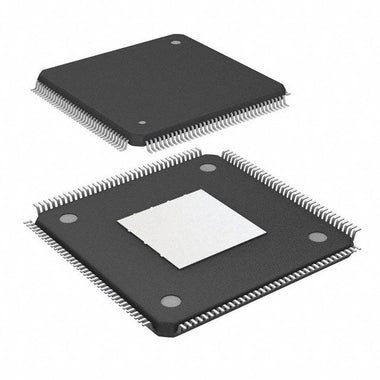
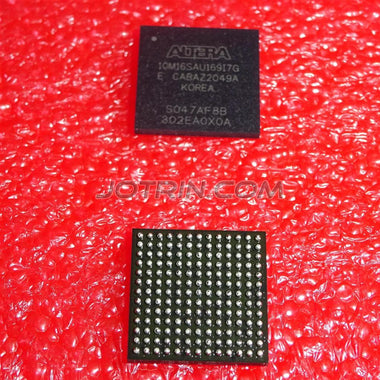
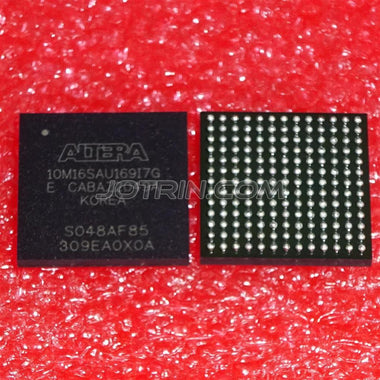
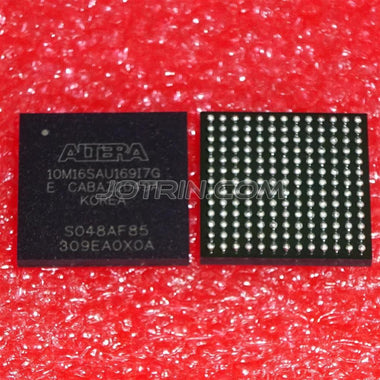
The XC7Z020-2CLG400I is offered in a 400-pin Chip-Scale BGA (CLG400) package with a 17x17mm footprint and a 0.8mm ball pitch. This package provides a balance of I/O density and PCB routing feasibility. Pins are segregated into dedicated Processor System (PS) I/O and Programmable Logic (PL) I/O banks. The PL I/O banks are further organized into High-Range (HR) and High-Performance (HP) banks, supporting various I/O standards up to 3.3V and 1.8V, respectively. Thermal management is critical; a proper thermal solution, often involving a heat sink and airflow, is necessary to maintain the junction temperature within the specified industrial range (-40°C to 100°C).
Core Architectural Features
- Processing System (PS): Features a dual-core ARM Cortex-A9 processor operating up to 866 MHz (for speed grade -2), supported by L1 and L2 caches, on-chip memory, and external memory controllers for DDR3/DDR3L/DDR2/LPDDR2.
- DSP Slices: The PL contains 220 dedicated DSP48E1 slices, each with a 25x18 multiplier, a 48-bit accumulator, and a pre-adder. These are optimized for implementing high-performance digital signal processing functions like FIR filters, FFTs, and correlators with high throughput and low logic resource utilization.
- Clock Management: Includes multiple Clock Management Tiles (CMTs), each containing a Mixed-Mode Clock Manager (MMCM) and a Phase-Locked Loop (PLL). These provide robust capabilities for clock synthesis, jitter filtering, and deskew for managing complex timing domains within a system.
- High-Speed Connectivity: While this device does not contain multi-gigabit serial transceivers (GTX/GTH), its PS integrates hardened controllers for Gigabit Ethernet, USB 2.0, and CAN 2.0B. The PL can be used to implement other serial protocols like Aurora or Serial RapidIO using general-purpose I/O.
- Block RAM (BRAM): Provides 4.9 Mb of configurable 36 Kb Block RAM blocks. Each block can be configured as two independent 18 Kb RAMs, enabling efficient implementation of true dual-port memory for data buffering, FIFOs, and lookup tables.
- Power Efficiency: The 28nm process technology and granular clock gating features allow for low static and dynamic power consumption. The device supports multiple power domains, enabling sections of the chip to be powered down independently to conserve energy.
Specifications Parameter Table
| Specification | Technical Details |
|---|---|
| Logic Cells | 85,000 |
| Look-Up Tables (LUTs) | 53,200 |
| DSP Slices | 220 |
| Block RAM (BRAM) | 4.9 Mb (140 x 36Kb blocks) |
| Maximum PL I/O Pins (CLG400) | 100 |
| Processor | Dual-Core ARM Cortex-A9 MPCore |
| Core Voltage (VCCINT) | 1.0V |
| Package | CLG400 (17x17mm, 0.8mm pitch) |
| Speed Grade | -2 (Medium Performance) |
| Temperature Grade | Industrial (-40°C to 100°C Junction) |
XC7Z020-2CLG400I Equivalents, Cross Reference, and Lifecycle
The XC7Z020-2CLG400I is currently in an "Active" production status and is recommended for new designs. For procurement managers facing allocation or long lead times, several options exist. Within the Zynq-7000 family, the XC7Z010-2CLG400I and XC7Z015-2CLG400I are pin-to-pin compatible in the same CLG400 package. The XC7Z010 offers fewer logic resources (28K logic cells, 80 DSP slices) and may serve as a drop-in replacement for less demanding applications if the original design has sufficient resource margin. The XC7Z015 offers an intermediate level of resources. A migration to the higher-density XC7Z030 is not pin-compatible in this package. A key competitor is the Intel (formerly Altera) Cyclone V SoC family, such as the 5CSEBA5U19I7N. However, the Cyclone V SoC is not pin-compatible and would require a complete hardware redesign, including changes to the PCB layout, power delivery network, and software ecosystem.
Typical Application & Block Diagram Considerations
The XC7Z020-2CLG400I is frequently used in applications such as industrial motor control, machine vision, software-defined radio (SDR), medical imaging, and advanced driver-assistance systems (ADAS). In a system block diagram, the ARM PS typically runs a high-level operating system like Linux or an RTOS to manage control flow, networking, and user interfaces. The PL is used to accelerate data-intensive tasks, such as real-time image filtering, protocol handling, or high-frequency control loops. From a PCB design perspective, careful power supply design with adequate decoupling capacitors on all power rails (VCCINT, VCCAUX, VCCO, etc.) is critical for signal integrity. High-speed differential pairs for interfaces like DDR3 memory require impedance-controlled routing with precise length matching to meet timing specifications.
FAQs
What is the difference between commercial and industrial grade for the XC7Z020-2CLG400I?
The grade is indicated by the last letter in the part number. 'I' in XC7Z020-2CLG400I denotes Industrial grade, which guarantees operation over a junction temperature range of -40°C to 100°C. The commercial grade equivalent, ending in 'C', is specified for a narrower range of 0°C to 85°C.
What programming IDE is used for the XC7Z020-2CLG400I?
Development for the Zynq-7000 family is performed using the AMD-Xilinx Vivado Design Suite. This unified environment is used for synthesizing and implementing the programmable logic (PL) design (using HDL like Verilog or VHDL) and for developing the software for the ARM processing system (PS) via the integrated Vitis software platform.
Is the XC7Z020-2CLG400I recommended for new designs (NRND)?
Yes, the XC7Z020-2CLG400I is an active production part and is suitable for new designs. The Zynq-7000 family has a long product lifecycle and continues to be widely adopted in the industry, ensuring long-term availability and support from AMD-Xilinx.
Video Demonstration

Alan Carter
Senior Hardware Engineer & Component Specialist
Alan has over 15 years of expertise in embedded systems design, FPGA architecture, and global semiconductor supply chains. He specializes in component cross-referencing, lifecycle management, and helping OEMs navigate supply shortages.
Frequently Asked Questions (FAQs)
What are the key processing system (PS) and programmable logic (PL) resources in the XC7Z020-2CLG400I?
The XC7Z020-2CLG400I features a dual-core ARM Cortex-A9 MPCore™ processor (PS) running up to 866 MHz. The programmable logic (PL) section includes 85K logic cells, 53,200 Look-Up Tables (LUTs), 106,400 flip-flops, 560 KB of Block RAM, and 220 DSP slices.
What is the typical lead time for the XC7Z020-2CLG400I, and how has it been affected by recent market conditions?
Standard factory lead times for the Zynq-7000 series, including the XC7Z020-2CLG400I, have historically ranged from 16 to 24 weeks. However, due to global semiconductor shortages, lead times can extend to 52 weeks or more. It is crucial to check real-time inventory with authorized distributors or trusted independent suppliers for current availability.
Are there any drop-in replacements or pin-compatible alternatives for the XC7Z020-2CLG400I?
Within the Zynq-7000 family, the XC7Z010-2CLG400I is a lower-density, pin-compatible option, but it has fewer logic resources. The XC7Z020-1CLG400I is a pin-compatible part with a lower speed grade (-1 vs. -2). For a direct replacement, the same part number is required. Upgrading to a Zynq UltraScale+ MPSoC would require a complete board redesign.
What do the suffixes "-2", "CLG400", and "I" signify in the part number XC7Z020-2CLG400I?
The "-2" indicates a medium performance speed grade. "CLG400" specifies the package type: a 400-pin Chip Scale BGA (CSBGA) with a 17x17mm footprint and a 0.8mm pitch. The "I" suffix denotes the industrial temperature range, meaning the device is rated for operation between -40°C and 100°C junction temperature.
What is the current lifecycle status of the XC7Z020-2CLG400I? Is it recommended for new designs?
The XC7Z020-2CLG400I is currently in "Active" production status by AMD/Xilinx and remains a popular choice for many applications. While it is still suitable for new designs, especially those leveraging existing Zynq-7000 ecosystems, designers starting brand-new, high-performance projects might also consider the newer Zynq UltraScale+ MPSoC family for longer-term availability and enhanced features.
What are the typical power consumption and core voltage requirements for the XC7Z020-2CLG400I?
Power consumption is highly application-dependent. The core voltage (VCCINT) is nominally 1.0V. Auxiliary (VCCAUX) and I/O voltages (VCCO) can vary (e.g., 1.8V, 2.5V, 3.3V) depending on the I/O standards used. A typical embedded system might consume between 2 to 5 watts, but this can increase significantly with heavy PL utilization. Always use the Xilinx Power Estimator (XPE) tool for accurate projections.
Is the XC7Z020-2CLG400I RoHS compliant and what is its Moisture Sensitivity Level (MSL)?
Yes, the XC7Z020-2CLG400I is a lead-free component and is compliant with the RoHS (Restriction of Hazardous Substances) directive. Its Moisture Sensitivity Level (MSL) is typically rated at MSL 3, which means it has a floor life of 168 hours after being removed from its moisture-barrier bag before it must be baked prior to reflow soldering.
What type of external memory interfaces does the XC7Z020-2CLG400I support?
The Processing System (PS) features a hardened DDR memory controller supporting DDR3, DDR3L, DDR2, and LPDDR2 memory interfaces with data rates up to 1066 Mb/s. The Programmable Logic (PL) can also be used to implement additional memory controllers for various standards, providing design flexibility.
Looking for XC7Z020-2CLG400I Inventory?
We offer competitive pricing, full traceability, and fast shipping for the XC7Z020-2CLG400I and related components.
Check Stock & Request Quote