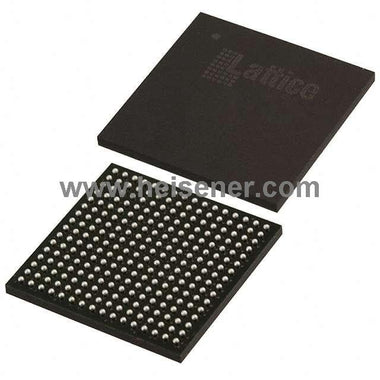
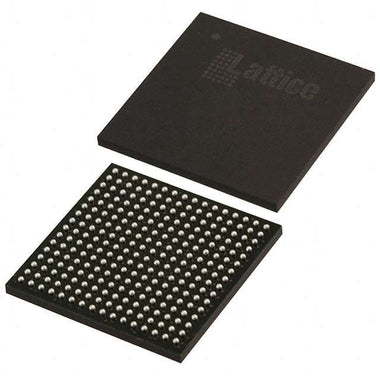
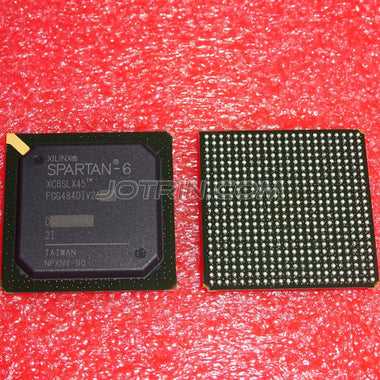
Hardware engineers frequently face the challenge of designing systems that require high-throughput data processing but are constrained by cost, power, and board space. Standard microcontrollers often lack the parallel processing capability for tasks like real-time video manipulation or multi-channel data acquisition. Conversely, high-end FPGAs can introduce prohibitive costs and power requirements. The Xilinx XC7A100T-1CSG324C from the Artix-7 family is engineered to address this specific gap, offering a substantial amount of logic and DSP resources in a cost-effective and power-efficient package.

Table of Contents
The Design Challenge XC7A100T-1CSG324C Solves
In modern embedded systems, the demand for processing power at the edge is escalating. Applications in industrial automation, portable medical devices, machine vision, and software-defined radio all require the ability to process large streams of data with low latency. A sequential processor, such as a CPU or microcontroller, often becomes a bottleneck. It can only execute one instruction at a time, making it ill-suited for tasks that are inherently parallel, like applying a filter to every pixel in a video frame simultaneously.
This is where Field-Programmable Gate Arrays (FPGAs) provide a solution. By configuring a sea of logic gates, an engineer can create a custom hardware circuit perfectly tailored to the application. This allows for massive parallelism, where thousands of operations can occur in a single clock cycle. However, the FPGA market is broad, with devices ranging from a few thousand logic cells to many millions, with a corresponding range in cost and power consumption.
The XC7A100T-1CSG324C specifically targets the "performance-per-watt" sweet spot. It belongs to the Xilinx Artix-7 family, which was designed using a 28nm process technology focused on delivering high performance with lower power consumption compared to previous generations. The '100T' designation indicates a device with approximately 100K logic cells, a significant resource pool for implementing complex digital logic, state machines, and soft-core processors. This is complemented by a generous allocation of Block RAM for on-chip data buffering and a substantial number of DSP slices for accelerating mathematical functions. For many projects, this is the "Goldilocks" size—large enough for demanding algorithms without the overhead of larger, more power-hungry Kintex or Virtex-class devices. The CSG324 package provides a compact 15x15mm footprint, making it viable for space-constrained applications, while the '-1' speed grade offers a solid performance baseline for commercial temperature range products.
Key Specifications at a Glance
When evaluating an FPGA, the headline numbers for key internal resources are the primary drivers for device selection. The XC7A100T-1CSG324C offers a balanced profile suitable for a wide array of applications. All specifications are sourced from the official Xilinx Artix-7 FPGAs Data Sheet (DS181).
| Parameter | Value | Why It Matters |
|---|---|---|
| Logic Resources (LUTs) | 63,400 | Look-Up Tables are the fundamental building blocks for implementing combinatorial and sequential logic. This quantity supports complex algorithms and multiple independent functional blocks. |
| CLB Flip-Flops | 126,800 | Flip-flops are used for storing state (memory) within the FPGA fabric. A high count allows for deep pipelines and complex state machines, improving timing performance. |
| Block RAM | 4,860 Kb | On-chip memory is critical for buffering data between processing stages, implementing FIFOs, or storing coefficients. This amount of BRAM reduces the need for slower external memory access. |
| DSP Slices | 240 | These are hardened multiply-accumulate blocks that accelerate signal processing tasks like FIR filters, FFTs, and correlators. A high DSP count is essential for communications and imaging applications. |
| GTP Transceivers | 8 | These are high-speed serial transceivers capable of running up to 6.6 Gb/s. They are used to implement standard protocols like PCIe, Serial ATA, DisplayPort, and 1G/10G Ethernet (XAUI). |
| Maximum User I/O | 210 | The number of pins available for general-purpose input/output in the CSG324 package. This determines how many external devices (sensors, ADCs, memory, etc.) can be interfaced directly. |
| Package | CSG324 (15x15 mm) | A chip-scale BGA package that offers a high I/O count in a small physical footprint, suitable for dense PCB designs. Requires careful layout and assembly. |
XC7A100T-1CSG324C vs Alternatives: Head-to-Head
Selecting the right FPGA involves comparing not just datasheets, but also considering the ecosystem, toolchains, and specific application needs. Here's how the XC7A100T stacks up against comparable devices from Intel (formerly Altera) and Lattice.
| Feature | Xilinx XC7A100T | Intel Cyclone 10 GX (10CX105Y) | Lattice ECP5 (LFE5UM-85F) |
|---|---|---|---|
| Logic Elements | 63,400 LUTs | 105K LEs | 84K LUTs |
| Block RAM | 4,860 Kb | ~5,928 Kb | ~3,750 Kb |
| DSP Blocks | 240 | 360 | 372 |
| Transceivers (Max Rate) | 8 @ 6.6 Gb/s | 12 @ 12.5 Gb/s | 4 @ 5 Gb/s |
| Static Power | Low (28nm HPL process) | Low (20nm process) | Very Low (40nm process optimized for power) |
| Design Software | Vivado Design Suite | Quartus Prime | Diamond Software |
When to choose the XC7A100T-1CSG324C: The XC7A100T is a compelling choice when your design requires a balanced mix of substantial logic, on-chip memory, and a moderate number of high-speed serial transceivers. Its 240 DSP slices provide significant signal processing horsepower. The Xilinx Vivado toolchain is a mature and feature-rich environment, well-regarded for its synthesis and timing analysis capabilities. While the Cyclone 10 GX offers more transceivers at a higher data rate, the XC7A100T may present a more cost-effective solution if those extra SERDES channels are not needed. Compared to the Lattice ECP5, the Artix-7 part offers more BRAM and faster transceivers, making it better suited for data-intensive applications. The ECP5, however, might be preferred in scenarios where minimizing static power is the absolute top priority and SERDES requirements are more modest. The XC7A100T hits a versatile midpoint, making it a workhorse for a broad range of mid-complexity designs.
Recommended Application Circuit
A successful FPGA design is heavily dependent on the surrounding support circuitry. While the internal logic is flexible, the external connections for power, configuration, and clocking must be robust. A typical application circuit for the XC7A100T involves several key areas.
Power Delivery Network (PDN): FPGAs are power-sensitive devices requiring multiple, clean voltage rails. The XC7A100T requires at a minimum:
- VCCINT (1.0V): The core voltage for the internal logic. This is the highest current rail and requires a high-efficiency switching regulator capable of responding to rapid load changes.
- VCCAUX (1.8V): Powers auxiliary internal logic, including the JTAG and clock management blocks.
- VCCO (1.2V to 3.3V): Powers the I/O banks. Each bank can have a different VCCO to interface with different logic levels. Each VCCO rail must be heavily decoupled.
- MGT Rails (VCCAUX_MGT, VTT_MGT): Specific rails for the GTP transceivers, typically 1.0V and 1.2V, which require extremely low-noise supplies.
Power supply sequencing is critical; consult the datasheet for the recommended power-on/power-off sequence to prevent damage. Using integrated PMIC solutions designed for FPGAs can simplify this task.
Configuration and Booting: The FPGA's configuration (the bitstream) is volatile and must be loaded at power-up. This is typically done from an external non-volatile memory, such as a QSPI NOR Flash. The XC7A100T's MODE pins (M[2:0]) are set to select the configuration mode (e.g., Master SPI). A JTAG header must also be included on the board for programming the flash and for debugging the FPGA logic using a Xilinx Platform Cable USB or similar tool.
Clocking: A stable, low-jitter clock source is fundamental. A typical design will use one or more external crystal oscillators to provide reference clocks. These clocks are fed into the FPGA and routed to the internal Mixed-Mode Clock Managers (MMCMs) or Phase-Locked Loops (PLLs). These blocks can then synthesize the various clock frequencies and phases required by different parts of the design. For designs using GTP transceivers, a dedicated low-jitter reference clock is mandatory for each quad.
For engineers new to the platform or looking for reference designs, it's valuable to Browse Artix-7 Series development boards and their schematics to see proven implementations of these support circuits.
PCB Layout and Thermal Design Tips
The performance of the XC7A100T-1CSG324C is directly tied to the quality of the PCB design. The 324-pin, 0.8mm pitch BGA package requires careful planning and execution.
Layout Strategy:
- Decoupling Capacitors: Place decoupling capacitors as close as physically possible to the BGA's power and ground pins. Use a mix of capacitor values (e.g., 10μF, 1μF, 0.1μF, 0.01μF) to provide low impedance across a wide frequency range. Place smaller value capacitors on the top side, directly adjacent to the BGA, and larger bulk capacitors nearby.
- BGA Fanout: Breaking out the signals from the BGA is a primary challenge. For the CSG324 package, a "dog-bone" fanout (where a via is placed next to the BGA pad) is often feasible for outer rows. Inner rows may require via-in-pad technology, which increases PCB cost but allows for denser routing. A minimum of a 6-layer PCB is recommended, with 8 or 10 layers being common for complex routing.
- High-Speed Traces: The GTP transceiver differential pairs must be routed with controlled impedance (typically 100Ω differential). Maintain symmetry between the P and N traces, keep them tightly coupled, and avoid sharp bends. Ensure they are routed over a solid reference ground plane.
- Power & Ground Planes: Use solid ground planes to provide a low-impedance return path for all signals. Dedicate entire layers to ground and power. Split power planes can be used to distribute the various voltage rails, but be mindful of signal return paths crossing splits.
Thermal Management: The XC7A100T can dissipate significant power depending on the design's resource utilization and clock frequency. Use the Xilinx Power Estimator (XPE) spreadsheet early in the design cycle to get a realistic power budget. The CSG324 package includes a central ground pad that also functions as a thermal pad. This pad must be soldered to a corresponding pad on the PCB, which should be connected with an array of thermal vias to the ground planes. These planes act as a heat spreader. For high-performance designs, a heatsink attached to the top of the FPGA package may be necessary. The decision to use a heatsink depends on the calculated power dissipation, ambient operating temperature, and available airflow.
Where to Buy XC7A100T-1CSG324C
The XC7A100T-1CSG324C is a widely used component in the electronics industry, available through authorized distributors and global component suppliers. The 'C' in the part number denotes a commercial temperature grade (0°C to 85°C junction temperature). An industrial grade ('I') version is also available for more demanding environments. The part is typically supplied in trays for manual or low-volume assembly, or on Tape & Reel for high-volume automated production lines.
Due to the complexity and value of FPGAs, it is critical to source them from reputable suppliers to avoid counterfeit or improperly handled components. Lead times and availability can fluctuate based on global supply chain dynamics. For procurement professionals and engineers planning a build, it is essential to verify stock and pricing from a trusted source. You can Check XC7A100T-1CSG324C Inventory & Pricing to get up-to-date information for your project planning and procurement cycle.
Video Demonstration
Frequently Asked Questions (XC7A100T-1CSG324C FAQ)
What is the main difference between the XC7A100T and the smaller XC7A35T?
The primary difference lies in the available resources. The XC7A100T offers significantly more logic cells (101K vs 33K), Block RAM (4,860 Kb vs 1,800 Kb), and DSP slices (240 vs 90) compared to the XC7A35T. While both are in the Artix-7 family, you would choose the XC7A100T for more complex applications involving larger algorithms, multiple soft-core processors, or extensive signal processing. The XC7A35T is better suited for less complex, cost-sensitive applications that still require FPGA capabilities beyond what a microcontroller can offer.
Is the XC7A100T-1CSG324C suitable for PCIe applications?
Yes, it is. The XC7A100T contains an integrated block for PCI Express, and its GTP transceivers support the line rates required for PCIe Gen1 and Gen2. The Vivado design tools include IP cores that greatly simplify the implementation of a PCIe endpoint. The XC7A100T can be configured, for example, as a x4 Gen2 endpoint, making it a solid choice for custom accelerator cards or high-speed data acquisition boards that interface with a host PC.
What software do I use to program the XC7A100T?
The XC7A100T is programmed using the AMD-Xilinx Vivado Design Suite. This is a comprehensive software package that includes everything needed for the design flow: HDL synthesis, implementation (place and route), static timing analysis, simulation, and bitstream generation. The free Vivado ML Standard Edition supports the Artix-7 family, including the XC7A100T, making the platform accessible without a large initial software investment. For advanced analysis and debugging, the Vivado ML Enterprise Edition is available.
How does the Artix-7 XC7A100T compare to an Intel Cyclone V or 10 series equivalent?
The XC7A100T competes directly with parts like the Intel Cyclone 10 GX. While both offer a similar number of logic elements, there are key differences in their resource mix. The Cyclone 10 GX may offer more or faster transceivers, while the Artix-7 might have a different balance of DSP to logic resources. The choice often comes down to specific design needs, prior experience with a vendor's toolchain (Vivado vs. Quartus), and commercial factors like price and availability for a given project volume.
What are the primary power supply rails I need to provide for the XC7A100T?
At a minimum, you must provide three main power rails: VCCINT (1.0V) for the core logic, VCCAUX (1.8V) for auxiliary logic, and VCCO for the I/O banks (voltage depends on the I/O standard, e.g., 3.3V for LVCMOS33). If you are using the high-speed GTP transceivers, they require their own dedicated low-noise power rails as well. A well-designed Power Delivery Network (PDN) with proper sequencing and decoupling is absolutely critical for stable operation.