ICE40HX8K-CB132 Design-In Guide: Why Choose It and How to Use It
Hardware engineers often face the challenge of integrating multiple functions into a space- and power-constrained design. You might need to bridge a MIPI display to a legacy processor, aggregate data from multiple sensors, or implement custom real-time logic that a standard microcontroller can't handle. This typically leads to a complex board with numerous "glue logic" ICs, increasing cost, board size, and power consumption. The Lattice ICE40HX8K-CB132 FPGA directly addresses this by providing a significant amount of programmable logic in a tiny, low-power package, backed by a uniquely accessible open-source toolchain.

Table of Contents
The Design Challenge ICE40HX8K-CB132 Solves
In modern embedded systems, the central processor (MCU or MPU) is often selected for its software ecosystem and primary processing power, not its peripheral flexibility. This creates a gap: how do you connect a new, high-speed sensor to an older processor? How do you drive a specific display interface not native to your MCU? Or how do you offload a repetitive, timing-critical task like multi-channel PWM generation or quadrature decoding to free up CPU cycles? The traditional answer involved a collection of discrete logic chips, level shifters, and specialized interface ICs—a solution that inflates the bill of materials (BOM), consumes precious PCB area, and complicates inventory management.
The ICE40HX8K-CB132, part of Lattice's iCE40 family, is engineered to be the definitive solution to this "logic gap." It's not designed to compete with large, high-performance FPGAs used in data centers. Instead, it excels as a co-processor or a highly flexible interface bridge in power-sensitive applications. With 7680 Logic Cells (LCs), it has enough capacity to implement complex state machines, custom communication protocols (like DMX512 or CAN controllers), and significant signal processing chains. For example, you can implement a complete multi-input audio mixer or a video scaler for a small display within this single chip.
Perhaps its most compelling feature, especially for startups, researchers, and engineers who value toolchain freedom, is its compatibility with a fully open-source synthesis and place-and-route flow (Project IceStorm). This eliminates the need for expensive, proprietary software licenses and avoids vendor lock-in. You can develop, simulate, and synthesize your HDL code using free tools like Yosys and nextpnr, which is a paradigm shift in the FPGA world. This accessibility lowers the barrier to entry for custom logic design and enables a more transparent and auditable development process. The combination of sufficient logic density, low static power consumption, small footprint, and an open-source toolchain makes the ICE40HX8K-CB132 a powerful tool for consolidating logic, accelerating tasks, and enabling innovative interfaces in next-generation products.
Key Specifications at a Glance
The following specifications are derived from the official Lattice iCE40 LP/HX Family Datasheet. They are critical for making an informed design-in decision.
| Parameter | Value | Why It Matters |
|---|---|---|
| Logic Cells (LCs) | 7680 | Defines the overall logic capacity. This is sufficient for complex glue logic, custom bus interfaces, and moderate DSP tasks. |
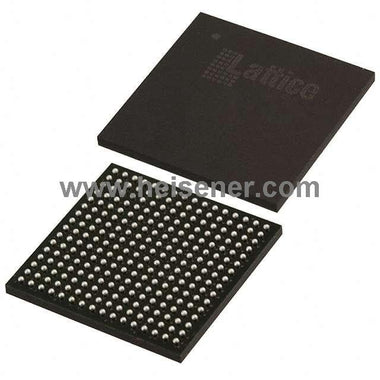
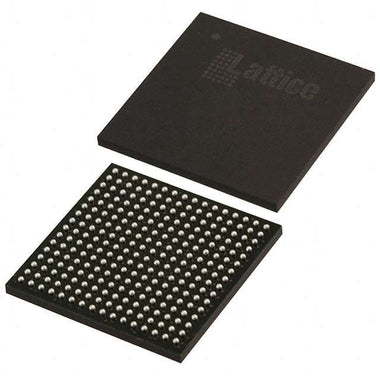
| Package | CB132 (8x8 mm, 0.8mm pitch) | A compact caBGA package that enables use in space-constrained designs like wearables and portables. Requires a capable PCB fabrication process. |
| Embedded Block RAM (EBR) | 128 kbits | Provides on-chip memory for data buffering, implementing FIFOs, or creating processor scratchpads. Crucial for bridging interfaces with different data rates. |
| DSP Blocks (MACs) | 16 (16x16 Multiplier-Accumulators) | Hardware blocks that dramatically accelerate digital signal processing tasks like FIR filters, FFTs, and correlations, offloading the main CPU. |
| Phase Locked Loops (PLLs) | 2 | High-performance PLLs for clock synthesis, multiplication, division, and phase shifting. Essential for managing multiple clock domains within a design. |
| Maximum User I/O | 95 | A high I/O count for its package size, allowing it to interface with numerous components simultaneously (e.g., sensor arrays, memory, processor bus). |
| Core Voltage (VCC) | 1.2V (Nominal) | The low core voltage contributes to its low overall power consumption, a key feature of the iCE40 family. |
| I/O Bank Voltage (VCCIO) | 1.8V, 2.5V, 3.3V | Programmable I/O banks allow the FPGA to directly interface with components at different logic levels without external level shifters, simplifying board design. |
ICE40HX8K-CB132 vs Alternatives: Head-to-Head
Choosing the right logic device involves comparing not just specs, but the entire ecosystem. Here's how the ICE40HX8K-CB132 stacks up against a comparable low-end FPGA and a high-end microcontroller.
| Feature | ICE40HX8K-CB132 | Xilinx Spartan-7 (e.g., XC7S15) | High-End MCU (e.g., STM32H7) |
|---|---|---|---|
| Logic Flexibility | Very High (7680 LCs) | Very High (~12.8k LCs) | Low (Fixed peripherals) |
| Real-Time Parallelism | Excellent. Every logic block runs in parallel. | Excellent. Massively parallel architecture. | Limited. Relies on interrupts and DMA, fundamentally serial processing. |
| Toolchain | Proprietary (Lattice Radiant/iCEcube2) AND fully supported Open Source (Project IceStorm) | Proprietary only (Vivado). No viable open-source alternative for this family. | Excellent open and closed-source C/C++ toolchains (GCC, Keil, IAR). |
| Static Power | Very Low. Designed for low-power standby. | Low, but generally higher than iCE40. | Very Low, with multiple deep sleep modes. |
| DSP Capability | Good (16 MAC blocks) | Good (20 DSP slices) | Good (Hardware FPU, DSP instructions) but not as parallel as an FPGA. |
| Ease of Use | Steeper learning curve (HDL) but open tools help. | Steep learning curve (HDL) with complex proprietary tools. | Shallow learning curve (C/C++), extensive libraries and examples. |
When to choose the ICE40HX8K-CB132: The decision hinges on your primary design constraints. Select the ICE40HX8K-CB132 when your project demands a combination of low static power, a moderate amount of custom parallel logic, and, crucially, when you want the freedom and transparency of an open-source toolchain. While a Spartan-7 might offer slightly more logic for a similar price point, it locks you into the Vivado ecosystem. A high-end MCU is easier to program for sequential tasks, but it fundamentally cannot compete with the FPGA's ability to perform dozens of operations in the exact same clock cycle. The ICE40HX8K is the ideal choice for bridging high-speed interfaces like MIPI, performing real-time sensor fusion, or offloading complex signal processing from a power-constrained host processor, especially in projects where toolchain cost and freedom are significant factors.
Recommended Application Circuit
Integrating the ICE40HX8K-CB132 is straightforward, but requires attention to power and configuration. A typical application circuit consists of three main parts: power supply, configuration, and clocking.
Power Supply: The FPGA requires several voltage rails.
- VCC (1.2V): This is the core logic voltage. It draws the most dynamic current. A 1A-capable switching regulator or LDO is recommended, with robust decoupling. Place a 10µF bulk capacitor and several 0.1µF ceramic capacitors as close as possible to the BGA's VCC pins.
- VCCIO (Banks 0, 1, 2): Each of the three I/O banks can be powered independently from 1.8V, 2.5V, or 3.3V. This is a powerful feature for interfacing with different logic levels. For example, Bank 0 could run at 3.3V to interface with an SPI flash, while Bank 1 runs at 1.8V to connect to a modern sensor. Each VCCIO pin group needs its own decoupling.
- VPP_2V5: This is the power for the non-volatile configuration memory (NVCM) programming. It requires a 2.5V supply.
- VCC_PLL: This 1.2V rail powers the PLLs. It's critical to provide a clean supply, often using a ferrite bead and dedicated decoupling to isolate it from the noisy core VCC rail.
Configuration: The most common method is Master SPI mode, where the FPGA boots from an external SPI NOR flash chip.
- Connect the FPGA's dedicated SPI pins (`SPI_SCK`, `SPI_SI`, `SPI_SO`, `SPI_SS_B`) to a standard SPI flash (e.g., Winbond W25Q series, Macronix MX25L series).
- The `CRESET_B` (active low reset) pin should be pulled high with a resistor and have a capacitor to ground for power-on reset. It can also be driven by a supervisor IC or host processor.
- The `CDONE` pin indicates when configuration is complete. It's an open-drain output and should be pulled high with a resistor. Monitoring this pin is essential to know when the FPGA is operational.
Clocking: A stable clock source (typically 12-50 MHz) must be provided to one of the global buffer input pins (`GB_IN`). This external clock can then be fed into the internal PLLs to generate the various high-speed and phase-aligned clocks required by your design.
PCB Layout and Thermal Design Tips
The 0.8mm pitch CB132 BGA package requires careful PCB layout. This is not a package for a simple 2-layer board; a 4-layer or 6-layer stack-up is standard practice.
BGA Fanout: The primary challenge is routing signals out from under the BGA. "Dog-bone" fanout, where a via is placed next to the BGA pad and connected with a short trace, is the most common and cost-effective method. For a 0.8mm pitch, this typically requires a via with a 0.45mm pad and a 0.2mm drill, and trace/space rules of 0.1mm (4 mils) or better. Check with your PCB fabricator about their capabilities early in the design process. Using microvias or via-in-pad is also an option but significantly increases fabrication cost.
Power and Ground Planes: Use solid ground and power planes in your layer stack-up. A typical 4-layer stack would be: Signal - Ground - Power - Signal. Place decoupling capacitors directly under the BGA on the opposite side of the board if possible, or as close as physically achievable on the top side. Use multiple vias for each capacitor to minimize inductance.
Thermal Management: The ICE40HX8K is low power, but can still dissipate a few hundred milliwatts under heavy load. The CB132 package often has a central grid of ground balls that also function as a thermal path. It is critical to connect all these ground balls to the main ground plane using an array of vias. This allows the PCB's ground plane to act as a heatsink, effectively wicking heat away from the die. Without proper thermal via stitching, the chip can overheat, leading to performance degradation or failure.
Signal Integrity: Route clock signals with care. Keep them short and avoid routing them near noisy signals. If your design uses high-speed differential pairs (the iCE40 supports LVDS), ensure they are routed with controlled impedance and matched lengths according to the interface specification.
Where to Buy ICE40HX8K-CB132
The ICE40HX8K-CB132 is a popular and generally well-stocked component, valued for its unique position in the market. It is primarily available in the 132-ball caBGA package, specified by the "CB132" suffix. For production, these components are supplied in Tape & Reel (T&R) format, suitable for automated pick-and-place assembly machines. The minimum order quantity (MOQ) and reel size can vary by distributor, so it's important for procurement professionals to verify this information.
While the part is popular, global supply chain fluctuations can affect availability and lead times. It is always prudent to plan procurement well in advance of your production schedule. For prototyping or small runs, some distributors may offer cut tape or individual units. Due to its popularity in the open-source and maker communities, it's also found on many development boards which can be useful for initial evaluation before committing to a custom PCB design. For up-to-date stock levels, pricing, and packaging options from a trusted global distributor, you can Check ICE40HX8K-CB132 Inventory & Pricing on our platform.
Video Demonstration
Frequently Asked Questions (ICE40HX8K-CB132 FAQ)
What is the main advantage of the ICE40HX8K over a similar-sized Xilinx or Intel FPGA?
The single biggest advantage is the fully supported open-source toolchain (Project IceStorm, Yosys, nextpnr). This allows for a completely free, transparent, and scriptable development flow without proprietary licenses or vendor lock-in. Additionally, the iCE40 family is renowned for its extremely low static power consumption, making it a superior choice for battery-powered or other power-sensitive applications where the FPGA may be idle for long periods.
Can I configure the ICE40HX8K-CB132 without an external SPI flash?
Yes. Besides the standard Master SPI mode where it boots from an external flash, the ICE40HX8K supports Slave SPI mode. In this configuration, a host microcontroller or processor acts as the SPI master and directly loads the configuration bitstream into the FPGA after power-up. This is a great option for reducing BOM cost and board space if a host MCU is already present in the system.
What is the difference between the HX and LP series in the iCE40 family?
The primary difference is performance and resources. The HX (High-Performance) series, including the ICE40HX8K, is optimized for higher logic capacity and contains dedicated DSP blocks (multiplier-accumulator units) for signal processing tasks. The LP (Low-Power) series prioritizes minimizing static and dynamic power above all else and typically has fewer logic cells and no DSP blocks. Choose HX for tasks requiring more logic or math acceleration, and LP for simpler logic in ultra-low-power scenarios.
What PCB technology is required for the CB132 package?
The CB132 is an 8x8mm, 0.8mm pitch caBGA package that demands a capable PCB manufacturing process. A standard 2-layer board is not sufficient. You will need a multi-layer PCB, typically 4 or 6 layers, to properly fanout the signals and provide adequate power and ground planes. The design rules will likely require 4 mil (0.1mm) trace/space and vias with around a 0.2mm drill and 0.45mm pad.
What are the typical applications for an FPGA with ~8k logic cells like the ICE40HX8K?
An FPGA of this size is incredibly versatile. Common applications include: bridging a MIPI DSI display or CSI camera to a parallel interface on an MCU, real-time sensor fusion from multiple I2C/SPI sensors, custom motor control with multi-channel PWM generation and quadrature encoder feedback, video and image processing like scaling or color space conversion for small displays, and offloading a host processor by implementing custom communication protocols or accelerating algorithms with its parallel DSP blocks.