Looking for a XC7A35T-1CPG236C equivalent or replacement? This guide covers pin-compatible drop-ins, functional alternatives, and migration considerations to help you find the right substitute. In today's volatile supply chain environment, identifying viable alternatives is a critical skill for hardware engineers and procurement specialists to prevent line-down situations and maintain project timelines. This guide provides a technical, engineering-focused analysis of the options available when the primary part, the XC7A35T-1CPG236C, is unavailable or has an extended lead time.

Table of Contents
XC7A35T-1CPG236C Overview and Current Availability
The XC7A35T-1CPG236C is a Field-Programmable Gate Array (FPGA) from the Xilinx (now AMD) Artix-7 family. It is engineered to provide a balance of performance, power efficiency, and cost, making it a popular choice for a wide range of applications including industrial control, machine vision, medical devices, and software-defined radio. Based on the 28nm process technology, it offers significant performance-per-watt advantages over previous generations.
Key specifications from the official datasheet (DS181) include:
- Logic Cells: 33,280
- CLB Slices: 5,200
- Block RAM: 1,800 Kb
- DSP Slices: 90
- Maximum User I/O: 106
- Package: 236-pin Chip Scale BGA (CPG236), 12x12mm, 0.5mm pitch
- Speed Grade: -1 (slowest commercial grade)
- Temperature Grade: C (Commercial, 0°C to 85°C junction temperature)
The part's current market position is mature but active. The Artix-7 family is widely adopted and well-supported by the AMD-Xilinx Vivado Design Suite. However, due to its popularity and the broader semiconductor industry's supply chain constraints, the XC7A35T-1CPG236C can experience periods of allocation, long lead times, and price volatility. These challenges often compel design and procurement teams to seek out alternatives to avoid production delays. Understanding the nuances of these alternatives is critical, as even a seemingly simple substitution can have significant design implications.
Pin-Compatible Equivalents
When searching for a replacement, the ideal scenario is a "drop-in" or pin-compatible part. For the XC7A35T-1CPG236C, true 1-for-1 drop-in replacements without any design changes are non-existent. However, several parts within the Artix-7 family share the same CPG236 package and are pin-compatible, meaning they can be physically soldered onto the same PCB footprint. These are the most viable near-term substitutes, but they all require some level of engineering verification.
The most common pin-compatible options include:
- Different Speed Grades: The XC7A35T is also available in faster speed grades, such as the XC7A35T-2CPG236C (-2 speed grade) and XC7A35T-3CPG236C (-3 speed grade). A faster speed grade part can almost always replace a slower one. The internal logic paths are faster, providing more timing margin. However, this is not a "slap it in and ship it" solution. The design must be recompiled in Vivado targeting the new speed grade, and a new bitstream must be generated. Static Timing Analysis (STA) must be re-run to confirm timing closure. While the design will likely pass timing with more slack, this verification step is non-negotiable. Additionally, faster speed grades may have slightly different power characteristics and typically come at a higher cost.
- Different Temperature Grades: The part is also available in an Industrial grade, XC7A35T-1CPG236I. The 'I' grade is rated for a wider junction temperature range (-40°C to 100°C) compared to the 'C' grade (0°C to 85°C). For a design operating in a standard commercial environment, using an 'I' grade part is generally acceptable from a functional standpoint. The primary considerations are cost (industrial parts are more expensive) and availability. Again, a new bitstream targeting the exact part number is recommended practice.
- Larger Density Devices: The XC7A50T-1CPG236C is a larger FPGA from the same family in the same package. It offers more logic cells (52,160), Block RAM (2,700 Kb), and DSP slices (120). If your design utilizes less than the full capacity of the XC7A35T, it can be recompiled to target the XC7A50T. This is a viable option if the XC7A50T is more readily available. The key considerations are significantly higher cost and potentially higher static power consumption due to the larger die size. A new bitstream is mandatory.
In all these cases, while the PCB hardware remains unchanged, the firmware (bitstream) must be regenerated for the specific part being used. The device ID is checked during configuration, and using a bitstream for a XC7A35T-1C on a XC7A35T-2C device may fail or lead to unpredictable behavior.
Functional Alternatives (May Require Redesign)
If no pin-compatible Artix-7 device is available, the next step is to consider functionally similar FPGAs from other families or manufacturers. This path is significantly more complex and requires a PCB redesign and a substantial software/firmware porting effort.
Within the AMD-Xilinx Ecosystem:
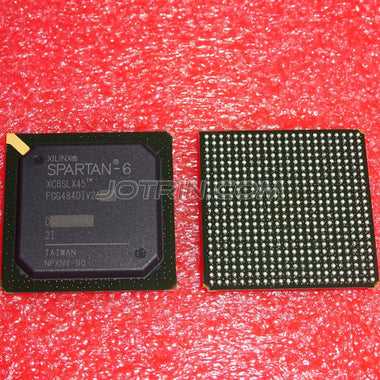
One could consider migrating to a different family, such as the Spartan-7 or the more advanced Zynq-7000 (which combines an FPGA with an ARM processor). A Spartan-7 device like the S50 or S75 might offer a similar logic capacity at a different cost and power point. However, they come in different packages (e.g., FTGB196, CSGA225), necessitating a full PCB layout spin. The advantage is that the design stays within the Vivado toolchain, making the IP and HDL porting process relatively straightforward. Timing constraints and some primitive instantiations might need to be updated, but the core VHDL/Verilog code would largely remain the same.
Outside the AMD-Xilinx Ecosystem:
This is the most involved option. Key competitors offering devices in a similar class include:
-
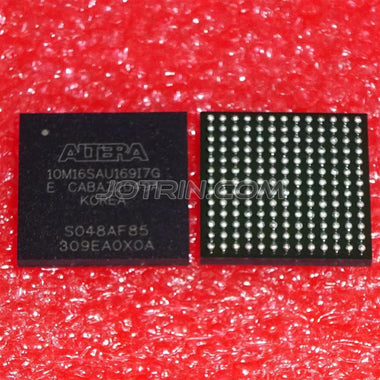
Intel (formerly Altera) Cyclone Series: The Cyclone V or Cyclone 10 LP families offer devices with comparable logic density. For example, a Cyclone V E device like the 5CEFA2F23C8N could be a functional match. This migration requires a complete redesign:
- Hardware: New PCB footprint, different I/O banking rules, different power supply requirements (e.g., VCCIO, VCC_CORE voltages and sequencing).
- Software: A complete migration from the Vivado Design Suite to Intel's Quartus Prime Software. This is a major undertaking. All Xilinx-specific IP cores (e.g., MMCMs, Block RAMs, DSP48 slices) must be replaced with their Intel equivalents (e.g., PLLs, M10K blocks, DSP blocks). The syntax for timing constraints (SDC files) is largely similar but has vendor-specific nuances. The entire design must be re-simulated and re-verified from the ground up.
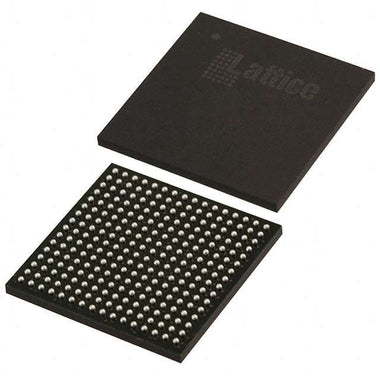
- Lattice Semiconductor ECP5/ECP5-5G Series: Lattice FPGAs are often considered for their low power consumption and SERDES capabilities. An LFE5U-25F or LFE5U-45F device could be a candidate. The migration effort is similar to moving to Intel: a full board spin and a toolchain migration to Lattice Diamond software. All vendor primitives and IP must be ported.
Choosing a functional alternative is a strategic decision. It's not a quick fix for a supply chain issue but rather a major project fork or a next-generation product redesign. The engineering cost in terms of time and resources is substantial and must be weighed against the supply chain benefits.
Detailed Comparison Table
The following table provides a side-by-side comparison of the XC7A35T-1CPG236C and its potential replacements. Specifications are based on manufacturer datasheets and should be used for preliminary evaluation. Always consult the latest official datasheet for final design decisions.
| Parameter | XC7A35T-1CPG236C | XC7A35T-2CPG236C | XC7A50T-1CPG236C | Intel Cyclone 10 LP (10CL040YF484C8G) |
|---|---|---|---|---|
| Manufacturer | AMD-Xilinx | AMD-Xilinx | AMD-Xilinx | Intel |
| Logic Cells / Elements | 33,280 / 5,200 Slices | 33,280 / 5,200 Slices | 52,160 / 8,150 Slices | 39,600 LEs |
| Total Block RAM | 1,800 Kb | 1,800 Kb | 2,700 Kb | 1,720 Kb |
| DSP Slices / Multipliers | 90 | 90 | 120 | 112 (18x18) |
| Package | CPG236 (12x12mm) | CPG236 (12x12mm) | CPG236 (12x12mm) | FBGA-484 (23x23mm) |
| Max User I/O | 106 | 106 | 106 | 340 |
| Speed Grade | -1 (Slowest) | -2 (Faster) | -1 (Slowest) | -8 (Standard) |
| Redesign Effort | N/A | Low (Bitstream Recompile) | Low (Bitstream Recompile) | High (PCB + Full Code Port) |
Migration Guide: Switching from XC7A35T-1CPG236C
Successfully migrating from the XC7A35T-1CPG236C to an alternative requires a systematic verification process. Rushing this step can lead to costly board failures and production delays. Here is a checklist for engineers managing this transition.
1. For Pin-Compatible Artix-7 Substitutes (e.g., XC7A35T-2C, XC7A50T-1C):
- Datasheet Review: Even with pin-compatibility, perform a thorough review of the substitute part's datasheet. Pay close attention to any differences in I/O electrical characteristics (VIL, VIH, VOL, VOH), maximum frequency ratings, and power supply recommendations. While parts in the same family are usually very similar, minor differences can exist.
- Power and Thermal Analysis: This is a critical step. A faster speed grade (-2) or a larger device (XC7A50T) will have different power profiles. Static power (Icc_static) may increase, and dynamic power will depend on the design's activity. Use the Xilinx Power Estimator (XPE) spreadsheet with your design's specifics to model the power consumption of the new device. Confirm that your existing Power Delivery Network (PDN) and thermal solution (heatsink, airflow) can handle the potential increase in power dissipation.
- Toolchain and Bitstream Generation: This is mandatory. Open your project in the Vivado Design Suite. Change the target device in the project settings to the exact part number you are migrating to (e.g., from `xc7a35t-1cpg236c` to `xc7a35t-2cpg236c`). Perform a full synthesis and implementation run. Do not reuse any intermediate files.
- Static Timing Analysis (STA): After implementation, meticulously review the timing reports. When moving to a faster device, you should see increased timing slack (a better Worst Negative Slack, WNS). This is a positive confirmation. However, you must still ensure all constraints are met across all process corners. Do not assume timing will be met without verification.
- Hardware Testing: The new bitstream must be tested on a physical board with the new substitute chip. Perform a full functional validation, paying special attention to high-speed interfaces (DDR memory, Ethernet, etc.) and I/O timing.
Sticking within the same device family, like the diverse Browse Artix-7 Series, dramatically simplifies this migration process compared to switching manufacturers.
2. For Functional (Non-Pin-Compatible) Alternatives:
This is a full redesign project. The scope is much larger and involves schematic capture, layout, and a complete firmware port. The process involves all the steps above, plus schematic and layout for the new footprint, a complete rewrite of toolchain scripts and timing constraints for the new vendor's tools (e.g., Quartus Prime), and a full porting of all vendor-specific IP cores. This is a significant engineering investment.
Where to Source XC7A35T-1CPG236C and Alternatives
Navigating the component market requires diligence, especially for high-demand parts like FPGAs. When sourcing the XC7A35T-1CPG236C or its potential replacements, it's crucial to prioritize supply chain integrity to avoid counterfeit or substandard parts.
Counterfeit FPGAs are a pervasive problem. These can be empty packages, incorrect devices remarked with a different part number, or used/reclaimed parts that have been re-balled and sold as new. Using such a component can lead to immediate failures, intermittent field failures, and significant security vulnerabilities. The risk is simply not worth the potential cost savings.
The most reliable method for sourcing is to work with authorized distributors or trusted independent distributors who have rigorous inspection and testing protocols. A reliable supplier provides traceability back to the original manufacturer, giving you confidence in the part's authenticity and quality. They can also provide support in identifying and procuring viable, verified alternatives when your primary part is out of stock. When you need to secure inventory, a trusted source is your best partner. You can Check XC7A35T-1CPG236C Inventory & Pricing through our platform to access our global network of vetted suppliers.
Video Demonstration
Frequently Asked Questions (XC7A35T-1CPG236C FAQ)
Can I replace a XC7A35T-1CPG236C with a faster XC7A35T-2CPG236C?
Yes, this is a common and viable substitution. The XC7A35T-2CPG236C is pin-compatible and uses the same PCB footprint. Because it is a faster speed grade, your existing design will likely have more timing margin. However, it is not a direct "drop-in" replacement. You must recompile your design in the Vivado toolchain, specifically targeting the -2 speed grade part, and generate a new bitstream. You must also re-run static timing analysis to formally verify timing closure, and it is wise to re-evaluate the power consumption as the faster part may have slightly different characteristics.
Is the XC7A50T-1CPG236C a drop-in replacement for the XC7A35T-1CPG236C?
The XC7A50T-1CPG236C is pin-compatible, meaning it can be soldered on the same PCB pads. However, it is a different die with more logic resources (52k logic cells vs 33k). You cannot use the bitstream for the XC7A35T on this device. You must change the target device in your Vivado project, recompile the entire design, and generate a new bitstream specifically for the XC7A50T. You should also analyze the power impact, as the larger device may have higher static power consumption, which could affect your power supply and thermal design.
Can I use an Intel Cyclone V FPGA as a replacement for the XC7A35T-1CPG236C?
No, not as a direct or simple replacement. While a Cyclone V device might offer similar logic capacity, it is from a different manufacturer and is not pin-compatible. Migrating to a Cyclone V requires a complete hardware redesign, including a new PCB layout for a different package footprint and different power supply rails. Furthermore, it requires a massive software and firmware porting effort, moving from the Xilinx Vivado toolchain to Intel's Quartus Prime, and replacing all Xilinx-specific IP cores with Intel equivalents. This is a major engineering project, not a quick substitution.
What is the difference between the Commercial 'C' and Industrial 'I' grade parts?
The primary difference is the specified operating junction temperature range. The XC7A35T-1CPG236C (Commercial grade) is rated for a junction temperature of 0°C to 85°C. The XC7A35T-1CPG236I (Industrial grade) is rated for a wider range of -40°C to 100°C. For a product operating in a controlled, indoor environment, using an 'I' grade part in place of a 'C' grade is generally safe. The industrial part has been screened for more rigorous conditions. However, 'I' grade parts are typically more expensive, and you should still follow best practices by recompiling your design targeting the specific part number used.
Do I really need to generate a new bitstream if I only change the speed grade?
Yes, absolutely. Generating a new bitstream is a non-negotiable step. The FPGA configuration process checks the device ID, and a mismatch can cause the configuration to fail. More importantly, the bitstream contains the physical routing and timing information derived from the place-and-route process. This process is highly dependent on the specific timing model of the target device, which varies between speed grades. Using an incorrect bitstream, even if it loads, can lead to unpredictable behavior, hidden timing violations, and intermittent failures in the field.