XC7A100T-1CSG324C Application Guide: From Datasheet to Working Circuit
When designing a portable, multi-channel data acquisition (DAQ) system, the challenge is to aggregate, process, and buffer high-speed data streams in a power-efficient and compact form factor. The Xilinx XC7A100T-1CSG324C is an ideal central processing hub for such a system. It provides the parallel processing capability to handle multiple analog-to-digital converter (ADC) inputs simultaneously, using its abundant DSP slices for real-time filtering and Fast Fourier Transforms (FFTs), while its logic cells manage data routing and system control.

Table of Contents
Application Context: Where XC7A100T-1CSG324C Fits in the System
In our target application—a portable 8-channel DAQ system for vibration analysis—the XC7A100T-1CSG324C serves as the digital brain. The system's primary goal is to capture analog signals from eight accelerometers, digitize them, perform real-time frequency domain analysis, and stream the results to a host controller or storage medium.
A block diagram for this system would place the XC7A100T at the center. On its input side, it interfaces with eight parallel high-speed ADCs (e.g., 14-bit, 50 MSPS devices). Each ADC requires a parallel LVDS or CMOS data bus and a clock line. The FPGA's flexible I/O banks are configured to match the voltage and signaling standards of these ADCs. Inside the FPGA, eight independent data capture modules, implemented in HDL, deserialize and align the incoming data from each channel.
Once the raw data is captured, it is fed into a processing pipeline. This is where the Artix-7 architecture excels. The data streams are first passed through digital filters (FIR or IIR) to remove noise and unwanted frequency components. These filters are implemented efficiently using the 240 dedicated DSP slices within the XC7A100T. Each DSP slice can perform a 25x18 multiply-accumulate (MAC) operation per clock cycle, enabling high-throughput filtering without consuming general-purpose logic fabric.
After filtering, the data for each channel is buffered in on-chip Block RAM. The 4,860 Kb of BRAM is partitioned to create FIFOs for each channel, decoupling the capture rate from the processing rate. When a sufficient number of samples are collected (e.g., 1024 points), a processing block triggers an FFT. The FFT algorithm is also heavily accelerated by the DSP slices and can be implemented using Xilinx's free IP cores, significantly reducing development time. The 101,440 logic cells provide ample resources for the control logic, state machines, and data path routing required to manage these parallel operations.
On the output side, the processed data (e.g., frequency bins and magnitudes) needs to be sent to a host system. The XC7A100T can implement a variety of standard communication interfaces. For this application, a lightweight UDP/IP stack running on a soft-core processor (like a MicroBlaze) could be implemented to stream data over an external Ethernet PHY. Alternatively, for higher bandwidth, the FPGA's built-in PCIe Gen2 block could be used to create a direct, high-speed link to a host PC's motherboard. The choice depends on the system's bandwidth and connectivity requirements. The FPGA also manages system-level tasks, such as controlling ADC settings, monitoring power and temperature, and handling user commands from the host.
Core Specifications for This Application
The following specifications from the official Xilinx Artix-7 datasheet (DS181) are critical for the success of our multi-channel DAQ application.
| Parameter | Value | Application Relevance |
|---|---|---|
| Logic Cells | 101,440 | Provides the necessary fabric for control logic, data path multiplexing, state machines, and implementing soft-core processors like MicroBlaze for system management. |
| DSP Slices | 240 | Crucial for high-performance signal processing. These hardware multipliers are used to implement FIR filters and accelerate FFT calculations for all eight channels in parallel. |
| Block RAM | 4,860 Kb | Used for creating deep FIFOs to buffer incoming ADC data and store intermediate results between processing stages (e.g., time-domain samples before an FFT). |
| Maximum User I/O | 210 (in CSG324 package) | Ensures sufficient pins are available to connect to eight parallel ADCs, a configuration flash, an Ethernet PHY or other communication interface, and system-level control/status signals. |
| Clock Management Tiles (CMT) | 6 | Contains Mixed-Mode Clock Managers (MMCM) and Phase-Locked Loops (PLLs) to synthesize, de-skew, and manage the various clock domains required for ADCs, the core fabric, and external interfaces. |
| Core Voltage (VCCINT) | 1.0V (Nominal) | The low core voltage contributes to lower static and dynamic power consumption, which is critical for a portable, potentially battery-operated, device. |
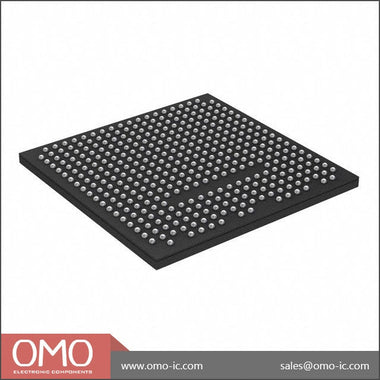
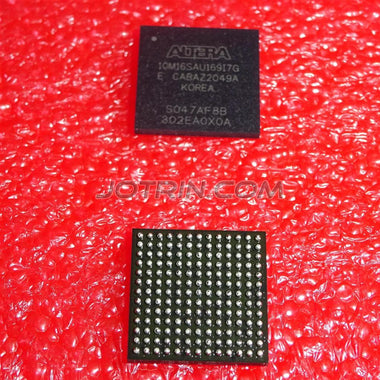
| Package | CSG324 (15x15mm) | A compact chip-scale BGA package that enables a small PCB footprint, essential for designing a portable instrument. The 0.8mm pitch is manageable for standard multi-layer PCB manufacturing processes. |
Reference Circuit and Component Selection
A robust hardware design is foundational to a stable FPGA system. The circuit around the XC7A100T-1CSG324C must address power delivery, configuration, clocking, and I/O interfacing. Here's a walkthrough of the essential support circuitry.
Power Delivery Network (PDN): The Artix-7 family requires several distinct voltage rails.
- VCCINT (1.0V): This is the core voltage for the FPGA logic. It is the highest current rail and requires a high-efficiency switching regulator capable of a fast transient response. A 3A-capable buck converter is a safe choice.
- VCCAUX (1.8V): This auxiliary voltage powers internal logic like the JTAG and clock management tiles. It has a lower current requirement than VCCINT. A dedicated 1A buck regulator or a low-dropout (LDO) regulator can be used.
- VCCO (1.2V to 3.3V): This is the I/O bank voltage. Each of the FPGA's I/O banks can have a different VCCO, allowing it to interface with devices at various logic levels. In our DAQ design, we might have one bank at 1.8V for LVDS ADCs and another at 3.3V for the configuration flash and an Ethernet PHY. Each VCCO rail needs its own regulator, sized for the expected I/O switching current.
Configuration: The FPGA must load its configuration data (the bitstream) from non-volatile memory upon power-up. The most common method is Master SPI mode, using an external Quad-SPI (QSPI) flash memory chip. A 128Mb or 256Mb QSPI flash (from vendors like Micron, Winbond, or Macronix) is typically sufficient. The FPGA's M[2:0] mode pins must be strapped with pull-up/pull-down resistors to select this configuration mode (typically '001' for Master SPI). A JTAG header should also be included on the board for debugging and initial programming of the QSPI flash via the Vivado Design Suite.
Clocking: A stable, low-jitter clock source is critical. For our DAQ application, a 100MHz or 125MHz differential crystal oscillator provides a clean reference clock to one of the FPGA's clock-capable input pairs. This reference is then fed into an internal MMCM, which synthesizes all other required clocks: the system clock for the logic fabric, the ADC interface clocks, and the clock for the Ethernet PHY. Careful routing of the input clock trace as a controlled-impedance differential pair is essential to preserve signal integrity.
Designing with FPGAs involves managing a system of interconnected parts. To see other devices in this family and compare their resources, you can Browse Artix-7 Series to find the perfect fit for your logic and I/O requirements.
Design Pitfalls and How to Avoid Them
Even experienced engineers can encounter issues when designing with dense BGA components like the XC7A100T. Here are some common pitfalls and how to steer clear of them.
| Common Mistake | Symptom | Fix |
|---|---|---|
| Incorrect Power-Up Sequencing | FPGA fails to configure (DONE pin stays low), high inrush current, or damage to the device. | Follow the recommended power-on sequence specified in the datasheet (DS181): VCCINT, then VCCAUX, then VCCO. Use a dedicated power sequencer IC or stagger the enable signals of your voltage regulators. |
| Missing or Incorrect Configuration Pin Strapping | The FPGA does not attempt to load the bitstream from the QSPI flash after power-on. The INIT_B pin may be held low. | Carefully review the M[2:0] mode pins and other configuration pins (e.g., PUDC_B) in the Configuration User Guide (UG470). Ensure they are pulled high or low with appropriate resistors (e.g., 4.7kΩ) to select the desired boot mode. |
| Floating Unused I/O Pins | Increased power consumption, potential for I/O banks to become unstable, and susceptibility to ESD events. | Consult the Artix-7 SelectIO User Guide (UG471). By default, unused I/O pins are tristated with a weak internal pull-up after configuration. For best practice, explicitly constrain all unused pins as inputs with an internal pull-up or pull-down in your design constraints file (XDC). |
| Poor Decoupling Capacitor Placement | Timing failures, logic errors, and system instability, especially under heavy load. The system may appear to work intermittently. | Place high-frequency decoupling capacitors on the bottom side of the PCB directly under the FPGA's power pins. Use the smallest package size practical (e.g., 0402) and connect them with short, wide traces and multiple vias to the power and ground planes to minimize inductance. |
A particularly insidious issue is related to the configuration pins. The M[2:0] pins are multiplexed with user I/O after configuration. If your design uses these pins as outputs, ensure they don't conflict with the pull-up/pull-down resistors needed for configuration. A common solution is to use a higher resistance value (e.g., 47kΩ) for the strapping resistors if the I/O standard can tolerate it, or to buffer the output signal if necessary. Always simulate your power-on sequence and check the state of these critical pins before committing to a PCB layout.
Performance Optimization Tips
Extracting maximum performance from the XC7A100T-1CSG324C requires attention to detail in both the digital design and the physical layout.
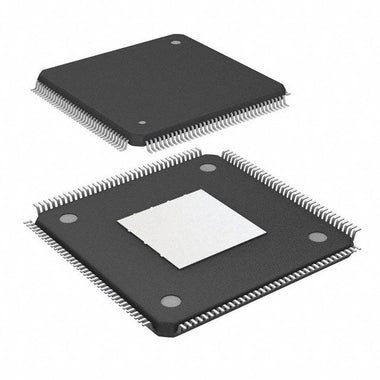
Thermal Management: The CSG324 package features a central ground pad on the underside of the package which is critical for thermal dissipation. In your PCB layout, create a large copper pad under the FPGA and stitch it with an array of thermal vias to the internal ground planes. This creates a low thermal resistance path to conduct heat away from the silicon die. For high-utilization designs that push the FPGA's performance limits, a small heatsink can be attached to the top of the package. Use the Xilinx Power Estimator (XPE) spreadsheet early in the design cycle to get a realistic estimate of power consumption and junction temperature, which will inform your thermal strategy.
Signal Integrity: For high-speed interfaces like the ADC data lines or a DDR memory interface, signal integrity is paramount. Use your PCB design software's impedance calculator to design controlled-impedance traces (typically 50Ω single-ended, 100Ω differential). Route critical signals, especially clocks, on inner layers sandwiched between ground planes to shield them from noise. Ensure that trace lengths within a data bus are matched to within tight tolerances to avoid skew. Use a tool like HyperLynx or the Vivado Serial I/O Analysis tools to simulate your channels and verify performance before fabrication.
Power Integrity: A stable power delivery network (PDN) is the bedrock of a reliable system. Go beyond just placing capacitors. Use a solid, continuous ground plane directly beneath the FPGA. Use wide traces or copper polygons for power rails to minimize voltage drop (IR drop). Place decoupling capacitors in a hierarchical fashion: bulk capacitors near the voltage regulator, mid-range capacitors near the corners of the FPGA, and high-frequency capacitors as close as physically possible to the BGA balls. This strategy provides low impedance across a wide frequency spectrum, satisfying the FPGA's transient current demands.
Related Components and Accessories
A successful XC7A100T-1CSG324C design relies on a well-chosen ecosystem of supporting components. For our DAQ application, the following parts are essential.
Configuration Memory: A reliable QSPI NOR Flash is required for booting. The Micron MT25QL series (e.g., MT25QL128ABA) or the Winbond W25Q series are industry-standard choices, offering sufficient density and performance for fast configuration times.
Power Management: To simplify the complex power requirements, consider a Power Management IC (PMIC) designed for FPGAs. Devices like the Texas Instruments TPS65086x family or Analog Devices' ADP5014 can generate all required rails (VCCINT, VCCAUX, VCCO, etc.) from a single input voltage, with built-in sequencing and monitoring, saving significant board space and design effort.
Clock Oscillator: For a clean system clock, a low-jitter differential oscillator is recommended. The SiTime SiT9120 series or the Abracon AX7 series offer excellent phase jitter performance (typically under 1 ps RMS), which is critical for high-speed serial transceivers and achieving timing closure in the FPGA.
Ethernet PHY: To implement the Ethernet output stream, an external 10/100/1000 Mbps Ethernet PHY is needed. The Microchip KSZ9031 or the Texas Instruments DP83867 are popular choices that interface with the FPGA via a standard RGMII or SGMII interface. These components handle the physical layer signaling, leaving the FPGA to manage the MAC and above layers.
When you are ready to move from design to procurement, you can Check XC7A100T-1CSG324C Inventory & Pricing to source the central component for your system.
Video Demonstration
Frequently Asked Questions (XC7A100T-1CSG324C FAQ)
How do I properly power the multiple voltage rails on the XC7A100T-1CSG324C?
The XC7A100T requires at least three voltage rails: VCCINT (1.0V core), VCCAUX (1.8V auxiliary), and one or more VCCO (1.2V-3.3V I/O) rails. The official datasheet specifies a power-on sequence of VCCINT first, followed by VCCAUX, and then VCCO. The easiest way to achieve this is with a dedicated PMIC designed for FPGAs, which integrates multiple regulators and a sequencer. Alternatively, you can use discrete buck converters and LDOs and control their 'Enable' pins with a simple RC delay circuit or a dedicated supervisor IC to ensure the correct timing.
What is the most reliable way to configure the XC7A100T in a production system?
For most production systems, the "Master SPI" configuration mode is the most common and reliable method. This involves connecting the FPGA to an external QSPI NOR flash memory chip that stores the bitstream. Upon power-up, the FPGA acts as the master, automatically clocks data out of the flash, and configures itself. Ensure the M[2:0] mode pins are correctly set with pull-up/down resistors (usually '001' for x4 SPI) and that the QSPI flash is programmed with a valid bitstream file generated by Vivado.
Can the XC7A100T handle real-time signal processing from multiple high-speed ADCs?
Yes, this is a primary strength of the device. The XC7A100T contains 240 dedicated DSP slices, which are hardware blocks optimized for multiply-accumulate operations. This allows you to implement parallel FIR filters, correlators, or FFTs for multiple data streams simultaneously. By instantiating a separate processing pipeline for each ADC channel, you can achieve high-throughput, low-latency processing that would be impossible with a traditional microcontroller.
What are the key considerations for PCB layout around the CSG324 package?
The top three considerations are power delivery, high-speed signal routing, and thermal management. First, use a solid ground plane and place decoupling capacitors as close as possible to the BGA pins, preferably on the backside of the board. Second, for any high-speed interfaces (like clocks or LVDS pairs), route them as controlled-impedance differential pairs with matched lengths. Finally, ensure the central thermal pad of the BGA is connected with an array of thermal vias to a large ground plane to dissipate heat effectively.
How do I manage heat dissipation for the XC7A100T-1CSG324C in a fanless enclosure?
In a fanless design, thermal management is critical. Start by using the Xilinx Power Estimator tool to predict power consumption. On the PCB, use a dense grid of thermal vias under the FPGA's central pad to conduct heat to large internal ground and power planes, which act as a heat spreader. If the enclosure is metal, you can use a thermal gap pad to create a conductive path from the PCB's ground plane (or the top of the FPGA) to the chassis, turning the entire enclosure into a heatsink.

Alan Carter
Senior Hardware Engineer & Component Specialist
Alan has over 15 years of expertise in embedded systems design, FPGA architecture, and global semiconductor supply chains. He specializes in component cross-referencing, lifecycle management, and helping OEMs navigate supply shortages.