XC7A35T-1CPG236C Design-In Guide: Why Choose It and How to Use It
Hardware engineers often face a difficult choice: a powerful but costly and power-hungry high-end FPGA, or a low-cost microcontroller that lacks the parallel processing muscle for demanding tasks. This gap leaves many applications, from industrial automation to portable medical devices, without an optimal solution. The Xilinx XC7A35T-1CPG236C directly addresses this challenge, offering a compelling balance of performance, power efficiency, and cost within the Artix-7 family. It provides the necessary logic, memory, and DSP resources for real-time processing without the design overhead of more complex FPGAs.

Table of Contents
The Design Challenge XC7A35T-1CPG236C Solves
In modern embedded systems, the demand for processing data from multiple high-speed sources in parallel is exploding. Consider a machine vision system for quality control on a production line. A microcontroller, operating sequentially, would struggle to capture and process multiple video streams in real-time to detect defects. It simply lacks the parallel architecture. On the other end of the spectrum, a high-end Virtex or Kintex FPGA could handle the task with ease, but its cost, power consumption, and complex power-rail requirements would make the final product commercially unviable for many markets. This is the critical gap where the XC7A35T-1CPG236C excels.
The Artix-7 family was specifically engineered by Xilinx (now AMD) to deliver the best performance-per-watt for cost-sensitive applications. The XC7A35T is a sweet spot within this family, providing a substantial amount of programmable logic without unnecessary overhead. It enables engineers to offload computationally intensive tasks from a host processor or to create a completely standalone system-on-a-chip (SoC) solution using the MicroBlaze soft processor core. Tasks that are inherently parallel, such as digital signal processing (DSP) for software-defined radio, sensor fusion in robotics, or video encoding/decoding in professional AV equipment, are ideal candidates for implementation in this FPGA.
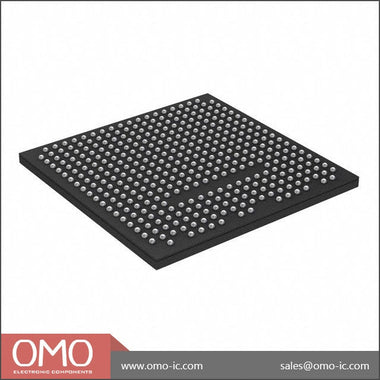
Furthermore, the specific CPG236 package is a significant design advantage. This 236-pin chip-scale ball grid array (BGA) has a 0.8mm pitch, which is manageable for standard 4-to-6 layer PCB manufacturing processes. This avoids the high costs associated with the finer pitches and higher layer counts required by larger FPGAs. It offers a sufficient number of I/O pins (106) for interfacing with sensors, memory, and communication peripherals, while maintaining a compact footprint suitable for space-constrained designs. By choosing the XC7A35T-1CPG236C, an engineering team can implement a high-performance, custom-logic solution that meets stringent cost and power budgets, accelerating time-to-market for a wide range of products.
Key Specifications at a Glance
The decision to select an FPGA hinges on its core resources. The XC7A35T-1CPG236C offers a balanced profile suitable for a wide array of mid-range applications. All specifications are sourced from the official Xilinx Artix-7 datasheet (DS181).
| Parameter | Value | Why It Matters for Your Design |
|---|---|---|
| Logic Cells | 33,280 | This is the fundamental resource for implementing custom logic, state machines, and control structures. 33k cells are sufficient for complex algorithms and significant glue logic. |
| Block RAM (BRAM) | 1,800 Kb | On-chip memory is critical for buffering data, implementing FIFOs, and creating lookup tables. 1,800 Kb allows for substantial data storage without needing slower external RAM. |
| DSP Slices | 90 | Each DSP48E1 slice is a hardened MAC (Multiply-Accumulate) block. These are essential for high-throughput signal processing like FIR filters, FFTs, and correlations, offloading the logic fabric. |
| Maximum User I/O | 106 | For the CPG236 package, this determines the number of connections to the outside world (sensors, ADCs, DACs, connectors). 106 I/O is a good balance for compact yet connected designs. |
| Clock Management Tiles (CMT) | 5 | Each CMT contains a Mixed-Mode Clock Manager (MMCM) and a Phase-Locked Loop (PLL). These are crucial for synthesizing, de-skewing, and managing multiple clock domains within the design. |
| Package | CPG236 | A 10x10mm, 0.8mm pitch BGA. This package enables a small PCB footprint and is compatible with cost-effective manufacturing processes compared to larger, finer-pitch BGAs. |
| Speed Grade | -1 | This is the slowest commercial speed grade, offering the lowest cost. It is still capable of running internal logic well over 100 MHz, sufficient for a vast range of applications. |
| Temperature Grade | Commercial (0°C to 85°C TJ) | Defines the operational junction temperature range. Suitable for indoor, office, or controlled industrial environments. Not intended for automotive or harsh outdoor use. |
XC7A35T-1CPG236C vs Alternatives: Head-to-Head
When selecting a mid-range FPGA, it's crucial to compare it against key competitors. Here, we evaluate the XC7A35T against comparable parts from Intel (formerly Altera) and Lattice Semiconductor.
| Feature | Xilinx XC7A35T-1CPG236C | Intel Cyclone 10 LP (10CL040) | Lattice ECP5 (LFE5U-45F) |
|---|---|---|---|
| Logic Elements | 33,280 Logic Cells | ~40k Logic Elements (LEs) | 44k Logic Cells (LCs) |
| Embedded Memory | 1,800 Kb Block RAM | 1,720 Kbits M9K Blocks | 1,974 Kb Embedded Block RAM |
| DSP/Multiplier Blocks | 90 DSP Slices (18x25) | 132 Embedded Multipliers (18x18) | 204 DSP Slices (18x18) |
| Toolchain | Xilinx Vivado ML Edition | Intel Quartus Prime Lite | Lattice Diamond |
| Power Focus | Best performance-per-watt; low dynamic power. | Lowest static power; ideal for battery-powered standby modes. | Balanced performance with strong SERDES capabilities for its class. |
| Unique Feature | Mature IP ecosystem, MicroBlaze soft processor, high-performance DSP slices. | User Flash Memory on-chip, extremely low standby current. | Cost-effective SERDES up to 3.2 Gbps, making it strong for interfaces like PCIe Gen1/2. |
The choice between these devices is nuanced and depends heavily on project priorities. The XC7A35T-1CPG236C is the go-to choice when your design requires significant signal processing horsepower. Its 90 DSP48E1 slices are highly efficient and well-supported by the Vivado toolchain, making it a favorite for applications in SDR, video processing, and motor control. The Xilinx ecosystem, including the free Vivado ML Standard Edition, is mature and feature-rich, though it has a steeper learning curve than some alternatives. If your team has existing Xilinx experience, the XC7A35T is a natural fit.
The Intel Cyclone 10 LP, as its name implies, is optimized for low power, particularly static (standby) power. If your device spends most of its time in a low-power state and only wakes up periodically, the Cyclone 10 LP could offer significant battery life advantages. The Lattice ECP5 carves out a niche by providing cost-effective, high-speed SERDES transceivers. If your design needs to interface with standards like PCI Express, Gigabit Ethernet, or CPRI, the ECP5 often presents the lowest-cost entry point for a SERDES-capable FPGA.
In summary, choose the XC7A35T for DSP-heavy and balanced performance applications where the robust Vivado IP catalog can be leveraged. Choose the Cyclone 10 LP for ultra-low-power standby applications. Choose the ECP5 when you need low-cost SERDES connectivity.
Recommended Application Circuit
Integrating the XC7A35T-1CPG236C successfully requires careful attention to its supporting circuitry, primarily power, configuration, and clocking. While a full schematic is design-dependent, the following blocks are universally critical.
Power Supply Subsystem: The Artix-7 family requires several voltage rails.
- VCCINT (1.0V): This is the core voltage for the FPGA fabric. It draws the most current and is the most sensitive to noise. A high-efficiency switching regulator (buck converter) followed by good filtering is recommended.
- VCCAUX (1.8V): This auxiliary voltage powers internal logic like the CMTs and JTAG interface. It requires less current than VCCINT but still needs to be a clean supply.
- VCCO (1.2V to 3.3V): This is the I/O bank voltage. Each bank can be powered independently, allowing the FPGA to interface with logic at different voltage levels (e.g., a 3.3V SPI flash and a 1.8V sensor). Each VCCO rail must be decoupled properly.
Configuration and JTAG: The FPGA is volatile, meaning it must be configured from an external non-volatile memory on every power-up. The most common method is Master SPI mode, where the FPGA acts as the master and reads its configuration file (bitstream) from an external QSPI NOR Flash chip (e.g., from Micron, Winbond, or Macronix). A 128Mb or 256Mb flash is typically sufficient. The MODE pins (M[2:0]) must be set correctly to select the configuration mode. The JTAG port (TMS, TCK, TDI, TDO) is essential and must be brought out to a header for programming the flash and for debugging the design using a Xilinx Platform Cable USB or similar JTAG probe.
Clocking: The FPGA requires at least one stable, low-jitter external clock source. A 50 MHz or 100 MHz crystal oscillator is a common choice. This input clock is fed into one of the on-chip Clock Management Tiles (CMTs), where MMCMs or PLLs can synthesize all required internal clock frequencies for different parts of your design. For a deeper dive into the capabilities of the entire family, you can Browse Artix-7 Series components and their associated application notes.
PCB Layout and Thermal Design Tips
A successful FPGA design is as much about the PCB layout as it is about the HDL code. For the XC7A35T-1CPG236C, with its 0.8mm pitch BGA, layout requires methodical planning.
BGA Fanout and Routing: A standard 4-layer or 6-layer PCB is usually sufficient. Use a "dog-bone" fanout pattern where a trace exits the BGA pad and immediately connects to a via placed just outside the pad array. This is more cost-effective than via-in-pad technology. Plan your I/O assignments in the FPGA pin planner to group related signals and simplify routing. Keep high-speed signal traces (like differential pairs for LVDS or clock inputs) short, properly impedance-controlled (typically 50 ohms single-ended, 100 ohms differential), and referenced to a solid ground plane.
Power Integrity: Use a dedicated ground plane (or multiple, on a multi-layer board) and one or more power planes. For the high-current VCCINT rail, a dedicated plane is highly recommended. Place decoupling capacitors as close as physically possible to every power pin of the BGA. Use a mix of capacitor values (e.g., 10uF, 1uF, 0.1uF, and 0.01uF) to provide low impedance across a wide frequency range. This is non-negotiable for stable operation.
Thermal Management: The XC7A35T is power-efficient, but a high-utilization design running at high clock speeds will generate heat. The primary path for heat to escape is through the solder balls into the PCB. Create a grid of thermal vias directly under the chip, connecting the central ground pads of the BGA to the internal ground plane(s). This turns your PCB into a heatsink. For most commercial-grade applications, this technique, combined with adequate airflow, is sufficient to keep the junction temperature below the 85°C maximum. For more demanding scenarios, perform a thermal simulation and consider a small, top-mounted heatsink if necessary.
Where to Buy XC7A35T-1CPG236C
The XC7A35T-1CPG236C is a popular and generally well-stocked member of the Artix-7 family. However, like all advanced electronic components, supply chains can be volatile. It is critical to source these parts from authorized or highly reputable distributors to guarantee authenticity and avoid counterfeit components, which are a major risk with FPGAs.
This part is typically supplied in Tape & Reel packaging for automated pick-and-place assembly lines. When planning for production, always consult with your supplier on lead times, as these can vary from immediate availability to several weeks or months depending on market conditions. For prototyping and small-batch runs, some distributors may offer cut tape or individual units. To ensure you are getting a genuine, factory-traceable component, it is best practice to work with established global distributors. You can Check XC7A35T-1CPG236C Inventory & Pricing to get up-to-date information on availability and procurement options for your project.
Video Demonstration
Frequently Asked Questions (XC7A35T-1CPG236C FAQ)
What is the main difference between the XC7A35T and the XC7A50T?
The primary difference lies in the available logic and memory resources. The XC7A50T offers more capacity with approximately 52,160 Logic Cells, 2,700 Kb of Block RAM, and 120 DSP slices, compared to the XC7A35T's 33,280 LCs, 1,800 Kb BRAM, and 90 DSP slices. You should choose the XC7A35T for cost-sensitive designs where its resources are sufficient. Opt for the XC7A50T when you anticipate needing more logic for future features or if your algorithm's resource utilization is pushing the limits of the 35T.
Is the CPG236 BGA package difficult to manufacture?
The CPG236 is a Ball Grid Array (BGA) package, which means it cannot be hand-soldered and requires a reflow oven for assembly. For professional EMS (Electronics Manufacturing Services) providers, this is a standard process. Its 0.8mm pitch is considered quite manageable and does not typically require advanced (and more expensive) PCB technologies like HDI or via-in-pad. However, it does necessitate X-ray inspection for quality control to verify solder joint integrity, which is a standard step in BGA assembly.
How does the XC7A35T-1CPG236C compare to an Intel Cyclone V E part?
The choice often comes down to design priorities and ecosystem familiarity. The Artix-7 XC7A35T generally excels in performance-per-watt and offers more powerful DSP blocks (DSP48E1), making it a stronger candidate for math-intensive applications. The Xilinx Vivado toolchain also has a very extensive library of IP cores. An equivalent Cyclone V E part might offer different I/O features or power characteristics, and its Quartus Prime toolchain is preferred by engineers with a background in Altera devices. You should evaluate based on specific needs like DSP performance (favoring Artix-7) versus toolchain preference.
What type and size of external flash memory is needed for configuration?
The XC7A35T is volatile and requires an external non-volatile memory to store its configuration bitstream. The most common and recommended solution is a Quad-SPI (QSPI) NOR Flash memory IC. For the XC7A35T, the uncompressed bitstream size is around 12.5 Mb. Therefore, a 32 Mb or 64 Mb QSPI flash chip would be insufficient. A 128 Mb flash chip is a safe and common choice, providing ample room for the bitstream and potentially other data storage, such as a MicroBlaze application or calibration parameters.
Can I use the free Xilinx Vivado software for the XC7A35T?
Yes, absolutely. The XC7A35T device is fully supported by the Vivado ML Standard Edition, which is the free version of the Xilinx design suite (formerly known as WebPACK). This includes the synthesis, place-and-route, simulation, and bitstream generation tools needed to complete a design. This free software access makes the XC7A35T a highly accessible and cost-effective choice for startups, researchers, hobbyists, and companies looking to avoid expensive software license fees.