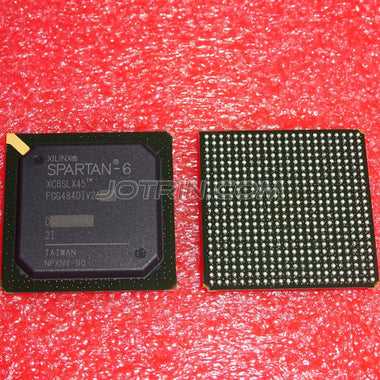
XC6SLX16-2CSG324C Design-In Guide: Why Choose It and How to Use It
Hardware engineers often face the challenge of adding custom logic, high-speed interface bridging, or parallel processing capabilities to a design without escalating costs or power consumption. While modern FPGAs offer immense power, they can be overkill for many mainstream applications, bringing with them complex power delivery networks and steep learning curves. The Xilinx XC6SLX16-2CSG324C from the Spartan-6 family directly addresses this by providing a balanced, cost-effective solution with a substantial amount of logic, DSP resources, and I/O in a mature, well-understood platform. It's the go-to choice for extending the life of existing product lines or for new designs where value and time-to-market are paramount.

Table of Contents
The Design Challenge XC6SLX16-2CSG324C Solves
The XC6SLX16-2CSG324C occupies a critical sweet spot in the world of digital logic. It is engineered for projects that require more than a CPLD or small microcontroller can offer, but do not justify the cost, power budget, and design complexity of a high-end FPGA like the 7-series or UltraScale families. This device is a workhorse for cost-sensitive applications in industrial control, automotive infotainment, medical imaging, and professional video equipment.
Consider a typical design scenario: a system-on-chip (SoC) or microprocessor has a limited number of peripheral interfaces. The product requires three additional UARTs, a custom PWM generation block for motor control, and a parallel camera interface. Implementing this with discrete logic would be a nightmare of board space and routing. A high-end FPGA would be underutilized and expensive. This is precisely where the XC6SLX16 shines. With 14,579 logic cells, it has ample room to instantiate multiple soft-core peripherals, custom state machines, and data path logic. Its 232 user I/O pins (in the CSG324 package) provide the physical connectivity needed to interface with numerous external components.
Furthermore, the inclusion of 32 dedicated DSP48A1 slices makes it highly effective for signal processing tasks. These are not just simple multipliers; they are hardened MAC (Multiply-Accumulate) units capable of performing filtering (FIR, IIR), FFTs, and other DSP algorithms far more efficiently in terms of power and logic resources than a "soft" implementation in general-purpose logic. This allows a design to offload computationally intensive tasks from a host processor, freeing it up for application-level software. For example, in a video system, the XC6SLX16 can handle real-time color space conversion or image scaling before passing the data to a video encoder. Built on a mature 45 nm process, the Spartan-6 family offers a known, reliable performance and power profile, simplifying system-level analysis and thermal management compared to bleeding-edge process nodes.
Key Specifications at a Glance
The following specifications are derived from the official Xilinx Spartan-6 family datasheet (DS162). These parameters are critical for assessing the XC6SLX16-2CSG324C's suitability for a new design.
| Parameter | Value | Why It Matters |
|---|---|---|
| Logic Cells | 14,579 | This is the fundamental measure of the FPGA's capacity for implementing custom logic, state machines, and control structures. This count is sufficient for moderately complex systems. |
| Slices | 2,278 | Slices are the basic building blocks in the Xilinx architecture, containing look-up tables (LUTs) and flip-flops. This number directly relates to the logic cell count and defines the granularity of the fabric. |
| Block RAM (Kb) | 576 Kb | On-chip memory is crucial for buffering data, implementing FIFOs, and creating video frame buffers. 576 Kb, organized in 18 Kb blocks, provides substantial local storage to reduce reliance on external RAM. |
| DSP48A1 Slices | 32 | These dedicated hardware blocks accelerate multiplication and MAC operations. Having 32 slices makes the device suitable for entry-level digital signal processing, such as audio processing or FIR filters. |
| Maximum User I/O | 232 (CSG324 Package) | Defines the maximum number of signals that can connect the FPGA to the rest of the system. This high I/O count is a key advantage for interface-heavy applications. |
| Core Voltage (VCCINT) | 1.2V (Nominal) | The core voltage powers the internal logic fabric. Its relatively low level helps manage power consumption. A stable, low-noise 1.2V rail is critical for reliable operation. |
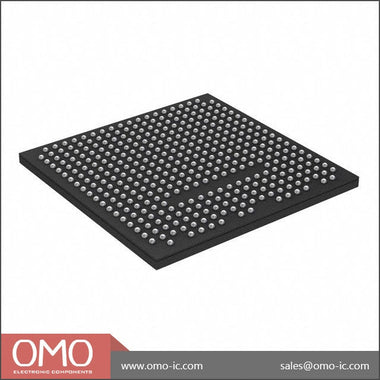
| Package | CSG324 (15x15mm, 0.8mm pitch) | A chip-scale BGA package that offers a good balance between density and PCB manufacturability. The 0.8mm pitch is manageable with standard PCB fabrication processes. |
| Speed Grade | -2 | Indicates the performance of the device. A -2 speed grade is the standard commercial-grade option, offering a good balance of performance for most applications. Faster (-3) grades are also available. |
XC6SLX16-2CSG324C vs Alternatives: Head-to-Head
Choosing the right logic device involves trade-offs. Here’s how the XC6SLX16-2CSG324C compares to a smaller device in the same family and a contemporary competitor from Intel (formerly Altera).
| Feature | XC6SLX16-2CSG324C | Xilinx XC6SLX9 | Intel Cyclone IV EP4CE15 |
|---|---|---|---|
| Logic Resources | 14,579 Logic Cells / 2,278 Slices | 9,152 Logic Cells / 1,430 Slices | 15,408 Logic Elements (LEs) |
| Block RAM | 576 Kb | 288 Kb | ~504 Kb (516,096 bits) |
| DSP/Multipliers | 32 DSP48A1 Slices | 16 DSP48A1 Slices | 56 embedded 18x18 multipliers |
| Architecture | 6-input LUTs, highly flexible slices | 6-input LUTs, highly flexible slices | 4-input LUTs, Adaptive Logic Modules (ALMs) |
| Power Consumption | Low to moderate, dependent on utilization and clock speed. | Lower than XC6SLX16 for similar logic utilization due to smaller die. | Generally competitive, but highly design-dependent. Different process technology. |
| Development Tools | Xilinx ISE Design Suite (legacy) | Xilinx ISE Design Suite (legacy) | Intel Quartus Prime (or older Quartus II) |
When to choose the XC6SLX16-2CSG324C: You should select the XC6SLX16 over the smaller XC6SLX9 when your design requires the extra logic capacity, and especially if you need more than 288 Kb of block RAM or more than 16 DSP slices. The step-up in resources is significant and can prevent you from running out of room mid-project. Compared to the Intel Cyclone IV EP4CE15, the choice is more nuanced. The XC6SLX16's 6-input LUT architecture can be more efficient for certain logic functions. If your team has existing expertise and IP for the Xilinx ecosystem and the ISE toolchain, staying with the Spartan-6 is a low-friction path. The XC6SLX16 also has a slight edge in total block RAM. The Cyclone IV, however, offers more raw multipliers, which might be beneficial for highly parallel math-intensive tasks that don't need the full DSP48A1 feature set. Ultimately, the decision often comes down to ecosystem familiarity, specific resource needs (RAM vs. DSP vs. Logic), and supply chain availability.
Recommended Application Circuit
A successful design with the XC6SLX16-2CSG324C hinges on a robust support circuit, primarily for power and configuration. A minimal system requires careful planning of these elements.
Power Supply Subsystem: The Spartan-6 has three main power domains:
- VCCINT (1.2V): This is the core logic voltage. It is the most critical and highest-current rail. A high-efficiency switching regulator is recommended. This rail requires extensive decoupling with a mix of bulk capacitance (e.g., 10-47uF) and high-frequency ceramic capacitors (0.1uF, 0.01uF) placed as close as possible to every VCCINT pin.
- VCCAUX (2.5V): This rail powers auxiliary internal logic, including JTAG, DCMs, and PLLs. It has lower current requirements than VCCINT but still needs clean power and proper decoupling.
- VCCO (1.2V, 1.5V, 1.8V, 2.5V, 3.3V): There are multiple VCCO banks, each powering a set of I/O pins. This is a key feature, as it allows the FPGA to interface directly with devices operating at different voltage levels. For example, one bank could run at 3.3V to interface with a SPI flash, while another runs at 1.8V to connect to a DDR2 memory. Each VCCO bank must be decoupled independently.
Configuration and JTAG: Upon power-up, the FPGA is a blank slate. It must be configured by loading a bitstream from an external source. The most common method is Master SPI mode, where the FPGA reads its configuration from a standard SPI flash memory chip upon power-up. The circuit requires connecting the FPGA's dedicated configuration pins (CCLK, MOSI, MISO, PROGRAM_B, DONE, INIT_B) to the SPI flash. A JTAG header (TDI, TDO, TCK, TMS) is also essential for in-system programming and debugging using a Xilinx Platform Cable USB or similar JTAG probe. This allows for rapid development without needing to pre-program the SPI flash for every iteration. When designing a system around this part, it's wise to explore the entire ecosystem. You can Browse Spartan-6 Series devices and their supporting components to build a complete bill of materials.
PCB Layout and Thermal Design Tips
The CSG324 package is a 0.8mm pitch BGA, which requires careful PCB layout but is well within the capabilities of most modern PCB manufacturers.
- Decoupling Capacitor Placement: This cannot be overstated. Decoupling capacitors for the VCCINT rail must be placed on the bottom side of the PCB, directly under the FPGA, with vias connecting them as close as possible to the BGA balls. Use a combination of capacitor values (e.g., 1uF, 0.1uF, and 0.01uF) to provide low impedance across a wide frequency range.
- Power and Ground Planes: Use solid, unbroken ground and power planes directly beneath the FPGA. This provides a low-impedance return path for signals and helps with power distribution integrity. A typical stack-up for a BGA design would be at least 4 layers, often 6 or 8 for more complex routing. For example: Signal | GND | Power | Signal.
- BGA Fanout: Use "dog-bone" fanout, where a trace is run from the BGA pad to a via placed just outside the pad. This is the most cost-effective method. Avoid placing vias directly in the BGA pads (via-in-pad) unless absolutely necessary for high-density routing, as this increases fabrication cost. Route critical high-speed signals, like clock lines or LVDS pairs, with controlled impedance.
- Thermal Management: The CSG324 package has an exposed pad on the bottom (or a central grid of ground balls) that serves as the primary thermal path. It is critical to connect this to the main ground plane using an array of thermal vias. This allows the PCB itself to act as a heat sink. For designs with high utilization and clock speeds, perform a power analysis using the Xilinx Power Estimator (XPE) tool to determine if an external heat sink is required.
Where to Buy XC6SLX16-2CSG324C
The XC6SLX16-2CSG324C is a mature component, meaning it has a stable and well-established supply chain. It is a popular choice for long-lifecycle products in the industrial, medical, and automotive sectors, where designs are validated and then produced for many years. This longevity means it is often stocked by distributors specializing in production-volume and legacy components.
When sourcing, pay close attention to the full part number. The 'XC6S' denotes the Spartan-6 family, 'LX16' is the device size, '-2' is the speed grade, 'CSG324' is the package, and 'C' indicates the commercial temperature range (0°C to 85°C). Industrial temperature range ('I') parts are also available. The device is typically supplied in tape and reel for automated assembly. Given its status as a long-running part, it's crucial to work with a reliable distributor to avoid counterfeit components and ensure traceability. For up-to-date stock levels, packaging options, and competitive quotes, you can Check XC6SLX16-2CSG324C Inventory & Pricing on our platform.
Video Demonstration
Frequently Asked Questions (XC6SLX16-2CSG324C FAQ)
What is the main difference between the Spartan-6 XC6SLX16 and the XC6SLX9?
The primary difference lies in the available logic and memory resources. The XC6SLX16 offers approximately 60% more logic cells (14,579 vs. 9,152), double the block RAM (576 Kb vs. 288 Kb), and double the dedicated DSP slices (32 vs. 16) compared to the XC6SLX9. You should choose the XC6SLX16 if your design is moderately complex, requires significant data buffering, or involves signal processing that can benefit from the additional DSP hardware. The XC6SLX9 is a more cost-effective choice for simpler glue logic, I/O expansion, or basic control tasks.
Is the Spartan-6 family still a good choice for new designs?
Yes, for specific applications. While newer families like the 7-Series or Artix offer higher performance and lower power per logic cell, the Spartan-6 family excels in cost-sensitive and long-lifecycle products. Its toolchain (ISE Design Suite) is mature and stable, and the device architecture is well-understood by many engineers. For applications that don't require cutting-edge transceiver speeds or massive logic density, the Spartan-6, and specifically the XC6SLX16, provides an excellent balance of capability, cost, and availability.
What software is used to program the XC6SLX16-2CSG324C?
The XC6SLX16-2CSG324C is programmed using the Xilinx ISE Design Suite. It is important to note that the Spartan-6 family is not supported by the newer Vivado Design Suite, which is intended for the 7-series FPGAs and beyond. Engineers working with Spartan-6 devices must use the appropriate version of ISE, which is available from the AMD-Xilinx website. The final output of the tool is a bitstream file (.bit) that is used to configure the FPGA.
What are the critical power supply rails for the XC6SLX16 and what are their typical voltages?
There are three critical power supply domains. The most important is VCCINT, the core voltage, which must be a stable 1.2V. The second is VCCAUX, the auxiliary voltage for internal resources like PLLs and JTAG, which requires 2.5V. The third is VCCO, the I/O voltage, which is flexible and set by the user to match external component interfaces; common values are 3.3V, 2.5V, 1.8V, or 1.5V. Each VCCO bank can be powered independently.
How does the CSG324 package affect PCB design complexity?
The CSG324 is a 324-ball chip-scale BGA with a 0.8mm pitch. This package requires a multi-layer PCB, typically 4 to 8 layers, to successfully route all signals and power. The 0.8mm pitch is manageable for most PCB fabricators using standard processes and does not typically require expensive HDI (High-Density Interconnect) techniques like microvias. The primary challenge is the fanout strategy and the placement of decoupling capacitors directly under the package for the core voltage rail.