In a world of ever-advancing FPGAs with staggering gate counts and multi-gigabit transceivers, engineers often face a critical challenge: right-sizing their logic solution. Over-specifying a device leads to increased cost, power consumption, and design complexity, while under-specifying can cripple performance. The Xilinx XC6SLX16-2CSG324C Spartan-6 FPGA masterfully addresses this dilemma. It provides a robust, cost-effective platform with ample logic and I/O for a vast range of applications, from industrial control and video processing to custom glue logic, without the overhead of more advanced, and often unnecessary, features.

Table of Contents
The Design Challenge XC6SLX16-2CSG324C Solves
The primary challenge the XC6SLX16-2CSG324C solves is achieving an optimal balance of performance, cost, and power for mainstream digital logic applications. Many modern designs require more parallel processing capability than a microcontroller can offer but do not warrant the expense or power budget of a high-end SoC or a 7-series/UltraScale+ FPGA. This is the "sweet spot" where the Spartan-6 family, and the XC6SLX16 in particular, excels.
Consider these common engineering scenarios:
- Legacy System Interface: You need to bridge a modern processor to a legacy parallel bus. A microcontroller might be too slow or lack the necessary I/O, while a large FPGA is overkill. The XC6SLX16 provides ample I/O and the logic to implement complex state machines and protocol conversions efficiently.
- Custom Motor Control or Robotics: Precise, low-latency control of multiple PWM channels, quadrature encoder feedback, and sensor fusion requires parallel operations. The XC6SLX16 can implement dozens of such controllers simultaneously, a task that would saturate even a high-performance MCU.
- Real-Time Video/Image Processing: Simple to moderate image processing algorithms like color space conversion, filtering, or object detection benefit immensely from the parallel nature of an FPGA. The 32 DSP48A1 slices in the XC6SLX16 provide hardware acceleration for the multiply-accumulate operations at the heart of these tasks.
- Logic Consolidation: A board design might be cluttered with numerous smaller logic ICs (CPLDs, 74-series logic, etc.). The XC6SLX16 can consolidate all this "glue logic" into a single component, reducing board space, simplifying the BOM, and increasing reliability.
The XC6SLX16-2CSG324C specifically addresses these challenges with a mature 45 nm process, a well-understood design toolchain (ISE Design Suite), and a feature set focused on core logic and I/O flexibility. It avoids the complexity of high-speed transceivers (GTPs are available in other Spartan-6 devices, but not this one) and integrated processors, which simplifies power management and board layout. For teams with experience in Xilinx's pre-Vivado ecosystem, it represents a known quantity, reducing development risk and time-to-market. It is the go-to choice when you need substantial, deterministic, parallel processing without breaking the budget.
Key Specifications at a Glance
The specifications below are derived directly from the official Xilinx Spartan-6 datasheets (DS162). These numbers are critical for determining if the XC6SLX16-2CSG324C is the right fit for your design's resource requirements.
| Parameter | Value | Why It Matters for Your Design |
|---|---|---|
| Logic Cells | 14,579 | This is the primary measure of the FPGA's capacity. It indicates the overall complexity of the logic functions (state machines, controllers, data paths) you can implement. 14.5k cells are sufficient for many video, control, and communication applications. |
| Slices | 2,278 | Slices are the fundamental building blocks. Each Spartan-6 slice contains four 6-input LUTs and eight flip-flops. The number of slices directly translates to the available logic and register resources for your HDL code. |
| Block RAM (Total) | 576 Kb | On-chip memory is essential for buffering data, implementing FIFOs, or creating ROMs. 576 Kb provides significant storage to decouple processing stages and manage data streams without needing external RAM for many tasks. |
| DSP48A1 Slices | 32 | These are dedicated hardware blocks for high-speed arithmetic (A*B+C). They are critical for any digital signal processing, filtering, or mathematically intensive application, offering massive performance gains over implementing multipliers in general logic. |
| Maximum User I/O | 232 | This is the number of pins available for your signals in the CSG324 package. A high I/O count is crucial for interfacing with multiple peripherals, wide data buses, sensors, and actuators. |
| Clock Management Tiles (CMTs) | 4 | Each CMT contains two DCMs (Digital Clock Managers) and one PLL. These are vital for managing clock domains, synthesizing new clock frequencies, and eliminating clock skew within your design, ensuring timing closure. |
| Speed Grade | -2 | The speed grade defines the timing performance of the fabric. A -2 grade offers a solid balance between performance and cost, suitable for systems with moderate clock speed requirements (typically up to ~200-300 MHz, design dependent). |
XC6SLX16-2CSG324C vs Alternatives: Head-to-Head
Choosing an FPGA involves weighing it against its contemporaries and modern successors. Here's how the XC6SLX16 stacks up against a direct competitor from its era (Intel/Altera Cyclone IV) and a lower-end modern alternative (Xilinx Artix-7).
| Feature | XC6SLX16-2CSG324C (Spartan-6) | Intel Cyclone IV E (e.g., EP4CE15) | Xilinx Artix-7 (e.g., XC7A15T) |
|---|---|---|---|
| Process Node | 45 nm | 60 nm | 28 nm |
| Design Toolchain | Xilinx ISE Design Suite | Intel Quartus II / Prime Lite | Xilinx Vivado Design Suite |
| Logic Elements | 14,579 Logic Cells (2,278 Slices) | ~15,408 Logic Elements (LEs) | 15,850 Logic Cells (2,476 Slices) |
| Power Consumption | Low (for its era) | Low (for its era) | Significantly Lower (due to 28nm process) |
| Hard IP / Features | DSP slices, Block RAM, DCMs/PLLs. Memory controller block. | Embedded multipliers, RAM blocks, PLLs. | DSP slices, Block RAM, 7 Series clocking, High-speed transceivers (on 'T' models), ADC. |
| Voltage Rails | Multiple (VCCINT 1.2V, VCCAUX, VCCO) | Multiple (Core 1.2V, I/O, PLL) | Multiple (Core ~1.0V, I/O, etc.) |
So, when should you choose the XC6SLX16-2CSG324C? The decision hinges on your project's specific constraints.
Choose the XC6SLX16-2CSG324C if:
- Cost is a primary driver. As a mature part, the Spartan-6 often offers the best performance-per-dollar in this logic density class.
- Your design team has extensive experience with the Xilinx ISE toolchain. Avoiding the learning curve of a new tool suite like Vivado or Quartus can save significant development time.
- Your design does not require multi-gigabit serial transceivers. The 'LX' family is optimized for logic, making it more cost-effective if you don't need GTPs.
- Moderate power consumption is acceptable. While not as efficient as a 28nm Artix-7, its power profile is well-understood and manageable with proper thermal design.
In contrast, you would select an Artix-7 for new, power-sensitive designs that can benefit from the Vivado toolchain's advanced features and potentially require high-speed serial I/O. The Cyclone IV is a viable alternative if your organization is standardized on the Intel/Altera ecosystem. The XC6SLX16 remains a compelling choice for a huge number of projects due to its unbeatable combination of capability, cost, and a massive body of existing documentation and community knowledge.
Recommended Application Circuit
Successfully integrating the XC6SLX16-2CSG324C requires careful attention to its supporting circuitry, primarily power, configuration, and clocking. A robust design here is non-negotiable for system stability.
Power Delivery Network (PDN): The Spartan-6 requires three main voltage domains:
- VCCINT (1.2V): This is the core voltage for the internal logic. It is the highest current draw rail. A high-efficiency switching regulator (buck converter) is strongly recommended. The power supply must be able to handle high transient currents as logic activity changes.
- VCCAUX (2.5V): This rail powers auxiliary logic, including JTAG and other configuration-related circuits. It has a lower current requirement than VCCINT. An LDO is often sufficient.
- VCCO (1.2V to 3.3V): This is the I/O voltage, and there are multiple VCCO pins, one for each I/O bank. This is a powerful feature, allowing you to interface with 3.3V, 2.5V, and 1.8V logic on the same chip. Each bank's VCCO must be decoupled independently.
Proper power sequencing is critical. The Xilinx datasheets specify the recommended power-on sequence (typically VCCINT, then VCCAUX, then VCCO) to ensure the device initializes correctly. Modern power sequencer ICs can manage this, or it can be implemented with careful regulator selection.
Configuration and JTAG: The FPGA is volatile and must be configured on every power-up. This is typically done using an external SPI flash memory (e.g., a Winbond W25Q series). The FPGA's mode pins (M0, M1, M2) are set to select Master SPI mode, where the FPGA clocks the data out of the flash into itself. The JTAG interface (TDI, TDO, TCK, TMS) is essential for debugging with a Xilinx Platform Cable USB and for in-system programming.
Clocking: A stable, low-jitter external oscillator (e.g., 50 MHz or 100 MHz) should be connected to a global clock capable (GCLK) input pin. From this master clock, the internal Digital Clock Managers (DCMs) and PLLs can be used to synthesize all other required clock frequencies for your design, ensuring clean clock distribution throughout the fabric. This is a core competency for anyone working with the Browse Spartan-6 Series.
PCB Layout and Thermal Design Tips
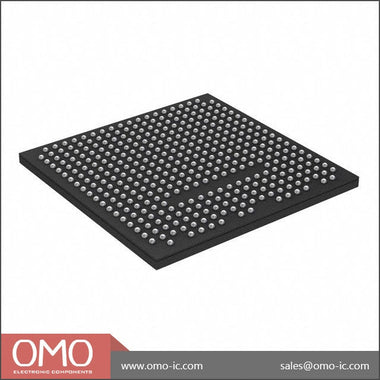
The performance of your XC6SLX16-2CSG324C design is just as dependent on the PCB layout as it is on the HDL code. The CSG324 package is a 0.8mm pitch BGA, which requires a capable PCB fabrication process.
Decoupling Capacitors: This is the most critical aspect of FPGA layout. Place a set of decoupling capacitors as close as physically possible to every VCCINT and VCCO pin. A common strategy is to use a combination of values, such as 0.1µF and 10nF, to provide low impedance across a wide frequency range. These should be placed on the back side of the board directly under the BGA's fanout vias for the shortest possible loop inductance.
BGA Fanout and Routing: A "dog-bone" fanout pattern is standard for 0.8mm pitch BGAs. This involves placing a via adjacent to the BGA pad and connecting them with a short trace. This allows signals to be routed on inner layers. For a device with 232 user I/O, a minimum 6-layer PCB is typical, with 8 or 10 layers being common for more complex routing. Use solid ground and power planes to ensure good signal integrity and a low-impedance power delivery network.
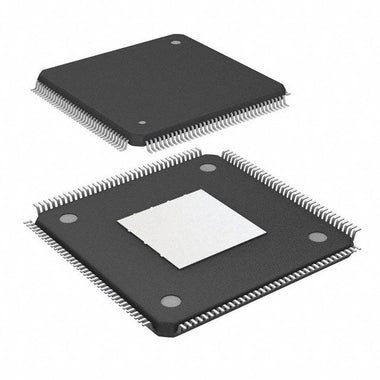
Thermal Management: The XC6SLX16-2CSG324C is a commercial grade part, rated for a junction temperature (Tj) of 0°C to 85°C. You must ensure Tj stays within this range. The CSG324 package has a central ground pad that also acts as the primary path for heat dissipation. It is essential to place an array of thermal vias in this pad area, connecting them directly to the ground plane(s). The ground plane then acts as a small heat sink. For high-utilization designs, use the Xilinx Power Estimator (XPE) spreadsheet to calculate the device's power consumption and determine if additional cooling, like a heat sink or airflow, is necessary.
Where to Buy XC6SLX16-2CSG324C
The XC6SLX16-2CSG324C is a mature and widely adopted FPGA, which is both a benefit and a caution for procurement professionals. Its long market presence means it is generally available from a wide range of sources. However, this popularity also makes it a target for counterfeiters and unauthorized resellers offering poorly stored or remarked components.
To ensure authenticity, full traceability, and proper handling, it is crucial to source these components from a reputable global distributor. WWDParts.com provides access to a global network of vetted suppliers, mitigating the risks associated with the grey market. The XC6SLX16-2CSG324C is typically supplied in the CSG324 package (a 324-ball Chip Scale BGA) on tape and reel for automated assembly or in trays for smaller quantities. When planning your production, be sure to account for lead times, which can fluctuate based on global demand and factory allocation. By partnering with a trusted distributor, you can secure the components you need for both prototyping and volume production. For the most up-to-date availability and pricing information, you can Check XC6SLX16-2CSG324C Inventory & Pricing directly on our platform.
Video Demonstration
Frequently Asked Questions (XC6SLX16-2CSG324C FAQ)
What is the main difference between the Spartan-6 XC6SLX16 and a newer Artix-7 XC7A15T?
The primary differences are process technology, power consumption, and the required design toolchain. The Artix-7 is built on a more modern 28nm process, making it significantly more power-efficient than the 45nm Spartan-6. The biggest practical difference for engineers is the software: Spartan-6 devices require the older Xilinx ISE Design Suite, while Artix-7 and all newer families use the Xilinx Vivado Design Suite. While their logic capacities are similar, the Artix-7 also offers more advanced features like improved clocking resources and, on 'T' models, high-speed serial transceivers.
Do I have to use the Xilinx ISE Design Suite for the XC6SLX16-2CSG324C?
Yes, you must use the Xilinx ISE Design Suite. The Spartan-6 family is not supported by the modern Xilinx Vivado Design Suite, which was introduced for the 7-series devices and beyond. While ISE is considered a legacy tool, it is stable, well-documented, and perfectly capable for developing complex designs for Spartan-6 FPGAs. Many organizations maintain ISE-based workflows specifically for cost-effective products built around these parts.
What are the power supply requirements for the XC6SLX16?
The XC6SLX16 requires a multi-rail power supply. The three main rails are VCCINT (1.2V) for the internal core logic, VCCAUX (2.5V) for auxiliary and configuration logic, and VCCO for the I/O banks. The VCCO rails are bank-specific and can be set to different voltages (e.g., 3.3V, 2.5V, 1.8V) to allow the FPGA to interface with various logic levels simultaneously. Careful power supply design with proper sequencing and decoupling is essential for reliable operation.
Can the XC6SLX16-2CSG324C drive a VGA display?
Absolutely. Driving a standard VGA display is a classic application for an FPGA of this size. The XC6SLX16 has more than enough logic cells to implement the timing generators for horizontal and vertical sync signals, as well as the logic to generate pixel data. With 232 user I/O pins, you have ample connectivity for the 8-bit red, green, and blue channels (24-bit color) plus the H-sync and V-sync signals, with many pins left over for other functions.
What does the "-2CSG324C" suffix mean?
This suffix provides critical information about the specific device variant. "-2" is the speed grade, indicating its timing performance (with lower numbers like -3 being faster). "C" indicates it is a commercial temperature grade device, rated for a junction temperature of 0°C to 85°C. "SG324" defines the package type, which is a 324-ball Chip Scale BGA with a 0.8mm ball pitch. Understanding this code is vital for ordering the correct part for your application's performance and environmental requirements.