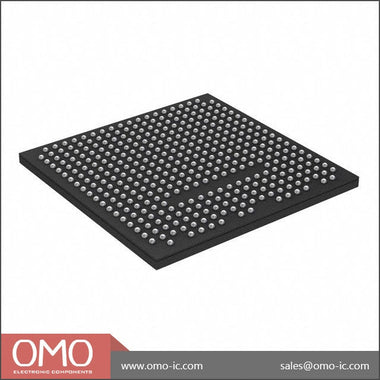
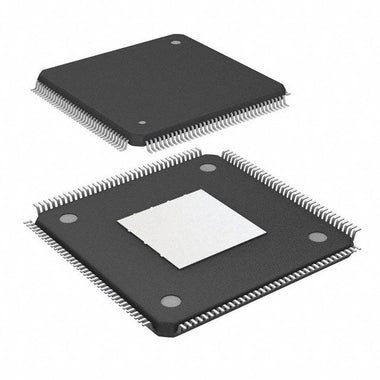
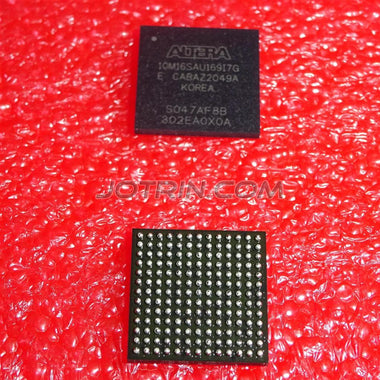
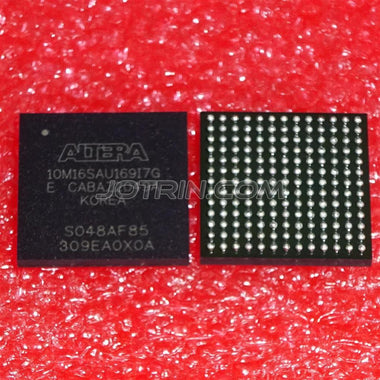
Finding a suitable XC6SLX9-2TQG144I equivalent or replacement can be a critical task for hardware engineers managing existing product lines or facing supply chain disruptions. As a mature component, sourcing this specific Spartan-6 FPGA can be challenging. This comprehensive guide covers pin-compatible drop-ins, functional alternatives that require redesign, and detailed migration considerations to help you navigate your options and make informed decisions for your hardware project.

Table of Contents
XC6SLX9-2TQG144I Overview and Current Availability
The XC6SLX9-2TQG144I is a Field-Programmable Gate Array (FPGA) from the Xilinx (now AMD) Spartan-6 family. This family was designed to provide a low-cost, high-volume solution for a wide range of applications, from automotive infotainment to industrial control and consumer electronics. Understanding its core specifications is the first step in finding a suitable replacement.
The part number breaks down as follows:
- XC6S: Spartan-6 Family
- LX9: Logic-optimized device with approximately 9k logic cells.
- -2: Standard performance speed grade.
- TQG144: 144-pin Thin Quad Flat Pack (TQFP) package.
- I: Industrial temperature range (-40°C to 100°C junction temperature).
Based on the official Xilinx DS162 datasheet, key specifications for the XC6SLX9 include:
- Logic Cells: 9,152
- Slices: 1,430
- Flip-Flops: 11,440
- Total Block RAM: 576 Kbits (organized in 32 blocks of 18 Kb)
- DSP Slices (18x18 Multipliers): 16
- Clock Management Tiles (CMTs): 2
- Maximum User I/O: 102
- Core Voltage (VCCINT): 1.2V (Nominal)
The Spartan-6 family is a mature product line and is generally considered "Not Recommended for New Designs" (NRND). While AMD/Xilinx continues to support existing customers, production volumes are reduced, and the parts are not prioritized for the general distribution market. This lifecycle status is the primary driver behind the sourcing challenges many engineers face. Availability can be sporadic, lead times can extend to many months, and pricing in the open market is often subject to high volatility. For these reasons, many teams are actively seeking both direct replacements and long-term migration strategies for products that use this FPGA.
Pin-Compatible Equivalents
True pin-compatible, drop-in replacements are the ideal solution as they minimize or eliminate the need for costly and time-consuming PCB redesigns. For the XC6SLX9-2TQG144I, the options for direct replacement are limited and exist primarily within the Spartan-6 family itself.
Speed Grade Variants: The most straightforward potential replacement is a different speed grade of the same device. The XC6SLX9-3TQG144I is a faster speed grade (-3) of the same LX9 device in the identical TQG144 package. In most cases, a faster part can replace a slower one without issue. The faster switching characteristics mean that timing constraints met by the -2 grade will almost certainly be met by the -3 grade. However, it is a critical engineering practice to re-run Static Timing Analysis (STA) using the timing models for the -3 grade to formally verify performance. While the original bitstream might function, the correct engineering process is to re-target the design in the Xilinx ISE software to the XC6SLX9-3TQG144I and generate a new bitstream. This ensures the place-and-route tools use the correct timing information for optimization and validation.
Device Density Variants: It is sometimes possible to use a different density device from the same family and package. For example, the XC6SLX16-xTQG144x is a larger device (approx. 16k logic cells) in the same TQG144 package. While the package footprint is identical, this is not a drop-in replacement. The bitstream generated for an LX9 will not work on an LX16. An engineer must re-target the project in ISE to the XC6SLX16, re-compile the entire design, and generate a new bitstream. While most general-purpose I/O pins align between devices in the same package, it is crucial to verify the locations of special-function pins like clock inputs (GCLK), configuration pins (DONE, PROG_B), and JTAG pins. Any discrepancy could require a minor PCB rework (e.g., cutting traces, adding jumpers) or render the board non-functional.
Conversely, migrating to a smaller device like the XC6SLX4-xTQG144x is only possible if the original design's resource utilization (logic cells, BRAM, DSPs) is low enough to fit within the smaller part's capacity. This also requires a full re-compile and bitstream generation.
Functional Alternatives (May Require Redesign)
When a pin-compatible replacement is not available or a long-term product refresh is planned, engineers must look at functional alternatives. These are FPGAs with similar logic capacity and features but from different families or manufacturers. This path always requires a significant redesign effort, including a new PCB layout and a complete port of the design source and constraints.
AMD/Xilinx Migration Path: The logical successor to the Spartan-6 family is the Spartan-7 family. A device like the XC7S15 or XC7S25 would offer similar or greater logic capacity. This migration provides access to a modern architecture with improved performance, lower power consumption, and a more robust supply chain. However, the effort is substantial. The design tools switch from the legacy ISE Design Suite to the modern Vivado Design Suite. Power supply requirements are different, packages are typically BGA instead of TQFP, and all design constraints (timing, pin locations) must be created from scratch. All manufacturer-specific IP cores and primitives (e.g., clock managers, memory blocks) must be updated to their Vivado-equivalent versions.
Intel (formerly Altera) Alternatives: The primary competitor to the Spartan-6 was the Intel Cyclone family. A device from the Cyclone IV E or Cyclone V E series could serve as a functional replacement. For example, an EP4CE10 or EP4CE15 offers a comparable number of Logic Elements (LEs). This migration requires moving to the Intel Quartus Prime design software. The entire design must be ported, including re-instantiating Intel-specific IP for memory, PLLs, and DSPs. A new PCB is mandatory, as the pinouts, package footprints, and power delivery schemes are completely different.
Lattice Semiconductor Alternatives: For cost-sensitive and low-power applications, the Lattice ECP5 or MachXO3 families are strong contenders. An ECP5 device with 12k or 25k Look-Up Tables (LUTs) could replace the XC6SLX9. Lattice FPGAs are known for their efficient I/O and small form factors. The migration path involves using the Lattice Diamond software, porting the HDL, and designing a new PCB. This can be an attractive option for modernizing a design with a focus on reducing cost and power consumption.
Detailed Comparison Table
This table provides a side-by-side comparison of the XC6SLX9-2TQG144I against a pin-compatible speed grade upgrade, a larger same-family device, and a modern alternative from the Spartan-7 family. All specifications are based on manufacturer datasheets.
| Parameter | XC6SLX9-2TQG144I | XC6SLX9-3TQG144I (Faster Speed Grade) | XC6SLX16-2TQG144I (Larger Device) | XC7S15-1FTGB196I (Modern Alternative) |
|---|---|---|---|---|
| Logic Cells (approx.) | 9,152 | 9,152 | 14,579 | 12,800 |
| Block RAM (Kbits) | 576 | 576 | 576 | 720 |
| DSP Slices | 16 | 16 | 32 | 20 |
| Maximum User I/O | 102 | 102 | 102 | 100 |
| Core Voltage (VCCINT) | 1.2V | 1.2V | 1.2V | 1.0V |
| Package | 144-pin TQFP | 144-pin TQFP | 144-pin TQFP | 196-ball FTGB |
| Design Toolchain | Xilinx ISE | Xilinx ISE | Xilinx ISE | AMD Vivado |
| Redesign Effort | N/A | Minimal (Bitstream re-compile) | Low (Bitstream re-compile, pin check) | High (Full PCB and software redesign) |
Migration Guide: Switching from XC6SLX9-2TQG144I
Migrating away from the XC6SLX9-2TQG144I requires a structured approach. The level of effort depends entirely on the chosen replacement part. Here is a practical guide for engineers planning a transition.
Step 1: Identify the Migration Path
First, determine which path is most feasible for your project's timeline, budget, and technical resources.
- Path A: Pin-Compatible Speed Grade (e.g., to XC6SLX9-3TQG144I). Lowest risk and effort.
- Path B: Pin-Compatible Density Change (e.g., to XC6SLX16-2TQG144I). Low-to-moderate risk, requires software changes.
- Path C: Full Redesign (e.g., to Spartan-7 or competitor). Highest effort, but a long-term solution.
Step 2: Executing the Migration
For Path A, the primary task is validation. Although it's a faster part, you must re-target the project in Xilinx ISE to the '-3' speed grade and generate a new bitstream. This allows the Static Timing Analyzer (STA) to use the correct device model. Run a full timing simulation to confirm that no new setup or hold violations have been introduced, which can occasionally happen in complex designs with tight timing paths.
For Path B, the process is more involved. You must change the target device in your ISE project settings to the XC6SLX16. Before compiling, use the Xilinx tools to perform a pin migration check between the LX9 and LX16 in the TQG144 package. Pay close attention to dedicated pins (clocks, configuration, JTAG). If all used pins map correctly, you can proceed to a full synthesis, place-and-route, and bitstream generation. This new bitstream is the only one that will work on the XC6SLX16 hardware.
For Path C, you are undertaking a new product design. This involves schematic capture for the new FPGA, including its different power delivery network (PDN), I/O voltage banks, and configuration circuitry. A new PCB layout is mandatory. In parallel, the software team must port the HDL code to the new toolchain (e.g., Vivado). This means replacing all Spartan-6 specific primitives (like DCMs) with their modern equivalents (like MMCMs), rewriting all timing and I/O constraints from scratch, and performing a full functional verification and validation cycle. This is a significant engineering task that should be planned as a major product revision. When considering this path, it's a good opportunity to Browse Spartan-6 Series and other families to evaluate all modern options.
Where to Source XC6SLX9-2TQG144I and Alternatives
Sourcing mature components like the XC6SLX9-2TQG144I requires diligence and a cautious approach. Due to its NRND status, this part is often a target for counterfeiters and unauthorized resellers offering components with questionable origin and quality. Using parts from such sources can lead to premature field failures, unpredictable performance, and significant financial and reputational damage.
To mitigate these risks, procurement professionals and engineers should prioritize sourcing from reputable, global distributors who can provide component traceability and authenticity documentation. Authorized distributors have a direct relationship with the original component manufacturer (OCM), ensuring the parts are genuine. Independent distributors with robust testing and inspection processes can also be a reliable source, especially for hard-to-find components. They can perform inspections, X-ray analysis, and decapsulation to verify authenticity. When you need to secure inventory, it is essential to work with a trusted supplier. You can Check XC6SLX9-2TQG144I Inventory & Pricing through established channels to ensure you receive authentic components for your production needs.
Video Demonstration
Frequently Asked Questions (XC6SLX9-2TQG144I FAQ)
Can I use an XC6SLX9-3TQG144I to replace an XC6SLX9-2TQG144I?
Yes, this is generally the most straightforward replacement. The XC6SLX9-3TQG144I is the same device in the same package, but with a faster speed grade (-3 is faster than -2). For most designs, a faster part is a safe substitute. However, the correct engineering process is not to simply use the old bitstream, but to re-target your project in the Xilinx ISE software to the -3 speed grade, re-compile, and generate a new bitstream. This ensures the timing analysis is performed against the correct device model and confirms system stability.
Is the XC6SLX16-2TQG144I a drop-in replacement for the XC6SLX9-2TQG144I?
No, it is not a direct drop-in replacement, although it comes in the same TQG144 package. The XC6SLX16 is a larger device with more logic resources, and it requires its own unique bitstream. You cannot program an XC6SLX16 with a bitstream generated for an XC6SLX9. To use it as a replacement, you must change the target device in your ISE project, verify that all critical pins (clocks, configuration) align, and re-compile the entire design to generate a new bitstream for the XC6SLX16.
What is the modern equivalent to the Spartan-6 XC6SLX9?
The modern equivalent from AMD/Xilinx is the Spartan-7 family. A device such as the XC7S15 or XC7S25 offers a similar or greater number of logic resources with better performance and power efficiency. This is considered a migration, not a replacement, as it requires a complete hardware and software redesign. This involves designing a new PCB for a different package (likely BGA), updating the power design, and porting the entire software project from the older ISE toolchain to the modern Vivado Design Suite.
Can I use an Intel/Altera Cyclone FPGA as a replacement?
Functionally, yes, an Intel Cyclone FPGA (like a Cyclone IV E or Cyclone V E) can perform the same role as a Spartan-6. However, this is a major engineering project, not a simple replacement. It requires porting your Verilog/VHDL code to the Intel Quartus Prime software, re-instantiating all manufacturer-specific IP cores (like PLLs and RAM blocks), and creating new timing and pinout constraints. Most importantly, you must design a completely new Printed Circuit Board (PCB) to accommodate the different footprint, pinout, and power requirements of the Intel device.
Why is the XC6SLX9-2TQG144I hard to find or expensive?
The XC6SLX9-2TQG144I is part of the Spartan-6 family, which is a mature product line that AMD/Xilinx has classified as "Not Recommended for New Designs" (NRND). This means production has been scaled back and is primarily focused on supporting long-term contracts with large, existing customers. The reduced availability in the general distribution channel creates scarcity, which in turn leads to supply chain constraints, very long lead times, and significant price volatility on the open market. This is why many companies are actively seeking replacement or migration strategies.