LFE5U-45F-8BG381C Design-In Guide: Why Choose It and How to Use It
As a hardware engineer, you're constantly faced with the challenge of bridging high-speed interfaces without breaking the power budget or the bill of materials. You might need to aggregate data from multiple sensors, drive a small video display, or add a Gigabit Ethernet port to a legacy system. Using a high-end FPGA is often overkill, while a microcontroller lacks the necessary I/O speed and parallel processing capability. The Lattice LFE5U-45F-8BG381C is engineered specifically for this gap, offering a potent combination of high-speed SERDES, flexible logic, and low power consumption in a compact, cost-effective package.

Table of Contents
The Design Challenge LFE5U-45F-8BG381C Solves
Modern embedded systems demand high-bandwidth connectivity. Whether it's for machine vision, industrial automation, 5G infrastructure, or automotive driver-assistance systems (ADAS), the need to process and move data quickly is paramount. The primary engineering challenge is implementing interfaces like PCI Express, Gigabit Ethernet, CPRI, and high-resolution video (DisplayPort, MIPI D-PHY) within strict size, weight, power, and cost (SWaP-C) constraints. This is where the LFE5U-45F-8BG381C, a member of the Lattice ECP5 family, finds its purpose.
Consider a typical scenario: designing a compact industrial camera. The design requires interfacing with a MIPI CSI-2 image sensor, performing some basic image processing like color space conversion or a simple filter, and then transmitting the video stream over Gigabit Ethernet. A standard microcontroller cannot handle the raw data rate from the sensor. A large, mid-range FPGA can certainly do the job, but it comes with a significant cost penalty, a larger physical footprint, and higher power consumption, which complicates thermal management in a sealed enclosure. This is the "overkill" problem.
The LFE5U-45F-8BG381C addresses this directly. Its architecture is optimized for high-speed connectivity. It features four 5G SERDES (Serializer/Deserializer) channels that can be configured to implement a wide range of standard protocols. This allows it to act as a powerful bridge chip. You can receive data on one high-speed interface, use the 44k Look-Up Tables (LUTs) and 194 DSP slices for real-time processing, and re-transmit it on another. The on-chip embedded block RAM (EBR) provides the necessary buffering for rate matching and packet handling. Because the ECP5 family was designed for high-volume, cost-sensitive applications, it delivers this capability at a price point and power envelope that is significantly lower than its more complex counterparts. It enables designers to add high-value features without escalating the system cost or complexity, making it an ideal choice for smart "glue logic" and data bridging applications.
Key Specifications at a Glance
Understanding the core specifications is the first step in qualifying any component for a new design. The LFE5U-45F-8BG381C offers a balanced feature set tailored for connectivity and signal processing. All values are sourced directly from the official Lattice ECP5 Family Datasheet.
| Parameter | Value | Why It Matters for Your Design |
|---|---|---|
| Logic Slices (LUTs) | 43.8k | Provides ample logic resources for implementing control logic, state machines, and data path manipulation. Sufficient for moderately complex designs. |
| DSP Slices | 194 | Hardware multipliers (18x18) that accelerate digital signal processing tasks like FIR filters, FFTs, and image processing algorithms, offloading the main logic fabric. |
| Embedded Block RAM (EBR) | 1944 kbits | Essential for data buffering in applications like video frame buffers, Ethernet packet stores, or general-purpose FIFOs between clock domains. |
| SERDES Channels | 4 channels @ up to 5 Gbps | The key feature. Enables native implementation of high-speed protocols like PCIe Gen 1/2, SGMII/GbE, XAUI, CPRI, and JESD204B without external PHYs. |
| Maximum User I/O | 205 | Offers a high number of flexible I/O pins for connecting to peripherals, memory, and other system components. Supports various standards like LVDS and LVCMOS. |
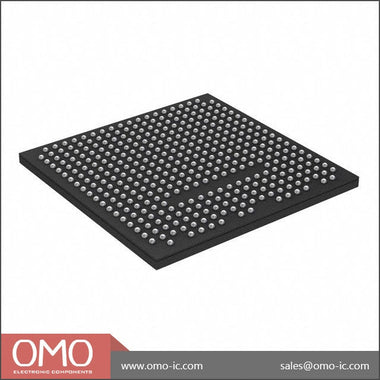
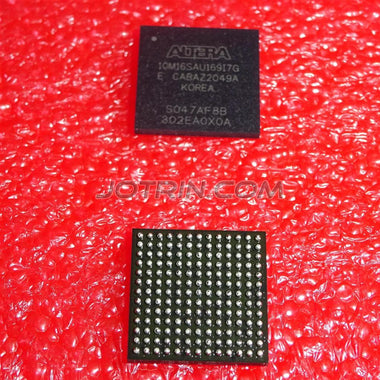
| Package | 381-ball caBGA (17x17 mm) | A compact, flip-chip BGA that provides good signal integrity and thermal performance, suitable for space-constrained designs. |
| Core Voltage (VCC) | 1.1V | A low core voltage contributes to the device's overall low power consumption, a critical factor for thermally sensitive or battery-powered applications. |
| Speed Grade | -8 (Fastest) | This part is the fastest commercial-grade version, ensuring timing closure for high-frequency designs and maximizing performance. |
LFE5U-45F-8BG381C vs Alternatives: Head-to-Head
When selecting an FPGA, it's crucial to compare it against other devices in its class. The main competitors for the LFE5U-45F-8BG381C are typically found in the Xilinx Artix-7 and Intel Cyclone V families.
| Feature | LFE5U-45F-8BG381C (Lattice) | XC7A35T (Xilinx Artix-7) | 5CGXFC4C6 (Intel Cyclone V GX) |
|---|---|---|---|
| Logic Resources | ~44k LUTs | ~33k LUTs | ~50k LEs |
| SERDES Channels | 4 @ 5 Gbps | 4 @ 6.6 Gbps | 6 @ 6.144 Gbps |
| DSP Slices | 194 (18x18) | 90 (18x25) | 112 (18x18 variable precision) |
| Power Consumption | Low | Moderate | Moderate to High |
| Cost Profile | Cost-Optimized | Mid-Range | Mid-Range to High |
| Primary Strength | Low-power, cost-effective SERDES connectivity. | High logic-to-I/O ratio, mature toolchain. | Higher SERDES count and flexible DSP blocks. |
So, when should you choose the LFE5U-45F-8BG381C? The decision hinges on your primary design driver. If your application is defined by the need for one or more high-speed serial interfaces (like Gigabit Ethernet or PCIe x1/x2) and the overall system cost and power are the most critical constraints, the ECP5 is an exceptional choice. It provides just the right amount of resources without the premium price tag of its competitors. While an Artix-7 part might offer slightly faster SERDES and a more mature toolset for complex logic designs, it often comes with a higher power draw. The Cyclone V GX offers more SERDES channels, but this capability is reflected in its higher cost and power consumption. The LFE5U-45F-8BG381C hits a sweet spot for applications that need to be "connected and smart" but not necessarily "computationally massive." It's the go-to choice for interface bridging, data aggregation, and light-duty video processing in high-volume, cost-sensitive products.
Recommended Application Circuit
Integrating the LFE5U-45F-8BG381C into your design requires careful attention to three main areas: power, configuration, and high-speed I/O. A robust implementation in these areas is critical for system stability and performance.
Power Delivery Network (PDN): The FPGA requires several voltage rails. The most critical is the 1.1V core voltage (VCC), which powers the internal logic. This rail can have significant transient current demands, so a capable switching regulator is recommended. You will also need VCCAUX (typically 2.5V) for auxiliary internal circuits like the PLLs and some I/O buffers, and one or more VCCIO rails for the I/O banks. Each I/O bank can be powered independently (e.g., 1.8V, 2.5V, or 3.3V) to interface with different logic levels. Following the datasheet's recommendations for decoupling is non-negotiable. Place a combination of bulk capacitors (e.g., 10-47uF) and high-frequency ceramic capacitors (e.g., 0.1uF, 0.01uF) as close as possible to every power and ground pin of the BGA.
Configuration Circuit: ECP5 FPGAs are SRAM-based, meaning they must be configured from an external non-volatile memory on every power-up. The most common method is Master SPI mode. In this setup, the FPGA acts as the SPI master and reads its configuration bitstream from a standard SPI NOR Flash chip. You'll need to connect the FPGA's dedicated configuration pins (CCLK, MISO, MOSI, SPI_SS) to the flash memory. The size of the flash depends on your bitstream size, but a 16Mbit or 32Mbit device is a safe starting point for a 45k LUT device. Ensure the flash memory's VCC is compatible with the VCCIO of the FPGA bank where the configuration pins reside.
High-Speed I/O: For SERDES interfaces, AC coupling capacitors (typically 100nF) are required on the transmit and receive differential pairs (TXP/TXN, RXP/RXN). These capacitors block DC bias differences between the FPGA and the connected device. The layout for these traces is critical and is discussed in the next section. For general-purpose I/O, simply connect them to your peripherals, ensuring the voltage levels match the VCCIO supplied to that bank. The entire Browse ECP5 Series is designed to simplify this kind of high-performance I/O integration.
PCB Layout and Thermal Design Tips
A successful design with a 381-ball BGA like the LFE5U-45F-8BG381C depends heavily on a well-executed PCB layout. Mistakes here can lead to signal integrity issues, power instability, and thermal failure.
BGA Fanout and Layer Stackup: The 0.8mm pitch of the BG381 package requires a multi-layer PCB. A 6 or 8-layer stackup is standard practice. This allows for dedicated power and ground planes, which are essential for signal integrity and a low-impedance PDN. For fanning out the inner balls of the BGA, a "dog-bone" fanout with microvias is the most common technique. This involves placing a via adjacent to the BGA pad and connecting them with a short trace. For the highest density and best performance, via-in-pad (VIP) can be used, but this increases PCB fabrication costs.
Signal and Power Integrity:
- SERDES Routing: Route all SERDES differential pairs with 100-ohm controlled impedance. Keep the traces within a pair tightly coupled and length-matched to minimize skew. Avoid sharp bends and route them on an inner layer, referenced to a solid ground plane, to shield them from noise.
- Power Planes: Use solid, uninterrupted ground planes. It's often best to have a primary ground plane on layer 2. Power planes for VCC, VCCAUX, and VCCIO should be as solid as possible to provide a low-inductance path for current. If space is tight, use wide power pours instead of thin traces.
- Decoupling: Place decoupling capacitors on the bottom side of the PCB, directly under the FPGA, as close to the BGA balls as possible. This minimizes the loop inductance and provides the most effective high-frequency noise filtering.
Thermal Management: The LFE5U-45F-8BG381C uses a flip-chip (caBGA) package, which offers superior thermal performance compared to wire-bond packages. Heat is primarily conducted from the die through the solder balls into the PCB. To facilitate this, create a grid of thermal vias in the PCB directly under the FPGA. These vias should connect the top-side pads (especially the central ground pads) to the internal ground planes, effectively turning the planes into a large heat spreader. For high-utilization designs operating in a warm environment, a small, passive heatsink attached to the top of the package may be necessary to keep the junction temperature within the commercial operating range (0°C to 85°C).
Where to Buy LFE5U-45F-8BG381C
The LFE5U-45F-8BG381C is a widely used part within the ECP5 family, making it generally available through authorized distributors and global component marketplaces. As a procurement professional or EMS company, you will typically find this component supplied in either JEDEC trays for smaller quantities or on tape and reel for high-volume automated manufacturing lines. The "-8BG381C" suffix specifies the fastest commercial speed grade in the 381-ball BGA package.
Lead times and availability can fluctuate based on global supply chain dynamics. It is always prudent to plan procurement well in advance, especially for production runs. Engaging with a reliable distributor can provide visibility into stock levels, lead times, and potential alternatives if needed. For up-to-date information on availability and to secure your inventory for an upcoming build, you can Check LFE5U-45F-8BG381C Inventory & Pricing on our platform.
Video Demonstration
Frequently Asked Questions (LFE5U-45F-8BG381C FAQ)
What is the main advantage of the LFE5U-45F-8BG381C over a comparable Xilinx Artix-7 FPGA?
The primary advantage is its superior performance-per-watt and cost-effectiveness for SERDES-based connectivity applications. While an Artix-7 may offer more raw logic or DSP resources in some variants, the ECP5 family is specifically architected to provide high-speed serial I/O at a lower power point and acquisition cost. If your design is driven by the need to bridge interfaces like SGMII, PCIe, or CPRI on a tight budget, the LFE5U-45F-8BG381C is often the more efficient choice.
Can I implement a PCI Express endpoint with the LFE5U-45F-8BG381C?
Yes, absolutely. The four 5G SERDES channels are fully capable of implementing a PCI Express Gen 1 (2.5 GT/s) or Gen 2 (5.0 GT/s) interface. You can configure it as a x1, x2, or x4 endpoint. Lattice provides pre-engineered IP cores for PCIe that can be integrated into your design using their Diamond software, significantly simplifying the development process for PCIe-based systems.
What type and size of configuration flash memory should I use?
You should use a standard SPI NOR Flash memory. The FPGA reads its configuration bitstream from this external chip on power-up. For the LFE5U-45F, the uncompressed bitstream size is under 12 Mbits, so a 16 Mbit SPI flash is a common and safe choice. It's good practice to select a slightly larger flash (e.g., 32 Mbit) to accommodate future firmware growth or to store additional user data.
What are the critical power rails I need to design for this FPGA?
There are three main categories of power rails. First is the core voltage (VCC) at 1.1V, which powers the internal logic fabric and requires a clean, stable supply. Second is the auxiliary voltage (VCCAUX) at 2.5V, powering PLLs and other analog blocks. Finally, you have the I/O bank voltages (VCCIO), which can be set independently for each bank to levels like 1.8V, 2.5V, or 3.3V to match the logic levels of connected devices.
How complex is the PCB layout for the 381-ball BGA package?
The 17x17mm, 0.8mm pitch BGA package requires an experienced layout engineer and a well-defined PCB manufacturing process. A minimum of a 6-layer board is strongly recommended to accommodate proper power planes, ground planes, and signal routing. The most critical aspects are the BGA fanout strategy, controlled impedance routing for high-speed differential pairs (like SERDES), and a dense array of decoupling capacitors placed directly under the chip for power integrity.