LFE5U-25F-8BG381C Equivalents, Replacements, and Cross-Reference Guide
Navigating the complexities of the electronic component supply chain is a constant challenge for hardware engineers and procurement specialists. When a specific part like the Lattice LFE5U-25F-8BG381C FPGA becomes difficult to source, understanding your options is critical to keeping projects on track. This guide provides a detailed analysis of potential equivalents, from pin-compatible alternatives within the same family to functional replacements that may require board-level changes. We will cover the technical trade-offs, migration strategies, and sourcing considerations to help you make an informed decision.

Table of Contents
LFE5U-25F-8BG381C Overview and Current Availability
The LFE5U-25F-8BG381C is a specific configuration of the Lattice Semiconductor ECP5 family of FPGAs. It is designed to offer a balance of logic density, I/O count, and high-speed SERDES interfaces in a compact and power-efficient package, making it suitable for a wide range of applications including industrial control, video processing, and communications infrastructure. Let's break down the part number:
- LFE5U: Indicates the ECP5 family with "Ultra" features, which includes the high-speed SERDES transceivers.
- -25: Specifies the logic density, corresponding to 24K Look-Up Tables (LUTs).
- F: Denotes the standard power variant.
- -8: Represents the speed grade. An '-8' speed grade is the slowest commercial option, offering the most relaxed timing at the lowest cost.
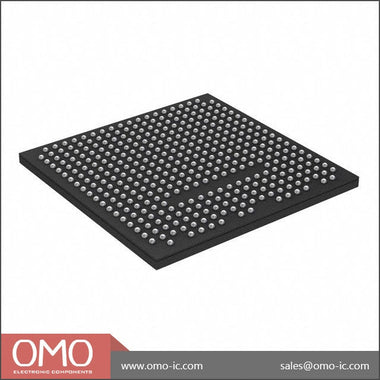
- BG381: Describes the package, a 381-ball fine pitch BGA (caBGA) with a 17x17 mm footprint and 0.8mm pitch.
- C: Indicates the commercial temperature range (0°C to 85°C junction temperature).
Key features, according to the official datasheet, include 24K LUTs, 1008 Kbits of embedded block RAM, 28 configurable 18x18 DSP slices, and four SERDES channels capable of speeds up to 3.2 Gbps. This combination makes it a versatile choice for bridging, aggregation, and control plane tasks. The ECP5 family is considered a mature product line. While not at an end-of-life (EOL) stage, certain part numbers, especially specific speed and package combinations, can experience allocation, extended lead times, or pricing volatility due to shifting global demand and fabrication capacity. Engineers designing with the LFE5U-25F-8BG381C should be aware of its market position and have a contingency plan involving potential substitutes.
Pin-Compatible Equivalents
Finding a true, 100% drop-in replacement for an FPGA is rare. However, within the ECP5 family and the BG381 package, several pin-compatible options exist. These parts share the exact same physical footprint and pinout, meaning they can be soldered onto the same PCB layout without any hardware changes. However, "pin-compatible" does not mean "transparent." Any change requires careful engineering validation.
Here are the primary categories of pin-compatible alternatives for the LFE5U-25F-8BG381C:
- Different Speed Grades: The most common substitution is moving to a faster speed grade. You could replace the LFE5U-25F-8BG381C with an LFE5U-25F-7BG381C or LFE5U-25F-6BG381C. These parts are faster and will almost certainly meet the timing requirements of a design built for the slower '-8' grade. The primary downside is cost, as faster grades are more expensive. Crucially, you must still re-run static timing analysis (STA) in the Lattice Diamond software to formally verify that all timing constraints are met, even though it's highly likely they will be.
-
Different Logic Densities: If the LFE5U-25F is unavailable, you might consider a different density in the same package.
- Upsizing: The LFE5U-45F-8BG381C offers 44K LUTs. It is pin-compatible and can be a viable replacement. You would need to recompile your design targeting the new device in Lattice Diamond. As long as your original design fits, it will work. The device will be more expensive and may have slightly different power characteristics.
- Downsizing: The LFE5U-12F-8BG381C offers 12K LUTs. This is only an option if your design's resource utilization (LUTs, BRAM, DSPs) is low enough to fit into the smaller device. This requires a full re-synthesis and place-and-route to confirm.
- Different Temperature Grades: The LFE5U-25F-8BG381I is the industrial temperature grade (-40°C to 100°C) version. It is a pin-compatible and generally safe replacement for the commercial 'C' grade part. It is built to a higher tolerance and is more expensive. It's an excellent option if availability is the sole concern and the increased cost is acceptable.
- LFE5UM Variant: The LFE5UM-25F-8BG381C is a pin-compatible variant with double the number of DSP slices (56 vs. 28). If your design is not DSP-intensive, this can serve as a replacement. If your design *is* DSP-heavy, this could be a significant upgrade. You must re-target the device in the design software.
In all cases of pin-compatible substitution, a new programming file (.jed or .bit) must be generated for the specific target device. You cannot use the bitstream for a -25F device on a -45F device, even if the design fits.
Functional Alternatives (May Require Redesign)
When pin-compatible options are exhausted or a long-term strategic shift is needed, engineers must look at functional alternatives from other FPGA vendors. This path is significantly more involved, requiring a complete PCB redesign and a full port of the HDL design, including IP cores and timing constraints. This is not a "replacement" in the drop-in sense, but a "migration" to a new platform.
The primary competitors offering FPGAs in a similar class to the ECP5 are AMD (formerly Xilinx) and Intel (formerly Altera).
1. AMD/Xilinx Artix-7 Family: The Artix-7 series is a strong functional equivalent, known for its performance-per-watt. A part like the XC7A35T in an FGG484 (1mm pitch) or FTG256 (0.8mm pitch) package would be a comparable starting point.
- Logic: The XC7A35T offers 33,280 logic cells (a different metric than LUTs, but roughly comparable in scale).
- SERDES: It includes GTP transceivers that are competitive with the ECP5's SERDES.
- Redesign Effort: This is a major effort. You must switch from the Lattice Diamond toolchain to the AMD Vivado Design Suite. All HDL code will likely port over, but any Lattice-specific IP cores (like SERDES primitives, PLLs, or memory controllers) must be replaced with their Xilinx equivalents. Timing constraints must be converted from Lattice's SDC format to Xilinx's XDC format. The PCB will need a complete re-layout for the new package footprint and power rail requirements.
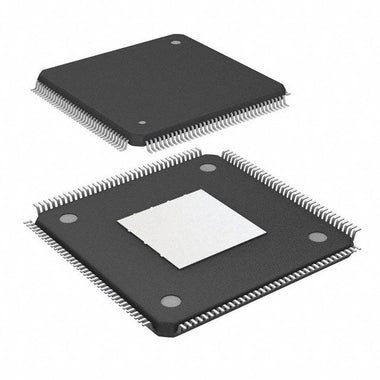
2. Intel/Altera Cyclone 10 LP Family: The Cyclone 10 LP family is optimized for low power and low cost. A device like the 10CL025 in a U256 or F484 package could be considered.
- Logic: The 10CL025 has 25K Logic Elements (LEs). Note that Cyclone 10 LP devices do not have high-speed SERDES transceivers. For that, you would need to look at the Cyclone V or Arria series. This makes the Cyclone 10 LP a suitable alternative only if your design does not use the SERDES on the ECP5.
- Redesign Effort: Similar to the Xilinx path, this requires a move to the Intel Quartus Prime Software. All Altera/Intel-specific IP must be instantiated, and a full board spin is necessary. The power delivery network (PDN) must be re-evaluated for the new device's requirements.
Choosing a functional alternative is a strategic decision. It's often undertaken for a new product revision or when an entire product line is being migrated away from a component family due to long-term supply chain concerns. The non-recurring engineering (NRE) cost of the redesign must be weighed against the benefits of improved availability or potentially lower cost from the new part.
Detailed Comparison Table
The following table provides a side-by-side comparison of the LFE5U-25F-8BG381C with a pin-compatible upgrade and two functional alternatives from other vendors. Note that metrics like "Logic Cells" are not always directly comparable between vendors, but they provide a general sense of scale. All specifications are sourced from official manufacturer datasheets.
| Parameter | Lattice LFE5U-25F-8BG381C | Lattice LFE5U-45F-8BG381C (Pin-Compatible Upgrade) | AMD Artix-7 XC7A35T-1FTG256C (Functional Alt.) | Intel Cyclone 10 LP 10CL025YE144C8G (Functional Alt.) |
|---|---|---|---|---|
| Manufacturer | Lattice Semiconductor | Lattice Semiconductor | AMD (Xilinx) | Intel (Altera) |
| Logic Elements | 24K LUTs | 44K LUTs | 33,280 Logic Cells / 20,800 LUTs | 24,624 Logic Elements (LEs) |
| Block RAM | 1008 Kbits | 1998 Kbits | 1,800 Kbits | 594 Kbits |
| DSP Slices | 28 (18x18) | 132 (18x18) | 90 | 112 (18x18 Multipliers) |
| SERDES Channels | 4 @ 3.2 Gbps | 4 @ 3.2 Gbps | 4 GTP @ 6.6 Gbps | 0 |
| Max User I/O | 245 | 245 | 106 | 96 |
| Core Voltage (VCC) | 1.1V | 1.1V | 1.0V | 1.2V |
| Package | 381-ball caBGA (17x17mm) | 381-ball caBGA (17x17mm) | 256-ball FTBGA (17x17mm) | 144-pin EQFP (20x20mm) |
Migration Guide: Switching from LFE5U-25F-8BG381C
Successfully migrating away from the LFE5U-25F-8BG381C, whether to a pin-compatible part or a completely new architecture, requires a methodical approach. Rushing this process can lead to costly board respins or subtle, hard-to-debug system failures. Here is a checklist of critical items to verify.
For Pin-Compatible Substitutions:
- Software Project Retargeting: This is the first and most important step. Open your project in Lattice Diamond. Change the target device to the new part number (e.g., from LFE5U-25F... to LFE5U-45F...). You cannot skip this.
- Full Recompilation: Perform a full synthesis, place, and route for the new device. Do not assume the old bitstream will work. The internal routing and resources are different, even for pin-compatible parts.
- Static Timing Analysis (STA): After compilation, meticulously review the timing analysis report. Even when moving to a faster speed grade, it's essential to confirm that all setup, hold, and clock-domain crossing constraints are met. Pay special attention to I/O timing relative to external components.
- Power Estimation: Use the Lattice Power Calculator tool to re-estimate power consumption for the new device. A higher-density part (like the -45F) or a faster speed grade will likely consume more power. Ensure your power delivery network (PDN) and thermal solution (heatsinks, airflow) can handle the potential increase.
- Generate New Programming File: Create the new .jed or .bit file and ensure your manufacturing or programming process is updated to use this new file for the boards using the substitute part.
For Functional Alternative (Redesign) Migrations:
This is a full-scale engineering project. The checklist is much more extensive.
- Toolchain and IP Migration: The biggest hurdle is moving from Lattice Diamond to AMD Vivado or Intel Quartus. This involves learning a new tool, but more importantly, replacing all vendor-specific IP. Your DDR memory controller, SERDES PHY, PCIe core, and even simple PLLs must be replaced with equivalents from the new vendor's library. This is a significant design effort.
- HDL and Constraints Porting: While standard Verilog/VHDL is portable, vendor-specific primitives are not. Timing constraints must be translated from SDC to the new format (e.g., XDC for Vivado), which is not always a one-to-one mapping.
- Schematic and Layout Redesign: A new footprint means a new PCB layout. Pay close attention to the new device's power pin requirements, decoupling capacitor guidelines (often very strict), and I/O banking rules. The number and voltage of power rails may differ.
- Signal Integrity Analysis: High-speed interfaces like SERDES or DDR memory require new signal integrity simulations (e.g., using HyperLynx or SiSoft) for the new board layout and FPGA driver/receiver characteristics.
Whether you are making a small substitution or a major migration, it's wise to explore the full range of devices within the ECP5 family first. You can Browse ECP5 Series to see if a different density or package combination might solve your problem with less engineering effort.
Where to Source LFE5U-25F-8BG381C and Alternatives
During times of supply chain disruption, sourcing becomes a critical function. When looking for the LFE5U-25F-8BG381C or its alternatives, a multi-faceted strategy is essential.
Start by checking with large, franchised distributors. They offer the highest degree of certainty regarding component authenticity and handling. However, during shortages, their stock is often the first to be depleted, and they may have long lead times or allocate stock to larger customers.
This is where independent distributors like WWDParts.com play a crucial role. We specialize in navigating the global open market to find available inventory that may not be visible through standard channels. Our quality control and inspection processes are designed to mitigate the risks of sourcing from the open market, including screening for counterfeit and refurbished components. When purchasing from any non-franchised source, it is vital to work with a supplier who has robust anti-counterfeit measures in place.
Be wary of sources on consumer-to-consumer platforms or brokers with no traceability or quality inspection credentials. The risk of receiving incorrect, damaged, or counterfeit FPGAs from such channels is extremely high and can lead to catastrophic failures in the field. Always prioritize suppliers who can provide traceability, date codes, and a certificate of compliance. You can always Check LFE5U-25F-8BG381C Inventory & Pricing through our platform to access our globally sourced stock.
Video Demonstration
Frequently Asked Questions (LFE5U-25F-8BG381C FAQ)
Can I replace a LFE5U-25F-8BG381C with a faster speed grade like the -7BG381C?
Yes, this is one of the most common and safest substitutions. A faster speed grade part (-7 or -6) is designed to meet tighter timing specifications than the slower -8 grade. Therefore, it will almost certainly work in a design that was timed for the -8 grade. However, you must perform your due diligence by recompiling the design for the new speed grade in Lattice Diamond and verifying that all timing constraints are still met in the static timing analysis report. The primary drawback is that faster speed grades are typically more expensive.
Is the industrial grade LFE5U-25F-8BG381I a drop-in replacement for the commercial grade?
Yes, the industrial grade ('I') part is a pin-compatible replacement for the commercial grade ('C') part. The industrial version is rated for a wider operating temperature range (-40°C to 100°C junction temp) compared to the commercial part (0°C to 85°C). It is manufactured and tested to higher standards, making it a more robust, but also more expensive, component. For a system operating in a standard commercial environment, using an industrial part is perfectly acceptable and is a good strategy when the commercial version is out of stock.
What is the difference between LFE5U-25F and LFE5UM-25F? Can I use one for the other?
The 'M' in LFE5UM designates a device with more DSP (Digital Signal Processing) resources. For the 25K density, the LFE5U-25F has 28 (18x18) DSP slices, while the LFE5UM-25F has 56 DSP slices. They are pin-compatible in the same package. If your design does not use many DSPs, you can likely use the LFE5UM as a substitute for the LFE5U by simply retargeting and recompiling in software. If your design is DSP-heavy, the LFE5UM could offer a performance boost, but you cannot replace an LFE5UM with a standard LFE5U if your design requires more than 28 DSPs.
My design uses 20K LUTs. Can I use the smaller LFE5U-12F-8BG381C to save cost?
No, you cannot. The LFE5U-12F device has a maximum of 12K LUTs. A design that requires 20K LUTs will not fit into this smaller device. The synthesis and place-and-route tools in Lattice Diamond will fail due to a lack of resources. If you need to find a replacement, you must choose a device with at least the same or greater logic capacity, such as the original LFE5U-25F (24K LUTs) or the larger LFE5U-45F (44K LUTs).
Can I replace the Lattice LFE5U-25F-8BG381C with a Xilinx Artix-7 FPGA?
No, not as a direct replacement. While an Artix-7 device may have similar functional capabilities (logic, RAM, SERDES), it is not a drop-in or pin-compatible substitute. Switching from a Lattice ECP5 to a Xilinx Artix-7 requires a complete redesign of the printed circuit board (PCB) to accommodate the different package footprint, pinout, and power requirements. Furthermore, it requires a complete migration of the FPGA design itself, including porting the HDL to a new toolchain (Vivado), replacing all Lattice-specific IP cores with Xilinx equivalents, and rewriting all timing constraints. This is a major engineering task, not a simple component swap.