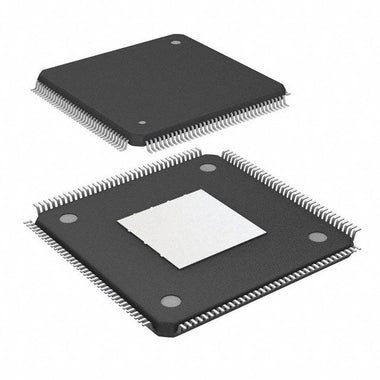
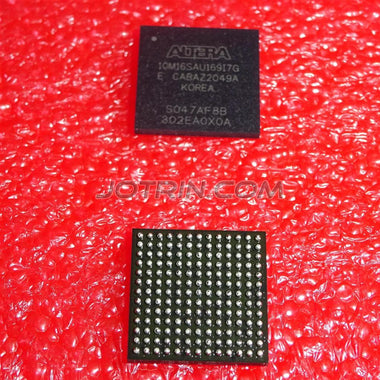
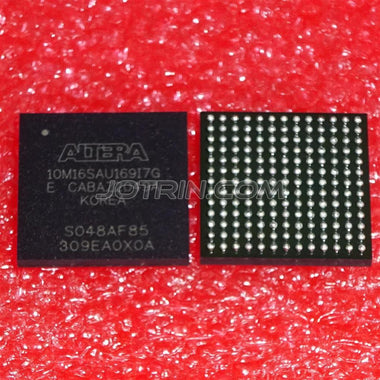
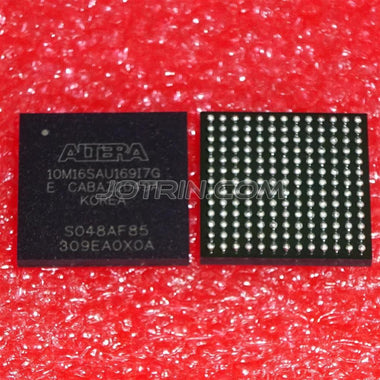
The Xilinx XC6SLX16-2CSG324C is a field-programmable gate array (FPGA) from the Spartan-6 family, engineered to provide a cost-effective, low-power solution for a wide range of logic-intensive applications. It strikes a crucial balance between processing capability, I/O flexibility, and power consumption, making it a workhorse component in industrial, automotive, and consumer electronics. This device allows hardware engineers to implement custom digital circuits, from simple glue logic to complex system-on-chip (SoC) designs, offering a significant time-to-market advantage over ASIC development.

Table of Contents
What is the XC6SLX16-2CSG324C?
The XC6SLX16-2CSG324C is a specific member of the Xilinx (now AMD) Spartan-6 family of FPGAs, built on a mature 45 nm process technology. This technology choice was pivotal in delivering a new level of power efficiency and cost reduction compared to previous FPGA generations. The '16' in the part number designates its logic capacity, placing it in the lower-mid range of the Spartan-6 family, ideal for applications that require substantial logic but not the massive scale of high-end FPGAs.
At its core, the architecture is based on a fabric of configurable logic blocks (CLBs). In the Spartan-6, each CLB contains two slices, and these slices come in two flavors: SliceL (Logic) and SliceM (Memory). The XC6SLX16 contains a mix of these. A SliceL is optimized for standard combinatorial logic and contains four 6-input look-up tables (LUTs), four flip-flops, and associated carry logic. A SliceM is more versatile; in addition to the logic capabilities of a SliceL, its LUTs can be configured as distributed RAM or as 32-bit shift registers (SRL32), providing fine-grained memory resources throughout the fabric.
Beyond the general-purpose logic fabric, the XC6SLX16 integrates several specialized hard IP blocks to improve performance and efficiency for common functions. These include 32 DSP48A1 slices, which are essential for signal processing tasks. Each DSP slice contains a high-speed 18x18 multiplier, an adder, and an accumulator, capable of performing multiply-accumulate (MAC) operations far more efficiently than can be implemented in soft logic. It also includes 576 Kbits of dedicated Block RAM, organized in 18 Kb blocks. These are true dual-port RAMs that are critical for buffering data, implementing FIFOs, and creating processor memory. For clocking, the device features multiple Clock Management Tiles (CMTs), each containing two Digital Clock Managers (DCMs) and one Phase-Locked Loop (PLL). This powerful combination allows for robust clock synthesis, clock deskew, jitter filtering, and frequency multiplication/division, which are fundamental to any stable synchronous digital design.
Pinout Configuration and Packaging
The XC6SLX16-2CSG324C is offered in the CSG324 package. This is a 324-ball Chip-Scale BGA (Ball Grid Array) package with a 1.0mm ball pitch and a 15x15 mm body size. This package provides a good balance between I/O density and PCB layout complexity, making it suitable for cost-sensitive applications that still require a significant number of external connections.
The 324 pins are not just user I/O. A significant number are dedicated to power, ground, and configuration functions, which are critical for the device's operation. Key pin categories include:
- Power Pins: Multiple power rails are required. VCCINT (1.2V nominal) powers the internal logic core. VCCAUX (2.5V nominal) powers auxiliary internal circuits, including the JTAG and configuration logic. VCCO pins power the I/O banks, and their voltage (e.g., 1.8V, 2.5V, 3.3V) can be set independently for each bank to interface with different logic levels. Proper decoupling with capacitors close to each power pin is non-negotiable for signal integrity.
- Ground Pins (GND): A large number of ground pins are provided to ensure a low-inductance return path for signals and power, which is essential for high-speed operation and noise reduction.
- Configuration Pins: These pins control how the FPGA loads its configuration bitstream upon power-up. The MODE pins (M0, M1) select the configuration mode (e.g., Master SPI, Slave Serial). Other critical pins include PROG_B (to initiate reconfiguration), DONE (indicates successful configuration), and INIT_B (indicates an error during configuration).
- JTAG Pins: The standard JTAG test access port pins (TCK, TMS, TDI, TDO) are present for boundary-scan testing, in-system programming, and debugging with tools like a ChipScope Pro logic analyzer.
- User I/O: The remaining pins are available as general-purpose user I/O. In the CSG324 package, the XC6SLX16 provides up to 232 user I/O pins. These can be configured to support a wide variety of single-ended and differential signaling standards.
Core Architectural Features
- Advanced Logic Fabric: The device is built around a high-density logic fabric featuring 6-input Look-Up Tables (LUTs), a significant improvement over the 4-input LUTs of previous generations. This allows more logic to be packed into each LUT, improving overall device utilization and performance. Each CLB contains eight flip-flops, providing ample resources for registered designs.
- Integrated DSP48A1 Slices: It includes 32 dedicated DSP slices, each capable of performing an 18 x 18 bit signed multiplication and accumulation. This hard IP provides a massive performance and efficiency boost for computationally intensive algorithms like FIR filters, FFTs, and correlators, which are common in digital communications and image processing.
- Flexible Block RAM: The XC6SLX16 contains a total of 576 Kbits of fast, dual-port Block RAM. These 18 Kb blocks can be cascaded to create larger memory arrays or configured in various width/depth combinations. They also feature a built-in FIFO controller to simplify the implementation of data buffers.
- High-Performance Clock Management: The device features multiple Clock Management Tiles (CMTs), each with PLLs and DCMs. These blocks provide comprehensive clocking capabilities, including frequency synthesis (multiplication and division), phase shifting, clock deskewing, and jitter attenuation, ensuring robust timing across the entire design.
- Versatile I/O Resources: The I/O blocks (IOBs) support a wide range of signaling standards, from standard LVCMOS to high-speed differential standards like LVDS. Features like Digitally Controlled Impedance (DCI) allow for on-chip termination, simplifying board design and improving signal integrity by matching the driver impedance to the transmission line.
Specifications Parameter Table
| Specification | Technical Details |
|---|---|
| Logic Cells | 14,579 |
| Number of Slices | 2,278 |
| Number of Flip-Flops | 18,228 |
| Total Block RAM | 576 Kbits |
| Number of DSP48A1 Slices | 32 |
| Number of Clock Management Tiles (CMTs) | 4 |
| Maximum User I/O | 232 (in CSG324 package) |
| Core Voltage (VCCINT) | 1.14V to 1.26V (1.2V Nominal) |
XC6SLX16-2CSG324C Equivalents, Cross Reference & Lifecycle
The Spartan-6 family is a mature product line. While still in production to support a vast installed base of products, it is generally considered "Not Recommended for New Designs" (NRND) by most distributors and by AMD/Xilinx themselves. For new projects, engineers are strongly encouraged to use newer families like the Artix-7, which offer superior performance, lower power, and are supported by the modern Vivado Design Suite.
Finding a direct, drop-in "equivalent" for an FPGA is exceptionally difficult. Unlike a simple op-amp, an FPGA's function is defined by the user's custom bitstream. However, within the Spartan-6 family, some level of pin compatibility may exist. For example, a board designed for the XC6SLX16-CSG324 might also accommodate an XC6SLX9-CSG324 or XC6SLX25-CSG324, provided the I/O assignments are compatible. This would require a recompilation of the design for the new target device but could be a viable sourcing strategy. It is crucial to verify pin compatibility using the official Xilinx documentation before attempting such a substitution.
For procurement professionals managing existing product lines, securing a stable supply of the XC6SLX16-2CSG324C is key. Due to its mature lifecycle status, lead times can vary, and sourcing from a reliable global distributor is essential to avoid counterfeit components and ensure production continuity. Check XC6SLX16-2CSG324C Inventory & Pricing to assess current availability and plan your procurement strategy.
Typical Applications & Circuit Considerations
The XC6SLX16-2CSG324C's blend of logic, DSP, and memory resources makes it suitable for a wide array of cost-sensitive, high-volume applications. Its capabilities are well-matched for tasks that bridge the gap between microcontrollers and high-end FPGAs.
Common applications include:
- Industrial Automation: Implementing custom motor control loops, interfacing with multiple sensors, and creating custom communication protocol bridges (e.g., EtherCAT slave, CAN bus controller).
- Machine Vision: Performing real-time image pre-processing tasks like filtering, color space conversion, and feature extraction from camera sensor data before passing it to a host processor.
- Automotive Electronics: Driving infotainment displays, implementing driver-assistance logic, and serving as a co-processor in engine control units (ECUs).
- Consumer Electronics: Acting as a display controller, audio processor, or a flexible system controller in devices like printers, projectors, and set-top boxes.
- Software Defined Radio (SDR): The DSP48A1 slices are ideal for implementing digital down-conversion (DDC) and digital up-conversion (DUC) chains in the digital front-end of radio systems.
When designing a board with the XC6SLX16, several circuit considerations are paramount. First, the power distribution network (PDN) must be robust. This involves using separate low-noise regulators for VCCINT, VCCAUX, and the various VCCO banks. A well-planned decoupling strategy, using a combination of bulk tantalum or aluminum electrolytic capacitors and numerous 0.1uF/10nF ceramic capacitors placed as close as possible to the BGA balls, is mandatory to handle the high-frequency current demands of the FPGA core and I/O. Second, the configuration circuit must be reliable. This typically involves a small SPI flash memory chip to store the bitstream, with its I/O lines connected to the appropriate FPGA pins. The MODE pins must be pulled high or low with resistors to select the correct boot mode. Finally, for high-speed I/O, PCB layout requires careful attention to controlled impedance routing and trace length matching, especially for differential pairs like LVDS.
The versatility of this component is a testament to the entire Spartan-6 family's design philosophy. Engineers looking for similar solutions with different logic densities should Browse Spartan-6 Series to find the optimal part for their specific requirements.
Video Demonstration
Frequently Asked Questions (XC6SLX16-2CSG324C FAQ)
What software is used to program the XC6SLX16-2CSG324C?
The XC6SLX16-2CSG324C is programmed using the Xilinx ISE Design Suite. The final and most stable version that supports the Spartan-6 family is ISE 14.7. It is critical to note that the modern Xilinx Vivado Design Suite does not support Spartan-6 or any older families. Engineers working with this part must use the legacy ISE toolchain for synthesis, place-and-route, and bitstream generation.
What does the part number "-2CSG324C" signify?
This suffix provides key information about the specific device variant. The "-2" is the speed grade, which indicates the relative performance of the device (a -3 is faster, a -1 is slower). "C" denotes the temperature grade, which is Commercial (0°C to 85°C junction temperature). "SG" is the package code, indicating a standard RoHS-compliant package. Finally, "324" refers to the package type and pin count, in this case, a 324-ball Chip-Scale BGA.
Is the XC6SLX16 still a good choice for new designs?
For brand new, from-scratch designs, the XC6SLX16 is generally not recommended. It is a legacy part, the supporting ISE software is no longer updated, and newer FPGA families like the Artix-7 offer better performance-per-watt and long-term availability. However, for cost-optimized high-volume products, incremental updates to existing designs, or applications where the development is already complete, it remains a viable and cost-effective component.
What is the main difference between a Spartan-6 and a Spartan-7 FPGA?
The differences are substantial, reflecting a generational leap in technology. Spartan-6 is built on a 45nm process and uses a unique 6-input LUT architecture, programmed with the ISE Design Suite. Spartan-7 is built on a more advanced 28nm process, resulting in lower power and higher performance. It features a more advanced and regular CLB architecture, also based on 6-input LUTs but with more features, and is exclusively supported by the modern Vivado Design Suite, which offers a more streamlined and powerful design flow.
What kind of external memory is needed for configuration?
The XC6SLX16-2CSG324C requires an external non-volatile memory to store its configuration bitstream, as the internal SRAM-based configuration is volatile. The most common choice is a low-cost SPI (Serial Peripheral Interface) flash memory chip. The uncompressed bitstream size for the XC6SLX16 is approximately 5,538,080 bits. Therefore, an 8 Mbit (1 MByte) or 16 Mbit (2 MByte) SPI flash is a common and safe choice, providing enough space for the configuration file and allowing room for future updates or multi-boot designs.

Alan Carter
Senior Hardware Engineer & Component Specialist
Alan has over 15 years of expertise in embedded systems design, FPGA architecture, and global semiconductor supply chains. He specializes in component cross-referencing, lifecycle management, and helping OEMs navigate supply shortages.