XC6SLX16-2CSG324C Datasheet, Pinout, Equivalents, and Specs
The XC6SLX16-2CSG324C is a Field-Programmable Gate Array (FPGA) from the Xilinx Spartan-6 family, manufactured using a 45nm low-power copper interconnect process. It provides a cost-effective solution for high-volume logic designs, offering a balanced architecture of configurable logic blocks, block RAM, and DSP slices. This component is engineered for applications requiring significant parallel processing capabilities, such as industrial control, automotive infotainment, and digital communications.
Table of Contents
What is the XC6SLX16-2CSG324C?
The XC6SLX16-2CSG324C is a specific device within the Spartan-6 LX series, which is optimized for logic-intensive designs. The internal architecture is built around Configurable Logic Blocks (CLBs), each containing Look-Up Tables (LUTs) and flip-flops for implementing combinatorial and sequential logic. In addition to the logic fabric, the device integrates dedicated hardware blocks, including 576 Kbits of Block RAM for on-chip data storage, 32 DSP48A1 slices for high-speed arithmetic operations, and Clock Management Tiles (CMTs) for precise clock synthesis and distribution. This combination of programmable logic and hardened IP blocks allows the XC6SLX16-2CSG324C to serve as a flexible platform for system integration, targeting cost-sensitive markets that do not require high-performance serial transceivers. The entire Browse Spartan-6 Series offers a range of densities and features for various design needs.

Pinout Configuration and Packaging
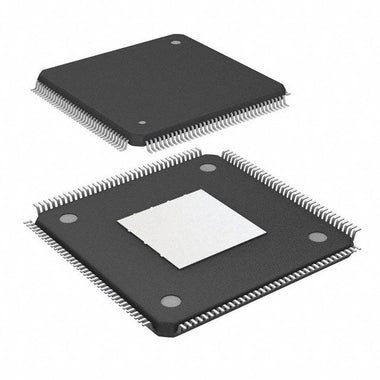
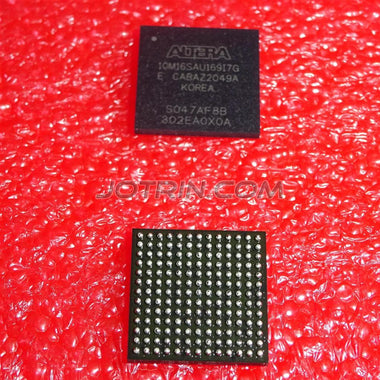
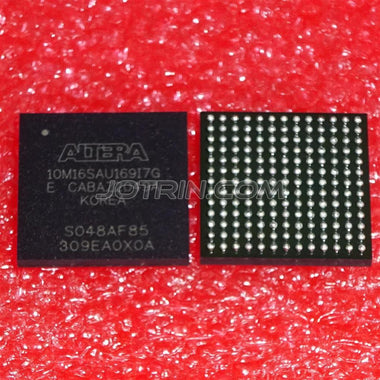
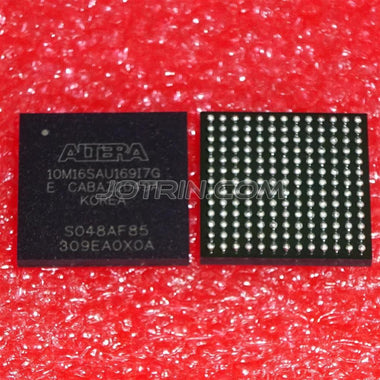
The XC6SLX16-2CSG324C is offered in a 324-ball Chip Scale BGA (CSG324) package with a 15x15 mm footprint and a 1.0mm ball pitch. This package provides a high I/O count in a compact form factor suitable for space-constrained PCB designs. The pinout includes dedicated pins for power (VCCINT, VCCAUX, VCCO, GND), configuration (MODE, CCLK, DONE, PROGRAM_B), and JTAG (TDI, TDO, TMS, TCK). The remaining pins are user I/Os, organized into banks, where each bank can be powered by a separate VCCO supply to support different I/O voltage standards (e.g., LVCMOS33, LVCMOS25, LVDS_25).
Core Architectural Features
- Logic Capacity: Contains 14,579 logic cells organized into 2,278 slices. Each slice includes four 6-input LUTs and eight flip-flops, providing a flexible fabric for implementing complex digital logic.
- On-Chip Memory: Features 576 Kbits of true dual-port Block RAM, configurable as 32 individual 18Kb blocks. This memory is ideal for implementing FIFOs, data buffers, and coefficient tables.
- Digital Signal Processing: Integrates 32 dedicated DSP48A1 slices. Each slice includes a high-speed 18x18 multiplier, an adder, and an accumulator, enabling efficient implementation of signal processing algorithms like FIR filters and FFTs.
- Clock Management: Includes two Clock Management Tiles (CMTs), each containing a Digital Clock Manager (DCM) and a Phase-Locked Loop (PLL). These blocks provide advanced clocking capabilities such as frequency synthesis, clock de-skew, and jitter filtering.
- Flexible I/O: Provides up to 232 user I/O pins supporting a wide range of single-ended and differential signaling standards. The SelectIO technology allows for per-pin configuration of drive strength, slew rate, and pull-up/pull-down resistors.
Specifications Parameter Table
| Specification | Technical Details |
|---|---|
| Logic Cells | 14,579 |
| Total Block RAM | 576 Kbits |
| Number of DSP Slices | 32 |
| Maximum User I/O | 232 |
| Core Supply Voltage (VCCINT) | 1.14V to 1.26V (1.2V Nominal) |
| Package / Case | 324-CSBGA (15x15) |
| Speed Grade | -2 (Standard Performance) |
| Operating Temperature | 0°C to 85°C (Commercial Grade) |
XC6SLX16-2CSG324C Equivalents, Cross Reference, and Lifecycle
The Spartan-6 family is considered a mature product line, primarily recommended for existing designs or maintenance of legacy systems. When seeking alternatives, engineers should consider devices within the same family for pin-to-pin compatibility. A direct, pin-compatible alternative with a higher performance grade is the XC6SLX16-3CSG324C, which offers faster timing characteristics. For designs requiring more or fewer logic resources while maintaining the same package and pinout, the XC6SLX9-xCSG324C (lower density) and XC6SLX25-xCSG324C (higher density) are potential migration options, though careful pin migration analysis is required. Given the component's lifecycle status, verifying stock is a critical step in the design and procurement process. You can Check XC6SLX16-2CSG324C Inventory & Pricing to assess availability from various distributors.
Typical Application & Circuit Considerations
The XC6SLX16-2CSG324C is well-suited for a variety of applications that require custom logic and parallel data processing. Common use cases include industrial motor control, machine vision pre-processing, medical imaging equipment, custom glue logic in embedded systems, and protocol bridging (e.g., SPI to Parallel). From a circuit design perspective, robust power delivery is paramount. The VCCINT, VCCAUX, and VCCO rails must be properly decoupled with a combination of bulk and high-frequency ceramic capacitors placed as close to the BGA balls as possible. A recommended power-on sequence (VCCINT, then VCCAUX, then VCCO) should be followed to ensure reliable device initialization. PCB layout should also prioritize short, impedance-controlled traces for high-speed I/O and clock signals to maintain signal integrity.
Video Demonstration
Frequently Asked Questions (XC6SLX16-2CSG324C FAQ)
Q: What is the significance of the "-2" speed grade in the XC6SLX16-2CSG324C part number?
A: The "-2" designation refers to the speed grade of the FPGA, which indicates its performance characteristics. In the Spartan-6 family, a lower number generally signifies a faster device. The -2 speed grade is a standard performance commercial-grade part, offering a balance between operational frequency and cost. It is slower than a -3 grade but faster than a -1L (low power) grade. This specification is critical for static timing analysis, as it defines the propagation delays through logic elements and routing resources, ultimately determining the maximum clock frequency a design can achieve.
Q: What are the core voltage requirements for the XC6SLX16-2CSG324C?
A: The device requires multiple power supply rails for proper operation. The core logic fabric is powered by VCCINT, which has a nominal voltage of 1.2V. The auxiliary internal logic, including the JTAG and configuration circuitry, requires VCCAUX at a nominal 2.5V. The I/O banks are powered by VCCO, which is flexible and can range from 1.2V to 3.3V, allowing direct interfacing with various logic standards. Each of these rails must be well-regulated and decoupled with appropriate capacitors to ensure stable operation.
Q: How is configuration data loaded into the XC6SLX16-2CSG324C?
A: The XC6SLX16-2CSG324C is an SRAM-based FPGA, meaning its configuration is volatile and must be loaded from an external non-volatile source upon every power-up. The most common configuration mode is Master SPI, where the FPGA acts as the master and reads its configuration bitstream from an external SPI flash memory chip. Other modes include Slave Serial and Slave Parallel, where a microprocessor or another master device pushes the configuration data to the FPGA. The JTAG interface can also be used to load a bitstream for debugging and prototyping purposes.
Q: Can the XC6SLX16-2CSG324C directly interface with 5V logic?
A: No, the I/O pins of the XC6SLX16-2CSG324C are not 5V tolerant. The maximum voltage that can be applied to any user I/O pin is determined by its bank's VCCO supply, which has a maximum rating of 3.3V (3.465V absolute maximum). Applying a 5V signal directly to an I/O pin will exceed the absolute maximum ratings and can cause permanent damage to the device. To interface with 5V logic, external voltage level-shifting circuitry, such as a resistor divider for inputs or a dedicated level-shifter IC, is required.
Q: What are the DSP48A1 slices in this FPGA used for?
A: The DSP48A1 slices are hardened, dedicated hardware blocks optimized for high-performance digital signal processing and arithmetic operations. Each slice contains a pre-adder, an 18x18 two's complement multiplier, and a 48-bit accumulator/post-adder. By using these dedicated blocks instead of general-purpose logic fabric, designers can implement functions like Multiply-Accumulate (MAC), FIR filters, FFTs, and correlators with significantly higher performance and lower logic resource utilization. This makes the FPGA highly efficient for applications in communications, audio/video processing, and control systems.

Alan Carter
Senior Hardware Engineer & Component Specialist
Alan has over 15 years of expertise in embedded systems design, FPGA architecture, and global semiconductor supply chains. He specializes in component cross-referencing, lifecycle management, and helping OEMs navigate supply shortages.