MPF100T-FCG484E Equivalents, Replacements, and Cross-Reference Guide
Finding a suitable replacement or cross-reference for a specific Field-Programmable Gate Array (FPGA) like the Microchip MPF100T-FCG484E can be a critical task, especially when facing supply chain disruptions, end-of-life (EOL) notices, or the need for cost optimization. As a hardware engineer, your primary goal is to minimize redesign effort while ensuring functional and performance parity. This guide provides a detailed analysis of potential equivalents for the MPF100T-FCG484E, covering pin-compatible drop-ins, functional alternatives requiring board changes, and the key technical considerations for migration.

Table of Contents
MPF100T-FCG484E Overview and Current Availability
The MPF100T-FCG484E is a member of Microchip's PolarFire family of FPGAs, renowned for their low power consumption, reliability, and security features. The part number decodes as follows:
- MPF100T: PolarFire family, with 108K Logic Elements (LEs) and high-speed transceivers.
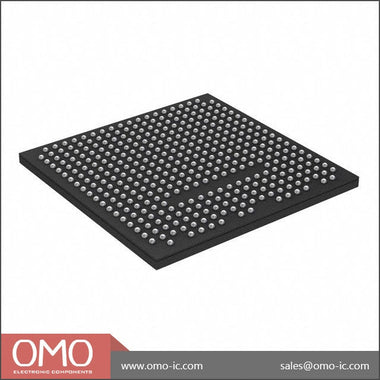
- FCG484: A 484-ball, 23x23mm, 1.0mm pitch, flip-chip BGA package.
- E: Specifies the industrial temperature grade, with an operating junction temperature range of -40°C to 100°C.
At its core, the MPF100T-FCG484E provides a substantial logic fabric built on a 28nm SONOS flash-based process. This is a key differentiator from SRAM-based FPGAs from competitors like Xilinx and Intel. The flash-based architecture results in significantly lower static power consumption, making it an excellent choice for power-sensitive applications. It also offers "instant-on" capability, as the configuration is non-volatile and loaded immediately at power-up without an external configuration memory device. Key specifications from the official datasheet include 108K Logic Elements, 342 Math Blocks (18x18), and 7.4 Mb of on-chip RAM. It features eight transceiver lanes capable of speeds up to 12.7 Gbps, making it suitable for protocols like PCIe Gen2, JESD204B, and 10Gb Ethernet. The device also includes robust security features like a physically unclonable function (PUF) and a true random number generator (TRNG).
Currently, the MPF100T-FCG484E is an active production device. However, like many advanced semiconductor components, it can be subject to market dynamics, including extended lead times and allocation. Procurement professionals and engineers should plan for these possibilities by qualifying alternative parts and maintaining flexible bills of materials (BOMs).
Pin-Compatible Equivalents
For engineers seeking a replacement with the absolute minimum hardware impact, the first place to look is within the same device family and package. A pin-compatible or "drop-in" replacement allows you to use the same PCB layout, which can save months of redesign, re-validation, and re-fabrication effort. The Microchip PolarFire family is designed with migration paths in mind.
The FCG484 package is used across several densities in the PolarFire series. This means you may be able to substitute the MPF100T with a larger or smaller device without changing your board layout. Potential pin-compatible options include:
- Up-sizing (More Resources): The MPF200T-FCG484 is a pin-compatible option with more logic resources (192K LEs vs. 108K). This is a viable path if your design is resource-constrained or if the MPF200T is more readily available. While the device will fit the footprint, you must recompile your design in the Libero SoC design suite, targeting the new MPF200T device. The resulting bitstream will be different. Power consumption will also change, so your power delivery network (PDN) must be verified to handle the potentially higher dynamic current of the larger device.
- Down-sizing (Fewer Resources): The MPF050T-FCG484 is a potential pin-compatible option with fewer resources (52K LEs). This is only an option if your design utilizes significantly less than the 108K LEs available in the MPF100T. Migrating down can be a cost-saving measure, but you must ensure your design fits within the smaller device's constraints by performing a trial compilation in Libero SoC.
Crucial Consideration: Pin compatibility does not mean chip compatibility. You cannot simply solder a different part onto the board and expect it to work with the old configuration file. The FPGA bitstream is highly specific to the exact part number (density, speed grade, etc.). Any change, even to a pin-compatible device, requires a full re-synthesis, re-place-and-route, and regeneration of the programming file. You must also re-run timing analysis to ensure your design still meets its performance requirements on the new target device.
Functional Alternatives (May Require Redesign)
When a pin-compatible replacement is not available or desirable, you must look for functional alternatives from other manufacturers. This path is significantly more involved and will require a full PCB redesign and a complete porting of the FPGA design to a new software toolchain. These are not substitutes; they are new projects.
Key competitors offering FPGAs with similar logic density and transceiver capabilities include:
- AMD (Xilinx) Artix-7 / Kintex-7: A device like the Xilinx Artix-7 XC7A100T or Kintex-7 XC7K160T could be a functional alternative. These are SRAM-based FPGAs, which is the most significant difference. This means they require an external configuration memory (like a QSPI flash chip) to load the design on power-up, adding cost and board space. They also have higher static power consumption compared to the flash-based PolarFire. The migration would involve porting the VHDL/Verilog code, replacing all Microchip-specific IP cores (like memory controllers or SerDes PHYs) with Xilinx IP equivalents, and learning the Vivado Design Suite. The package will be different (e.g., FBG484 for the XC7K160T), necessitating a new PCB layout.
- Intel (Altera) Cyclone V / Arria V: An Intel Cyclone V ST or Arria V GX device could also serve as a functional replacement. For example, a Cyclone V part with around 110K LEs would be a comparable starting point. Like Xilinx devices, these are SRAM-based and carry the same implications: need for external configuration memory, higher static power, and a completely different toolchain (Intel Quartus Prime). All Altera-specific IP would need to be re-instantiated, and the design would need to be re-validated from the ground up.
- Lattice ECP5 / CertusPro-NX: For applications where the high-speed 12.7 Gbps transceivers are not the primary driver, a Lattice ECP5 device might be considered. They offer a good balance of logic and DSP resources in a small form factor. If lower power is still a key requirement but PolarFire is unavailable, the CertusPro-NX family offers modern features on a low-power 28nm FD-SOI process, though it may not match the raw logic density or transceiver speed of the MPF100T.
The decision to switch to a functional alternative is a major engineering commitment. It involves not just hardware redesign but also significant software and firmware effort, toolchain licensing, and a full re-verification and qualification cycle.
Detailed Comparison Table
This table provides a high-level comparison of key parameters between the MPF100T-FCG484E and potential functional alternatives. Note that exact values can vary based on speed grade and specific device variants. Always consult the manufacturer's datasheet for final design decisions.
| Parameter | Microchip MPF100T-FCG484E | AMD (Xilinx) Kintex-7 XC7K160T-1FFG676C | Intel Cyclone V 5CEBA7F23I7N |
|---|---|---|---|
| Configuration Technology | Non-Volatile Flash | SRAM (Requires external boot memory) | SRAM (Requires external boot memory) |
| Logic Elements (approx.) | 108K LEs (4-input LUT + DFF) | 162K Logic Cells (6-input LUT + DFFs) | 149.5K LEs |
| Block RAM | 7.4 Mb | 11.7 Mb | 6.8 Mb |
| DSP Blocks / Multipliers | 342 (18x18) | 600 DSP Slices (25x18) | 342 (18x18 and 27x27 modes) |
| Transceivers (SerDes) | 8 lanes @ up to 12.7 Gbps | 16 lanes @ up to 12.5 Gbps | 9 lanes @ up to 6.144 Gbps |
| Max User I/O | 284 | 400 | 288 |
| Core Voltage (Typical) | 1.05V | 1.0V | 1.1V |
| Static Power | Low (Flash-based) | Higher (SRAM-based) | Higher (SRAM-based) |
| Package | FCG484 (23x23mm, 484-pin) | FFG676 (27x27mm, 676-pin) | F484 (23x23mm, 484-pin) |
Migration Guide: Switching from MPF100T-FCG484E
Migrating away from the MPF100T-FCG484E, whether to a pin-compatible sibling or a completely different architecture, requires a methodical approach. Rushing the process can lead to costly board spins and project delays. Here is a checklist of critical areas to verify.
1. Hardware Verification:
- Footprint & Package: If moving to a non-pin-compatible part, a full re-layout of the PCB is the first step. Pay close attention to BGA escape routing, via technology (e.g., via-in-pad), and layer stackup requirements, which can be found in the new device's packaging and layout guidelines.
- Power Delivery Network (PDN): Different FPGAs have different core, I/O, and auxiliary voltage rails. You must redesign your power supply to match the new requirements. Even for a pin-compatible upgrade like the MPF200T, you must analyze if your existing PDN can handle the potentially higher transient and static currents. Use the manufacturer's power estimator tools (e.g., Microchip Power Estimator, Xilinx Power Estimator) early in the process.
- I/O Standards & Banking: Verify that the new device supports the I/O standards your design requires (LVDS, LVCMOS, HSTL, etc.). FPGA I/O banks are often grouped with a common VCCIO rail; ensure your pinout assignments are compatible with the new device's banking rules.
- Signal Integrity: High-speed signals, especially from SerDes transceivers, require careful signal integrity analysis. When changing devices, even if the data rate is the same, the driver/receiver characteristics might differ. Re-run simulations for critical interfaces like DDR memory, PCIe, and Ethernet to ensure timing and signal quality margins are met.
2. Software & Firmware Porting:
- Design Environment: This is the most significant non-hardware change. You will move from Microchip's Libero SoC to AMD/Xilinx's Vivado or Intel's Quartus Prime. This involves a learning curve and potentially new software license costs.
- RTL Porting: Generic VHDL and Verilog code is generally portable. However, any instantiated primitives or macros specific to the PolarFire architecture (e.g., specific clocking resources or I/O cells) must be replaced with equivalents from the new vendor's library.
- IP Core Replacement: This is often the most time-consuming task. Vendor-provided IP for complex functions like DDR memory controllers, PCIe endpoints, or Ethernet MACs are not portable. You must reconfigure a new IP core from the target vendor's library and integrate it into your design. This often requires changes to the surrounding logic and software drivers.
- Timing Constraints: Your timing constraints file (e.g., SDC) will need to be reviewed and likely modified. Clock names, paths, and architecture-specific commands will differ between toolchains. A full timing closure run is mandatory.
For engineers working within the PolarFire ecosystem, it's beneficial to Browse PolarFire Series to understand the full range of available densities and packages for future design flexibility.
Where to Source MPF100T-FCG484E and Alternatives
In today's volatile electronics market, sourcing components requires a strategic approach. For a high-value component like the MPF100T-FCG484E, your sourcing strategy should prioritize authenticity and reliability.
The most secure method is to purchase from authorized Microchip distributors. This guarantees that the parts are genuine, have been stored correctly, and come with a full chain of custody from the manufacturer. However, during times of high demand or allocation, even authorized channels may have long lead times or limited stock.
This is where a trusted independent distributor like WWDParts.com becomes a critical partner. We specialize in sourcing components from a global network of vetted suppliers, including excess inventory from OEMs and EMS companies. This allows us to find parts that may not be available through conventional channels. When sourcing from the open market, counterfeit prevention is paramount. We employ rigorous inspection processes and testing to ensure that every component we ship is authentic and meets manufacturer specifications.
Whether you need to secure a final production run of the MPF100T-FCG484E or are looking for qualified alternatives to keep your production lines running, a reliable sourcing partner is essential. You can Check MPF100T-FCG484E Inventory & Pricing to see current availability and get a quote for your project needs.
Video Demonstration
Frequently Asked Questions (MPF100T-FCG484E FAQ)
Can I use an MPF200T-FCG484E as a direct replacement for the MPF100T-FCG484E?
Yes, but with critical software steps. The MPF200T-FCG484E is pin-compatible, meaning it fits the same PCB footprint. However, you cannot simply swap the chip and use the old programming file. You must open your project in the Microchip Libero SoC design suite, change the target device to MPF200T, and perform a full re-compilation (synthesis, place-and-route) to generate a new bitstream. It is also essential to verify that your power supply can handle the potentially higher current of the larger device.
Is there a Xilinx or Intel drop-in replacement for the MPF100T-FCG484E?
No, there are absolutely no drop-in replacements from other manufacturers like Xilinx (AMD) or Intel (Altera). Their FPGAs use different package footprints, pinouts, voltage requirements, and configuration methods (SRAM vs. Flash). Migrating to a Xilinx or Intel part is considered a functional replacement, which requires a complete hardware redesign (new PCB) and a full porting of your design to a new software toolchain (Vivado or Quartus).
What is the biggest challenge when migrating from a PolarFire FPGA to a Xilinx Artix-7?
The most significant architectural difference is migrating from PolarFire's non-volatile Flash technology to the Artix-7's SRAM-based technology. This has two major impacts. First, you must add an external configuration memory chip (like QSPI Flash) to your PCB to store the Artix-7's bitstream, which adds cost and complexity. Second, the power profile will change dramatically; while the Artix-7 may have comparable dynamic power, its static (leakage) power will be significantly higher, which could be a major issue for battery-powered or thermally constrained designs.
If I use a pin-compatible PolarFire device, do I need to change my PCB?
For a pin-compatible swap within the PolarFire family (e.g., MPF100T to MPF200T in the same FCG484 package), you generally do not need to change your PCB layout. The physical footprint and pin assignments are identical. However, you must perform due diligence on your power delivery network (PDN). A larger FPGA may draw more current, so you must verify that your voltage regulators and PCB power planes can support the new device under worst-case conditions.
What software tool changes are required to move from a Microchip PolarFire to an Intel Cyclone V?
The software migration is substantial. You would need to completely abandon the Microchip Libero SoC Design Suite. The entire design process must be moved to the Intel Quartus Prime Design Software. This involves not just learning a new tool, but also replacing all Microchip-specific IP cores (e.g., memory controllers, SerDes PHYs) with their Intel equivalents, rewriting timing constraints (SDC files), and adapting any scripts used for the build process.