MPF100T-FCG484E Datasheet, Pinout, Equivalents, and Specs
The MPF100T-FCG484E is a mid-density Field-Programmable Gate Array (FPGA) from Microchip's PolarFire family, engineered for low power consumption, high reliability, and robust security. Fabricated on a 28nm SONOS non-volatile process technology, this device integrates a power-optimized logic fabric with high-speed transceivers, DSP blocks, and RAM resources. It is designed for a wide range of applications where thermal constraints, power efficiency, and data security are primary design considerations, such as industrial automation, secure communications, and embedded vision systems.
Table of Contents
What is the MPF100T-FCG484E?
The MPF100T-FCG484E is a member of the PolarFire family of FPGAs, which are distinguished by their focus on minimizing both static and dynamic power consumption. Unlike SRAM-based FPGAs that require an external configuration memory and consume significant static power to retain their configuration, the MPF100T-FCG484E utilizes a SONOS (Silicon-Oxide-Nitride-Oxide-Silicon) non-volatile process. This allows the device to be "live at power-up," eliminating inrush currents associated with configuration and providing instant-on functionality, a critical feature for system control and safety applications. The non-volatile nature also inherently enhances design security by storing the configuration bitstream within the device's secure flash memory, making it resistant to unauthorized read-back and cloning attempts.
The internal architecture is built around a 4-input Look-Up Table (LUT) fabric, which is the fundamental building block for implementing combinatorial logic. The MPF100T-FCG484E provides 109K Logic Elements (LEs), each comprising a LUT and an associated flip-flop. These LEs are organized into Logic Clusters, which are interconnected via a hierarchical routing architecture designed for efficient signal propagation and timing closure. For arithmetic-intensive operations, the device integrates 340 dedicated 18x18 Math Blocks. These are hardened DSP blocks capable of performing multiplication, multiply-accumulate (MACC), and multiply-add operations with high throughput and power efficiency, offloading these tasks from the general-purpose logic fabric. Memory resources include 7608 Kb of Large SRAM (LSRAM) blocks (18 Kb each) and an additional 821 Kb of distributed µSRAM. This dual-memory architecture provides flexibility for implementing various memory structures, from deep FIFOs and buffers to processor caches. The device also features high-speed serial transceivers capable of data rates up to 12.7 Gbps, enabling implementation of standard protocols like PCIe, JESD204B, and 10Gb Ethernet without external PHYs.

Pinout Configuration and Packaging
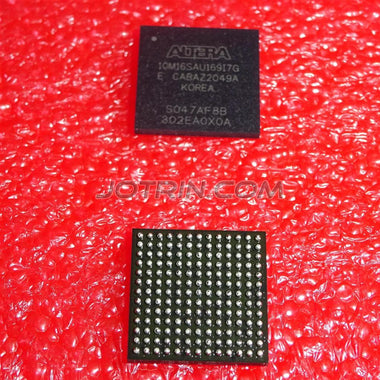
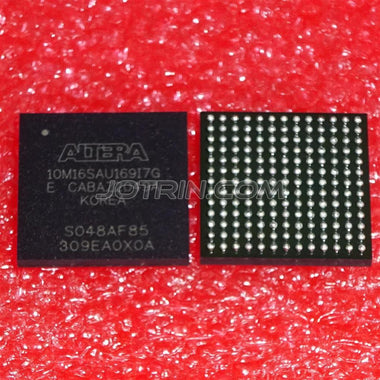
The MPF100T-FCG484E is offered in the FCG484 package, a 23x23mm Fine-Pitch Chip-Scale Grid Array with a 1.0mm ball pitch. This package provides a balance between I/O density and PCB manufacturability. The 484 pins are meticulously allocated to user I/O, high-speed transceivers, dedicated function pins, and a significant number of power and ground connections essential for signal integrity and stable operation. The user I/O pins are organized into banks, with each bank having an independent VCCIO supply pin. This allows for interfacing with multiple logic standards (e.g., LVCMOS33, LVDS, SSTL) simultaneously within a single design.
Key pin categories in the FCG484 package include:
- General Purpose I/O (GPIO): These pins can be configured for various single-ended and differential I/O standards. They support features like programmable slew rates, pull-up/pull-down resistors, and open-drain outputs.
- Transceiver Pins (TXP/TXN, RXP/RXN): These are dedicated differential pairs for the high-speed SERDES transceivers. Their placement on the PCB requires precise controlled impedance routing (typically 100Ω differential) to maintain signal integrity at multi-gigabit speeds.
- Power and Ground Pins (VCC, VCC_PA, VCCIO, GND): Multiple pins are dedicated to different power domains, including the core logic (VCC), transceiver analog circuits (VCC_PA), and I/O banks (VCCIO). A robust power distribution network with adequate decoupling capacitors placed directly under the package is critical.
- Configuration and JTAG Pins: Pins such as MODE[0:2], JTAG_TDI, JTAG_TDO, JTAG_TMS, and JTAG_TCK are used for device programming, debugging, and boundary scan testing.
- Clocking Pins: Dedicated input pins for connecting external clock sources to the device's global clock networks and PLLs.
Designers must refer to the official Microchip pinout files for the FCG484 package to ensure correct pin assignments and adherence to PCB layout guidelines for high-speed and power-sensitive signals.
Core Architectural Features
- Power-Optimized 28nm Fabric: The FPGA fabric is built on a low-power 28nm SONOS non-volatile process, resulting in up to 50% lower total power compared to competing mid-range FPGAs. This is achieved through significantly reduced static power due to the flash-based configuration and optimized dynamic power during operation.
- Integrated High-Speed Transceivers: The device includes multiple multi-protocol SERDES transceivers supporting data rates from 250 Mbps to 12.7 Gbps. These transceivers feature programmable pre-emphasis and equalization, making them suitable for demanding standards like PCIe Gen2, XAUI, JESD204B, and Serial RapidIO.
- Comprehensive Security Features: PolarFire FPGAs incorporate a multi-layered security model. This includes a DPA (Differential Power Analysis) resistant crypto accelerator, a physically unclonable function (PUF) for key generation and storage, and a secure boot capability to ensure the FPGA boots only with an authenticated bitstream.
- Flexible Memory Architecture: The device contains two types of embedded memory blocks: 18 Kb two-port Large SRAM (LSRAM) blocks with optional ECC support and 1 Kb µSRAM blocks. This hierarchical memory system allows designers to efficiently implement a wide range of data buffering and storage schemes.
- Advanced Clocking Network: A sophisticated clocking architecture featuring multiple Phase-Locked Loops (PLLs) and Clock Conditioning Circuits (CCCs) provides flexible clock synthesis, multiplication, division, and phase shifting. This enables robust management of multiple clock domains within a complex system-on-chip design.
Specifications Parameter Table
| Specification | Technical Details |
|---|---|
| Logic Elements (4-input LUT + DFF) | 109K |
| Large SRAM (LSRAM) Blocks (18 Kb) | 422 |
| Total LSRAM | 7608 Kb |
| Math Blocks (18x18 Multiplier) | 340 |
| High-Speed Transceivers | 8 lanes @ 12.7 Gbps |
| Max User I/O | 254 |
| Core Voltage (VCC) | 1.0V |
| Package | FCG484 (23x23mm, 1.0mm pitch) |
MPF100T-FCG484E Equivalents, Cross Reference & Lifecycle
The MPF100T-FCG484E is an active production device. Direct, drop-in equivalents for FPGAs are rare due to proprietary architectures and toolchains. However, when considering functional alternatives or migration paths, engineers can evaluate other devices within the same family or from competing product lines, though this will always require a design porting effort.
For a density upgrade within the same package footprint, the MPF200T-FCG484E offers nearly double the logic resources (192K LEs) while maintaining pin compatibility, allowing for a scalable platform design. If a design requires fewer resources, the MPF050T-FCG484E could be considered, though it is not a standard density offering. When comparing across manufacturers, a device like the Xilinx Artix-7 XC7A100T-FGG484 or Intel Cyclone V 5CEBA5F23C7N might offer similar logic capacity, but differ significantly in power consumption, transceiver performance, security features, and development environment. A migration to these alternatives would necessitate a complete redesign of the RTL, constraints, and IP cores.
Before finalizing a design or substitution, it is crucial to verify real-time stock levels and lead times. Check MPF100T-FCG484E Inventory & Pricing to get the most current availability information.
Typical Applications & Circuit Considerations
The unique combination of low power, security, and mid-range density makes the MPF100T-FCG484E well-suited for thermally constrained and mission-critical applications. Its non-volatile nature provides reliability in environments where configuration errors from radiation effects (SEUs) are a concern.
System-Level Use Cases:
- Industrial Automation: Used in motor control loops, programmable logic controllers (PLCs), and machine vision systems where deterministic, low-latency processing is required. The device can aggregate sensor data, perform real-time image processing, and drive multiple control interfaces.
- Secure Communications: The integrated crypto-accelerator and DPA countermeasures make it an ideal platform for secure data-in-transit applications, such as encrypted network routers, VPN gateways, and secure radio systems.
- Aerospace & Defense: Its reliability and security features are valuable in avionics, guidance systems, and military communications. The instant-on capability is critical for safety and control systems that must be operational immediately at power-up.
- Smart Embedded Vision: The combination of DSP blocks for image processing, high-speed transceivers for camera interfaces (e.g., CoaXPress), and sufficient logic for AI/ML inference algorithms enables compact, low-power smart cameras and edge video analytics devices.
PCB Design and Power Considerations:
Successfully implementing the MPF100T-FCG484E requires careful attention to the PCB layout and power distribution network (PDN). The device requires multiple power rails: a 1.0V core voltage (VCC), transceiver analog power (VCC_PA), PLL power, and I/O bank voltages (VCCIO) ranging from 1.2V to 3.3V. A specific power-up sequence must be followed to ensure proper device initialization. The PDN must be designed for low impedance, utilizing a sufficient number of high-quality ceramic decoupling capacitors placed as close as possible to the BGA balls, typically on the underside of the PCB directly beneath the device. For high-speed interfaces like DDR3/DDR4 memory or the SERDES transceivers, controlled impedance routing with precise length matching for differential pairs is mandatory to maintain signal integrity and meet timing budgets. Thermal management is also a key consideration; a matrix of thermal vias under the package connected to ground planes is recommended to dissipate heat effectively.
For projects requiring different resource levels but similar architectural benefits, engineers can Browse PolarFire Series to find devices with varying logic densities, transceiver counts, and package options.
Video Demonstration
Frequently Asked Questions (MPF100T-FCG484E FAQ)
Q: What is the configuration technology used in the MPF100T-FCG484E and how does it differ from SRAM-based FPGAs?
A: The MPF100T-FCG484E uses a SONOS (Silicon-Oxide-Nitride-Oxide-Silicon) non-volatile flash technology for configuration. Unlike traditional SRAM-based FPGAs which are volatile and require an external configuration memory (like a SPI flash) to load the bitstream on every power-up, the PolarFire's configuration is stored internally within the device's flash cells. This provides several key advantages: "live at power-up" capability, lower static power consumption as no power is needed to maintain the configuration, and enhanced security as the bitstream is not exposed on external pins during boot.
Q: What software development tools are required to design with the PolarFire MPF100T-FCG484E?
A: The primary design environment for all PolarFire FPGAs, including the MPF100T-FCG484E, is the Microchip Libero SoC Design Suite. This is a comprehensive toolchain that supports the entire design flow from HDL synthesis, place-and-route, and timing analysis to bitstream generation and on-chip debugging. The suite includes tools like Synplify Pro for synthesis and a powerful timing analyzer to help designers meet performance targets. Microchip offers different licensing tiers for Libero, including a free version that supports some devices in the family.
Q: How are the security features in the MPF100T-FCG484E implemented?
A: Security is a core aspect of the PolarFire architecture, implemented through several hardware features. The device includes a hardened crypto-accelerator for cryptographic functions like AES-256 and SHA-256, which is designed with DPA (Differential Power Analysis) countermeasures to resist side-channel attacks. It also features a Physically Unclonable Function (PUF) for secure key generation and storage, and supports secure boot protocols to ensure that only an authenticated and encrypted bitstream can be loaded, protecting intellectual property and preventing tampering.
Q: Can the I/O banks on the MPF100T-FCG484E support different voltage standards simultaneously?
A: Yes, the I/O pins on the MPF100T-FCG484E are organized into several independent banks, and each bank is powered by its own VCCIO supply pin. This architecture allows a designer to connect different banks to different voltage levels (e.g., 1.8V, 2.5V, 3.3V) within the same design. This flexibility is crucial for interfacing with a variety of external components, such as memory, sensors, and processors, that may operate at different logic levels, eliminating the need for external level-shifting components.
Q: What considerations are important for power supply design for this FPGA?
A: A robust power supply design is critical for the stable operation of the MPF100T-FCG484E. The device requires multiple voltage rails, including the 1.0V core voltage (VCC), transceiver power, and I/O voltages (VCCIO). It is essential to follow the power-up sequencing specified in the datasheet to prevent damage and ensure proper initialization. Furthermore, the Power Distribution Network (PDN) on the PCB must be designed for low impedance using ample decoupling capacitors placed very close to the BGA power and ground pins to handle transient current demands and minimize voltage ripple.

Alan Carter
Senior Hardware Engineer & Component Specialist
Alan has over 15 years of expertise in embedded systems design, FPGA architecture, and global semiconductor supply chains. He specializes in component cross-referencing, lifecycle management, and helping OEMs navigate supply shortages.