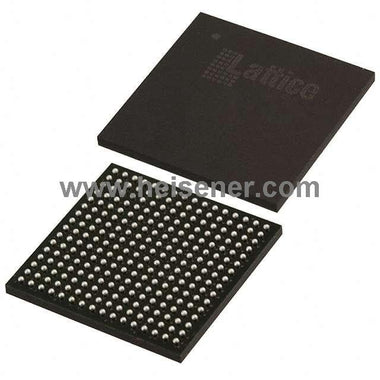
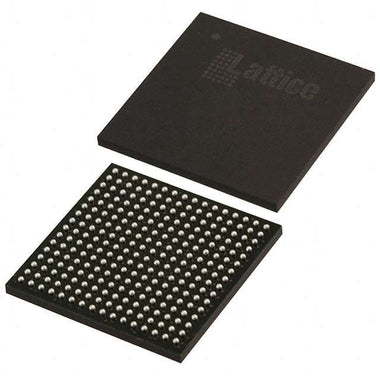
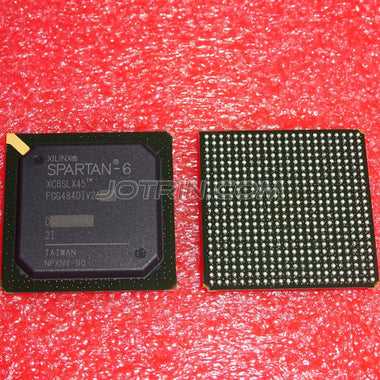
The 5CEBA4F23C8N is a System-on-Chip (SoC) FPGA from Intel's (formerly Altera) Cyclone V family, integrating a dual-core ARM Cortex-A9 MPCore processor with FPGA fabric on a single die. This device is fabricated using a 28 nm low-power (LP) process technology, providing a balance of performance, low power consumption, and logic density. It is designed for mid-range applications requiring both hardware acceleration and software control, such as industrial control systems, video surveillance, and automotive infotainment.
Table of Contents
What is the 5CEBA4F23C8N?
The 5CEBA4F23C8N is a member of the Cyclone V E series, which are SoC FPGAs that combine a Hard Processor System (HPS) with traditional FPGA fabric. The HPS is centered around a dual-core ARM Cortex-A9 MPCore processor, capable of operating at frequencies up to 925 MHz. This HPS is a self-contained subsystem that includes a rich set of peripherals such as a DDR3/DDR2/LPDDR2 memory controller, Ethernet MAC, USB 2.0 OTG controllers, UARTs, SPI, I2C, and flash memory controllers (NAND, QSPI). The key architectural advantage is the high-bandwidth interconnect between the HPS and the FPGA fabric, allowing for coherent memory sharing and efficient offloading of computationally intensive tasks from the processor to custom hardware accelerators implemented in the FPGA logic.
The FPGA fabric itself contains 49,000 Logic Elements (LEs), which are the fundamental building blocks for implementing digital logic. These LEs are organized into 18,480 Adaptive Logic Modules (ALMs). Each ALM contains a fracturable look-up table (LUT), two full adders, and four registers, providing a flexible and efficient logic structure. The fabric is further supported by 3,464,192 bits of embedded M10K memory blocks and 66 variable-precision DSP blocks. These DSP blocks can be configured as 18x18 multipliers, making the device suitable for signal processing algorithms. The device is manufactured on a 28nm Low-Power (LP) process, which helps to minimize both static and dynamic power consumption, a critical factor for thermally constrained or battery-powered applications. The integration of a hardened processor system reduces the design complexity and board space compared to a two-chip solution (a separate CPU and FPGA), while also providing significantly higher bandwidth and lower latency between the software and hardware domains.

Pinout Configuration and Packaging
The 5CEBA4F23C8N is offered in a 484-pin FineLine Ball Grid Array (FBGA) package, designated by the F23 package code. This package has a 23x23 mm body size with a 1.0 mm ball pitch, providing a dense I/O solution suitable for complex PCB designs. The pinout is strategically organized to support high-speed interfaces and maintain signal integrity. The 484 pins are allocated to user I/O, HPS-dedicated peripherals, power, ground, and configuration functions.
A significant portion of the pins are dedicated to the HPS, providing direct external access for peripherals like the Gigabit Ethernet RGMII interface, USB PHY interface, and the DDR3 memory interface. These HPS pins have fixed locations and functions. The remaining user I/O pins are connected to the FPGA fabric and are arranged in multiple I/O banks. Each bank can be powered independently with a specific VCCIO voltage (e.g., 1.5V, 1.8V, 2.5V, 3.3V), allowing the device to interface with a wide variety of external components and logic levels. The pinout also includes dedicated clock input pins for global and regional clock networks, differential I/O pairs for implementing high-speed standards like LVDS, and dedicated configuration pins for loading the FPGA bitstream from external flash memory.
Core Architectural Features
- Integrated Hard Processor System (HPS): Features a dual-core ARM Cortex-A9 MPCore processor running up to 925 MHz, complete with L1/L2 caches, a snoop control unit (SCU) for cache coherency, and a rich set of hardened peripherals including a multi-port DDR3/LPDDR2 memory controller, 10/100/1000 Ethernet MAC, and dual USB 2.0 OTG controllers.
- 28 nm FPGA Fabric: Comprises 49,000 Logic Elements (LEs) organized as 18,480 Adaptive Logic Modules (ALMs). The fabric also includes 3,464 Kbits of M10K embedded memory and 66 variable-precision DSP blocks, enabling the implementation of complex digital logic and signal processing algorithms.
- High-Bandwidth HPS-FPGA Interconnect: Multiple high-throughput AXI bridges connect the HPS to the FPGA fabric. These bridges (FPGA-to-HPS, HPS-to-FPGA, and a lightweight HPS-to-FPGA bridge) facilitate coherent memory access and low-latency communication, enabling seamless hardware acceleration.
- Flexible Clock Management: Includes 6 on-chip Phase-Locked Loops (PLLs) for clock synthesis, multiplication, division, and phase shifting. This allows for the generation of multiple clock domains required by complex SoC designs from a minimal number of external clock sources.
- Versatile I/O Capabilities: Provides up to 240 user I/O pins, configurable to support a wide range of single-ended and differential I/O standards. The I/O elements include features like programmable slew rate, programmable drive strength, and on-chip termination to improve signal integrity.
Specifications Parameter Table
| Specification | Technical Details |
|---|---|
| Part Number | 5CEBA4F23C8N |
| Family | Cyclone V E (SoC) |
| Logic Elements (LEs) | 49,000 |
| Adaptive Logic Modules (ALMs) | 18,480 |
| Total RAM Bits | 3,464,192 |
| DSP Blocks (18x18 Multipliers) | 66 |
| HPS Processor | Dual-core ARM Cortex-A9 MPCore (up to 925 MHz) |
| Package | 484-pin FineLine BGA (FBGA) |
| Operating Temperature Range | 0°C to 85°C (Commercial) |
| Maximum User I/O Pins | 240 |
5CEBA4F23C8N Equivalents, Cross Reference & Lifecycle
The 5CEBA4F23C8N is an active production device from Intel, widely used in various industries. When considering alternatives, engineers typically look at devices within the same family that offer different performance grades or temperature ranges. A direct, pin-compatible alternative is the 5CEBA4F23C7N, which is identical in logic resources and packaging but features a faster speed grade (-7 vs. -8). This can be a drop-in replacement for designs that require higher clock frequencies, provided the timing constraints are re-validated. For applications requiring operation in harsh environments, the industrial-grade equivalent, 5CEBA4F23I7N, offers an extended temperature range of -40°C to 100°C and the faster -7 speed grade.
When migrating, it is critical to verify timing closure, power consumption, and thermal dissipation, as faster speed grades can increase dynamic power. The bitstream files are not directly interchangeable between different speed grades and must be recompiled for the target device in the Intel Quartus Prime software. For the most current availability and lead time information, it is recommended to Check 5CEBA4F23C8N Inventory & Pricing from authorized distributors.
Typical Applications & Circuit Considerations
The 5CEBA4F23C8N's combination of a dual-core ARM processor and reconfigurable logic makes it highly suitable for applications that benefit from both software flexibility and hardware-accelerated performance. Common use cases include industrial automation systems for motor control and PLC logic, machine vision systems where the FPGA fabric performs real-time image pre-processing (e.g., filtering, edge detection) before the ARM processor handles higher-level analysis, and advanced driver-assistance systems (ADAS) for sensor fusion and object detection. Other applications include broadcast video equipment, medical imaging devices, and software-defined radio (SDR).
From a circuit design perspective, several considerations are critical. The power distribution network (PDN) must be robust, with separate, well-decoupled power rails for the FPGA core (VCC_CORE), I/O banks (VCCIO), analog PLLs (VCCA), and the HPS. Low-ESR ceramic capacitors should be placed as close as possible to the BGA balls to minimize inductance and provide clean power. For the high-speed DDR3 interface connected to the HPS, PCB layout requires careful trace length matching, controlled impedance, and proper termination to ensure signal integrity. A solid ground plane is essential for return current paths and minimizing noise. Thermal management is also a key factor; for high-utilization designs, a heat sink may be necessary to keep the junction temperature within the specified 0°C to 85°C commercial range. Engineers designing with this part or similar SoCs can Browse Cyclone V Series to find devices with varying logic densities and feature sets to match specific project requirements.
Video Demonstration
Frequently Asked Questions (5CEBA4F23C8N FAQ)
Q: What development software is required to program the 5CEBA4F23C8N?
A: Development for the 5CEBA4F23C8N requires the Intel Quartus Prime Design Software for the FPGA fabric and the SoC Embedded Design Suite (EDS) for the HPS. Quartus Prime is used for HDL synthesis, place-and-route, and timing analysis of the logic implemented in the FPGA. The Platform Designer (formerly Qsys) tool within Quartus is used to configure the HPS, define the HPS-FPGA interconnect bridges, and integrate custom IP. The SoC EDS provides a complete software development environment, including a pre-built Linux kernel, U-Boot bootloader, device drivers, and the ARM Development Studio 5 (DS-5) Intel SoC FPGA Edition for debugging.
Q: How is the boot process managed for this SoC FPGA?
A: The boot process is controlled by the HPS. Upon power-up, a Boot ROM in the HPS executes and reads the Boot Select (BSEL) pins to determine the boot source. Supported boot sources include QSPI flash, NAND flash, or an SD/MMC card. The Boot ROM loads the Preloader (a component of the U-Boot bootloader) into on-chip RAM, which then initializes the HPS clock system, DDR memory controller, and other critical peripherals. Finally, the Preloader loads the main operating system (e.g., Linux) and the FPGA configuration bitstream (RBF file) into their respective destinations.
Q: What is the difference between a Logic Element (LE) and an Adaptive Logic Module (ALM) in this device?
A: LEs and ALMs are both metrics for logic capacity, but an ALM is the more fundamental physical block in the Cyclone V architecture. An Adaptive Logic Module (ALM) contains a fracturable 8-input look-up table (LUT), two full adders, and four registers. This structure is highly flexible and can be configured as two independent 4-input LUTs, one 5-input LUT and one 3-input LUT, or various other combinations. A Logic Element (LE) is a normalized metric used for comparison across different FPGA families; one ALM in the Cyclone V architecture is roughly equivalent to 2.65 LEs. Therefore, the 5CEBA4F23C8N has 18,480 ALMs, which corresponds to approximately 49,000 LEs.
Q: Can the FPGA fabric directly access the DDR memory connected to the HPS?
A: Yes, the FPGA fabric can access the HPS DDR memory controller through high-bandwidth AXI bridges. The architecture includes an FPGA-to-HPS bridge that allows logic in the FPGA to act as a master and initiate read/write transactions to the DDR memory or any other HPS peripheral. This memory sharing is cache-coherent when the appropriate AXI signals are used, which is managed by the Snoop Control Unit (SCU) within the ARM Cortex-A9 MPCore. This capability is essential for applications where large data sets are processed by hardware accelerators in the FPGA.
Q: What are the primary power supply rails required for the 5CEBA4F23C8N?
A: The 5CEBA4F23C8N requires several independent power supply rails for proper operation. The main supply for the FPGA logic core is VCC_CORE, which is typically 1.1V. The I/O banks require VCCIO supplies, which can range from 1.2V to 3.3V depending on the I/O standard being used. The analog components, such as the PLLs, require a separate, clean VCCA supply (typically 2.5V). Additionally, the HPS has its own power domains, and the DDR memory interface requires specific supplies like VCC_DDR and VTT. A well-designed Power Distribution Network (PDN) with proper decoupling for each rail is critical for system stability.

Alan Carter
Senior Hardware Engineer & Component Specialist
Alan has over 15 years of expertise in embedded systems design, FPGA architecture, and global semiconductor supply chains. He specializes in component cross-referencing, lifecycle management, and helping OEMs navigate supply shortages.