5CEBA2F23C8N Datasheet, Pinout, Equivalents, and Specs
The 5CEBA2F23C8N is a low-power, high-functionality field-programmable gate array (FPGA) belonging to the Altera (Intel) Cyclone V E family. Fabricated on TSMC's 28-nm low-power (28LP) process, this device delivers 25,000 logic elements (LEs) optimized for cost-sensitive, high-volume industrial and consumer applications. It provides a robust architecture for custom logic implementation, DSP processing, and bridging functions without the overhead of integrated high-speed transceivers.
Table of Contents
What is the 5CEBA2F23C8N?
The 5CEBA2F23C8N is an SRAM-based FPGA designed to address the system-level challenges of power consumption, cost, and time-to-market. As part of the Cyclone V E series, it focuses entirely on core logic performance, omitting hard processor systems (HPS) and multi-gigabit transceivers found in other Cyclone V variants. The internal architecture is built around Adaptive Logic Modules (ALMs), which offer superior logic density and routing efficiency compared to traditional 4-input lookup tables (LUTs).
Targeting markets such as industrial motor control, broadcast video processing, and consumer electronics, the device integrates variable-precision DSP blocks and M10K embedded memory blocks. This makes it highly capable of handling parallel processing tasks and digital signal processing algorithms. To explore other logic densities or transceiver-equipped variants within this architectural family, engineers can Browse Cyclone V Series.

Pinout Configuration and Packaging
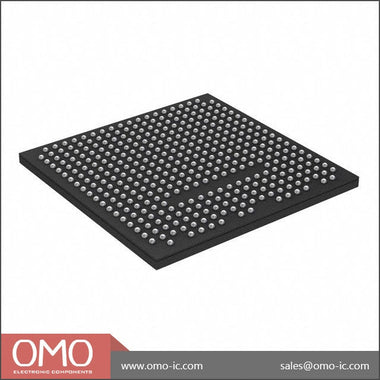
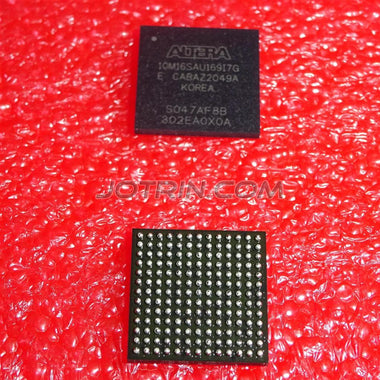
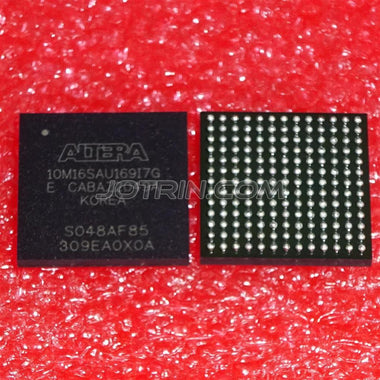
The 5CEBA2F23C8N is housed in a 484-pin FineLine BGA (FBGA) package, measuring 23 mm by 23 mm with a 1.0 mm ball pitch. This packaging provides a balance between high I/O availability and manageable PCB routing complexity. The device offers up to 224 user I/O pins, which are distributed across multiple modular I/O banks. Each bank can be independently powered by its own VCCIO supply, allowing the FPGA to interface simultaneously with different logic standards (e.g., 3.3V LVTTL, 2.5V LVCMOS, and 1.5V HSTL).
Critical pins include the VCCINT pins, which require a strict 1.1V supply for the core logic fabric, and the dedicated configuration pins (MSEL, DCLK, nCONFIG, nSTATUS, and CONF_DONE) used during the boot process. Additionally, the device features dedicated clock input pins that route directly to the global clock networks and fractional PLLs, ensuring low-skew clock distribution across the die.
Core Architectural Features
- 25,000 Logic Elements (LEs): Implemented via 9,430 Adaptive Logic Modules (ALMs), providing highly efficient logic synthesis and register utilization.
- 1.94 Megabits Embedded Memory: Distributed across M10K (10-kilobit) blocks and Memory Logic Array Blocks (MLABs) for dual-port RAM, FIFO, and ROM implementations.
- Variable-Precision DSP Blocks: Includes 25 DSP blocks that can be dynamically configured to support 18x18 or 27x27 multipliers, optimized for filtering and signal processing.
- Advanced Clock Management: Features four fractional phase-locked loops (PLLs) capable of precise frequency synthesis, phase shifting, and jitter attenuation.
- Robust I/O Capabilities: Supports multiple single-ended and differential I/O standards, including LVDS, RSDS, and mini-LVDS, with on-chip termination (OCT) to preserve signal integrity.
Specifications Parameter Table
| Specification | Technical Details |
|---|---|
| Manufacturer | Altera (Intel Programmable Solutions Group) |
| Logic Elements / Cells | 25,000 |
| Adaptive Logic Modules (ALMs) | 9,430 |
| Total RAM Bits | 1,945,600 |
| Number of User I/Os | 224 |
| Core Operating Voltage (VCCINT) | 1.1 V |
| Operating Temperature Range | 0°C to 85°C (Commercial Grade) |
| Package / Case | 484-BGA (23x23 mm footprint, 1.0 mm pitch) |
5CEBA2F23C8N Equivalents, Cross Reference, and Lifecycle
The 5CEBA2F23C8N is currently in an active lifecycle state, widely utilized in ongoing production designs. When evaluating equivalents, engineers must consider both logic density and speed grade. The 5CEBA2F23C7N is a direct equivalent featuring a faster fabric speed grade ("7" vs "8"), allowing for higher maximum clock frequencies while maintaining identical pinout and footprint compatibility.
For applications requiring future scalability, the 5CEBA4F23C8N serves as a drop-in replacement. It utilizes the exact same 484-FBGA package but doubles the logic capacity to 49,000 LEs, enabling seamless firmware upgrades without requiring a PCB redesign. To verify current stock levels, lead times, or procure this specific part for prototyping or production, Check 5CEBA2F23C8N Inventory & Pricing.
Typical Application & Circuit Considerations
Implementing the 5CEBA2F23C8N requires careful attention to the Power Delivery Network (PDN). The 1.1V VCCINT rail must be heavily decoupled using a mix of bulk capacitors (e.g., 47µF to 100µF tantalum or polymer) and high-frequency ceramic capacitors (0.1µF and 0.01µF) placed as close to the BGA vias as possible. Failure to properly decouple the core voltage can lead to logic errors and excessive jitter in the PLL outputs.
From a routing perspective, the 1.0 mm pitch of the 484-FBGA package generally allows for standard PCB manufacturing rules, typically requiring a 4-layer to 6-layer stackup depending on I/O utilization. Configuration is most commonly achieved via Active Serial (AS) mode using an Altera EPCQ flash memory device. Designers must ensure the configuration traces (DCLK, DATA) are impedance-matched and kept short to guarantee reliable bitstream loading at power-up.
Video Demonstration
Frequently Asked Questions (5CEBA2F23C8N FAQ)
Q: What is the primary difference between the 5CEBA2F23C8N and Cyclone V GX variants?
A: The 5CEBA2F23C8N belongs to the Cyclone V E series, which is optimized for pure logic implementation and does not include hard high-speed transceivers. In contrast, the Cyclone V GX series integrates up to 3.125 Gbps transceivers for protocols like PCI Express and Gigabit Ethernet. Engineers should select the E series when high-speed serial links are unnecessary, thereby reducing overall power consumption and component cost.
Q: How should the power-up sequence be managed for the 5CEBA2F23C8N?
A: Altera recommends a specific power-on sequence to prevent excessive inrush currents and ensure reliable initialization. The core voltage (VCCINT at 1.1V) and VCC_BAT should typically be powered first, followed by the I/O voltages (VCCIO) and phase-locked loop power supplies (VCCA_FPLL). Proper sequencing prevents latch-up conditions and ensures the power-on reset (POR) circuitry functions correctly before the configuration phase begins.
Q: Can the 5CEBA2F23C8N support LVDS interfaces?
A: Yes, the 5CEBA2F23C8N supports Low-Voltage Differential Signaling (LVDS) on its general-purpose I/O banks. It can achieve high-speed data transmission rates suitable for display interfaces, ADC/DAC interfacing, and chip-to-chip communication. Designers must ensure that the specific VCCIO bank powering the LVDS pins is supplied with the correct 2.5V reference voltage to meet the electrical characteristics required by the LVDS standard.
Q: What configuration schemes are available for this FPGA?
A: The 5CEBA2F23C8N supports multiple configuration schemes, including Active Serial (AS), Passive Serial (PS), Fast Passive Parallel (FPP), and JTAG. For standalone operation, the AS mode is most common, utilizing an external Altera EPCQ serial configuration device to load the SRAM bitstream upon boot. During prototyping and debugging, engineers typically utilize the JTAG interface for direct bitstream downloading and SignalTap II logic analysis.
Q: What does the "C8" suffix indicate in the 5CEBA2F23C8N part number?
A: The "C8" suffix denotes both the operating temperature range and the fabric speed grade of the FPGA. The "C" specifies a commercial temperature range, meaning the device is rated for junction temperatures between 0°C and 85°C. The "8" indicates the slowest speed grade in the Cyclone V family, which dictates the maximum internal clock frequencies and setup/hold times, making it suitable for applications where extreme timing performance is not the primary constraint.