M2S010-TQG144 Datasheet, Pinout, Equivalents, and Specs
The M2S010-TQG144 is a System-on-Chip (SoC) Field-Programmable Gate Array (FPGA) from Microchip's SmartFusion2 family. It integrates a 166 MHz ARM Cortex-M3 processor, advanced security features, and a flash-based FPGA fabric into a single device. This combination provides a reliable, secure, and low-power solution for a wide range of industrial, communications, defense, and aviation applications where high reliability and system integration are critical design parameters.
Table of Contents
What is the M2S010-TQG144?
The Microchip M2S010-TQG144 is a member of the SmartFusion2 family, which represents a significant evolution in SoC FPGA technology. Unlike traditional SRAM-based FPGAs that require an external configuration memory and are susceptible to single-event upsets (SEUs), the M2S010 utilizes a flash-based architecture. This core distinction means the device is "instant-on," non-volatile, and inherently more robust against radiation-induced configuration changes, making it suitable for high-reliability systems. The device is fabricated on a 65 nm low-power flash process, balancing performance with power efficiency.
The internal architecture is partitioned into three primary domains: the Microcontroller Subsystem (MSS), the FPGA fabric, and a comprehensive set of high-performance I/Os. The MSS is built around a hardened (not soft-core) 32-bit ARM Cortex-M3 processor, complete with its own embedded non-volatile flash memory (eNVM), embedded SRAM (eSRAM), and a full suite of standard communication peripherals such as UART, SPI, I2C, and CAN. This subsystem can operate independently of the FPGA fabric, allowing it to manage system boot, security protocols, and general housekeeping tasks while the FPGA handles high-speed parallel processing. The MSS and FPGA fabric are tightly coupled via an advanced high-performance bus (AHB) matrix, enabling high-throughput data exchange between the processor and custom logic implemented in the fabric.
The FPGA fabric itself contains 12,084 logic elements (LEs), each comprising a 4-input look-up table (LUT) and an associated D-type flip-flop. This provides sufficient logic resources for implementing complex digital signal processing (DSP) algorithms, custom state machines, and parallel data path controllers. The fabric is further enhanced with 66 dedicated 18x18 math blocks for hardware acceleration of multiplication-intensive operations and 540 Kbits of dual-port SRAM organized into 18 Kbit blocks. A key differentiator of the SmartFusion2 family is its focus on security. The M2S010-TQG144 incorporates multiple layers of design and data security, including differential power analysis (DPA) resistant crypto-accelerators, a physically unclonable function (PUF) for key generation, and a secure boot capability to ensure system integrity from power-on.

Pinout Configuration and Packaging
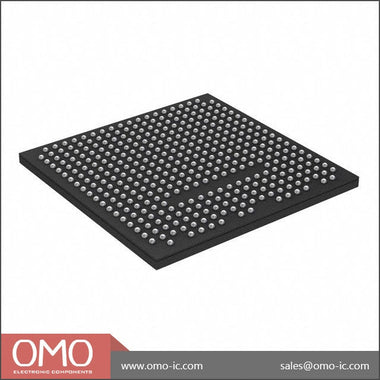
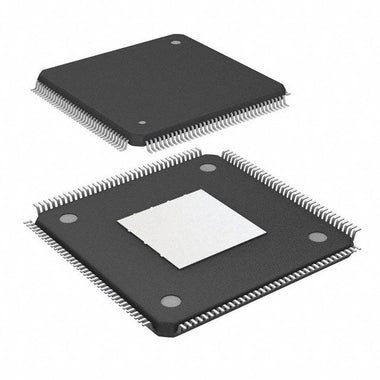
The M2S010-TQG144 is offered in a 144-pin Thin Quad Flat Pack (TQFP) package. This package provides a balance between pin density and ease of manufacturing, making it suitable for cost-sensitive applications where BGA packages may introduce higher PCB fabrication and assembly costs. The 144 pins are allocated to user I/O, dedicated function pins, power, and ground. In this specific package, the device provides up to 84 general-purpose user I/Os, which are organized into multiple I/O banks.
Each I/O bank has an independent power supply pin (VCCPA), allowing for multi-voltage I/O standards to be supported on a single device. The I/Os are highly configurable and support a wide range of signaling standards, including LVTTL, LVCMOS (1.2V, 1.5V, 1.8V, 2.5V, 3.3V), and LVDS. Dedicated pins are reserved for critical functions such as JTAG programming and debug (TCK, TMS, TDI, TDO), power supply inputs for the core logic (VCC), flash programming voltage (VPP), and PLL power supplies. Careful attention to the pinout during PCB design is crucial, particularly regarding the placement of decoupling capacitors close to the respective power pins and ensuring clean ground connections to minimize noise and ensure signal integrity.
Core Architectural Features
- Flash-Based FPGA Fabric: The device is built on a non-volatile flash process, enabling "instant-on" operation without an external configuration device. This architecture provides inherent immunity to single-event upset (SEU) configuration corruption and enhances design security by storing the configuration bitstream within the device's secure boundary.
- Hardened ARM Cortex-M3 Subsystem: Integrates a complete 166 MHz, 32-bit ARM Cortex-M3 processor with its own eNVM and eSRAM. This Microcontroller Subsystem (MSS) includes peripherals like DMA, Ethernet, USB, CAN, SPI, I2C, and UARTs, allowing it to function as the primary system controller, offloading tasks from the FPGA fabric.
- Advanced Security Features: Incorporates a multi-layered security model. This includes hardware accelerators for AES-256, SHA-256, and a pseudo-random number generator. It also features DPA (Differential Power Analysis) countermeasures and a Physically Unclonable Function (PUF) for secure key storage and management.
- High-Performance I/O and Clocking: Provides up to 84 user I/Os in the TQG144 package, supporting various single-ended and differential standards. The device contains multiple Phase-Locked Loops (PLLs) and clock conditioning circuits (CCCs) for flexible and precise clock synthesis and management throughout the system.
- Integrated DSP and Memory Resources: The FPGA fabric is equipped with 66 dedicated 18x18 math blocks for efficient implementation of DSP functions like FIR filters and FFTs. It also includes 540 Kbits of embedded SRAM (LSRAM) and 1 Kbit of micro SRAM (µSRAM) distributed throughout the fabric for low-latency data storage.
Specifications Parameter Table
| Specification | Technical Details |
|---|---|
| Logic Elements (4-input LUT + DFF) | 12,084 |
| Embedded SRAM (LSRAM) | 540 Kbits |
| Math Blocks (18x18 Multipliers) | 66 |
| Microcontroller Subsystem (MSS) | ARM Cortex-M3 @ 166 MHz |
| Maximum User I/O | 84 (in TQG144 package) |
| Core Voltage (VCC) | 1.2 V |
| Package Type | 144-pin TQFP |
| Operating Temperature Range (Commercial) | 0°C to 85°C (Tj) |
M2S010-TQG144 Equivalents, Cross Reference & Lifecycle
The M2S010-TQG144 is an active production device from Microchip. When considering alternatives, a direct drop-in replacement from another manufacturer is not feasible due to the unique proprietary architecture of SoC FPGAs. However, migration within the SmartFusion2 family is a viable engineering path. For designs that require fewer logic resources, the M2S005 in the same TQG144 package could be considered. Conversely, if a design requires more logic, memory, or DSP blocks, migrating to the M2S025-TQG144 is possible, as they share the same package and a high degree of pin compatibility for I/O and power pins, though a design re-compilation and verification is mandatory.
When cross-referencing, engineers should evaluate resource utilization (LEs, RAM, DSP) and I/O requirements. The primary consideration for migration is ensuring the new device meets or exceeds the resource needs of the original design. The Libero SoC Design Suite facilitates this migration by allowing the retargeting of a project to a different device within the same family. Always verify pin assignments and constraints after retargeting. For current availability and lead times, it is recommended to Check M2S010-TQG144 Inventory & Pricing.
Typical Applications & Circuit Considerations
The M2S010-TQG144 is engineered for applications demanding high reliability, security, and low power consumption. Its integrated architecture makes it an excellent fit for secure communication systems, where the MSS can manage encryption protocols (using the hardware accelerators) while the FPGA fabric implements high-speed data path logic. In industrial automation, it is used for complex motor control algorithms, where the FPGA provides parallel processing for precise PWM generation and feedback loop control, and the Cortex-M3 handles higher-level communication and system diagnostics.
From a circuit design perspective, proper power supply design is paramount. The M2S010-TQG144 requires multiple voltage rails: a 1.2V core voltage (VCC), I/O bank voltages (VCCPA, typically 1.8V, 2.5V, or 3.3V), and a 2.5V/3.3V flash programming voltage (VPP). A specific power-up sequence must be followed as detailed in the device datasheet to ensure proper initialization. Each power pin must be decoupled with a set of low-ESR ceramic capacitors (e.g., 0.1µF and 10µF) placed as close as possible to the device pin to minimize supply inductance and provide a low-impedance path for high-frequency currents. A well-designed power distribution network (PDN) on the PCB, often using dedicated power and ground planes, is essential for stable operation.
For PCB layout, signal integrity for high-speed I/Os must be considered. This includes impedance-controlled routing for differential pairs and careful length matching for parallel buses. The clock inputs should be routed with clean, direct paths, shielded by ground planes where possible to prevent noise coupling. The flexibility of the SmartFusion2 architecture allows for a wide range of system-level solutions. Engineers looking to implement similar integrated systems can Browse SmartFusion2 Series to find devices with varying logic densities and package options to match specific project requirements.
Video Demonstration
Frequently Asked Questions (M2S010-TQG144 FAQ)
Q: What is the primary advantage of the flash-based architecture in the M2S010-TQG144?
A: The primary advantage is its non-volatility, which leads to several key benefits. It allows for "instant-on" system startup because the configuration data is stored internally and does not need to be loaded from an external flash memory upon power-up. This architecture also enhances security, as the configuration bitstream is not exposed on external pins, and it provides inherent immunity to single-event upsets (SEUs) that can corrupt the configuration of SRAM-based FPGAs.
Q: How does the ARM Cortex-M3 Microcontroller Subsystem (MSS) interact with the FPGA fabric?
A: The MSS and the FPGA fabric are tightly coupled through a multi-layer AHB (Advanced High-performance Bus) matrix. This bus architecture allows the Cortex-M3 processor to act as a master, accessing custom peripherals and memory blocks implemented in the FPGA fabric as if they were memory-mapped peripherals. Conversely, the FPGA fabric can also contain bus masters that can initiate DMA transactions to and from the MSS's embedded SRAM, enabling high-throughput data transfers without processor intervention.
Q: What security features are built into the M2S010-TQG144?
A: The M2S010-TQG144 incorporates a comprehensive suite of security features designed to protect intellectual property (IP) and system data. It includes hardware accelerators for cryptographic functions like AES-256 and SHA-256, which are protected against side-channel attacks like Differential Power Analysis (DPA). The device also features a Physically Unclonable Function (PUF) for secure and unique key generation and storage, secure boot capabilities to ensure firmware authenticity, and bitstream encryption to protect the FPGA design itself.
Q: What software tools are required to develop a design for the M2S010-TQG144?
A: Development for the SmartFusion2 family, including the M2S010-TQG144, is done using Microchip's Libero SoC Design Suite. This is an integrated development environment (IDE) that provides tools for the entire design flow, from HDL synthesis and place-and-route for the FPGA fabric to firmware development for the ARM Cortex-M3. For the ARM subsystem, standard C/C++ compilers and debuggers like Keil MDK or IAR Embedded Workbench can be integrated into the Libero workflow.
Q: Are there specific power sequencing requirements for this device?
A: Yes, the M2S010-TQG144 has specific power-up sequencing requirements to ensure correct initialization and prevent damage. Generally, the core voltage (VCC at 1.2V) and the I/O bank voltages (VCCPA) should ramp up together or have the core voltage ramp up first. The programming voltage (VPP) has its own specific requirements and should typically be applied only during programming cycles. It is critical to consult the official Microchip datasheet for the precise timing diagrams and voltage ramp-rate specifications for your specific operating conditions.

Alan Carter
Senior Hardware Engineer & Component Specialist
Alan has over 15 years of expertise in embedded systems design, FPGA architecture, and global semiconductor supply chains. He specializes in component cross-referencing, lifecycle management, and helping OEMs navigate supply shortages.