LFE5U-25F-8BG381C Equivalents, Replacements, and Cross-Reference Guide
Looking for a LFE5U-25F-8BG381C equivalent or replacement? Supply chain disruptions, end-of-life (EOL) notices, or cost optimization efforts often lead engineers and procurement specialists to search for alternatives. This comprehensive guide covers pin-compatible drop-ins, functional alternatives, and critical migration considerations to help you find the right substitute for this popular Lattice ECP5 FPGA.

Table of Contents
LFE5U-25F-8BG381C Overview and Current Availability
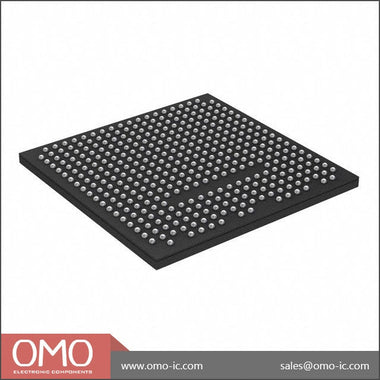
The LFE5U-25F-8BG381C is a member of the Lattice ECP5 family of Field-Programmable Gate Arrays (FPGAs). These devices are engineered to deliver high-performance features in a low-power, small-footprint package, making them ideal for a wide range of applications, from video processing and machine vision to industrial networking and communication protocol bridging. The part number itself provides a wealth of information: LFE5U signifies a lead-free ECP5 Ultra device (which includes SERDES transceivers), '25' indicates a density of 24k Logic Elements (LUTs), '-8' is the speed grade, 'BG381' denotes the 381-ball caBGA package, and 'C' specifies a commercial operating temperature range (0°C to 85°C junction temperature).
Key specifications from the official datasheet include:
- Logic Elements (LUTs): 24k
- Embedded Block RAM: 1008 kbits
- DSP Slices (18x18 Multipliers): 28
- SERDES Channels: 4 channels supporting up to 3.2 Gbps
- Maximum User I/O: 245
- Package: 17mm x 17mm, 381-ball caBGA, 0.8mm pitch
The ECP5 family's value proposition is its combination of SERDES functionality and DSP processing in a cost-effective FPGA fabric. This makes the LFE5U-25F-8BG381C a strong candidate for applications that need to bridge different high-speed interfaces, such as converting from a sensor's SLVS-EC output to MIPI CSI-2, or connecting a PCI Express endpoint to a custom logic core. In terms of market availability, the LFE5U-25F-8BG381C is an active production device. However, like most semiconductor components, particularly FPGAs, it can be subject to fluctuating lead times and allocation based on global demand. This unpredictability is a primary driver for engineers to proactively identify and qualify potential replacement parts to mitigate production risks.
Pin-Compatible Equivalents
For engineers facing a shortage of the LFE5U-25F-8BG381C, the most desirable solution is a pin-compatible, drop-in replacement. Within the Lattice ECP5 family, several devices share the same 381-ball caBGA package and are pin-for-pin compatible. This means they can be mounted on the same PCB footprint without any hardware changes. However, it is critical to understand that "pin-compatible" does not mean "drop-in replacement" without engineering effort.
Potential pin-compatible alternatives include:
- LFE5U-45F-8BG381C: This is a larger density device with 44k LUTs. Migrating to this part is often straightforward if your design is resource-constrained on the 25k device. The additional logic can provide more routing flexibility, potentially making it easier to meet timing closure.
- LFE5U-12F-8BG381C: This is a smaller density device with 12k LUTs. This is only a viable option if your current design utilizes less than 50% of the LFE5U-25F's resources. Migrating down in density can be a cost-saving measure if the original part was over-specified.
- Different Speed Grades (e.g., LFE5U-25F-7BG381C): A part with a '-7' speed grade is faster than the '-8' grade. Migrating to a faster part is generally safe, as it provides more timing margin. However, migrating to a slower speed grade (if one were available) would require a full timing re-analysis to ensure the design still functions correctly.
- Different Temperature Grades (e.g., LFE5U-25F-8BG381I): An 'I' grade part is for industrial temperature ranges (-40°C to 100°C junction). These are typically more expensive but are fully compatible for use in a commercial-grade application.
In all these cases, a new FPGA bitstream file must be generated. You cannot use the bitstream compiled for the LFE5U-25F on an LFE5U-45F. The process involves opening the project in the Lattice Diamond software, changing the target device in the project settings, and re-running the entire implementation flow (synthesis, place and route). The new bitstream must then be thoroughly tested in hardware to validate functionality.
Functional Alternatives (May Require Redesign)
When a pin-compatible part is not available or a cross-vendor strategy is required, engineers must look at functional alternatives. These are FPGAs from other manufacturers that offer a similar set of features (logic capacity, SERDES, DSP) but come in different packages and use different development tools. This path always requires a complete PCB redesign and a significant software/firmware porting effort.
Leading functional alternatives to the LFE5U-25F-8BG381C include:
- AMD (Xilinx) Artix-7 Series: Devices like the XC7A35T in a comparable BGA package are strong competitors. Artix-7 FPGAs feature 6-input LUTs (compared to ECP5's 4-input LUTs), which can sometimes lead to a more efficient logic implementation. The SERDES are known as GTP transceivers. Migration would require porting the design from Lattice Diamond to the AMD Vivado Design Suite, rewriting all constraints (pin assignments, timing), and replacing any Lattice-specific IP cores (like PLLs or SERDES blocks) with their AMD equivalents.
- Intel (Altera) Cyclone V or Cyclone 10 LP Series: The Cyclone family targets similar low-cost, low-power applications. A Cyclone V SX or SE device might offer a similar mix of logic, memory, DSP, and transceivers. The development environment is the Intel Quartus Prime Software. As with the Artix-7, this migration involves a full hardware spin and a complete toolchain and IP porting effort.
- Microchip (Microsemi) PolarFire Series: PolarFire FPGAs are known for their exceptionally low static and in-rush power, making them a compelling alternative for power-sensitive applications. They offer a different architecture and feature set. The migration path involves using the Microchip Libero SoC Design Suite and, like the others, requires a complete redesign of both the hardware and the FPGA implementation project.
Choosing a functional alternative is a major engineering decision. It requires evaluating not just the device specifications but also the maturity of the vendor's toolchain, the quality of their documentation, the availability of required IP, and the long-term supply outlook for the new part.
Detailed Comparison Table
The following table provides a side-by-side comparison of the LFE5U-25F-8BG381C, a pin-compatible alternative, and a popular functional alternative. All specifications are based on manufacturer datasheets and are subject to the specific conditions noted in those documents.
| Parameter | Lattice LFE5U-25F-8BG381C | Lattice LFE5U-45F-8BG381C (Pin-Compatible) | AMD (Xilinx) XC7A35T-2FTG256C (Functional Alt.) |
|---|---|---|---|
| FPGA Family | ECP5 | ECP5 | Artix-7 |
| Logic Cells (LUTs) | 24k (4-input) | 44k (4-input) | 33.2k (6-input) |
| Embedded Block RAM | 1008 kbits | 1970 kbits | 1800 kbits |
| DSP Slices / Multipliers | 28 (18x18) | 56 (18x18) | 90 (25x18) |
| SERDES / Transceivers | 4 Channels @ up to 3.2 Gbps | 4 Channels @ up to 3.2 Gbps | 4 Channels @ up to 6.6 Gbps |
| Max User I/O | 245 | 245 | 106 |
| Package | 381-ball caBGA (17x17mm) | 381-ball caBGA (17x17mm) | 256-ball FTBGA (13x13mm) |
| Core Voltage (Nominal) | 1.1 V | 1.1 V | 1.0 V |
Migration Guide: Switching from LFE5U-25F-8BG381C
Successfully migrating away from the LFE5U-25F-8BG381C requires a structured approach. The complexity varies dramatically between a pin-compatible switch and a cross-vendor functional replacement.
Case 1: Migrating to a Pin-Compatible ECP5 Device (e.g., LFE5U-45F)
- Project Setup: Open your existing Lattice Diamond project. Save it as a new version to preserve the original. In the project settings, change the target device from LFE5U-25F-8BG381C to the new part number (e.g., LFE5U-45F-8BG381C).
- Re-Implementation: Run the full design flow: Synthesis, Map, Place & Route. The tools will now target the new device's architecture. Pay close attention to the log files for any new warnings or errors.
- Timing Analysis: This is the most critical step. After place-and-route, run the timing analysis tools. Verify that all timing constraints (clock frequencies, input/output delays) are still being met. Migrating to a larger device like the LFE5U-45F might introduce slightly longer routing paths, which could affect high-speed signals. Conversely, migrating to a faster speed grade (e.g., '-7') will likely improve timing margin.
- Bitstream Generation & Test: Generate the new programming file (.bit). Program a board populated with the new FPGA and perform a full functional regression test to ensure all features, including high-speed interfaces like SERDES, are working as expected.
Case 2: Migrating to a Functional Alternative (e.g., AMD Artix-7)
This is a full-scale redesign project.
- Hardware Redesign: This is non-negotiable. A new PCB must be designed to accommodate the new FPGA's footprint, pinout, and power requirements. Pay special attention to power supply sequencing, decoupling capacitor recommendations, and differential pair routing for high-speed signals.
- Toolchain Transition: You must learn and use a new EDA toolchain (e.g., AMD Vivado). This includes understanding its project structure, synthesis and implementation options, and debugging tools.
- IP Core Replacement: Any vendor-specific IP used in your Lattice design must be replaced. This includes primitives like PLLs (now MMCMs/PLLs in Vivado), SERDES (now GTP/GTX transceivers), and memory blocks. This is often the most time-consuming part of the porting process.
- Constraint Porting: The Lattice Preference File (.lpf) containing pin assignments and timing constraints must be manually translated into the new vendor's format, such as Xilinx Design Constraints (.xdc). The syntax and commands are completely different.
- Full Re-Verification: The ported design must be treated as a new product. It requires a full suite of simulation, static timing analysis, and in-system hardware validation.
When considering alternatives, it's wise to explore the full range of available parts. You can Browse ECP5 Series to see if a different density or grade within the same family can meet your needs before committing to a major redesign.
Where to Source LFE5U-25F-8BG381C and Alternatives
When procuring high-value components like FPGAs, the integrity of your supply chain is paramount. Sourcing from unauthorized channels or the grey market introduces significant risks, including receiving counterfeit, remarked, or improperly stored components. Such parts can lead to immediate board failures, or worse, latent defects that cause field failures later.
The most reliable method for sourcing is to work with authorized distributors or trusted global partners like WWDParts.com. We have established relationships and robust quality control processes to ensure the authenticity and quality of the components we deliver. Whether you are looking for the exact LFE5U-25F-8BG381C or need assistance finding and procuring a qualified alternative, a reliable sourcing partner can navigate the complexities of the global market.
To check current stock levels and request a quote for your project, you can Check LFE5U-25F-8BG381C Inventory & Pricing on our platform. Our team is available to help you manage lead times and secure the parts you need to keep your production lines running.
Video Demonstration
Frequently Asked Questions (LFE5U-25F-8BG381C FAQ)
Can I directly replace an LFE5U-25F-8BG381C with an LFE5U-45F-8BG381C on my board?
Yes, you can physically replace the chip on your PCB as they are pin-compatible. However, it is not a "drop-in" replacement from a functional standpoint. The FPGA bitstream file compiled for the 25k LUT device will not work on the 45k LUT device. You must re-target your design to the LFE5U-45F-8BG381C in the Lattice Diamond software, re-run the place-and-route process, and generate a new bitstream file to program the new chip.
What is the difference between the LFE5U-25F-8BG381C and the LFE5U-25F-7BG381C?
The only difference between these two part numbers is the speed grade, indicated by the number before the package code ('-8' vs. '-7'). A '-7' speed grade is faster than a '-8' speed grade, meaning it can support higher clock frequencies and has shorter internal propagation delays. You can generally use a faster '-7' part as a replacement for a '-8' part without any issues, as it will provide more timing margin. However, the faster part may be more expensive.
Is there a drop-in replacement for the LFE5U-25F-8BG381C from AMD (Xilinx) or Intel?
No, there are no drop-in replacements for any FPGA from a different manufacturer. AMD (Xilinx) and Intel (Altera) use different package footprints, pinouts, power rail requirements, and configuration methods. Switching to a functional alternative from another vendor always requires a complete redesign of the printed circuit board (PCB) and a significant effort to port the HDL code, IP cores, and design constraints to the new vendor's software tools.
What software do I need to re-target a design for an ECP5 alternative?
If you are migrating to another pin-compatible device within the Lattice ECP5 family, you will need the Lattice Diamond software. This is Lattice's primary IDE for designing, implementing, and generating bitstreams for their FPGAs. If you are migrating to a different vendor, you will need their specific toolchain; for example, AMD Vivado for Artix-7 devices or Intel Quartus Prime for Cyclone devices.
What does the 'C' at the end of LFE5U-25F-8BG381C signify?
The 'C' at the end of the part number designates the device's operating temperature grade. 'C' stands for Commercial grade, which, according to the Lattice datasheet, corresponds to a junction temperature range of 0°C to 85°C. The alternative is typically 'I' for Industrial grade, which supports a wider range of -40°C to 100°C. You can use an Industrial grade part in a Commercial application, but not vice-versa if your product needs to operate in colder or hotter environments.