ICE40HX8K-CB132 Datasheet, Pinout, Equivalents, and Specs
The ICE40HX8K-CB132 is a high-performance, ultra-low-power field-programmable gate array (FPGA) developed by Lattice Semiconductor as part of the iCE40 HX family. Designed for sensor aggregation, protocol bridging, and custom logic implementation, it features 7,680 logic cells and operates on an advanced 40nm low-power standard CMOS process. This device is optimized for mobile, IoT, and industrial applications requiring high-speed data processing within strict thermal, power, and spatial constraints.
Table of Contents
What is the ICE40HX8K-CB132?
The ICE40HX8K-CB132 represents the high-density tier of Lattice Semiconductor’s iCE40 HX (High Performance) series of ultra-low-power FPGAs. Fabricated on a 40nm CMOS process, this device is engineered to deliver high-speed logic execution while maintaining a minimal power envelope, making it highly suitable for power-sensitive edge computing, mobile devices, and industrial control systems where traditional, power-hungry FPGAs are unviable.
At the core of the ICE40HX8K-CB132 architecture are 7,680 Logic Cells (LCs). Each logic cell consists of a 4-input Look-Up Table (LUT4) coupled with a D-type flip-flop (DFF) and dedicated carry logic. This highly granular architecture enables the efficient implementation of complex combinatorial and sequential logic circuits, DSP algorithms, and state machines. The dedicated carry logic is particularly critical for accelerating arithmetic operations such as adders, subtractors, and counters, reducing the routing overhead that would otherwise be required if implemented purely in LUTs.
The routing architecture utilizes a hierarchical routing matrix that connects the Programmable Logic Blocks (PLBs). This matrix is designed to minimize signal propagation delay and ensure deterministic timing closure for high-speed interfaces. To support data-intensive operations, the FPGA integrates 128 Kbits of embedded Block RAM (EBR), organized into 32 individual blocks of 4 Kbits each. This memory can be configured in various modes, including Single-Port RAM, Dual-Port RAM, Pseudo Dual-Port RAM, or FIFO buffers, providing essential storage for display buffering, data bridging tasks, or coefficient storage for digital filters.
Furthermore, the ICE40HX8K-CB132 includes two dedicated Phase-Locked Loops (PLLs), which are critical for clock synthesis, frequency multiplication, and phase shifting. These PLLs allow designers to generate high-frequency internal clocks from lower-frequency external oscillators, significantly reducing electromagnetic interference (EMI) and board-level component costs. Configuration is handled via an external SPI flash memory or downloaded directly from a host processor via an SPI interface into the device's internal SRAM. The absence of internal non-volatile configuration memory (NVCM) in the HX8K variant necessitates this external boot method, which is standard practice for high-density SRAM-based FPGAs. The device operates with a core voltage (VCC) of 1.2V, striking an optimal balance between switching speed and dynamic power consumption.

Pinout Configuration and Packaging
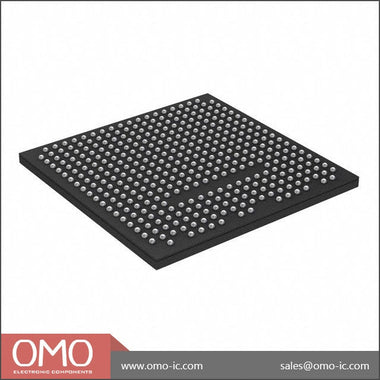
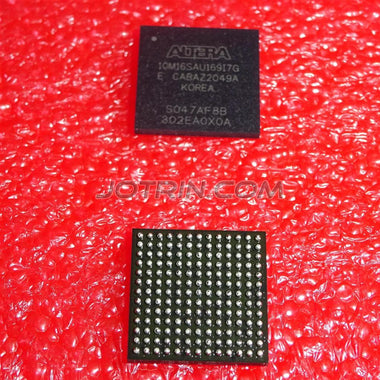
The ICE40HX8K-CB132 is housed in a 132-ball Chip-Scale Ball Grid Array (csBGA) package, designated by the "CB132" suffix. This package measures 8.0 mm x 8.0 mm with a 0.5 mm ball pitch, providing a highly compact footprint while offering a substantial number of user I/Os. The pinout is strategically organized into multiple I/O banks, allowing designers to interface with different logic standards simultaneously without requiring external level shifters.
Specifically, the device features up to 95 user-programmable I/O pins distributed across four independent I/O banks (Bank 0, Bank 1, Bank 2, and Bank 3). Each I/O bank can be supplied with its own VCCIO voltage, supporting a wide range of single-ended I/O standards including LVCMOS (3.3V, 2.5V, 1.8V) and LVDS (Low-Voltage Differential Signaling) for high-speed data transmission. The differential I/O capability is particularly critical for applications involving MIPI D-PHY, camera interfaces, or high-speed ADC/DAC data links.
Critical dedicated pins include the SPI configuration interface (SPI_VCC, SPI_SI, SPI_SO, SPI_SCK, SPI_SS_B), which are essential for loading the bitstream from an external flash memory upon power-up. Unlike larger FPGAs, the iCE40 family does not utilize JTAG for configuration, relying entirely on this SPI interface. Additionally, the CRESET_B pin serves as the master asynchronous reset for the configuration logic, while the CDONE pin is an open-drain output that indicates the successful completion of the configuration process. Power distribution pins (VCC, VCCIO, VCCPLL) and ground pins (GND) are distributed evenly across the BGA matrix to ensure low-impedance return paths and minimize simultaneous switching noise (SSN), which is vital for maintaining signal integrity in high-speed digital designs.
Core Architectural Features
- 7,680 Logic Cells (LCs): High-density logic fabric consisting of 4-input Look-Up Tables (LUT4), D-type flip-flops, and dedicated fast carry logic for optimized arithmetic operations.
- 128 Kbits Embedded Block RAM (EBR): Organized as 32 blocks of 4 Kbits, configurable as RAM, ROM, or FIFO, supporting synchronous read/write operations for data buffering.
- Dual Phase-Locked Loops (PLLs): Two highly configurable PLLs supporting frequency synthesis, clock multiplication/division, and phase adjustment for advanced clock domain management.
- Flexible I/O Architecture: 95 user I/Os distributed across 4 independent voltage banks, supporting LVCMOS (1.8V to 3.3V) and sub-LVDS/LVDS differential signaling standards.
- SRAM-based SPI Configuration: Volatile configuration memory supporting Master SPI boot from standard flash memory or Slave SPI configuration driven by an external host microcontroller.
Specifications Parameter Table
| Specification | Technical Details |
|---|---|
| Logic Cells (LUT4 + DFF) | 7,680 |
| Embedded Block RAM (EBR) | 128 Kbits (32 x 4 Kb blocks) |
| Maximum User I/O | 95 Pins |
| Package Type | 132-ball csBGA (8.0 mm x 8.0 mm, 0.5 mm pitch) |
| Core Operating Voltage (VCC) | 1.2V (Typical), 1.14V to 1.26V (Range) |
| I/O Bank Voltage (VCCIO) | 1.14V to 3.46V (Supports 1.8V, 2.5V, 3.3V standards) |
| Phase-Locked Loops (PLLs) | 2 |
| Configuration Modes | Master SPI, Slave SPI |
| Operating Temperature Range | -40°C to 100°C (Industrial) / 0°C to 85°C (Commercial) |
| Moisture Sensitivity Level (MSL) | MSL 3 |
ICE40HX8K-CB132 Equivalents, Cross Reference & Lifecycle
The ICE40HX8K-CB132 is currently in an active lifecycle phase, fully supported by Lattice Semiconductor's iCEcube2 and Radiant design software ecosystems. When considering equivalents or cross-references, hardware engineers must carefully evaluate both logic density requirements and package footprint constraints. Within the Lattice ecosystem, the iCE40LP8K is a closely related device; however, the LP (Low Power) variant is optimized for minimal static power consumption rather than the higher switching frequencies supported by the HX (High Performance) series.
For applications requiring dedicated DSP blocks (MAC operations) or more advanced embedded features like hard I2C/SPI IP, the iCE40 UltraPlus family (such as the iCE40UP5K) may serve as a functional architectural alternative. However, transitioning to the UltraPlus family requires a complete PCB redesign due to differing pinouts, package options, and power distribution requirements. Direct drop-in replacements for the CB132 package are limited strictly to other iCE40 variants that share the exact 132-ball csBGA footprint and identical power distribution network. To verify current stock, lifecycle updates, and procurement options, Check ICE40HX8K-CB132 Inventory & Pricing.
Typical Applications & Circuit Considerations
The ICE40HX8K-CB132 is widely deployed in system-level architectures requiring high-speed data bridging, sensor aggregation, and custom hardware acceleration. Typical applications include industrial motor control, where the FPGA implements precise, multi-axis PWM generation and field-oriented control (FOC) algorithms with deterministic microsecond latency. In consumer electronics and machine vision systems, the device frequently acts as a protocol bridge, converting legacy video interfaces or aggregating multiple MIPI CSI-2 camera streams into a single high-speed USB or PCIe interface via an external PHY.
From a circuit design perspective, strict adherence to power supply sequencing and decoupling guidelines is mandatory. The 1.2V core voltage (VCC) must be stable before the I/O bank voltages (VCCIO) are applied to prevent latch-up conditions and ensure reliable power-on reset (POR) initialization. Engineers should implement a robust power distribution network (PDN) utilizing low-ESR ceramic capacitors (typically 0.1µF and 0.01µF) placed as close as possible to the BGA power pins. The PLL power supply (VCCPLL) requires additional isolation, usually via a ferrite bead and dedicated decoupling capacitors, to mitigate phase noise and jitter injection from the digital core switching activities.
PCB layout for the 132-ball csBGA package demands careful via placement and trace routing. With a 0.5mm ball pitch, designers typically employ via-in-pad technology or dog-bone routing with microvias to escape the inner BGA rows. Controlled impedance routing is critical for the LVDS differential pairs and high-speed clock lines to prevent signal reflections and maintain eye diagram integrity. Furthermore, the SPI configuration lines should be kept short and routed away from noisy switching signals to guarantee flawless bitstream loading during the boot sequence. For engineers evaluating different logic densities or package sizes for their specific application requirements, Browse iCE40 Series to explore the full spectrum of Lattice low-power FPGAs.
Video Demonstration
Frequently Asked Questions (ICE40HX8K-CB132 FAQ)
Q: How is the ICE40HX8K-CB132 configured upon power-up?
A: The ICE40HX8K-CB132 utilizes an SRAM-based architecture, meaning it loses its configuration when powered down. Upon power-up, it must load its bitstream from an external non-volatile memory, typically a standard SPI flash chip connected to its dedicated SPI pins. Alternatively, a host microcontroller or processor can push the configuration data directly into the FPGA via the SPI slave interface, allowing for dynamic reconfiguration.
Q: What is the maximum operating frequency of the internal PLLs?
A: The two internal Phase-Locked Loops (PLLs) in the ICE40HX8K-CB132 are designed to synthesize high-frequency clocks from lower-frequency reference inputs. Depending on the specific speed grade and core voltage tolerance, the PLLs can generate internal clock frequencies up to 275 MHz. Proper isolation of the VCCPLL pin using a ferrite bead and decoupling capacitors is required to achieve this maximum frequency with minimal jitter.
Q: Can the ICE40HX8K-CB132 drive LVDS signals directly?
A: Yes, the I/O banks of the ICE40HX8K-CB132 are capable of supporting sub-LVDS and standard LVDS differential signaling. To utilize this feature, the corresponding VCCIO bank must be powered with the appropriate voltage, typically 2.5V or 3.3V, depending on the specific LVDS standard required. External termination resistors (typically 100 ohms) may be necessary depending on the transmission line characteristics and receiver specifications.
Q: What development software is required to program this FPGA?
A: Lattice Semiconductor provides the iCEcube2 design suite for synthesizing, placing, and routing designs targeting the iCE40 HX family. Additionally, the Lattice Radiant software offers modern toolchain support for newer designs and IP integration. There is also a robust open-source toolchain available, known as Project IceStorm, which is highly popular among independent engineers and researchers for programming iCE40 devices.
Q: What are the thermal management requirements for the CB132 package?
A: The ICE40HX8K-CB132 is an ultra-low-power device, meaning it generally dissipates very little heat under standard operating conditions. In most applications, the bare 8x8mm csBGA package provides sufficient thermal dissipation through the PCB copper planes without the need for active cooling or external heatsinks. However, in high-frequency designs utilizing maximum logic utilization and continuous I/O switching, engineers should perform a thermal analysis to ensure the junction temperature remains within the specified limits.