Request a Quote · 10M16SAU169I7G
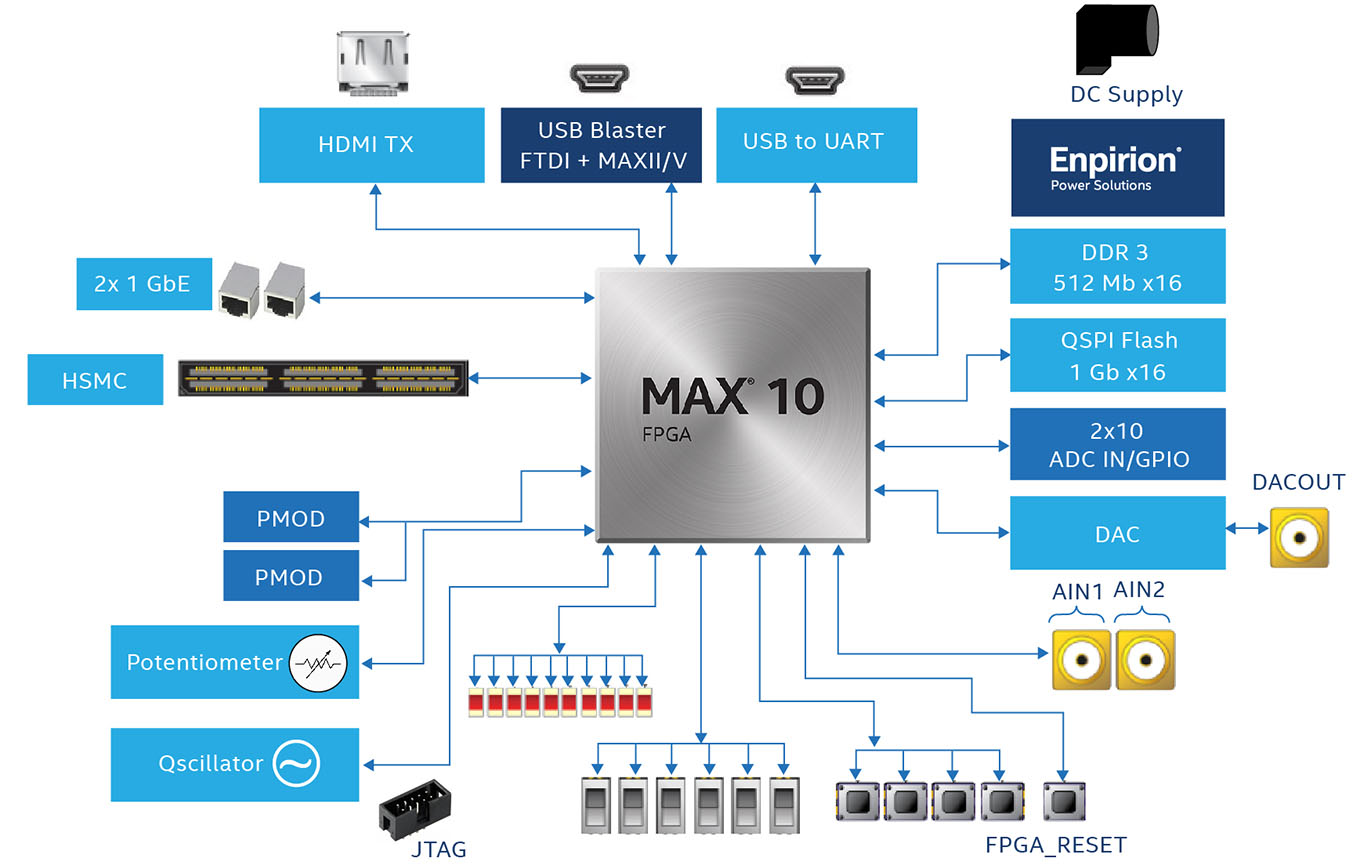
Intel MAX 10 FPGA Functional Block Diagram — Logic Array, Embedded Memory, PLLs, ADC Block, and User I/O (Source: Altera/Intel)
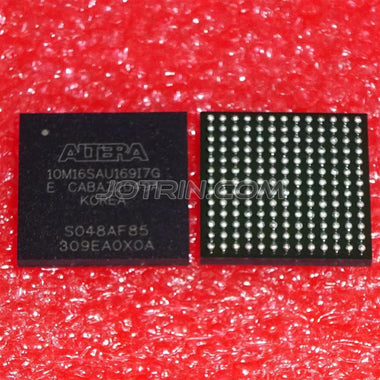
The 10M16SAU169I7G is an industrial-grade FPGA from the Intel (Altera) MAX 10 family, integrating 16,000 logic elements, embedded flash memory, and an analog-to-digital converter in a compact 169-ball UBGA package. Built on 55 nm non-volatile flash technology with a −40°C to +100°C operating range, this device delivers instant-on functionality, dual-boot capability, and single-chip integration for cost-sensitive industrial, automotive, and IoT applications.
Table of Contents
1. Overview and Key Features
The MAX 10 family represents Intel’s (formerly Altera) single-chip, non-volatile FPGA product line built on a 55 nm flash process. Unlike traditional FPGAs that require external configuration memory, the 10M16SAU169I7G stores its configuration internally in flash, enabling instant-on operation within milliseconds of power-up. This eliminates the need for external configuration devices, reducing both BOM cost and board space—a critical advantage in space-constrained industrial and IoT deployments.
The 10M16 device provides 16,000 logic elements organized into 1,000 logic array blocks (LABs), 45 M9K embedded memory blocks totaling 549 Kbit of on-chip RAM, and 45 embedded 18×18 multiplier blocks for DSP functions. Four PLLs support flexible clock management, while the integrated ADC block (up to 2 ADC channels with 12-bit resolution at 1 MSPS) enables direct analog sensor interfacing without external ADC chips. The dual-boot flash architecture allows field-safe firmware updates with automatic fallback to a known-good image.

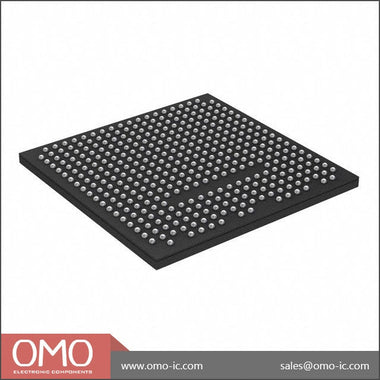
MAX 10 FPGA 169-UBGA Package (11 mm × 11 mm) — Industrial Grade BGA Component (Source: Microchip USA)
2. Technical Specifications and Parameter Table
| Parameter | Value |
|---|---|
| Manufacturer | Intel (Altera) |
| Family | MAX 10 (10M16) |
| Logic Elements (LEs) | 16,000 |
| Logic Array Blocks (LABs) | 1,000 |
| Embedded Memory (M9K) | 549 Kbit (45 M9K blocks) |
| Embedded Multipliers (18×18) | 45 |
| Phase-Locked Loops (PLLs) | 4 |
| User I/O Pins | 130 (U169 package) |
| Analog-to-Digital Converter | 12-bit SAR ADC, up to 1 MSPS |
| Internal Flash (User + Config) | Up to 5,734 Kbit (dual boot) |
| External Memory Interface | DDR2, DDR3, DDR3L, LPDDR2 SDRAM |
| I/O Standards | 3.3 V / 2.5 V / 1.8 V / 1.5 V LVCMOS, LVTTL, SSTL, HSTL, LVDS |
| Core Voltage | 1.2 V |
| I/O Supply Voltage | 3.0 V / 3.3 V |
| Speed Grade | 7 (slowest) |
| Process Technology | 55 nm Flash (TSMC) |
| Package | 169-UBGA (11 mm × 11 mm × 1 mm) |
| Operating Temperature | −40°C to +100°C (Industrial) |
| Mounting | Surface Mount (SMD/SMT) |
| RoHS Compliance | RoHS Compliant |
| Configuration | Internal Flash (JTAG + Internal Config) |
Looking for 10M16SAU169I7G Inventory?
Check our real-time stock levels, pricing, and volume discounts for worldwide distribution.
Check 10M16SAU169I7G Stock3. Architecture, Pinout, and Application Circuit
The 10M16SAU169I7G employs the MAX 10 architecture centered on a sea-of-LUTs fabric. Each logic element contains a four-input look-up table (LUT), a programmable register, and carry chain logic. The 1,000 LABs are arranged in a row/column structure with horizontal and vertical routing channels providing high-performance interconnect. The 45 M9K memory blocks (each 9,216 bits) can be configured as single-port RAM, dual-port RAM, ROM, or FIFO buffers, supporting data widths from ×1 to ×36.
The U169 UBGA package organizes 130 user I/O pins across multiple I/O banks, each independently configurable for different voltage standards. The device supports LVDS pairs for high-speed differential signaling, making it suitable for DDR3 memory interfaces operating at up to 300 MHz (600 Mbps). The integrated ADC block accepts analog inputs from dedicated pins, providing 12-bit conversion at up to 1 MSPS—ideal for temperature monitoring, voltage supervision, and sensor interfacing without external ADC ICs.
For a typical application circuit, the 10M16SAU169I7G requires a 1.2 V core supply (VCCINT), 2.5 V PLL analog supply (VCCA), and 3.3 V I/O bank supplies (VCCIO). Decoupling capacitors (100 nF ceramic + 10 µF bulk) should be placed near each power pin. The JTAG interface (TCK, TDI, TDO, TMS) connects to the programming cable for configuration and debugging via Quartus Prime Lite (free edition).
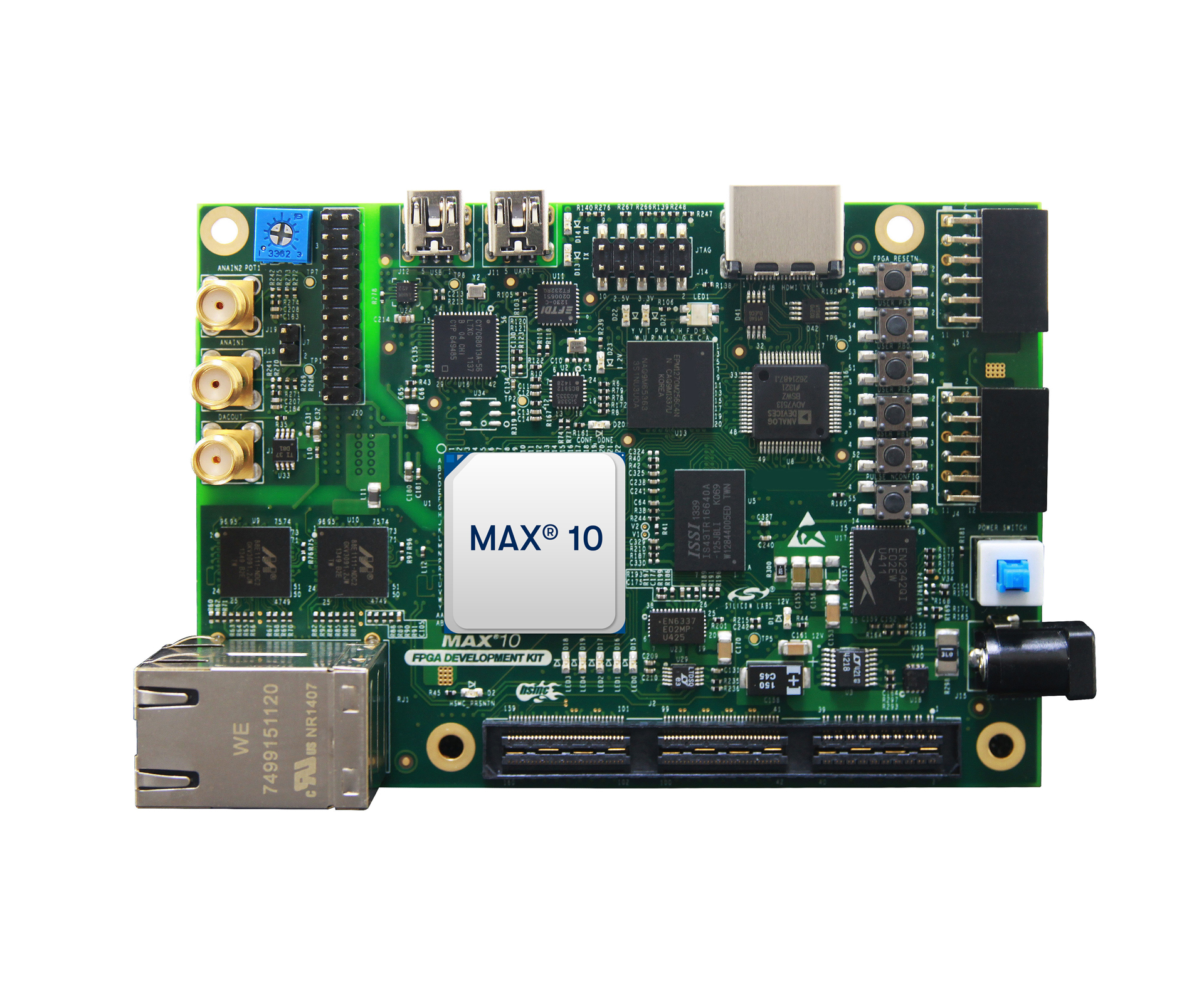
MAX 10 FPGA Development Kit — Reference Design Board with DDR3, ADC, and Expansion Headers (Source: Altera/Intel)
4. Video: MAX 10 FPGA Tutorial
5. Equivalents, Cross-Reference, and Ordering
The 10M16SAU169I7G belongs to the 10M16 sub-family within the MAX 10 lineup. Understanding the part number decode helps when selecting alternatives:
- 10M16 — 16K logic elements
- SA — Single supply, ADC enabled
- U169 — 169-ball UBGA package
- I7 — Industrial temperature (−40°C to +100°C), speed grade 7
- G — Lead-free / RoHS
Common cross-reference variants include:
- 10M16SAU169C8G — Commercial temp (0°C to +85°C), speed grade 8 (faster)
- 10M16SCU169I7G — Single supply, compact variant (no ADC)
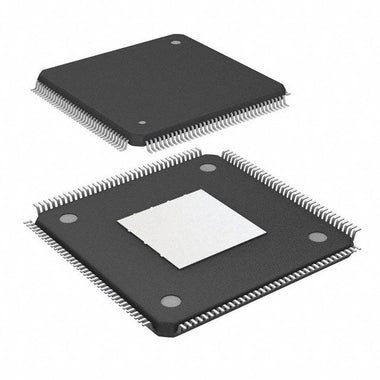
- 10M16SAE144I7G — Same die in 144-EQFP package
The MAX 10 family is supported by Quartus Prime Lite Edition (free, no license required), making it ideal for prototyping and education. For production, Intel provides Quartus Prime Standard and Pro editions with advanced optimization features.
Need a Different MAX 10 Variant?
Browse our full inventory of Intel MAX 10 FPGAs with competitive pricing and fast shipping.
Browse Intel/Altera FPGAs6. Frequently Asked Questions (FAQ)
Q1: What is the difference between 10M16SAU169I7G and 10M16SAU169C8G?
The “I7” suffix denotes the industrial temperature range (−40°C to +100°C) with speed grade 7, while the “C8” suffix indicates commercial temperature (0°C to +85°C) with speed grade 8. The C8G variant offers faster timing performance but over a narrower temperature range. Choose the I7G for harsh environments such as outdoor industrial equipment, automotive electronics, or military-adjacent applications.
Q2: Does the 10M16SAU169I7G require an external configuration flash?
No. The MAX 10 FPGA integrates on-chip flash memory that stores the FPGA configuration internally. This enables instant-on operation—the device self-configures within milliseconds of power-up without any external EEPROM or SPI flash. The dual-boot architecture also allows storing two configuration images for safe remote firmware updates.
Q3: What software tools are needed to program the 10M16SAU169I7G?
Intel provides Quartus Prime Lite Edition as a free download (no license file needed) that fully supports all MAX 10 devices. The toolchain includes the Quartus Prime design software, ModelSim-Intel FPGA Edition for simulation, and the Nios II Embedded Design Suite for soft processor development. Programming is done via a USB-Blaster or USB-Blaster II cable connected to the JTAG header.
Q4: Can the 10M16SAU169I7G interface with DDR3 SDRAM?
Yes. The MAX 10 10M16 supports DDR3, DDR3L, DDR2, and LPDDR2 external memory interfaces. The device includes dedicated hard memory controller IP and calibrated I/O circuitry to achieve data rates up to 600 Mbps (300 MHz DDR). This is sufficient for buffering video frames, storing Nios II program data, or implementing high-throughput data acquisition pipelines.
Q5: What is the on-chip ADC capable of in the 10M16SAU169I7G?
The “SA” variant of MAX 10 includes an integrated 12-bit successive-approximation register (SAR) ADC that supports up to 1 MSPS conversion rate. It can be configured with up to 18 analog input channels (depending on the package and pin multiplexing). This ADC is commonly used for on-board voltage monitoring, temperature sensing, and interfacing with analog sensors—eliminating the need for an external ADC IC.
Q6: What are the typical applications for the 10M16SAU169I7G?
The 10M16SAU169I7G is used across a wide range of applications: industrial motor control and automation, building and factory sensor hubs, smart metering and energy management, video surveillance and image processing, automotive infotainment and ADAS pre-processing, medical device signal conditioning, telecom protocol bridging, and IoT edge computing gateways. Its combination of non-volatile configuration, integrated ADC, and industrial-grade temperature rating makes it especially suited for always-on field-deployed systems.