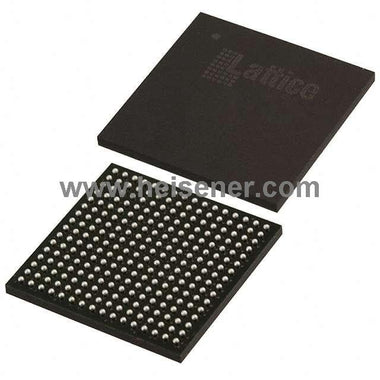
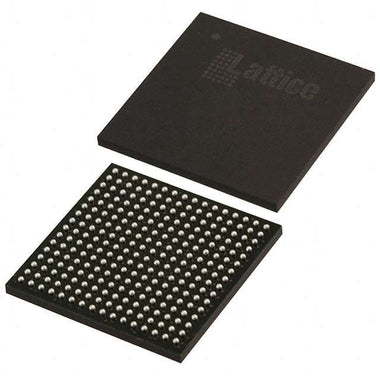
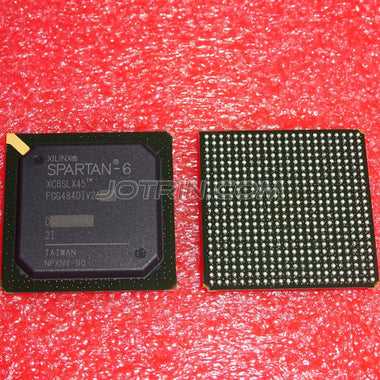
The 10M16SAU169I7G is a high-performance, non-volatile FPGA from the Intel (formerly Altera) MAX 10 family. Built on a 55nm flash process technology, this device delivers 16,000 logic elements in a compact 169-pin UBGA package with industrial-grade temperature support. Its instant-on capability, integrated analog-to-digital converter, and dual-configuration flash memory make it an ideal solution for industrial control, embedded systems, and communication applications.
Table of Contents
- 1. Device Overview & Key Features
- 2. Technical Specifications
- 3. Block Diagram & Architecture
- 4. Pinout & Package Information
- 5. Application Circuits & Development Kits
- 6. FAQ – 10M16SAU169I7G
1. Device Overview & Key Features
The 10M16SAU169I7G belongs to the Intel MAX 10 FPGA family, a series of single-chip, non-volatile programmable logic devices designed to integrate the optimal set of system components on a single die. Key advantages of the MAX 10 family include:
- Non-volatile instant-on: Internal flash memory enables configuration in microseconds at power-up, eliminating the need for external configuration devices.
- Dual configuration images: Supports two configuration images stored in on-chip flash, enabling remote field updates with a safe fallback image.
- Integrated ADC: Built-in 12-bit analog-to-digital converter with up to 18 channels, reducing external component count for mixed-signal applications.
- Industrial temperature range: The "I7G" suffix denotes industrial temperature operation from -40°C to +100°C, ensuring reliability in harsh environments.
- Low power consumption: 55nm flash-based process delivers excellent power efficiency compared to SRAM-based FPGAs.
These features make the 10M16SAU169I7G particularly well-suited for applications in motor control, power management, sensor aggregation, and protocol bridging. For related FPGA components, explore our FPGA collection at wwdparts.
2. Technical Specifications
| Parameter | Value |
|---|---|
| Manufacturer | Intel (Altera) |
| Part Number | 10M16SAU169I7G |
| Family | MAX 10 FPGA |
| Logic Elements (LEs) | 16,000 |
| Logic Array Blocks (LABs) | 1,000 |
| Embedded Memory (M9K) | 549 Kb (562,176 bits) |
| DSP Blocks (18×18 Multipliers) | 45 |
| PLLs | 4 |
| User I/O Pins | 130 |
| LVDS Pairs | Up to 22 |
| ADC | Yes – 12-bit SAR ADC |
| User Flash Memory | Yes (Internal configuration & user flash) |
| Package | 169-UBGA (11 mm × 11 mm) |
| Core Supply Voltage | 1.2 V |
| I/O Voltage | 3.0 V / 3.3 V (supports 1.2–3.3 V standards) |
| Speed Grade | 7 |
| Operating Temperature | -40°C to +100°C (Industrial) |
| Process Technology | 55 nm Flash |
| External Memory Support | DDR3, DDR2, LPDDR2, SRAM |
| I/O Standards | LVTTL, LVCMOS, SSTL, HSTL, LVDS, RSDS |
| Mounting Type | SMD/SMT |
| RoHS Compliant | Yes |
Need to source this part? Check availability and pricing for the 10M16SAU169I7G at wwdparts.com.
3. Block Diagram & Architecture
The MAX 10 architecture integrates logic elements, embedded memory blocks, DSP blocks, PLLs, and an analog-to-digital converter on a single die with non-volatile flash configuration storage. The block diagram below illustrates the major functional blocks and interconnect of the MAX 10 development platform:
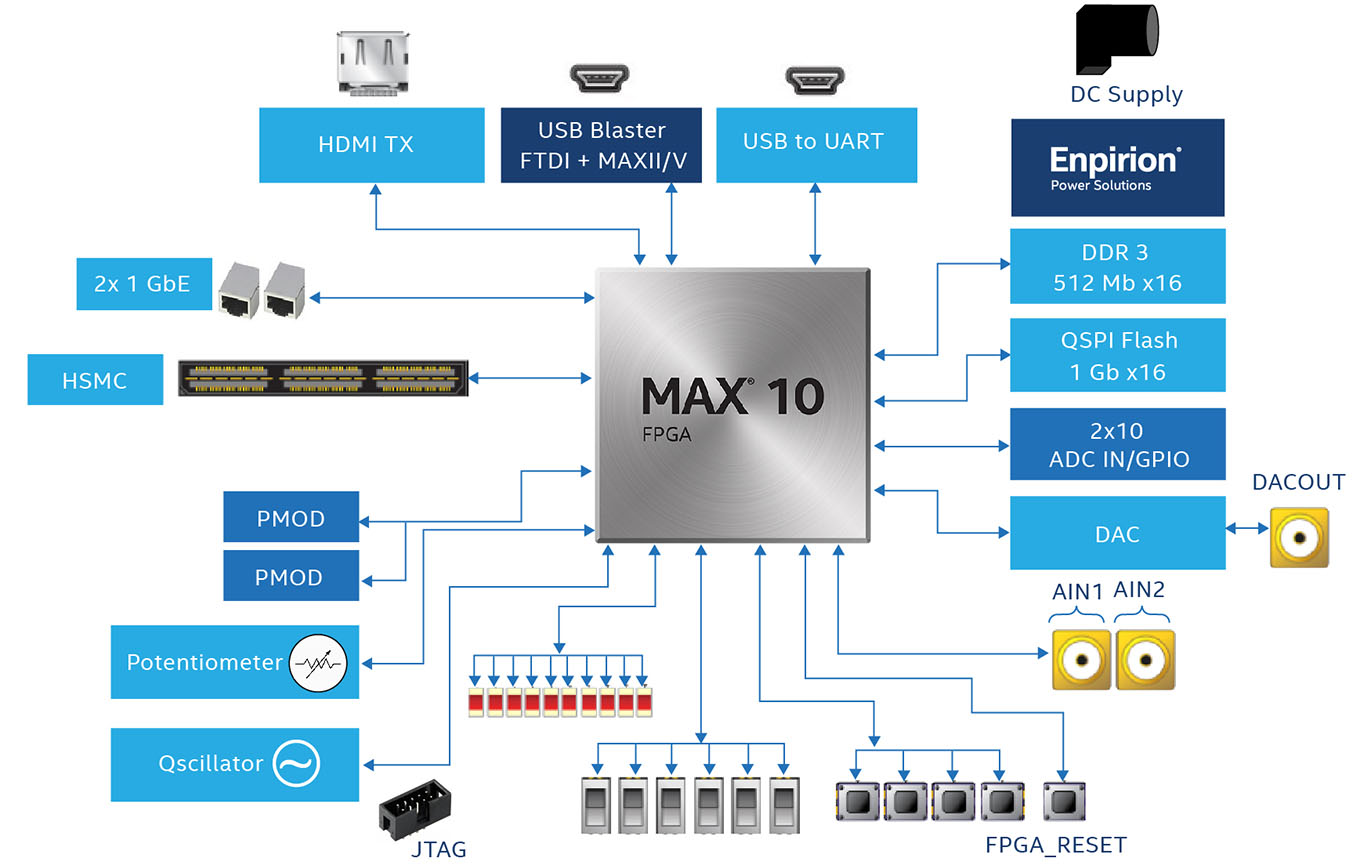
The MAX 10 architecture provides a flexible routing fabric that connects all major blocks. Each Logic Array Block (LAB) contains 16 Adaptive Logic Modules (ALMs), and the M9K embedded memory blocks provide 8,192-bit dual-port RAM with various width configurations. The four PLLs support clock management with frequency synthesis and phase shifting capabilities.
4. Pinout & Package Information
The 10M16SAU169I7G is housed in a 169-pin Ultra FineLine BGA (UBGA) package with dimensions of 11 mm × 11 mm × 1 mm. This compact form factor provides 130 user I/O pins with support for multiple I/O voltage standards. Below is a representative image of the MAX 10 UBGA-169 package:

Key package characteristics:
- Ball pitch: 0.8 mm
- Package dimensions: 11 mm × 11 mm × 1 mm
- Total balls: 169 (13 × 13 array)
- User I/O: 130 pins across multiple I/O banks
- Power/Ground: Dedicated VCC, VCCIO, and GND balls
For PCB layout guidelines and pin assignments, refer to the official MAX 10 Pin Connection Guidelines in the Intel FPGA documentation.
5. Application Circuits & Development Kits
The MAX 10 family is well-suited for a wide range of embedded and industrial applications. Intel/Altera offers official development kits to accelerate prototyping and evaluation:
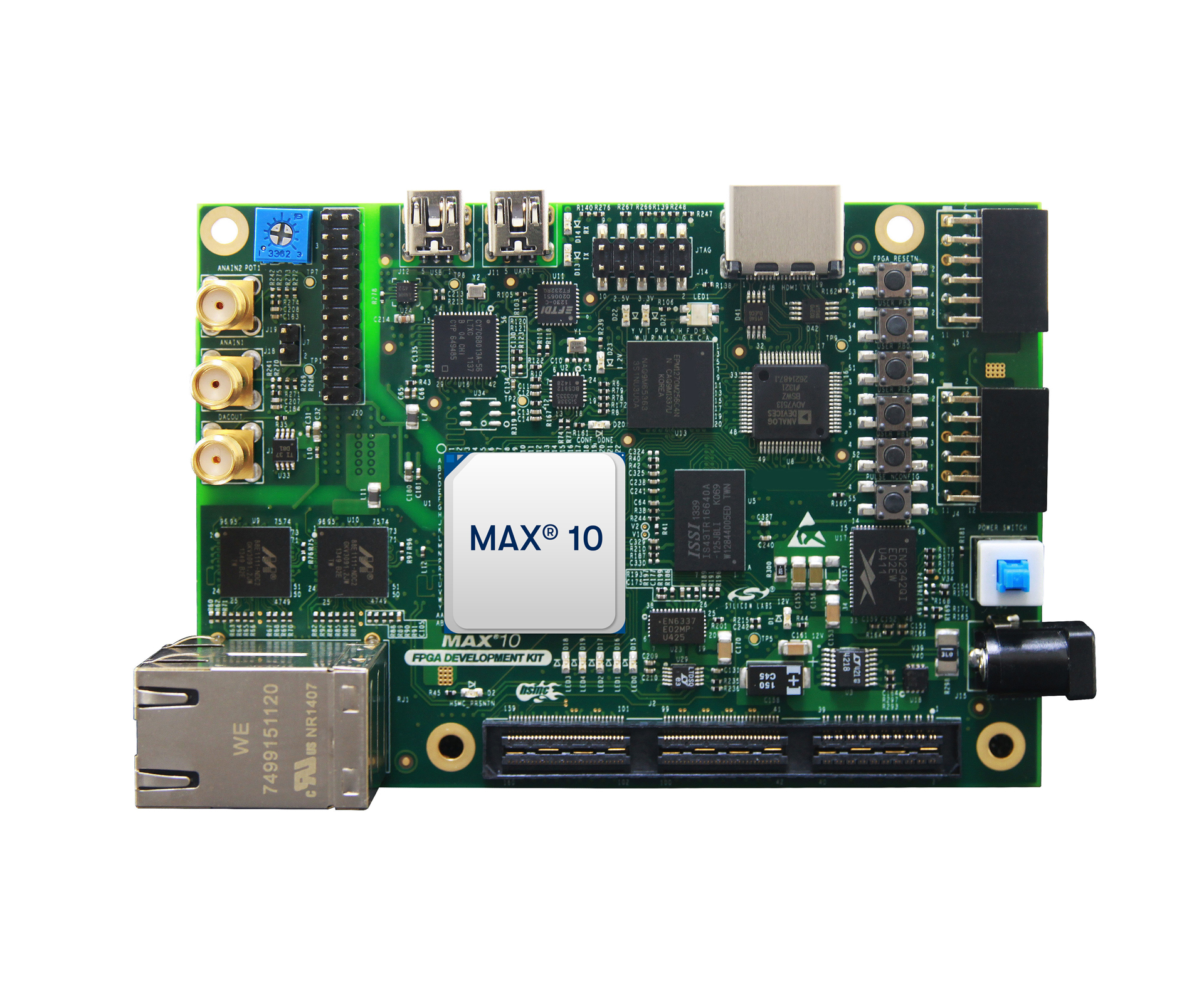
The MAX 10 FPGA Development Kit features:
- MAX 10M50 FPGA with full-featured I/O connectivity
- Dual Gigabit Ethernet ports
- HDMI video output
- USB-to-UART bridge for serial communication
- HSMC expansion connector for add-on cards
- On-board USB-Blaster II for JTAG programming
Typical application areas for the 10M16SAU169I7G include:
- Industrial automation: Motor control, PLC co-processing, sensor fusion
- Power management: Digital power supply sequencing and monitoring
- Communication: Protocol bridging (SPI, I2C, UART, PCIe)
- Automotive: ADAS sensor preprocessing, LED lighting control
- Consumer electronics: Display control, audio processing
Browse more Intel FPGA development tools and accessories in our development kits collection.
Video Tutorial: Getting Started with MAX 10 FPGA
6. FAQ – 10M16SAU169I7G
What is the 10M16SAU169I7G?
The 10M16SAU169I7G is an Intel (Altera) MAX 10 family FPGA with 16,000 logic elements, 549 Kb of embedded memory, 45 DSP blocks, and an integrated 12-bit ADC. It comes in a 169-pin UBGA package rated for industrial temperatures (-40°C to +100°C).
What software is used to program the 10M16SAU169I7G?
The 10M16SAU169I7G is programmed using Intel Quartus Prime software (Lite Edition is free). Quartus Prime supports VHDL, Verilog, and schematic design entry, along with synthesis, place-and-route, timing analysis, and JTAG programming for MAX 10 devices.
Does the 10M16SAU169I7G require an external configuration memory?
No. The MAX 10 FPGA includes internal flash memory for configuration storage, providing instant-on operation at power-up without the need for external EEPROM or flash configuration devices. It also supports dual configuration images for safe remote updates.
What is the maximum operating frequency of the 10M16SAU169I7G?
The speed grade 7 designation indicates this is the standard performance tier in the MAX 10 family. Typical core clock frequencies range up to 250–300 MHz depending on design complexity, with the four integrated PLLs supporting clock frequencies up to 500 MHz for output clocks.
What memory interfaces does the 10M16SAU169I7G support?
The 10M16SAU169I7G supports DDR3, DDR2, LPDDR2, and SRAM external memory interfaces through its hard memory controller IP. The device I/O supports SSTL and HSTL voltage standards required for these memory interfaces.
What are the equivalent or alternative parts to the 10M16SAU169I7G?
Within the MAX 10 family, alternatives include the 10M16SAU169C8G (commercial temperature), 10M08SAU169I7G (8K LEs, same package), and 10M25SAU169I7G (25K LEs). From other families, the Lattice MachXO3LF and Microchip PolarFire offer comparable non-volatile FPGA solutions.