Request a Quote · 10M16SAU169I7G

10M16SAU169I7G UBGA-169 Package and Pinout Reference
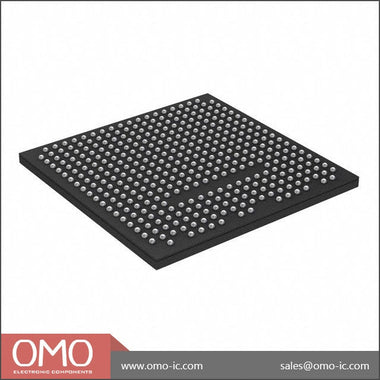
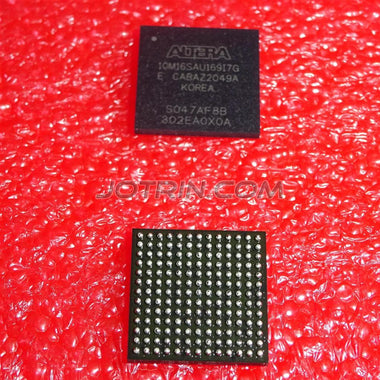
The 10M16SAU169I7G is an Intel (formerly Altera) MAX 10 family FPGA housed in a 169-ball UBGA package. Built on 55nm non-volatile process technology, this device integrates 16,000 logic elements, dual analog-to-digital converters, and internal configuration flash memory in a single chip. It targets industrial-grade applications requiring an operating temperature range of −40°C to +100°C, making it well-suited for motor control, sensor aggregation, embedded processing, and board management functions where a compact, instant-on programmable logic device is needed.
Table of Contents
1. Overview and Core Features
The MAX 10 FPGA family from Intel (Altera) was introduced to bridge the gap between CPLDs and low-cost FPGAs. The 10M16SAU169I7G occupies the mid-density tier of the family, offering 16,000 logic elements across 1,000 logic array blocks (LABs). A defining characteristic of the MAX 10 platform is its use of non-volatile flash-based configuration, which eliminates the need for an external configuration ROM and enables instant-on operation within milliseconds of power-up.
Key features of this device include:
- Dual ADC blocks – Each 12-bit successive-approximation ADC supports up to 1 MSPS conversion rate, enabling direct analog signal acquisition without external ADC ICs.
- User flash memory – Up to 736 Kb of on-chip user flash memory is available for non-volatile data storage, simplifying system designs that require persistent parameters.
- Embedded memory – 549 Kb of M9K embedded SRAM blocks support FIFOs, RAM, and ROM implementations.
- Four PLLs – On-chip phase-locked loops provide flexible clock management with frequency synthesis and jitter filtering.
- 130 user I/O pins – Supporting voltage levels from 1.0V to 3.3V LVCMOS, LVTTL, SSTL, and HSTL standards.
The “I7G” suffix designates the industrial temperature grade (−40°C to +100°C), speed grade 7, and lead-free (green) packaging. This makes the device suitable for environments with extended temperature demands such as factory automation, transportation, and outdoor equipment. For related MAX 10 devices, see also the 10M08SAE144C8G and 10M04SCE144C8G technical guides.
2. Specifications and Parameter Table
| Parameter | Value |
|---|---|
| Part Number | 10M16SAU169I7G |
| Manufacturer | Intel (Altera) |
| Family | MAX 10 |
| Logic Elements (LEs) | 16,000 |
| Logic Array Blocks (LABs) | 1,000 |
| Embedded Memory (M9K) | 549 Kb (562,176 bits) |
| User Flash Memory | Up to 736 Kb |
| 18×18 Embedded Multipliers | 46 |
| PLLs | 4 |
| ADC | Dual 12-bit, up to 1 MSPS |
| Global Clock Networks | 20 |
| User I/O Pins | 130 |
| Max LVDS Pairs | 22 |
| Package | 169-UBGA (11 × 11 mm) |
| Process Technology | 55 nm (non-volatile flash) |
| Core Voltage | 1.2V |
| I/O Voltage | 3.0V – 3.3V |
| Operating Temperature | −40°C to +100°C (Industrial) |
| Speed Grade | 7 |
| Configuration | Internal flash (instant-on), dual-image boot |
| External Memory Interface | DDR2, DDR3, LPDDR2, SRAM |
| RoHS Compliant | Yes (lead-free) |
Looking for 10M16SAU169I7G Inventory?
Check our real-time stock levels, pricing, and volume discounts for global distribution.
Check 10M16SAU169I7G Stock3. Architecture and Block Diagram
The MAX 10 architecture arranges logic elements into LABs, each containing 16 adaptive logic modules (ALMs). Interconnect resources include row, column, and direct-link routing that enable efficient signal propagation. The embedded memory is organized as M9K blocks (each 9,216 bits), which can be configured as single-port RAM, dual-port RAM, ROM, or FIFO buffers.
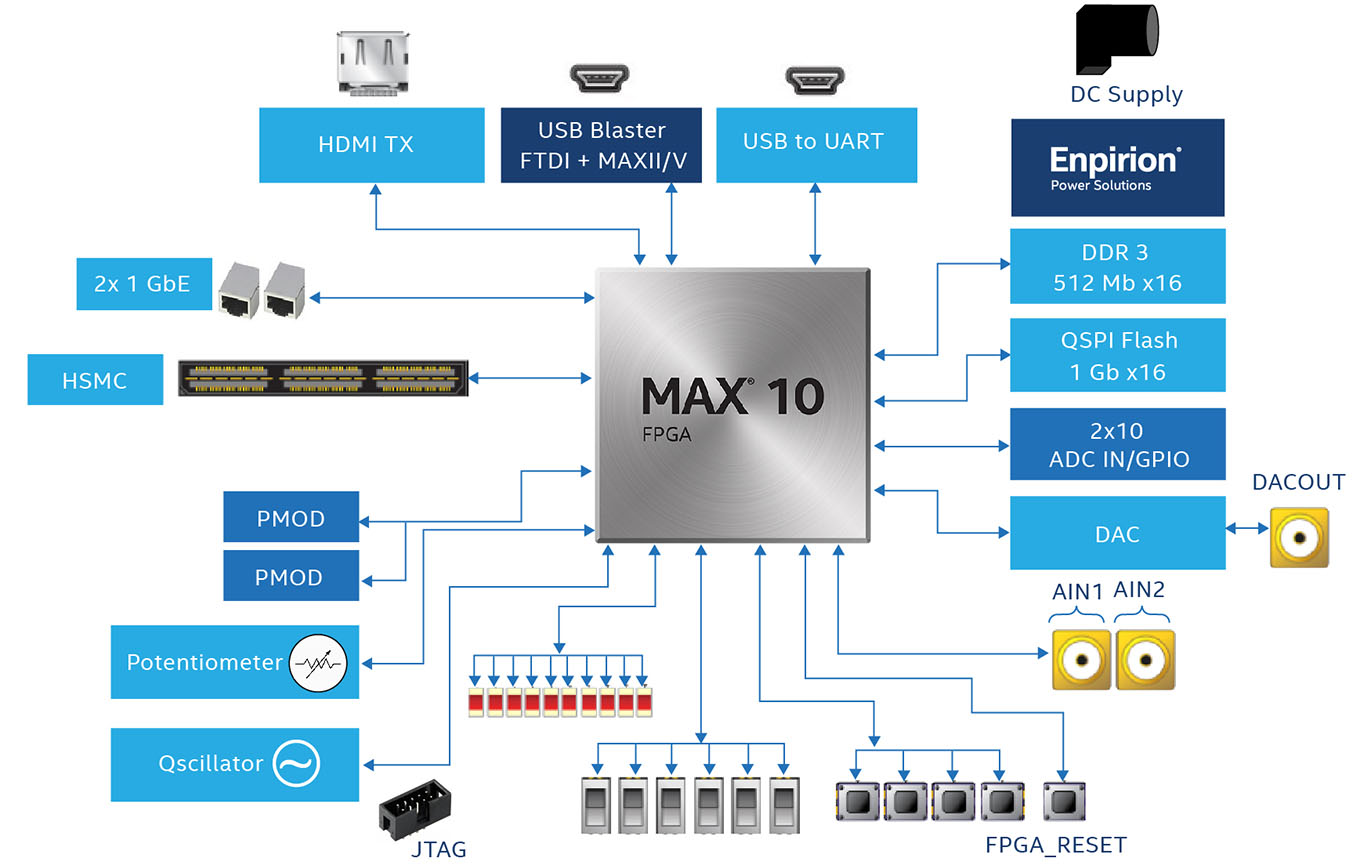
MAX 10 FPGA Development Kit Block Diagram
The dual 12-bit ADC subsystem is a distinctive feature of the MAX 10 “SA” variant (Single-supply, Analog). Analog input channels are routed through a multiplexer to the SAR ADC core. The conversion results are accessible through a soft IP interface within the FPGA fabric, enabling tight integration with custom digital processing logic. The four on-chip PLLs provide clock multiplication, division, and phase shifting, supporting frequencies up to 450 MHz internally.
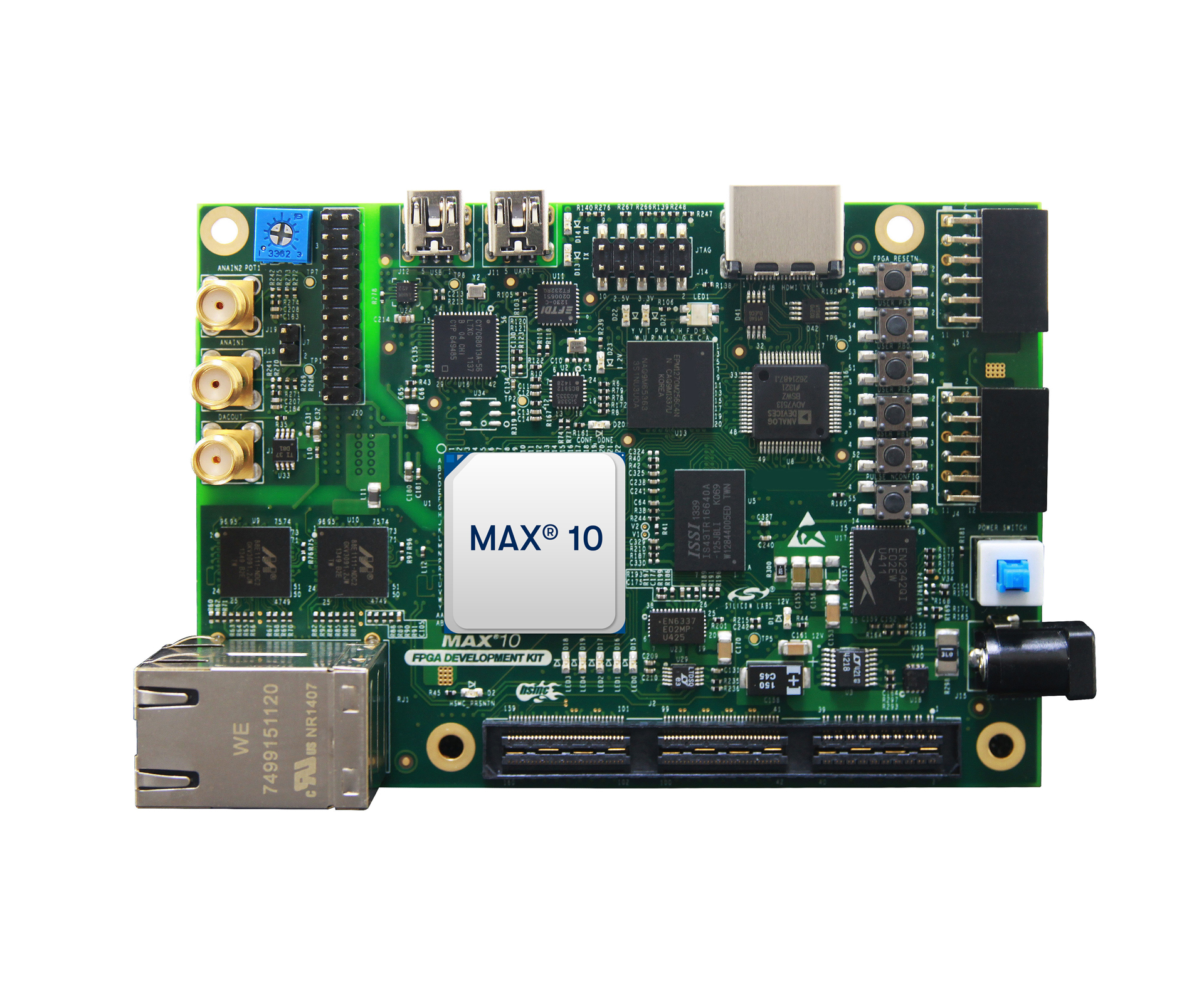
MAX 10 FPGA Development Kit – Typical Application Circuit Board
The internal flash-based configuration eliminates external configuration devices and supports dual-image boot, enabling remote field updates with a known-good fallback image. This architecture is particularly valuable in industrial and automotive applications where reliable, instant-on operation is critical. For comparison with higher-density Intel FPGAs, see the Cyclone V GX 5CGXFC7C7F23C8N technical reference.
4. Video: MAX 10 FPGA Tutorial
5. Equivalents, Cross-Reference, and Lifecycle
The 10M16SAU169I7G is part of the MAX 10 10M16 density tier. Related ordering codes differ in temperature grade, speed grade, and analog capability:
- 10M16SAU169C8G – Commercial temperature (0°C to +85°C), speed grade 8. Lower cost alternative when industrial temperature is not required.
- 10M16SCU169I7G – Same U169 package and industrial grade, but “SC” variant (Single-supply, Compact) without the dual ADC blocks.
- 10M16SAE144I7G – Industrial grade with ADC in a 144-EQFP package, offering a different PCB footprint option.
- 10M08SAU169I7G – Lower density (8,000 LEs) in the same U169 package for cost-sensitive designs.
- 10M25SAU169I7G – Higher density (25,000 LEs) in U169 package for more complex logic requirements.
The MAX 10 family was launched in 2014 and has a “Launched” production status as of 2026. Intel has committed to long-term availability for the MAX 10 series. For designs requiring migration to a newer process node, the Intel Agilex or Cyclone 10 LP families offer potential upgrade paths, though pin-compatibility is not guaranteed. Engineers should consult the Intel FPGA migration guides for detailed cross-reference tables.
6. Frequently Asked Questions (FAQ)
What is the 10M16SAU169I7G used for?
The 10M16SAU169I7G is a mid-density FPGA used in industrial control systems, sensor interfaces, motor drive controllers, board management controllers, and embedded signal processing applications. Its integrated ADC and flash-based instant-on configuration make it particularly suited for designs that need analog acquisition and rapid boot times without external components.
What is the difference between 10M16SAU169I7G and 10M16SAU169C8G?
The primary differences are temperature range and speed grade. The I7G variant supports an industrial temperature range of −40°C to +100°C with speed grade 7, while the C8G variant is rated for commercial temperatures of 0°C to +85°C with speed grade 8. The “I” version is required for applications exposed to extreme temperatures.
Does the 10M16SAU169I7G have an integrated ADC?
Yes. The “SA” designation indicates the device includes dual 12-bit analog-to-digital converters, each capable of up to 1 MSPS conversion rate. These ADCs can be configured and accessed through soft IP blocks within the Quartus Prime design software.
What software is required to program the 10M16SAU169I7G?
The device is programmed using Intel Quartus Prime Lite or Standard Edition. Quartus Prime Lite is available as a free download and fully supports the MAX 10 family. Design entry supports Verilog, VHDL, and schematic capture. Programming is done via JTAG using an Intel USB-Blaster or compatible download cable.
Does the 10M16SAU169I7G require an external configuration flash?
No. The MAX 10 family uses internal non-volatile flash memory for configuration storage. The device configures itself from internal flash upon power-up, achieving an instant-on boot within milliseconds. It also supports dual-image configuration for safe remote firmware updates.
What is the maximum operating frequency of the 10M16SAU169I7G?
The internal logic fabric can operate at frequencies up to 450 MHz when using the on-chip PLLs. Actual achievable frequency depends on the design complexity, routing, and timing constraints. The speed grade 7 designation indicates timing performance relative to other MAX 10 variants, with lower numbers indicating faster silicon.
Alan Carter, Senior Hardware Engineer
Alan has over 15 years of experience in embedded systems design, specializing in ARM Cortex architectures, PCB routing for high-speed digital signals, and industrial IoT deployments. He frequently contributes technical teardowns and architecture comparisons.