Table of Contents
1. Overview of the 10M16SAU169I7G
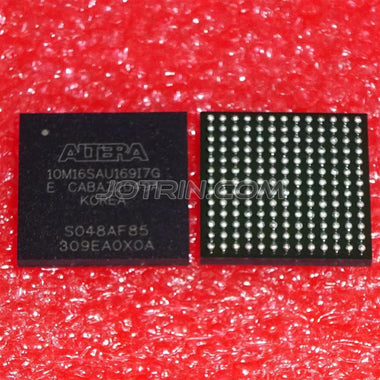
The 10M16SAU169I7G is a non-volatile FPGA from the Altera MAX 10 family, now part of Intel's programmable solutions portfolio. Built on a 55nm process technology, this device integrates 16,000 logic elements, user flash memory, and an analog-to-digital converter (ADC) into a compact 169-ball UBGA package. It is designed for cost-sensitive, low-power embedded applications where instant-on capability and single-chip integration are critical requirements.
The MAX 10 family stands apart from traditional FPGAs by incorporating internal configuration flash memory, eliminating the need for an external configuration device. This makes the 10M16SAU169I7G ideal for industrial control, motor drives, communications infrastructure, and IoT edge computing. The industrial-grade temperature range (-40°C to 100°C) and speed grade 7 designation ensure reliable operation in demanding environments.
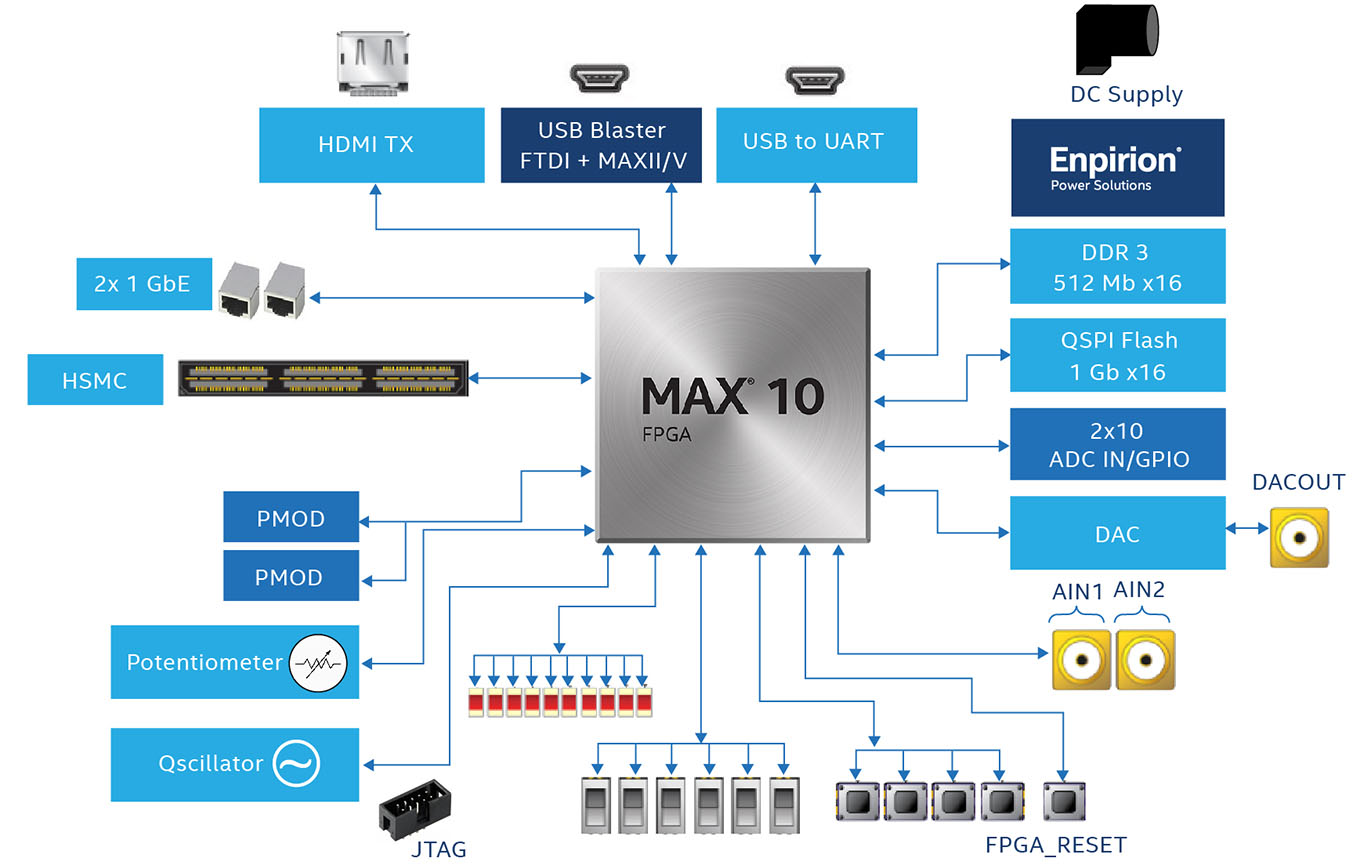
Figure 1: MAX 10 FPGA Development Kit Block Diagram – System Architecture Reference
Whether you are migrating from a CPLD to an FPGA or prototyping a new embedded design, the 10M16SAU169I7G offers the right balance of logic density, integrated analog, and non-volatile storage. Browse our full catalog of FPGA components for more Altera and Intel programmable logic devices.
2. Key Specifications and Parameters
The following table summarizes the core electrical, functional, and mechanical specifications for the 10M16SAU169I7G MAX 10 FPGA, extracted from the official Intel/Altera datasheet:
| Parameter | Value |
|---|---|
| Part Number | 10M16SAU169I7G |
| Family | Intel / Altera MAX 10 |
| Logic Elements (LEs) | 16,000 |
| Logic Array Blocks (LABs) | 1,000 |
| Embedded Memory (M9K Blocks) | 549 Kb (562,176 bits) |
| Embedded 18×18 Multipliers | 45 |
| Phase-Locked Loops (PLLs) | 4 |
| Global Clock Networks | 20 |
| Maximum User I/O Pins | 130 |
| LVDS Differential Pairs | 22 |
| User Flash Memory | Up to 736 KB (CFM + UFM) |
| Analog-to-Digital Converter (ADC) | Dual 1 MSPS 12-bit ADC |
| Process Technology | 55 nm |
| Core Voltage | 1.2 V |
| I/O Supply Voltage | 3.0 V / 3.3 V (supports 1.2 V – 3.3 V standards) |
| I/O Standards Supported | LVTTL, LVCMOS, SSTL, HSTL, HSUL, LVDS, PCI |
| External Memory Interfaces | DDR2, DDR3, LPDDR2, SRAM |
| Package Type | UBGA-169 (11 mm × 11 mm) |
| Operating Temperature | -40°C to +100°C (Industrial) |
| Speed Grade | 7 |
| Internal Configuration | Dual-boot flash (no external EEPROM required) |
| RoHS Compliant | Yes (Lead-Free) |
For a complete listing of MAX 10 variants, visit our Intel / Altera product page.
3. Pinout and Package Information
The 10M16SAU169I7G is housed in a 169-ball UBGA (Ultra-thin Ball Grid Array) package measuring 11 mm × 11 mm with a 0.8 mm ball pitch. This compact form factor is well-suited for space-constrained designs while still providing 130 user-configurable I/O pins across multiple I/O banks.

Figure 2: 10M16SAU169I7G UBGA-169 Package Footprint and Pin Layout
Key pinout considerations for PCB design:
- I/O Banks: Multiple I/O banks support different voltage levels per bank, enabling mixed-voltage interfacing with 1.2 V, 1.5 V, 1.8 V, 2.5 V, and 3.3 V logic families.
- Power Pins: Dedicated VCC core (1.2 V), VCCA (analog PLL supply at 2.5 V), and VCCIO (per-bank I/O supply) pins with recommended decoupling capacitors.
- Configuration Pins: JTAG interface pins (TCK, TMS, TDI, TDO) for programming and debugging via Intel Quartus Prime.
- ADC Input Pins: Dedicated analog input channels for the on-chip 12-bit ADC, supporting temperature sensing and external analog monitoring.
- Clock Inputs: Dedicated clock input pins routed to global clock networks and PLLs for high-performance clock distribution.
4. Typical Applications and Circuit Design
The 10M16SAU169I7G is engineered for a broad range of embedded and industrial applications. Its non-volatile architecture and integrated ADC make it a single-chip solution that reduces BOM cost and board area compared to traditional FPGA + configuration memory + external ADC designs.
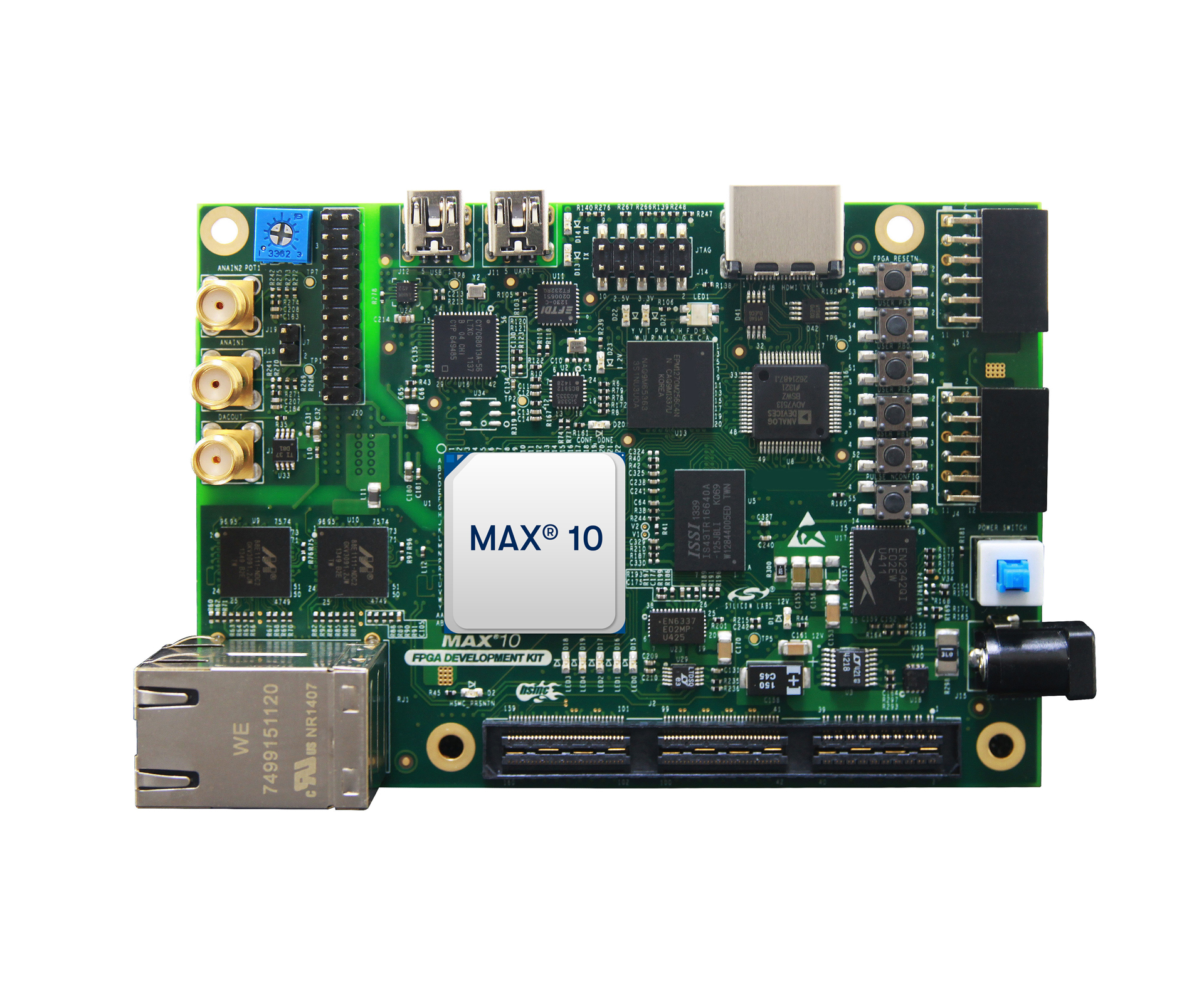
Figure 3: MAX 10 FPGA Development Kit – Application Circuit and Evaluation Board Layout
Common application areas include:
- Industrial Automation & Motor Control: Implement custom motor drive algorithms, sensor interfaces, and real-time control loops with deterministic I/O timing.
- Communications Infrastructure: Protocol bridging, serial interface conversion (SPI, I2C, UART), and high-speed data path management.
- IoT Edge Computing: Sensor data aggregation, preprocessing, and low-latency decision making at the edge with built-in ADC for analog sensor input.
- Display & Video Processing: LED panel controllers, video format conversion, and image processing pipelines leveraging the embedded multipliers.
- Test & Measurement: Custom protocol analyzers, data acquisition systems, and automated test equipment (ATE) leveraging the 12-bit ADC.
- Board Management & System Monitoring: Power sequencing, voltage/temperature monitoring via ADC, and system health reporting in servers and networking equipment.
Explore our selection of integrated circuits and development tools to find companion components for your MAX 10 design.
5. Development Tools and Getting Started
Developing with the 10M16SAU169I7G requires Intel's Quartus Prime software, which provides a complete design flow from HDL entry to device programming. The following video tutorial provides an introduction to working with MAX 10 FPGAs:
Video: Getting Started with MAX 10 FPGA Development
Development ecosystem highlights:
- Quartus Prime Lite Edition: Free-of-charge design software with full support for MAX 10 devices, including synthesis, place-and-route, and timing analysis.
- ModelSim Intel FPGA Edition: Functional simulation and verification of HDL designs before hardware deployment.
- Platform Designer (Qsys): System integration tool for building Nios II soft-processor systems, memory controllers, and peripheral IP blocks.
- Intel FPGA IP Library: Pre-verified intellectual property cores including PLL reconfig, DDR memory controllers, UART, SPI, and I2C interfaces.
- MAX 10 FPGA Development Kit: Official evaluation board featuring Arduino headers, HDMI, Ethernet, and USB connectivity for rapid prototyping.
- USB-Blaster II: JTAG download cable for programming and real-time debugging with SignalTap logic analyzer.
The dual-boot internal flash memory allows safe remote firmware updates: the FPGA loads from the primary image, and if configuration fails, it automatically falls back to a known-good secondary image.
6. Frequently Asked Questions (FAQ)
What is the 10M16SAU169I7G and what family does it belong to?
The 10M16SAU169I7G is a non-volatile FPGA from the Intel/Altera MAX 10 family. It features 16,000 logic elements, 549 Kb of embedded memory, an integrated 12-bit ADC, and internal configuration flash memory in a compact 169-ball UBGA package. The MAX 10 family is designed for cost-effective embedded applications requiring instant-on capability without external configuration memory.
What is the operating temperature range and speed grade of the 10M16SAU169I7G?
The 10M16SAU169I7G is rated for industrial-grade operation from -40°C to +100°C (junction temperature). The "I" in the part number denotes industrial temperature range, and the "7" indicates speed grade 7. The "G" suffix confirms lead-free (RoHS compliant) packaging. This makes it suitable for industrial, automotive peripheral, and outdoor equipment applications.
Does the 10M16SAU169I7G require an external configuration EEPROM?
No. The MAX 10 FPGA family includes internal configuration flash memory, so the 10M16SAU169I7G does not require an external EEPROM or flash chip for configuration storage. This provides instant-on operation (configuration loads from internal flash at power-up) and supports dual-boot images for safe remote firmware updates.
What software is needed to program the 10M16SAU169I7G?
Intel Quartus Prime Lite Edition (free) fully supports the MAX 10 FPGA family, including the 10M16SAU169I7G. The design flow includes VHDL/Verilog HDL entry, synthesis, place-and-route, timing analysis, and JTAG programming. ModelSim Intel FPGA Edition is available for simulation, and Platform Designer (formerly Qsys) enables Nios II soft-processor system integration.
What are the ADC capabilities of the 10M16SAU169I7G?
The 10M16SAU169I7G includes a dual analog-to-digital converter (ADC) block with 12-bit resolution and up to 1 MSPS sampling rate. The ADC supports an internal temperature sensing diode and multiple external analog input channels, making it suitable for system health monitoring, sensor data acquisition, and mixed-signal applications without requiring external ADC chips.
What external memory interfaces does the 10M16SAU169I7G support?
The 10M16SAU169I7G supports DDR2 SDRAM, DDR3 SDRAM, LPDDR2, and SRAM external memory interfaces through its hard memory controller IP. This enables high-bandwidth data storage and retrieval for applications such as video frame buffering, large data set processing, and Nios II embedded systems requiring external program/data memory.