XC7Z020-2CLG400C Design-In Guide: Why Choose It and How to Use It
Modern embedded systems frequently face a difficult trade-off: the need for complex, software-driven control and connectivity managed by an operating system, alongside the demand for high-throughput, deterministic, real-time processing. Traditionally, this meant a two-chip solution—a microprocessor (MPU) and a Field-Programmable Gate Array (FPGA)—leading to increased board complexity, higher latency, and greater power consumption. The Xilinx XC7Z020-2CLG400C, part of the Zynq-7000 family, directly addresses this challenge by integrating a powerful dual-core ARM processor system with flexible programmable logic on a single die, offering a streamlined, high-performance solution.

Table of Contents
The Design Challenge XC7Z020-2CLG400C Solves
As a senior hardware engineer, I've often encountered designs where a standard microcontroller lacks the parallel processing horsepower for tasks like real-time video processing, multi-axis motor control, or custom high-speed protocol implementation. The default solution was to add an FPGA to the board. While functional, this approach introduces significant design hurdles. You must manage the physical interface between the MPU and FPGA, which can become a bottleneck. This parallel bus or serial interface consumes valuable I/O pins on both devices, increases PCB routing complexity, and introduces latency that can be detrimental in control-loop applications. Furthermore, you now have two complex devices to power, program, and debug, increasing both the bill of materials (BOM) cost and development time.
The XC7Z020-2CLG400C elegantly solves this problem by its fundamental architecture: a System-on-Chip (SoC) that tightly couples a Processing System (PS) and Programmable Logic (PL). The PS is not just a soft-core processor implemented in logic; it's a hardened, dedicated dual-core ARM Cortex-A9 MPCore subsystem with its own peripherals, including timers, UART, SPI, I2C, CAN, USB, and Gigabit Ethernet. This system can boot an operating system like Linux or a real-time operating system (RTOS) completely independently of the FPGA fabric.
The true power comes from the high-bandwidth AXI interconnects that bridge the PS and PL. This allows the processor to configure and control custom hardware in the PL as if it were memory-mapped peripherals. Conversely, the PL can act as a bus master, directly accessing the DDR memory controller in the PS for high-throughput data streaming. This tight integration eliminates the inter-chip communication bottleneck of a two-chip solution. For an engineer, this means you can offload computationally intensive, parallelizable tasks (e.g., FIR filters, FFTs, image sensor interfaces) to the PL, freeing the ARM cores to handle application-level software, networking stacks, and user interfaces. This partitioning results in a more efficient, responsive, and powerful system within a smaller physical footprint and often with lower overall power consumption compared to its two-chip equivalent.
Key Specifications at a Glance
The following specifications are derived from the official Xilinx Zynq-7000 SoC (DS191) datasheet and are critical for design-in decisions. These values are specific to the XC7Z020-2CLG400C variant.
| Parameter | Value | Why It Matters |
|---|---|---|
| Processing System (PS) | Dual-core ARM Cortex-A9 MPCore | Provides robust processing power for running operating systems (e.g., Linux) and complex application software, separate from the real-time logic. |
| Max CPU Clock Frequency | 866 MHz (for -2 speed grade) | Determines the raw software processing capability. Higher frequency allows for more complex algorithms and faster application response. |
| Logic Cells | 85K | A primary measure of the FPGA fabric's capacity. This number indicates the amount of custom logic, state machines, and control structures you can implement. |
| Look-Up Tables (LUTs) | 53,200 | The fundamental building blocks of combinatorial logic in the PL. More LUTs allow for more complex logic functions. |
| DSP Slices | 220 | These are hardened, dedicated blocks for arithmetic operations (multiply-accumulate). Essential for signal processing, filtering, and mathematical acceleration. |
| Block RAM | 4.9 Mb (140 x 36 Kb blocks) | On-chip memory for buffering data, implementing FIFOs, or creating local data stores for the PL, reducing reliance on external DDR. |
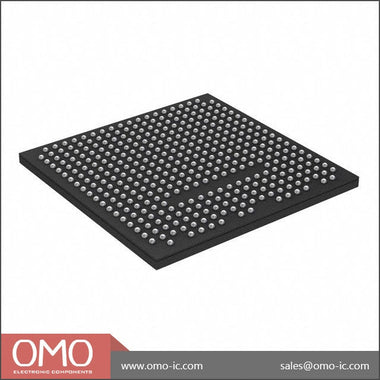
| Package | CLG400 (400-ball, 17x17mm, 0.8mm pitch) | Defines the physical footprint and PCB technology required. A 0.8mm pitch BGA requires advanced PCB manufacturing and assembly capabilities. |
| Temperature Grade | Commercial (0°C to 85°C Junction Temperature) | Specifies the operational thermal limits. This part is intended for controlled environments, not automotive or military applications. |
XC7Z020-2CLG400C vs Alternatives: Head-to-Head
Choosing the right core for a complex project involves weighing multiple factors. Here's how the XC7Z020-2CLG400C stacks up against common alternatives.
| Feature | XC7Z020-2CLG400C (Zynq-7000) | Intel Cyclone V SE/SX SoC | MPU + Discrete FPGA (e.g., STM32H7 + Artix-7) |
|---|---|---|---|
| Core Integration | Tightly coupled dual ARM Cortex-A9 (PS) and FPGA fabric (PL) on a single die. | Tightly coupled dual ARM Cortex-A9 (HPS) and FPGA fabric on a single die. | Two separate chips connected by a parallel or serial bus (e.g., FMC, SPI, PCIe). |
| Processor-Logic Bandwidth | Very high, via internal AXI buses (up to 100+ Gbps aggregate). | Very high, via internal AXI/Avalon-MM bridges. | Limited by the external interface. Significantly lower bandwidth and higher latency. |
| Development Ecosystem | Xilinx Vivado Design Suite, Vitis Unified Software Platform, PetaLinux. | Intel Quartus Prime, Platform Designer (Qsys), Intel SoC EDS. | Separate toolchains for MPU (e.g., STM32CubeIDE) and FPGA (e.g., Vivado), requiring more integration effort. |
| Board Space / BOM | Single chip for processing and logic. Reduced footprint and BOM count. | Single chip for processing and logic. Similar footprint and BOM reduction. | Two large-footprint chips, plus inter-chip connectors/traces. Higher BOM count and larger PCB area. |
| Power Management | Complex, multiple rails. Requires careful sequencing. Integrated solution can be more efficient. | Complex, multiple rails. Similar power design requirements. | Two separate power domains to manage, potentially simpler individually but more complex as a system. |
When to choose the XC7Z020-2CLG400C: This device is the optimal choice when your application requires a seamless, high-bandwidth link between a sophisticated software environment and custom hardware accelerators. If your design involves real-time video processing, software-defined radio (SDR), advanced motor control, or any system where software needs to dynamically control and respond to high-speed hardware events with minimal latency, the Zynq-7000 architecture excels. The choice between the XC7Z020 and a direct competitor like the Cyclone V SoC often comes down to your team's existing expertise with the Xilinx Vivado versus Intel Quartus toolchains, availability of specific IP cores, or a preference for the specific mix of logic, DSP, and memory resources. The two-chip MPU + FPGA solution remains viable for less integrated systems where the data transfer between processor and logic is not a performance bottleneck, or when an extremely powerful MPU is needed that exceeds the capabilities of the embedded ARM Cortex-A9 cores.
Recommended Application Circuit
Designing a board around the XC7Z020-2CLG400C requires careful attention to its support circuitry. This is not a drop-in component like a simple microcontroller; it's a high-performance system that demands a robust foundation.
Power Subsystem: The Zynq-7000 has several distinct power domains. Key rails include VCCPINT (PS core voltage), VCCPAUX (PS auxiliary voltage), VCCPLL (PS PLL voltage), VCCINT (PL core voltage), VCCBRAM (Block RAM voltage), VCCAUX (PL auxiliary voltage), and multiple VCCO rails for the I/O banks. These rails have specific voltage and current requirements, and more importantly, a required power-on and power-off sequence detailed in the datasheet (DS191). Failure to follow this sequence can damage the device. For this reason, it is highly recommended to use a Power Management IC (PMIC) specifically designed for Zynq or similar FPGAs, such as those from Texas Instruments or Analog Devices. These PMICs integrate multiple switching and LDO regulators and handle the sequencing automatically.
Boot and Configuration: The device must be configured at startup. The boot mode is selected via a set of MIO (Multiplexed I/O) pins that must have appropriate pull-up or pull-down resistors. Common boot sources include an on-board QSPI flash memory, an SD card, or directly via JTAG for development. The boot process loads the First Stage Bootloader (FSBL), which then configures the PL with the bitstream and loads the main application software (e.g., U-Boot and the Linux kernel) into DDR memory.
DDR Memory Interface: The PS includes a hardened DDR memory controller. A typical design will use a DDR3 or DDR3L SDRAM chip (or multiple chips). This is the most critical high-speed interface on the board. The layout requires 40-ohm or 50-ohm single-ended controlled impedance traces, precise length matching within byte lanes and between clock/strobe and data groups, and a clean power supply for the memory. The Xilinx tools provide wizards to generate the controller configuration based on your chosen memory part.
Clocking and Peripherals: A stable, low-jitter oscillator (typically 33.333 MHz or 50 MHz) is required for the PS_CLK input. From this, internal PLLs generate all necessary system clocks. Peripherals like Ethernet require an external PHY chip connected to the RGMII interface on the MIO pins. Similarly, USB requires an external PHY for a host or device port. For a full overview of components in this family, you can Browse Zynq-7000 Series parts and their associated reference designs.
PCB Layout and Thermal Design Tips
The physical design of the PCB is as important as the schematic for a successful XC7Z020-2CLG400C implementation. The CLG400 package is a 17x17mm, 400-ball BGA with a 0.8mm pitch, which places it in the category of advanced PCB design.
PCB Stackup and Fanout: A minimum of an 8-layer PCB is recommended, with 10 or 12 layers being common for more complex designs. This allows for dedicated ground planes, multiple power planes, and sufficient routing layers for high-speed signals. The 0.8mm pitch requires careful fanout. While dog-bone fanouts are possible, via-in-pad (VIP) technology is often preferred for cleaner routing and better signal integrity, especially under the densest parts of the BGA. This, however, increases PCB fabrication cost.
Decoupling and Power Integrity: A dense array of decoupling capacitors is non-negotiable. Place small 0402 or 0201 capacitors as close as possible to the BGA balls on the underside of the board for each power rail. Use a power integrity simulation tool (like HyperLynx PI or Sigrity) to analyze the power delivery network (PDN) and ensure voltage ripple is within the specifications under load.
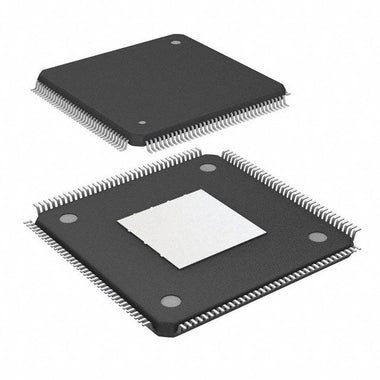
Thermal Management: The XC7Z020-2CLG400C can dissipate several watts of power, depending on the utilization of the PS and PL. The datasheet specifies a junction-to-ambient thermal resistance (ΘJA) which can be used for a first-order thermal estimation. The CLG400 package has a central ground pad array which is the primary path for heat to escape into the PCB. It is critical to place a dense grid of thermal vias in these pads, connecting them directly to internal ground planes. These planes act as heat spreaders. For applications with heavy PL utilization or operation in elevated ambient temperatures, a top-side heatsink is often necessary. Ensure there is a solid thermal path from the top of the package to the heatsink, using a suitable thermal interface material (TIM).
Where to Buy XC7Z020-2CLG400C
The XC7Z020-2CLG400C is a widely used part in industries like industrial automation, machine vision, and communications. It is available through authorized distributors and reputable independent suppliers. When sourcing, it is crucial to specify the full part number, as it encodes the device, speed grade (-2), package (CLG400), and temperature grade (C for Commercial). The device is supplied in a 400-ball Chip Scale BGA (CSBGA) package, typically in trays for automated assembly.
Due to the complexity and high demand for SoC FPGAs, lead times can vary. It is advisable for procurement professionals and engineering teams to plan their purchasing well in advance of production runs. For development and prototyping, numerous evaluation boards from Xilinx and third-party vendors (like the Digilent Zybo Z7-20 or Avnet MicroZed) feature the XC7Z020, providing a ready-made platform to start software and logic development before custom hardware is available. For current stock levels and pricing information on this specific component, you can Check XC7Z020-2CLG400C Inventory & Pricing.
Video Demonstration
Frequently Asked Questions (XC7Z020-2CLG400C FAQ)
What is the main difference between the Zynq-7000 XC7Z020 and a standard FPGA like an Artix-7?
The fundamental difference is that the XC7Z020 is a System-on-Chip (SoC), not just an FPGA. It contains a hardened, dedicated dual-core ARM Cortex-A9 processor system (PS) that can run an operating system and software independently. An Artix-7 is a pure FPGA, consisting only of programmable logic (PL). While you can implement a soft-core processor (like a MicroBlaze) in an Artix-7, it consumes logic resources and does not offer the performance or peripheral set of the hardened ARM cores in the Zynq.
How do I choose between the XC7Z020 and an Intel Cyclone V SoC?
Both are excellent devices with a similar architecture (ARM cores plus FPGA fabric). The decision often hinges on non-technical factors and specific project needs. Consider your team's experience: if your engineers are proficient with the Xilinx Vivado/Vitis toolchain, the Zynq is a natural choice. If they are more familiar with Intel's Quartus Prime, the Cyclone V may lead to faster development. Also, evaluate the specific resource mix (logic cells vs. DSP slices vs. block RAM) and available IP cores for your application, as one family may have a slight edge over the other for your particular needs.
What does the "-2" speed grade in XC7Z020-2CLG400C signify?
The speed grade indicates the performance level of the silicon. A "-2" speed grade part is faster than a "-1" grade but slower than a "-3" grade (if available). Specifically, it defines the maximum clock frequencies for the ARM CPU (up to 866 MHz for the -2 grade), the memory controllers, and the timing performance of the programmable logic fabric. For performance-critical applications, selecting a higher speed grade is important, but it comes at a higher cost.
What are the most critical power rails to manage for the XC7Z020?
While all power rails are important, the most critical are the core voltage rails: VCCPINT for the Processing System (PS) core and VCCINT for the Programmable Logic (PL) core. These rails draw the most current and are most sensitive to noise. Additionally, the power-up and power-down sequence between these rails and the auxiliary (VCCPAUX, VCCAUX) and I/O (VCCO) rails must be strictly followed as per the datasheet to prevent latch-up or damage to the device. Using a dedicated PMIC is the standard industry practice to manage this complexity.
Can I run a full operating system like Linux on the XC7Z020-2CLG400C?
Yes, absolutely. The dual-core ARM Cortex-A9 processor is more than capable of running a full embedded Linux distribution. Xilinx provides a suite of tools called PetaLinux SDK that automates the process of building a custom Linux Board Support Package (BSP) for Zynq-7000 devices. This allows you to leverage the vast ecosystem of Linux drivers, libraries, and applications for tasks like networking, file systems, and graphical user interfaces, while using the programmable logic for real-time hardware acceleration.