XC6SLX16-2FTG256C Datasheet, Pinout, Equivalents, and Specs
The XC6SLX16-2FTG256C is a Field-Programmable Gate Array (FPGA) from the Xilinx Spartan-6 family, fabricated on a 45nm process technology. It offers a balanced combination of logic resources, block RAM, and dedicated DSP slices, positioning it as a cost-effective solution for high-volume applications. This component is designed to deliver significant digital processing capabilities with low static and dynamic power consumption, making it suitable for a wide range of embedded systems.
What is the XC6SLX16-2FTG256C?
The XC6SLX16-2FTG256C is a specific configuration of the Spartan-6 LX series, engineered for logic-intensive designs. Its internal architecture is built around configurable logic blocks (CLBs), which contain Look-Up Tables (LUTs) and flip-flops, providing the fundamental building blocks for implementing custom digital circuits. The device integrates specialized hardware blocks, including 32 DSP48A1 slices for high-performance arithmetic operations and 576 Kbits of Block RAM for on-chip data storage. This integration allows engineers to offload computationally intensive tasks from a host processor or implement complex algorithms entirely within the FPGA fabric. Target markets include industrial automation, automotive driver assistance, medical imaging, and consumer electronics where a blend of performance, cost, and power efficiency is required.

Pinout Configuration and Packaging
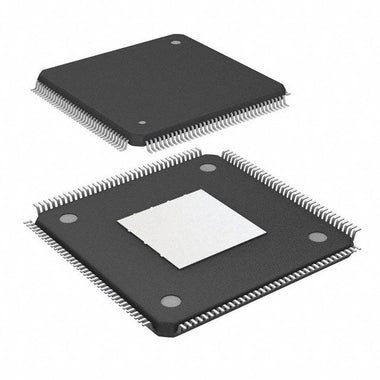
The XC6SLX16-2FTG256C is supplied in a 256-ball Fine-Pitch Thin Ball Grid Array (FTG256) package. This package has a 17x17 grid with a 1.0mm ball pitch, providing a compact footprint suitable for space-constrained PCB designs. The pinout includes dedicated pins for power (VCCINT for core, VCCO for I/O banks, VCCAUX for auxiliary logic), ground, configuration (JTAG, Master SPI), and clock inputs. The remaining pins are configurable user I/O, supporting a variety of signaling standards like LVCMOS, LVDS, and SSTL. Thermal management is a critical consideration for BGA packages; a properly designed PCB with thermal vias under the package is necessary to dissipate heat effectively from the die to the board's ground planes, ensuring operation within the specified commercial temperature range (0°C to 85°C).
Core Architectural Features
- Logic Resources: The device contains 14,579 logic cells, organized into 2,278 slices. Each slice is equipped with four 6-input LUTs and eight flip-flops, enabling the implementation of complex combinatorial and sequential logic functions with high granularity.
- DSP Slices (DSP48A1): Integrated with 32 dedicated DSP slices, the FPGA can perform high-throughput multiply-accumulate (MAC) operations. These hardware blocks are essential for signal processing applications such as digital filtering, Fast Fourier Transforms (FFTs), and correlation, significantly accelerating performance over general-purpose logic.
- Block RAM: Features 576 Kbits of true dual-port Block RAM, which can be configured into various sizes (e.g., 36Kb or two 18Kb blocks). This on-chip memory is critical for data buffering, implementing FIFOs, and storing coefficients or state information for algorithms.
- Clock Management Tiles (CMTs): Includes two CMTs, each containing a Digital Clock Manager (DCM) and a Phase-Locked Loop (PLL). These blocks provide advanced clocking capabilities, including frequency synthesis, clock deskewing, and jitter filtering, which are fundamental for maintaining timing closure in complex synchronous systems.
Specifications Parameter Table
| Specification | Technical Details |
|---|---|
| Logic Cells | 14,579 |
| Number of Slices | 2,278 |
| Total Block RAM | 576 Kbits |
| DSP Slices | 32 |
| Maximum User I/O | 186 |
| Core Voltage (VCCINT) | 1.2V (Nominal) |
| Package | FTG256 (17x17mm, 1.0mm pitch) |
XC6SLX16-2FTG256C Equivalents, Cross Reference, and Lifecycle
The Spartan-6 family, including the XC6SLX16-2FTG256C, is a mature product line. While still in production to support existing designs, it is generally considered Not Recommended for New Designs (NRND) by the manufacturer. For purchasing managers and engineers facing supply constraints, identifying alternatives is critical. Pin-to-pin compatible replacements are typically limited to other devices within the same family and package. The most direct drop-in options are the `XC6SLX16-3FTG256C` (a faster speed grade) or the `XC6SLX16-2FTG256I` (industrial temperature grade). These parts share the same physical footprint and pinout, requiring no PCB changes, though timing analysis must be re-verified. Functional alternatives from other manufacturers, such as the Intel/Altera Cyclone IV series (e.g., EP4CE15), offer similar logic density and features but are not pin-compatible. Migrating to such a device necessitates a complete hardware redesign (new PCB layout) and a full port of the HDL code and design tool flow.
Typical Application & Circuit Considerations
The XC6SLX16-2FTG256C is frequently used in applications requiring parallel data processing, such as machine vision pre-processing, industrial motor control loops, custom communication protocol bridging, and video interface conversion (e.g., DVI/HDMI transceivers). From a circuit design perspective, a robust Power Delivery Network (PDN) is mandatory. The device requires multiple supply rails (typically 1.2V for the core, 2.5V for auxiliary logic, and a variable VCCO for I/O banks from 1.2V to 3.3V). Each power rail must be adequately decoupled with low-ESR ceramic capacitors placed as close as possible to the BGA balls to minimize supply noise and voltage droop during high-frequency switching. For designs utilizing high-speed I/O standards like LVDS, PCB traces must be routed as controlled-impedance differential pairs to maintain signal integrity.
Video Demonstration
Market Availability and Pricing Trends
As a mature component integral to many long-lifecycle industrial and automotive products, the XC6SLX16-2FTG256C can experience supply chain constraints, including extended lead times and price volatility. Demand from legacy systems often keeps production active but can lead to allocation scenarios. To check real-time stock, pricing, or to request a quote for the XC6SLX16-2FTG256C and its verified alternatives, upload your BOM to WWDParts for fast processing.

Alan Carter
Senior Hardware Engineer & Component Specialist
Alan has over 15 years of expertise in embedded systems design, FPGA architecture, and global semiconductor supply chains. He specializes in component cross-referencing, lifecycle management, and helping OEMs navigate supply shortages.