Looking for a XC6SLX16-2CSG324C equivalent or replacement? As a hardware engineer, you know that sourcing legacy components can be a significant challenge, impacting production schedules and project viability. The Xilinx Spartan-6 family, while a workhorse for many years, is now a mature product line, making parts like the XC6SLX16-2CSG324C subject to supply chain volatility. This guide provides a detailed, engineering-focused breakdown of pin-compatible drop-ins, functional alternatives, and critical migration considerations to help you navigate sourcing challenges and find the right substitute for your design.

Table of Contents
XC6SLX16-2CSG324C Overview and Current Availability
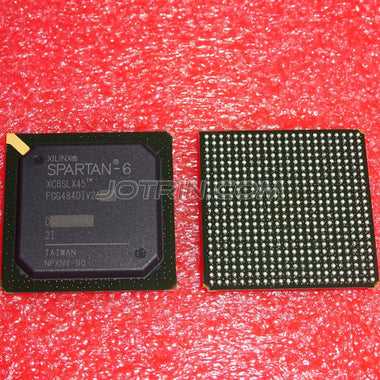
The Xilinx XC6SLX16-2CSG324C is a member of the Spartan-6 family of Field-Programmable Gate Arrays (FPGAs). Built on a mature 45 nm process, it offers a balanced combination of logic, memory, and DSP resources, making it a popular choice for a wide range of applications, from industrial control and automotive infotainment to consumer electronics and communications equipment. The part number decodes as follows: XC6S (Spartan-6 Family), LX16 (Logic-optimized with approximately 16K logic cells), -2 (Standard speed grade), CSG324 (324-ball Chip-Scale BGA package, RoHS compliant), and C (Commercial temperature range, 0°C to 85°C junction temperature).
Key technical specifications, according to the official Xilinx DS162 datasheet, include:
- Logic Cells: 14,579
- Slices: 2,278
- Flip-Flops: 18,224
- Block RAM: 576 Kbits (32 blocks of 18 Kb)
- DSP Slices (DSP48A1): 32
- Clock Management Tiles (CMTs): 4
- Maximum User I/O: 232
- Core Voltage (VCCINT): 1.2V
The Spartan-6 family is designed using the Xilinx ISE Design Suite, not the newer Vivado Design Suite used for 7-series and later devices. This is a critical consideration for any migration path. From a lifecycle perspective, the Spartan-6 family is considered "legacy" or "mature." While Xilinx (now AMD) continues to produce these parts to support long-lifecycle products, they are not recommended for new designs. This maturity leads to significant supply chain challenges. Demand from existing products remains high, while production may be de-prioritized in favor of newer families. This results in long lead times, allocation, and price volatility in the distribution channel, making the search for replacements a common engineering task.
Pin-Compatible Equivalents
For an engineer facing a line-down situation, a pin-compatible, drop-in replacement is the ideal solution as it minimizes or eliminates the need for a costly and time-consuming PCB redesign. Fortunately, within the Spartan-6 family and the CSG324 package, several pin-compatible options exist. However, "pin-compatible" does not always mean "zero effort." Each alternative has specific implications.
1. Speed Grade Variants: XC6SLX16-3CSG324C
This is the most straightforward replacement. The `-3` speed grade is faster than the `-2` grade. A design that meets timing closure on a `-2` grade part will almost certainly work on a `-3` grade part. It is a direct, drop-in replacement. The only typical downside is cost, as faster speed grades are usually priced at a premium. Best practice dictates re-running static timing analysis (STA) in the ISE Design Suite with the new speed grade selected to officially verify timing margins, but for most designs, this is a very low-risk substitution.
2. Temperature Grade Variants: XC6SLX16-2CSG324I
This part is identical to the original except for the operating temperature range. The `I` grade denotes an Industrial temperature range (-40°C to 100°C junction temperature), which is wider than the `C` (Commercial) grade's 0°C to 85°C. An Industrial grade part can always replace a Commercial grade part, as its operational envelope completely contains the commercial one. The reverse is not true. This is a safe, drop-in replacement, though like the faster speed grade, it may come at a higher cost.
3. Logic Density Variants: XC6SLX25-2CSG324C
If the XC6SLX16 is unavailable, moving to a larger device in the same package is a viable strategy. The XC6SLX25 offers more logic resources (24,051 logic cells vs. 14,579) in the same CSG324 footprint. It is pin-compatible from a hardware perspective. However, you cannot use the XC6SLX16 bitstream on an XC6SLX25 device. You must re-open your project in ISE, change the target device to the XC6SLX25, and re-compile the design to generate a new bitstream. This is a software/firmware change, but it avoids a hardware respin. This is an excellent option when the LX16 is out of stock but the LX25 is available.
4. Downgrade Option: XC6SLX9-2CSG324C
Conversely, if your design's resource utilization is low, you might be able to use a smaller, pin-compatible device like the XC6SLX9 (9,152 logic cells). This is only possible if your compiled design for the LX16 fits within the resources of the LX9. You would need to re-target and re-compile in ISE to verify. This can be a cost-saving measure but requires careful validation of resource utilization reports.
Functional Alternatives (May Require Redesign)
When no pin-compatible parts are available, the next step is to consider functionally similar FPGAs that will require a PCB redesign. This is a significant undertaking involving considerable non-recurring engineering (NRE) costs and time. The choice of a new part depends on factors like performance requirements, power budget, cost targets, and long-term availability.
1. Xilinx Spartan-7 Series (e.g., XC7S25-CSGA324)
The logical migration path within the Xilinx ecosystem is to the Spartan-7 family. These devices are built on a more advanced 28 nm process, offering better performance-per-watt. A part like the XC7S25 offers similar logic capacity to the Spartan-6 LX16/LX25. While the package name `CSGA324` is similar, it is not pin-compatible with the Spartan-6 `CSG324` package. Power rail requirements are different (e.g., different core voltage), and I/O bank rules may have changed. The most significant change is the design tool: Spartan-7 requires the Xilinx Vivado Design Suite. This means your entire design, including any IP cores, must be migrated from ISE to Vivado. This can be a complex process, especially for designs relying on older IP or specific ISE features.
2. Intel (formerly Altera) Cyclone IV or Cyclone V Series
Moving to a competing manufacturer like Intel is another option. The Cyclone IV E family, such as the EP4CE15, offers a comparable feature set to the Spartan-6 LX16. Cyclone V devices offer a step up in performance and features. This path requires a complete redesign from the ground up. You will need a new PCB layout for the different footprint, a new power delivery network, and a complete porting of your HDL code. The entire design process must be done in the Intel Quartus Prime Software, which has a different workflow, different IP library, and different timing analysis constraints than Xilinx ISE. This is the most effort-intensive option but may be necessary if long-term supply from a different vendor is desired.
3. Lattice Semiconductor ECP5 Series
Lattice is another strong competitor in this segment. The ECP5 family offers devices with similar logic densities (e.g., LFE5U-25F) and a focus on low power and cost-effective connectivity. Like the Intel option, switching to Lattice requires a full hardware and software redesign. You would use the Lattice Diamond or Radiant software for development. This path can be attractive for applications where specific features of the Lattice parts, like their SERDES capabilities, are a good fit.
Detailed Comparison Table
The table below provides a side-by-side comparison of the XC6SLX16-2CSG324C against a pin-compatible upgrade and two functional alternatives from different families/manufacturers. All specifications are sourced from official manufacturer datasheets.
| Parameter | XC6SLX16-2CSG324C | XC6SLX25-2CSG324C (Pin-Compatible Upgrade) | XC7S25-CSGA324 (Functional Alternative) | Intel EP4CE15F17C8 (Functional Alternative) |
|---|---|---|---|---|
| Manufacturer | Xilinx | Xilinx | Xilinx | Intel (Altera) |
| Family | Spartan-6 | Spartan-6 | Spartan-7 | Cyclone IV E |
| Process Node | 45 nm | 45 nm | 28 nm | 60 nm |
| Logic Elements | 14,579 Logic Cells | 24,051 Logic Cells | 23,360 Logic Cells | 15,408 Logic Elements |
| Block RAM | 576 Kbits | 936 Kbits | 1,620 Kbits | 516 Kbits |
| DSP Blocks | 32 DSP48A1 Slices | 38 DSP48A1 Slices | 80 DSP Slices | 56 Embedded Multipliers (18x18) |
| Max User I/O | 232 | 232 | 250 | 179 |
| Core Voltage (VCCINT) | 1.2V | 1.2V | 1.0V | 1.2V |
| Design Tools | ISE Design Suite | ISE Design Suite | Vivado Design Suite | Quartus Prime |
Migration Guide: Switching from XC6SLX16-2CSG324C
Successfully migrating away from the XC6SLX16-2CSG324C requires a systematic approach. Whether you're moving to a pin-compatible variant or a completely new part, a verification checklist is essential to prevent costly errors.
1. Validate Pin-for-Pin Compatibility: Even for parts within the same family and package, never assume 100% compatibility without verification. Download the datasheets for both the original part and the potential replacement. Cross-reference the pinout diagrams. Pay close attention to power pins (VCCINT, VCCAUX, VCCO, GND), configuration pins (MODE, CCLK, DONE, PROGRAM_B), and any dedicated clock inputs. For a part like the XC6SLX25, the pinout in the CSG324 package is designed to be a superset of the XC6SLX16, making it a safe hardware swap.
2. Analyze Power Delivery Network (PDN): Compare the power requirements. A faster speed grade or a larger density device might have slightly higher static (ICCINT) or dynamic power consumption. While often negligible, your PDN should have enough margin to handle it. If migrating to a new family like Spartan-7, the core voltage changes from 1.2V to 1.0V, which absolutely requires a regulator change and PCB respin. Different families also have different rules for VCCO and I/O banking that must be followed.
3. Re-evaluate Timing and Generate New Firmware: This is a non-negotiable step. Any change in the target device, even just a speed grade, requires you to update your project settings and re-run the implementation flow (synthesis, place & route). For a simple speed grade or density change within the same family, this is straightforward. For a migration to a new family (e.g., Spartan-7) or manufacturer (e.g., Intel), this is the bulk of the work. You must port your HDL, re-constrain the design with new timing constraints syntax, and work through the new toolchain to achieve timing closure.
4. Configuration and Boot-up: Ensure the configuration method is still valid. Spartan-6 supports modes like Master SPI, Slave Serial, and JTAG. Verify that the replacement part supports the same mode and that the associated pins are correctly connected. The configuration memory (e.g., an external SPI flash) may need to be reprogrammed with the new bitstream. The size of the bitstream for a larger device (like the XC6SLX25) will be larger, so ensure your configuration flash has sufficient capacity. When you Browse Spartan-6 Series options, always keep the full design lifecycle, including programming and field updates, in mind.
Where to Source XC6SLX16-2CSG324C and Alternatives
Sourcing mature components like the XC6SLX16-2CSG324C requires diligence to avoid counterfeit or poorly handled parts. The risk of receiving remarked, refurbished, or non-functional components from unauthorized channels is significantly higher for legacy FPGAs.
Always prioritize authorized distributors when possible. However, for allocated or obsolete parts, you may need to turn to the independent distribution channel. When doing so, partner with a reputable supplier that has a robust quality control and inspection process. This should include visual inspection, solderability testing, decapsulation (de-lidding) to verify the die, and X-ray inspection to check wire bonds. Ask for documentation on traceability and date codes. A reliable independent distributor acts as your first line of defense against counterfeit components, ensuring the parts you procure meet the required specifications for your production line. For current availability and to request a quote from a trusted supplier, you can Check XC6SLX16-2CSG324C Inventory & Pricing and get access to vetted stock.
Video Demonstration
Frequently Asked Questions (XC6SLX16-2CSG324C FAQ)
Can I use an XC6SLX25-2CSG324C to replace an XC6SLX16-2CSG324C?
Yes, this is a common and effective strategy. The XC6SLX25-2CSG324C is in the same family and package, making it pin-compatible from a hardware perspective. However, it is a larger density device, so you must recompile your design in the Xilinx ISE software, specifically targeting the XC6SLX25. You cannot use the bitstream file generated for the XC6SLX16. This is considered a software/firmware update, but it avoids a costly PCB redesign.
Is the XC6SLX16-3CSG324C a direct drop-in replacement?
Yes, the XC6SLX16-3CSG324C is a direct, drop-in replacement. The "-3" indicates a faster speed grade than the original "-2" part. A design that works on the slower part will almost certainly work on the faster one. While it's always best practice to re-run static timing analysis to be certain, it is generally considered a very low-risk substitution. The main consideration is typically a higher unit cost for the faster part.
What is the difference between the XC6SLX16-2CSG324C and XC6SLX16-2CSG324I?
The only difference is the operating temperature range. The 'C' suffix indicates a Commercial temperature range (0°C to 85°C junction temperature), while the 'I' suffix indicates an Industrial range (-40°C to 100°C). You can always use an Industrial 'I' grade part to replace a Commercial 'C' grade part as it has a wider operating range. However, you should not replace an 'I' grade part with a 'C' grade part in a product that is specified to operate in harsh temperature environments.
Can I replace the Xilinx XC6SLX16 with an Intel/Altera Cyclone FPGA?
No, not without a complete system redesign. While an Intel Cyclone IV or V FPGA may offer similar functionality in terms of logic capacity and performance, it is not compatible in any direct way. The package and pinout are different, requiring a new PCB layout. The power supply requirements are different, and most importantly, the design tools (Intel Quartus vs. Xilinx ISE) and underlying FPGA architecture are completely different, necessitating a full porting and re-verification of your HDL code.
Why is the XC6SLX16-2CSG324C often difficult to find or have long lead times?
The XC6SLX16-2CSG324C is part of the Spartan-6 family, which is a mature or "legacy" product line. While still in production to support many existing long-life products, manufacturers tend to prioritize production capacity for their newer-generation families. This, combined with continued high demand from the vast installed base of products using Spartan-6, creates a supply/demand imbalance. The result is often allocation, extended lead times, and price volatility in the market.