LCMXO2-1200HC-4TG144C Equivalents, Replacements, and Cross-Reference Guide
Looking for a LCMXO2-1200HC-4TG144C equivalent or replacement? During supply chain disruptions or for end-of-life product redesigns, hardware engineers and procurement managers often face the challenge of finding suitable substitutes. This guide provides a technical deep-dive into pin-compatible drop-ins, functional alternatives, and detailed migration considerations to help you navigate the process of replacing the Lattice MachXO2 LCMXO2-1200HC-4TG144C.

Table of Contents
LCMXO2-1200HC-4TG144C Overview and Current Availability
The LCMXO2-1200HC-4TG144C is a member of the MachXO2 family from Lattice Semiconductor, a series of non-volatile, infinitely reconfigurable Programmable Logic Devices (PLDs). These devices are often categorized as a bridge between CPLDs and FPGAs, offering a "Control PLD" architecture that integrates on-chip Flash memory, robust I/O capabilities, and a flexible logic fabric.
Let's break down the part number:
- LCMXO2: MachXO2 Family
- 1200: Denotes the logic density, corresponding to approximately 1200 Look-Up Tables (LUTs). The datasheet specifies this device has 1280 4-input LUTs.
- HC: High-Performance, 1.2V core voltage (VCC) device. This is distinct from the ZE (Zero Power) sub-family.
- 4: Speed Grade. A lower number indicates a faster device. '-4' is one of the faster commercial grades.
- T: Package type is TQFP (Thin Quad Flat Pack).
- G: Indicates a Pb-Free (lead-free) and RoHS compliant package.
- 144: Pin count of the package.
- C: Commercial temperature range, specified as a junction temperature (Tj) of 0°C to 85°C.
Key technical specifications from the official datasheet include 1280 LUTs, 107 maximum user I/O pins, 64 kbits of Embedded Block RAM (EBR), and 64 kbits of User Flash Memory (UFM). The non-volatile nature means it doesn't require an external configuration PROM, simplifying board design and providing "instant-on" capability. This makes it a popular choice for system control, glue logic, I/O expansion, and power-up sequencing. The MachXO2 family is mature but remains in active production and is widely used in new and existing designs. However, like many semiconductor components, it can be subject to allocation and extended lead times depending on global supply chain conditions, making the search for alternatives a practical necessity for many engineering teams.
Pin-Compatible Equivalents
Finding a true 100% drop-in replacement for a programmable logic device from a different manufacturer is practically impossible due to proprietary architectures, pinouts, and software tools. Therefore, the most viable pin-compatible equivalents for the LCMXO2-1200HC-4TG144C come from within the Lattice MachXO2 family itself. These alternatives share the same TQFP-144 footprint and pin assignments, but may differ in logic density, speed, or temperature grade.
Key Pin-Compatible Options:
- Different Speed Grade: The most common substitution is to use a different speed grade. You might find an LCMXO2-1200HC-5TG144C or LCMXO2-1200HC-6TG144C available. The '-5' and '-6' grades are slower than the '-4' grade. If your design has significant timing margin, this can be a viable option. Before committing, it is critical to change the device selection in the Lattice Diamond software and re-run Static Timing Analysis (STA) on your compiled design to confirm that all setup and hold time constraints are still met.
- Different Temperature Grade: The LCMXO2-1200HC-4TG144I is the industrial grade version (-40°C to 100°C Tj). It is a superset of the commercial grade ('C') part and can be used as a direct, drop-in replacement without any design changes. The industrial part may have a higher unit cost, but it is electrically and functionally identical within the commercial operating range.
- Different Logic Density (Upgrade): The LCMXO2-2000HC-xTG144C/I offers more logic resources (2112 LUTs) in the same package. It is a pin-compatible upgrade. Your existing LCMXO2-1200HC bitstream will not work directly; you must re-compile the design in Lattice Diamond targeting the new device. Since all pins maintain their function, no PCB changes are needed. This is a safe but potentially more expensive option.
- Different Logic Density (Downgrade): If your design is simple, it might fit into a smaller device like the LCMXO2-640HC-xTG144C/I (640 LUTs). To verify this, you must re-target and re-compile your HDL code for the smaller device. Check the compilation report for resource utilization (LUTs, BRAM, I/O) to ensure it fits. If it does, this can be a cost-effective, pin-compatible replacement.
In all intra-family migrations, the core voltage (VCC) and I/O voltage (VCCIO) standards are consistent across the 'HC' sub-family, simplifying the electrical analysis. The primary engineering effort involves re-compilation and timing verification, not a hardware redesign.
Functional Alternatives (May Require Redesign)
When a pin-compatible replacement from the MachXO2 family is not available or suitable, you must consider functional alternatives from other manufacturers. It is crucial to understand that this path will always require a significant redesign effort, including a new PCB layout, and porting the design to a new software toolchain.
Leading Functional Competitors:
-
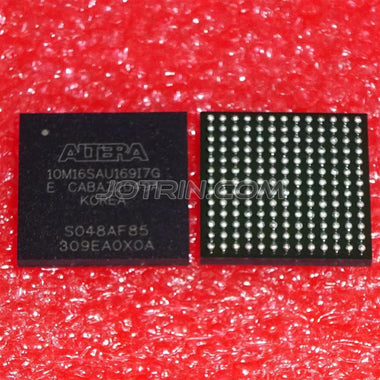
Intel (Altera) MAX 10 Family: The MAX 10 series is a strong competitor, also offering non-volatile, instant-on capabilities with an integrated configuration flash and ADC blocks. A device like the 10M02 or 10M04 in a compatible package (if available) could serve a similar function. However, migration requires:
- Hardware Redesign: The pinout and package footprint will be different, mandating a complete PCB respin. Power supply requirements (different voltage rails and decoupling) must be re-evaluated.
- Software Migration: The VHDL/Verilog source code needs to be ported to the Intel Quartus Prime software environment. All pin assignments, timing constraints, and any manufacturer-specific IP cores (like PLLs or memory blocks) must be re-instantiated and re-verified.
-
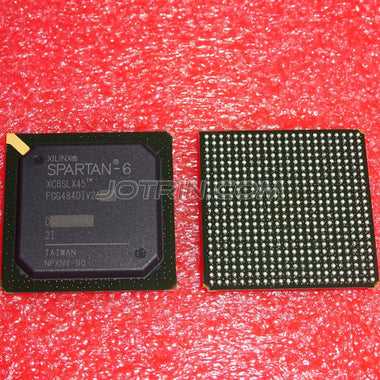
AMD (Xilinx) Artix-7 or Spartan-7 Families: These are true FPGAs and are generally more feature-rich and logic-dense. A small device from the Spartan-7 family could be a functional replacement. Unlike MachXO2 and MAX 10, these are SRAM-based, meaning they require an external configuration flash memory to store the bitstream, adding cost and board space. The migration effort is similar to moving to Intel:
- Hardware Redesign: A new PCB layout is required for the new footprint and the additional external flash memory.
- Software Migration: The design must be ported to the AMD Vivado Design Suite. This includes re-mapping all I/O, re-generating clocking resources, and performing full simulation and timing analysis in the new environment.
-
Microchip (Microsemi) IGLOO2 or PolarFire FPGA Families: Known for their low power consumption and security features, Microchip's FPGAs are another strong functional alternative. IGLOO2 devices are flash-based and non-volatile, making them architecturally similar to the MachXO2 in that respect. The migration path involves:
- Hardware Redesign: A new PCB layout is unavoidable.
- Software Migration: The design must be moved to Microchip's Libero SoC Design Suite, with all the associated work of porting constraints and IP.
Choosing a functional alternative is a major engineering decision. The cost and time of the required redesign must be weighed against the benefits of securing a component for production. This path is typically pursued for new product generations or when the original part is facing long-term obsolescence.
Detailed Comparison Table
This table provides a side-by-side comparison of the LCMXO2-1200HC-4TG144C and its potential pin-compatible and functional alternatives. All specifications are derived from manufacturer datasheets.
| Parameter | LCMXO2-1200HC-4TG144C | LCMXO2-2000HC-4TG144C (Upgrade) | LCMXO2-640HC-4TG144C (Downgrade) | Intel MAX 10 (10M02SCU169) (Functional) |
|---|---|---|---|---|
| Manufacturer | Lattice Semiconductor | Lattice Semiconductor | Lattice Semiconductor | Intel (Altera) |
| Look-Up Tables (LUTs) | 1280 | 2112 | 640 | 2000 LEs (Logic Elements) |
| Embedded Block RAM | 64 kbits | 79 kbits | 45 kbits | 63 kbits |
| User Flash Memory | 64 kbits | 96 kbits | 32 kbits | 128 kbits |
| Max User I/O | 107 | 107 | 107 | 130 |
| Core Voltage (VCC) | 1.2V | 1.2V | 1.2V | 1.2V |
| Package | 144-TQFP | 144-TQFP | 144-TQFP | 169-UBGA |
| Pin Compatible? | - | Yes | Yes | No (Requires Redesign) |
Migration Guide: Switching from LCMXO2-1200HC-4TG144C
Migrating away from the LCMXO2-1200HC-4TG144C requires a systematic approach to ensure the new device functions correctly in your system. Follow this checklist to manage the transition.
Step 1: Identify Candidate Replacements
First, determine the scope of change you can tolerate. Is a drop-in replacement mandatory, or is a board redesign feasible?
- For Drop-in: Your candidates are limited to other devices in the same family and package. Browse MachXO2 Series to identify parts with different speed, temperature, or density grades in the 144-TQFP package.
- For Redesign: Evaluate functional alternatives from Intel, AMD, or Microchip based on your key design criteria (power, cost, performance, features).
Step 2: Verify Electrical and Physical Compatibility
For pin-compatible swaps, this is straightforward. The 'HC' MachXO2 parts share the same 1.2V core voltage and support for various I/O standards (LVCMOS, LVTTL, etc.) up to 3.3V on their VCCIO banks. The footprint is identical. For functional alternatives, this step involves a full schematic and layout review, including power distribution network (PDN) analysis, pin assignments, and package footprint design.
Step 3: Re-compile and Analyze the Design
This is the most critical step for any replacement. Your original HDL code (VHDL/Verilog) is the source, but it must be processed for the new target device.
- Change Target Device: In the Lattice Diamond software (or Quartus/Vivado for other vendors), change the project's target device to your chosen replacement.
- Re-compile: Run the full synthesis, place, and route flow.
- Check Resource Utilization: If moving to a smaller device (e.g., LCMXO2-640HC), review the compilation report. Does the design fit? Check the usage of LUTs, registers, BRAM, and I/O pins. If utilization is over 90-95%, you may face routing challenges or difficulty with future modifications.
- Perform Static Timing Analysis (STA): If moving to a slower speed grade (e.g., -4 to -5), STA is non-negotiable. You must confirm that all timing paths in your design still meet the required setup and hold time constraints. Any violations must be fixed, potentially by restructuring logic or adjusting constraints, before proceeding.
Step 4: Generate New Programming File and Test
Once the design successfully compiles and passes timing analysis for the new device, generate the new programming file (a .jed or .bit file). The final step is to program a prototype board with the new device and run a full functional validation and regression test to confirm that system behavior is unchanged.
Where to Source LCMXO2-1200HC-4TG144C and Alternatives
Sourcing electronic components, especially during periods of high demand, requires diligence to ensure authenticity and quality. The LCMXO2-1200HC-4TG144C and its alternatives can be procured through several channels, each with its own advantages and risks.
Authorized distributors are the primary and most reliable source. They receive components directly from the manufacturer (Lattice Semiconductor) and can provide full traceability and certificates of conformance. However, during shortages, they may have long lead times or be in allocation.
Independent distributors, like WWDParts.com, specialize in sourcing components that are hard to find in the authorized channel. A reputable independent distributor provides a crucial service by tapping into a global network of stocked inventory. When using this channel, it is important to work with suppliers who have robust quality control and anti-counterfeit inspection processes. Look for providers who perform inspections, including X-ray analysis and decapsulation when necessary, to verify authenticity.
When you receive parts, always perform incoming inspection. Check that the part markings, packaging, and date codes match your order. If you have any doubts about authenticity, quarantine the parts and work with your supplier's quality team. You can Check LCMXO2-1200HC-4TG144C Inventory & Pricing to see current market availability from vetted suppliers.
Video Demonstration
Frequently Asked Questions (LCMXO2-1200HC-4TG144C FAQ)
Can I use an LCMXO2-640HC as a direct replacement for the LCMXO2-1200HC?
Potentially, yes, but it is not a guaranteed replacement. The LCMXO2-640HC is in the same family and 144-TQFP package, making it pin-compatible. However, it has significantly fewer logic resources (640 LUTs vs. 1280 LUTs). To confirm if this downgrade is possible, you must re-compile your existing design in the Lattice Diamond software after changing the target device to the LCMXO2-640HC. If the compilation is successful and the resource utilization report shows that your design fits within the 640 LUTs and associated block RAM, then it is a viable replacement.
Is the industrial grade LCMXO2-1200HC-4TG144I a drop-in replacement for the commercial grade?
Yes, absolutely. The industrial grade part (suffix 'I') is a direct, drop-in replacement for the commercial grade part (suffix 'C'). The 'I' part is specified to operate over a wider junction temperature range (-40°C to 100°C) compared to the 'C' part (0°C to 85°C). Since it is a superset of the commercial part's operating range, it will function identically in a commercial environment. No design changes, re-compilation, or timing analysis are required. The only likely difference will be a higher unit price for the industrial grade component.
What is the difference between speed grades like -4, -5, and -6?
The number after the core specification (e.g., -4, -5, -6) indicates the speed grade of the device, which relates to its timing performance. A lower number signifies a faster part with shorter propagation delays through the logic fabric. Therefore, a '-4' speed grade device is faster than a '-5', which is faster than a '-6'. If you are replacing a '-4' with a '-5', you must perform Static Timing Analysis (STA) to ensure your design's timing constraints are still met, as signals will take longer to propagate. Conversely, replacing a slower part with a faster one (e.g., a '-5' with a '-4') is always safe from a timing perspective.
Can I replace the LCMXO2-1200HC with a Xilinx or Intel part?
No, not as a direct drop-in replacement. While a small FPGA from Xilinx (AMD) or a CPLD from Intel (Altera) can provide similar functionality, their silicon architecture, package footprints, and pinouts are completely different and proprietary. Switching to a competitor's part is a major undertaking that requires a complete hardware redesign (new PCB layout) and a full software migration (porting the HDL code to a new IDE like Vivado or Quartus). This option is typically only considered for new product versions or when a redesign is already planned.
What does the "HC" in LCMXO2-1200HC mean?
The "HC" in the part number stands for "High-Performance." This designates it as part of the sub-family of MachXO2 devices that operate with a 1.2V core voltage (VCC) and are optimized for general-purpose performance. It is important to distinguish this from other MachXO2 sub-families, such as "ZE" (Zero Power), which are also 1.2V but are architected differently for lower static power consumption, or "HE" (High-Endurance), which are optimized for applications requiring a high number of UFM read/write cycles. While they share the MachXO2 name, parts from different sub-families (HC vs ZE) may have subtle differences in features or performance and are not always directly interchangeable even in the same package.