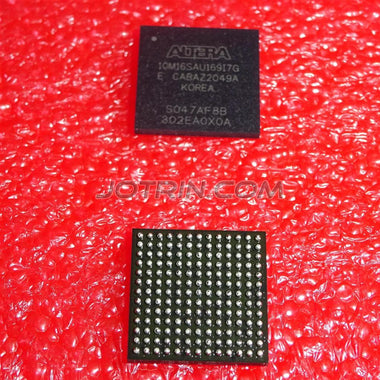
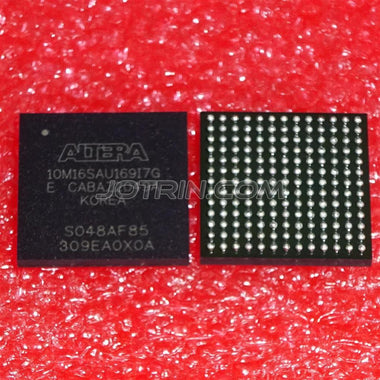
The H5CG48AGBDX018N is a high-performance 4Gb Graphics Double Data Rate 5 (GDDR5) Synchronous Graphics RAM (SGRAM) manufactured by SK Hynix. Organized as 512M words × 8 bits, this memory IC is engineered to provide the high bandwidth required by modern graphics processing units (GPUs), game consoles, and high-performance computing accelerators. It operates on a 1.5V power supply and utilizes a high-speed differential clocking scheme to achieve multi-gigabit per second data rates, making it a key component in systems demanding massive data throughput.
Table of Contents
What is the H5CG48AGBDX018N?
The H5CG48AGBDX018N is a monolithic, high-density CMOS GDDR5 memory device designed for applications requiring extremely high bandwidth. Internally, the 4Gb memory array is structured into sixteen banks, allowing for concurrent operations that maximize bus efficiency and reduce data access latency. It employs a data-prefetch architecture (8n-prefetch) and a dual data rate (DDR) interface for command/address inputs and a quad data rate (QDR) interface for data I/O, enabling data transfers on both the rising and falling edges of the write clock (WCK). This component is specifically targeted at the graphics and high-performance computing markets where the memory bus is often the primary bottleneck.

Pinout Configuration and Packaging
The H5CG48AGBDX018N is typically supplied in a 170-ball Fine-Pitch Ball Grid Array (FBGA) package. This high-density package is optimized for minimal signal path length, which is critical for maintaining signal integrity at high frequencies. Key pin groups include the Data I/O (DQ0-DQ7), Data Strobe (DQS_t/DQS_c), Address (A0-A13), Bank Address (BA0-BA2), Command Inputs (RAS_n, CAS_n, WE_n), and the differential system clock (CK_t/CK_c). Multiple VDD, VDDQ, and VSS pins are distributed across the package to ensure a stable power delivery network and low-inductance return paths for high-speed signals.
Core Architectural Features
- High Bandwidth Performance: Achieves data transfer rates up to 7.0 Gbps per pin, providing substantial bandwidth for demanding graphics rendering and parallel processing tasks.
- 16-Bank Internal Architecture: Features sixteen internal banks for concurrent memory operations, enabling interleaved access patterns that hide precharge and activation latencies, thus improving overall system throughput.
- Differential Clocking and Strobing: Utilizes differential clock (CK_t/CK_c) and data strobe (DQS_t/DQS_c) signals for superior common-mode noise rejection and precise data alignment at high operational speeds.
- Programmable On-Die Termination (ODT): Integrated, programmable ODT for data, strobe, and mask signals simplifies PCB design by minimizing the need for external termination resistors and allows for dynamic impedance matching.
- Fixed Burst Length of 8 (BL8): Employs a fixed burst length of 8 for all read and write operations, optimized for the typical access patterns of graphics controllers and cache line fills.
Specifications Parameter Table
| Specification | Technical Details |
|---|---|
| Memory Density | 4 Gb (Gigabit) |
| Organization | 512M x 8-bit |
| Technology | GDDR5 SGRAM |
| Operating Voltage (VDD/VDDQ) | 1.5V ± 3% |
| Data Rate | Up to 7.0 Gbps |
| Package Type | 170-ball FBGA |
| Operating Temperature (Case) | 0°C to 95°C |
H5CG48AGBDX018N Equivalents, Cross Reference, and Lifecycle
The H5CG48AGBDX018N belongs to the GDDR5 memory generation, which is a mature technology. While still used in many existing systems and some new cost-sensitive designs, it has been largely superseded by GDDR6 and GDDR6X in the latest high-end graphics cards. Consequently, its lifecycle status is considered mature, and long-term availability for new designs should be carefully evaluated. When seeking alternatives, engineers may consider parts from other major memory manufacturers like Samsung (e.g., K4G41325FE series) or Micron. However, a direct drop-in replacement is not guaranteed. Pin-to-pin compatibility must be verified, and more importantly, subtle differences in timing parameters (tCK, tRAS, tRP) and supported features may require firmware or BIOS adjustments. Before committing to a substitute, a thorough review of the alternative component's datasheet is mandatory. Due to its lifecycle stage, it is advisable to Check H5CG48AGBDX018N Inventory & Pricing to ensure supply chain stability for ongoing production or repairs.
Typical Application & Circuit Considerations
The primary application for the H5CG48AGBDX018N is as video RAM (VRAM) for discrete graphics cards, gaming consoles, and professional workstations. It is also suitable for other high-bandwidth applications such as network routers, switches, and high-performance computing (HPC) accelerators. From a circuit design perspective, successful implementation requires meticulous PCB layout. Key considerations include:
- Controlled Impedance: Data and address lines must be routed as 50-ohm single-ended traces, while differential pairs like clocks and strobes require 100-ohm differential impedance.
- Trace Length Matching: Traces within a data byte group (DQ, DQS, DM) must be length-matched to minimize timing skew.
- Power Delivery Network (PDN): A low-impedance PDN is critical. This involves using multiple power and ground planes and placing a dense array of low-ESL ceramic decoupling capacitors as close as possible to the VDD and VDDQ balls of the FBGA package to supply transient currents during high-speed switching.
Video Demonstration
Frequently Asked Questions (H5CG48AGBDX018N FAQ)
Q: Is the H5CG48AGBDX018N recommended for new high-performance designs?
A: For cutting-edge designs requiring maximum bandwidth, newer technologies like GDDR6 or GDDR6X are recommended. The H5CG48AGBDX018N is a mature GDDR5 component, making it a cost-effective and reliable choice for legacy system repairs, mid-range applications, or designs where GDDR5 is a platform requirement.
Q: What is the key difference between GDDR5 and standard DDR4 system memory

Alan Carter
Senior Hardware Engineer & Component Specialist
Alan has over 15 years of expertise in embedded systems design, FPGA architecture, and global semiconductor supply chains. He specializes in component cross-referencing, lifecycle management, and helping OEMs navigate supply shortages.