EP4CE15F23C8N Datasheet, Pinout, Equivalents, and Specs
The EP4CE15F23C8N is a mid-range FPGA from Intel's (formerly Altera) Cyclone IV E family, fabricated on a 60 nm low-power process with a 1.2 V core supply. It integrates 15,408 logic elements, 504 Kbit of embedded M9K SRAM, 56 embedded 18×18 multipliers, and 4 PLLs in a 484-pin FineLine BGA package. With 343 user I/O pins and commercial-grade operation (0 °C to 85 °C), the EP4CE15F23C8N targets industrial automation, telecommunications, video processing, and embedded DSP applications where a balance of logic density, I/O count, and low power consumption is required.
What Is the EP4CE15F23C8N?
The EP4CE15F23C8N belongs to the Cyclone IV E family — the fourth generation of Altera's low-cost FPGA line launched in 2009. The part number decodes as follows: "EP4CE15" indicates the 15,408-LE density variant of the Cyclone IV E series, "F23" identifies the 484-pin FineLine BGA package with a 23 × 23 mm body, "C8" denotes commercial-grade silicon at speed grade 8, and the trailing "N" signifies RoHS-compliant lead-free ball terminations.
Internally, the device organizes its 15,408 logic elements into 963 Logic Array Blocks (LABs), each containing 16 adaptive LEs. Every LE includes a four-input look-up table (LUT), a programmable register, carry chain logic, and register chain connections — enabling efficient implementation of both combinational and sequential functions. The MultiTrack interconnect architecture uses DirectDrive technology with continuous routing lines of varying lengths to achieve fast, predictable signal propagation across the die.
The 56 M9K embedded memory blocks provide 504 Kbit of dual-port SRAM, each configurable as single-port RAM, simple dual-port, true dual-port RAM, ROM, or FIFO buffers operating at up to 260 MHz. The 56 embedded 18×18 multipliers support high-throughput DSP operations, with each block capable of implementing one 18×18 or two independent 9×9 multiplications. Four general-purpose PLLs deliver clock synthesis, multiplication, division, and phase shifting across 20 global clock networks — double the PLL count of smaller Cyclone IV E devices.

Pinout Configuration and Packaging
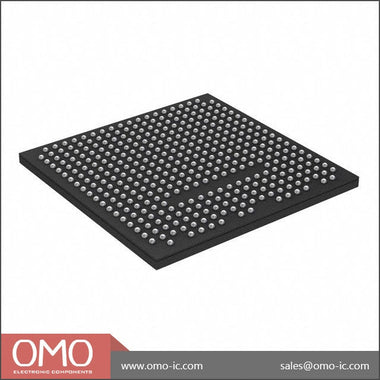
The EP4CE15F23C8N is housed in a 484-pin FineLine BGA (FBGA) package with a 23 × 23 mm body and 1.0 mm ball pitch. The BGA uses a 22 × 22 ball grid array with depopulated corners. Of the 484 balls, 343 are available as user I/O, distributed across eight independent I/O banks — significantly more than the four banks available in smaller Cyclone IV E packages.
Each I/O bank supports an independent VCCIO supply rail, enabling mixed-voltage interfacing within a single device. The I/O element (IOE) architecture supports multiple single-ended standards — LVTTL (3.3 V), LVCMOS (1.2 V to 3.3 V), SSTL-2, SSTL-18, and HSTL — along with differential LVDS at up to 640 Mbps, mini-LVDS, RSDS, LVPECL, BLVDS, and PPDS. PCI and PCI-X compliance is supported for 33 MHz and 66 MHz bus operation.
The F23 package provides dedicated clock input pins on all four sides of the die that connect directly to the 20 global clock networks and 4 PLLs. Configuration pins support Active Serial (AS) mode using an EPCS16 or EPCS64 serial configuration device, Passive Serial (PS), Fast Passive Parallel (FPP), and JTAG via the IEEE 1149.1 boundary-scan port. The MSEL[1:0] pins determine the configuration scheme at power-up. BGA ball assignments are documented in the Cyclone IV E Pin-Out Files available from Intel's download center.

Specifications Parameter Table
| Specification | Technical Details |
|---|---|
| Device Family | Cyclone IV E (Intel / Altera) |
| Process Node | 60 nm low-power CMOS |
| Logic Elements (LEs) | 15,408 |
| Logic Array Blocks (LABs) | 963 |
| M9K Memory Blocks | 56 |
| Total Embedded RAM | 504 Kbit |
| Embedded 18×18 Multipliers | 56 |
| PLLs | 4 (5 outputs per PLL) |
| Global Clock Networks | 20 |
| User I/O Pins | 343 |
| I/O Banks | 8 |
| Package | 484-FBGA (23 × 23 mm, 1.0 mm ball pitch) |
| Core Voltage (VCCINT) | 1.15 V to 1.25 V (nominal 1.2 V) |
| Max I/O Voltage (VCCIO) | 3.6 V |
| Clock Network Performance (C8) | 402 MHz |
| Speed Grade | C8 (Commercial, 0 °C to 85 °C) |
| I/O Standards | LVTTL, LVCMOS, SSTL-2, SSTL-18, HSTL, LVDS, PCI, PCI-X |
| External Memory Interfaces | DDR, DDR2, SDR SDRAM |
| Configuration Modes | Active Serial (AS), Passive Serial (PS), FPP, JTAG |
| RoHS Compliant | Yes (lead-free, "N" suffix) |
Typical Applications and Circuit Considerations
The EP4CE15F23C8N is designed for applications requiring moderate-to-high programmable logic density with extensive I/O connectivity and low power consumption. Its combination of over 15,000 LEs, 56 multipliers, 504 Kbit embedded RAM, and 343 user I/Os makes it suitable for a broad range of system designs:
- Industrial Control and Motor Drive: The FPGA's deterministic timing and parallel processing capability enable implementation of multi-axis servo controllers, PLC coprocessors, and custom fieldbus protocol engines. The 56 embedded multipliers accelerate PID loop calculations, sensor fusion, and real-time signal conditioning without consuming general-purpose logic resources.
- Video and Image Processing: With 343 I/O pins and substantial logic and memory resources, the EP4CE15F23C8N supports VGA/HDMI display controllers, camera sensor interfaces (DVP parallel), real-time image filtering, and framebuffer management. Development boards like the ALINX AX515 pair this FPGA with SDRAM and video connectors for rapid prototyping.
- Communications Protocol Bridging: The extensive I/O bank structure with eight independent VCCIO domains enables flexible multi-voltage protocol translation — bridging between processors, ADCs, DACs, and communication interfaces such as Ethernet PHYs, SPI, I2C, UART, and custom serial engines.
- Embedded DSP and Baseband Processing: The 56 multiplier blocks support FIR/IIR filtering, FFT computation, digital down-conversion, and modulation/demodulation. Quartus Prime includes optimized DSP IP cores (FIR Compiler, FFT, NCO) that efficiently map to the Cyclone IV E multiplier architecture.
- Automotive and Aerospace: The Cyclone IV E family's extended lifecycle commitment through 2040 and its proven reliability make the EP4CE15F23C8N suitable for automotive infotainment, ADAS sensor preprocessing, and aerospace avionics prototyping.
For power supply design, Altera recommends separate decoupling for VCCINT (1.2 V core), VCCIO (per-bank), and VCCA (PLL analog supply at 2.5 V). Each power ball on the BGA should have a 0.1 µF ceramic capacitor placed within 2 mm of the via, supplemented by bulk capacitors of 10–47 µF per rail. The BGA land pattern requires at least 6 PCB layers for full pin escape routing. Browse Cyclone IV Series components for related power management and configuration ICs.

Video Tutorial
Equivalents, Cross-Reference, and Lifecycle
The EP4CE15F23C8N remains in active production status as of 2026, with Intel extending the Cyclone IV family lifecycle through 2040 — ensuring long-term availability for industrial and automotive designs. For designs requiring alternative density or migration paths, consider these options:
- EP4CE10F23C8N: Same 484-FBGA package with reduced resources (10,320 LEs, 414 Kbit RAM, 23 multipliers). Pin-compatible for cost-down when logic utilization permits fewer resources.
- EP4CE22F23C8N: Upward migration offering 22,320 LEs in the same 484-FBGA package. Pin-compatible for designs requiring more logic headroom without PCB changes.
- EP4CE30F23C8N: Maximum density in the F23 package with 28,848 LEs, 66 multipliers, and 594 Kbit RAM for compute-intensive applications.
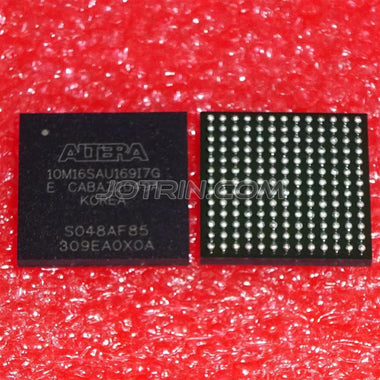
- 10M16SAU169C8G (MAX 10): Intel's newer non-volatile FPGA family in 55 nm. The MAX 10 offers integrated flash configuration (no external EPCS required) and an internal oscillator, though the pinout and package differ from Cyclone IV.
When sourcing the EP4CE15F23C8N, verify the full ordering code — the "C8" suffix indicates commercial temperature range and speed grade 8; industrial variants use "I7" (EP4CE15F23I7N) with extended -40 °C to 100 °C operation. Check EP4CE15F23C8N Inventory & Pricing for current stock and lead times. Also see our catalog of Intel FPGA and programmable logic devices for cross-compatible alternatives.
Frequently Asked Questions (EP4CE15F23C8N FAQ)
Q: What is the difference between EP4CE15F23C8N and EP4CE10E22C8N?
A: The EP4CE15F23C8N offers 15,408 logic elements in a 484-FBGA package with 343 user I/Os, while the EP4CE10E22C8N provides 10,320 LEs in a smaller 144-EQFP package with only 91 user I/Os. The EP4CE15 also doubles the embedded multipliers (56 vs. 23), increases RAM to 504 Kbit (vs. 414 Kbit), and provides 4 PLLs instead of 2. The larger BGA package enables wider memory interfaces and more complex system interconnects.
Q: What development tools are required to program the EP4CE15F23C8N?
A: The EP4CE15F23C8N is programmed using Intel Quartus Prime Lite Edition, which is a free download with full Cyclone IV support and no license restrictions. Design entry supports Verilog HDL, VHDL, and schematic capture. A USB Blaster or USB Blaster II JTAG programmer is required for board-level configuration. ModelSim-Intel FPGA Edition provides functional and timing simulation. The device also supports Active Serial (AS) boot using an EPCS16 or EPCS64 serial configuration ROM for production deployment.
Q: What is the maximum operating frequency of the EP4CE15F23C8N?
A: The EP4CE15F23C8N carries speed grade C8, the most cost-effective of three commercial grades. Its global clock network performance reaches approximately 402 MHz. The faster C7 and C6 speed grades achieve up to 437.5 MHz and 500 MHz respectively. Actual achievable register-to-register frequency depends on design complexity, routing congestion, and timing constraints applied during Quartus compilation. TimeQuest Timing Analyzer should be used during design closure to verify timing margins.
Q: What package type is the EP4CE15F23C8N and what are its PCB layout considerations?
A: The EP4CE15F23C8N uses a 484-pin FineLine BGA (FBGA) package with a 23 × 23 mm body and 1.0 mm ball pitch. PCB layout requires a minimum of 6 routing layers for full pin escape. Each power ball requires a 0.1 µF ceramic decoupling capacitor placed within 2 mm of the via, supplemented by 10–47 µF bulk capacitors per power rail. BGA soldering requires a reflow oven with a controlled thermal profile per JEDEC J-STD-020 guidelines. Altera provides Allegro and Altium land pattern files for download.
Q: Can the EP4CE15F23C8N interface with DDR2 SDRAM?
A: Yes. The Cyclone IV E family fully supports DDR, DDR2, and SDR SDRAM external memory interfaces. The 484-FBGA package provides ample DQS-capable pins to support 16-bit or even 32-bit wide DDR2 data buses. Quartus Prime includes the ALTMEMPHY megafunction to generate optimized memory controllers with DLL-based calibration. Development boards like the ALINX AX515 demonstrate 32-bit SDRAM interfaces running at full speed with the EP4CE15F23C8N.
Q: What are the power consumption characteristics of the EP4CE15F23C8N?
A: Static power consumption at 85 °C junction temperature is typically 55–70 mW. Dynamic power depends on design-specific factors including clock frequency, toggle rate, logic utilization, and I/O switching activity. Intel provides the PowerPlay Early Power Estimator (EPE) spreadsheet for pre-design budgeting and the Quartus Prime Power Analyzer for post-compilation accuracy. The 1.2 V core supply and 60 nm process keep total power below 1 W for most typical designs. The 484-FBGA package offers good thermal dissipation through the ball array to the PCB ground plane, eliminating the need for a heatsink in most applications.

Alan Carter
Senior Hardware Engineer & Component Specialist
Alan has over 15 years of expertise in embedded systems design, FPGA architecture, and global semiconductor supply chains. He specializes in component cross-referencing, lifecycle management, and helping OEMs navigate supply shortages.