10M16SAU169I7G Datasheet, Specifications & Application Guide | MAX 10 FPGA by Altera
Overview of the 10M16SAU169I7G
The 10M16SAU169I7G is a non-volatile FPGA from the Intel (Altera) MAX 10 family, built on a 55 nm flash process. It integrates 16,000 logic elements (LEs), embedded memory, DSP blocks, PLLs, and a dual analog-to-digital converter (ADC) into a compact 169-ball UBGA package. The "I" suffix indicates an industrial temperature range of –40 °C to +100 °C, while the "7" speed grade suits cost-sensitive, low-power designs that do not require the fastest timing.
MAX 10 devices are unique among FPGAs because they include on-chip user flash memory and support instant-on configuration without an external configuration device. This makes the 10M16SAU169I7G ideal for single-chip solutions in industrial control, sensor interfaces, motor drives, and portable instrumentation.
Key Specifications & Parameters
| Parameter | Value |
|---|---|
| Part Number | 10M16SAU169I7G |
| Manufacturer | Intel (Altera) |
| Family | MAX 10 (10M16) |
| Logic Elements (LEs) | 16,000 |
| Logic Array Blocks (LABs) | 1,000 |
| Embedded Memory (M9K) | 549 Kb (62 M9K blocks) |
| User Flash Memory (UFM) | 2,368 Kb |
| 18 × 18 Embedded Multipliers | 45 |
| PLLs | 4 |
| ADC Blocks | 1 dual-ADC (up to 1 MSPS, 12-bit) |
| Maximum User I/O (U169 package) | 130 |
| Maximum LVDS Pairs | 22 |
| Package | 169-UBGA (11 × 11 mm, 0.8 mm pitch) |
| Process Technology | 55 nm Flash |
| Core Voltage | 1.2 V |
| I/O Voltage | 1.0 V – 3.3 V (multi-voltage banks) |
| Operating Temperature (TJ) | –40 °C to +100 °C (Industrial) |
| Speed Grade | 7 (lowest speed) |
| Configuration | Internal (instant-on, no external config device needed) |
| External Memory Interface | DDR3, DDR2, LPDDR2, SRAM |
| I/O Standards | LVTTL, LVCMOS, PCI, SSTL, HSTL, LVDS |
| RoHS / Lead-Free | Yes (Green / "G" suffix) |
Block Diagram & Architecture
The MAX 10 architecture places logic array blocks (LABs) in a regular 2-D array with M9K memory columns, embedded multiplier columns, and PLLs at the device periphery. The on-chip ADC connects to a dedicated analog input block, while the user flash memory (UFM) provides non-volatile storage for calibration data, encryption keys, or a Nios II software image.

Key architectural highlights include single-chip configuration (dual boot images stored in internal flash), an integrated oscillator for configuration sequencing, and support for remote system upgrades via the JTAG or internal flash interface.
Pinout & Package Information
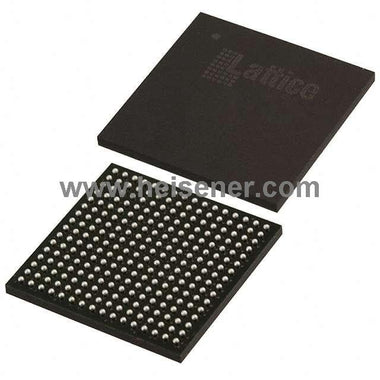
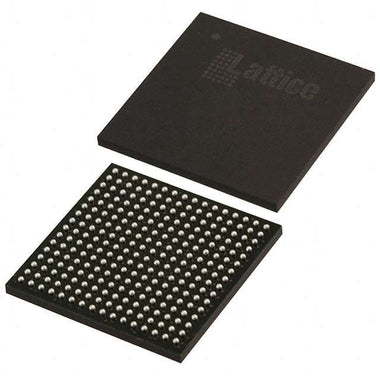
The 10M16SAU169I7G is housed in a 169-ball Ultra-Fine-Pitch BGA (UBGA) package measuring 11 × 11 mm with a 0.8 mm ball pitch. This compact form factor delivers up to 130 user I/O pins across multiple voltage banks, supporting simultaneous operation at 3.3 V, 2.5 V, 1.8 V, and 1.2 V levels.

The U169 package variant supports up to 22 LVDS differential pairs for high-speed serial communication. Pin migration is compatible with other MAX 10 devices in the same package (e.g., 10M08SAU169), simplifying PCB design across multiple density options.
Applications & Development Resources
The 10M16SAU169I7G is well-suited for a wide range of embedded and industrial applications, including:
- Industrial automation & motor control – Real-time sensor fusion with on-chip ADC
- Portable instruments & test equipment – Low-power, instant-on operation
- IoT edge devices – Small package, integrated flash, low BOM cost
- Video & image processing – DSP blocks for filtering and transformation
- Communications bridges – Protocol conversion with LVDS I/O

Altera provides the Quartus Prime Lite Edition (free) for MAX 10 development, including synthesis, simulation, timing analysis, and the Nios II soft-core processor. Evaluation kits such as the DE10-Lite and MAX 10 FPGA Development Kit offer turnkey hardware platforms.
Video Tutorial: Getting Started with MAX 10 FPGA
Frequently Asked Questions
What is the difference between 10M16SAU169I7G and 10M16SAU169C8G?
The "I7" suffix on the 10M16SAU169I7G indicates an industrial temperature range (–40 °C to +100 °C) with speed grade 7, while the "C8" suffix on the 10M16SAU169C8G denotes a commercial temperature range (0 °C to +85 °C) with speed grade 8. The industrial variant is preferred for harsh-environment deployments, while the commercial variant offers faster timing for room-temperature applications.
Does the 10M16SAU169I7G require an external configuration device?
No. MAX 10 FPGAs feature internal configuration flash memory, enabling instant-on operation without an external EEPROM or flash chip. The device stores up to two configuration images internally for dual-boot and remote update capabilities.
How many I/O pins are available on the 10M16SAU169I7G?
The 169-UBGA package provides up to 130 user I/O pins and supports up to 22 LVDS differential pairs. The I/O banks support multiple voltage standards from 1.0 V to 3.3 V simultaneously.
What software is used to program the 10M16SAU169I7G?
The 10M16SAU169I7G is programmed using Altera Quartus Prime Lite Edition, which is available as a free download. It supports VHDL, Verilog, and schematic design entry, and includes the Nios II embedded processor, ModelSim simulation, and the Platform Designer system integration tool.
Can the on-chip ADC of the 10M16SAU169I7G be used in production designs?
Yes. The integrated dual ADC block provides 12-bit resolution at up to 1 MSPS, with up to 18 analog input channels (device-dependent). It is suitable for temperature sensing, voltage monitoring, and low-to-medium-speed data acquisition in production systems.
Where can I buy the 10M16SAU169I7G?
The 10M16SAU169I7G is available from authorized distributors including wwdparts.com, DigiKey, Mouser, Arrow, and Octopart. For competitive pricing and guaranteed-authentic stock, visit wwdparts.com for a quick quote.