The M2S025-FGG484 is a System-on-Chip (SoC) Field-Programmable Gate Array (FPGA) from Microchip's SmartFusion2 family. It integrates a flash-based FPGA fabric, a 166 MHz ARM Cortex-M3 processor, and a comprehensive suite of security and high-speed communication peripherals. This device is engineered for applications requiring high reliability, robust security, and low static power consumption, making it a strong candidate for industrial, defense, aviation, and communications systems.
Table of Contents
What is the M2S025-FGG484?
The M2S025-FGG484 is a member of the SmartFusion2 family, which represents a significant evolution in SoC FPGA technology by combining three distinct hardware domains onto a single die. These domains are the FPGA fabric, the Microcontroller Subsystem (MSS), and a rich set of peripheral blocks. The core value proposition of this architecture is the tight integration between a hard processor system and programmable logic, all built upon a non-volatile flash process.
At its heart, the device's FPGA fabric contains 27,696 4-input Look-Up Table (LUT) based logic elements, providing a flexible platform for implementing custom digital logic. This fabric is distinct from traditional SRAM-based FPGAs. Being flash-based, the configuration data is stored on-chip in non-volatile memory. This results in several key advantages: "instant-on" performance at power-up without the need for an external configuration PROM, significantly lower static power consumption as configuration cells do not require constant power to maintain their state, and inherent immunity to Single Event Upsets (SEUs) caused by atmospheric radiation, which is a critical feature for high-reliability and aerospace applications.
The Microcontroller Subsystem (MSS) is built around a hard 166 MHz ARM Cortex-M3 processor. This is not a soft-core processor implemented in the FPGA logic; it is a dedicated silicon block with its own memory controllers, peripherals, and bus infrastructure. The MSS includes 256 KB of embedded flash memory (eNVM) and 64 KB of embedded SRAM (eSRAM), providing a complete processing environment for running application code, a real-time operating system (RTOS), or communication protocol stacks. The MSS communicates with the FPGA fabric via a multi-layer AMBA AHB bus matrix, enabling high-throughput data exchange between the processor and custom hardware accelerators implemented in the logic.
Security is a cornerstone of the SmartFusion2 architecture. The M2S025-FGG484 incorporates a sophisticated Design Security block that protects the device's intellectual property (IP). Features include a Physically Unclonable Function (PUF) for key generation and storage, hardware accelerators for AES-256, SHA-256, and HMAC, and countermeasures against Differential Power Analysis (DPA) attacks. These capabilities allow for the creation of secure bootloaders, encrypted communication channels, and tamper-resistant systems, preventing cloning, reverse engineering, and data theft.

Pinout Configuration and Packaging
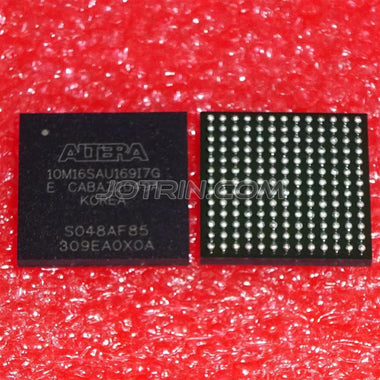
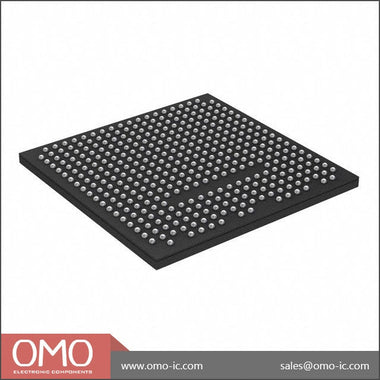
The M2S025-FGG484 is offered in a 484-pin Fine-pitch Ball Grid Array (FBGA) package with a 1.0 mm ball pitch. This package provides a high density of I/O connections in a compact footprint (23x23 mm), suitable for space-constrained PCB designs. The pinout is strategically organized to facilitate efficient PCB layout, particularly for high-speed interfaces.
The 484 pins can be categorized as follows:
- General Purpose I/O (GPIO): The majority of pins are configurable I/Os connected to the FPGA fabric. These support a wide range of single-ended and differential signaling standards (e.g., LVTTL, LVCMOS, LVDS, HSTL, SSTL) with programmable drive strength and slew rates. These are organized into I/O banks, each with its own VCCIO supply, allowing for interfacing with multiple voltage domains.
- Microcontroller Subsystem (MSS) I/O: A set of pins are dedicated to the hard peripherals within the MSS. This includes pins for JTAG/SWD debugging, UART, SPI, and I2C interfaces. Using these dedicated pins allows the MSS to function independently, even without the FPGA fabric being active.
- High-Speed SERDES Interface Pins: The device includes four high-speed Serializer/Deserializer (SERDES) lanes. These have dedicated differential pair pins (TXP/TXN, RXP/RXN) designed for multi-gigabit data rates. These pins require careful impedance-controlled routing on the PCB to maintain signal integrity for protocols like PCI Express, Gigabit Ethernet (SGMII), and XAUI.
- Power and Ground Pins: A significant number of pins are allocated for power (VCC, VCCIO, VCCPA, VCA, etc.) and ground (GND). The distributed placement of these pins is crucial for providing a low-inductance power delivery network (PDN) and ensuring stable operation of the core logic and high-speed interfaces. Proper decoupling capacitance close to these pins is a critical design requirement.
- Configuration and Clocking Pins: Pins for JTAG configuration, dedicated global clock inputs, and PLL reference clock inputs are also provided.
Engineers must consult the official Microchip pinout file for the M2S025-FGG484 to determine the exact location and function of each pin for their specific design. The pin assignments are managed within the Libero SoC Design Suite during the hardware design process.
Core Architectural Features
- Flash-Based FPGA Fabric: Features 27,696 logic elements (LEs), 34 mathblocks (18x18 multipliers), and 831,488 bits of dual-port SRAM organized in 1Kb blocks (LSRAM) and 18Kb blocks (uSRAM). The non-volatile nature provides instant-on operation, low static power, and high immunity to configuration upsets from radiation effects.
- Hard ARM Cortex-M3 Microcontroller Subsystem (MSS): A 166 MHz, 32-bit processor with a Memory Protection Unit (MPU), 256 KB of embedded non-volatile memory (eNVM), and 64 KB of SRAM. The MSS includes a rich set of hard peripherals: two 10/100/1000 Ethernet MACs, two CAN 2.0B controllers, two SPI, two I2C, and five UART ports, reducing FPGA resource utilization for standard functions.
- High-Speed Serial Interfaces (SERDES): Four integrated SERDES transceivers, each capable of operating up to 5 Gbps. These blocks can be configured to implement standard protocols such as PCI Express Gen2 x1, SGMII for Gigabit Ethernet, and custom high-speed serial links. Each lane includes dedicated clock and data recovery (CDR) circuitry.
- Comprehensive Security Subsystem: Provides robust protection for intellectual property and system data. Includes a non-deterministic random bit generator (NRBG), a Physically Unclonable Function (PUF) for secure key storage, hardware accelerators for AES-256, SHA-256, and HMAC, and DPA-resistant cryptographic processing. Supports secure boot and encrypted bitstream loading.
- Flexible Clocking Architecture: Features six on-chip Phase-Locked Loops (PLLs) for clock synthesis, multiplication, and deskew. These PLLs provide flexible clocking resources for the FPGA fabric, MSS, and SERDES interfaces, enabling complex multi-clock domain designs.
Specifications Parameter Table
| Specification | Technical Details |
|---|---|
| FPGA Logic Elements (4-input LUT + DFF) | 27,696 |
| Total RAM Bits | 831,488 |
| 18x18 Math Blocks / Multipliers | 34 |
| Processor Core | ARM Cortex-M3 @ 166 MHz |
| Max User I/O | 267 |
| SERDES Lanes | 4 lanes @ up to 5 Gbps |
| Core Voltage (VCC) | 1.2 V |
| Operating Temperature Range (Industrial) | -40°C to 100°C (Junction) |
M2S025-FGG484 Equivalents, Cross Reference & Lifecycle
The M2S025-FGG484 is an active production device from Microchip. Finding a direct, pin-for-pin, drop-in equivalent for an SoC FPGA from a different manufacturer is generally not feasible due to proprietary bitstream formats, unique architectural features, and differing software toolchains. Any replacement would necessitate a complete redesign of both the hardware logic (RTL) and the embedded software.
Within the SmartFusion2 family, however, there are migration paths. For designs that require fewer logic resources but must maintain the FGG484 footprint, the M2S010-FGG484 is a potential alternative. Conversely, if a design requires more logic, RAM, or DSP blocks, the M2S050-FGG484 offers a resource-rich option in the same package. It is critical to verify pin compatibility for the specific I/Os used in the design, as some dedicated function pins may differ between family members. Before committing to a migration, engineers must carefully review the respective datasheets and pinout files. For current stock levels and lead times, it is advisable to Check M2S025-FGG484 Inventory & Pricing.
Typical Applications & Circuit Considerations
The unique combination of a hard processor, programmable logic, and robust security features makes the M2S025-FGG484 suitable for a wide range of demanding applications.
- Secure Communications: The hardware crypto accelerators and DPA countermeasures are ideal for implementing secure communication endpoints, such as encrypted data radios or secure network interface cards. The FPGA fabric can be used to implement custom modulation/demodulation schemes or protocol offload engines, while the ARM Cortex-M3 handles the higher-level protocol stack.
- Industrial Control and Automation: The device's reliability and integrated peripherals like CAN and Ethernet MACs are well-suited for motor control, PLC (Programmable Logic Controller) backplanes, and industrial networking gateways. The FPGA can implement high-speed, deterministic control loops (e.g., for multi-axis motor control) that a software-only solution cannot achieve.
- Avionics and Defense: The flash-based architecture's inherent immunity to SEUs makes it a prime candidate for flight control systems, navigation equipment, and other mission-critical aerospace applications. The secure boot capability ensures system integrity and prevents unauthorized modifications.
- Medical Imaging and Instrumentation: The SERDES interfaces and parallel processing capability of the FPGA fabric can be used for high-speed sensor interfacing and real-time image processing pipelines in medical devices like ultrasound machines or endoscopes.
Circuit Design Considerations: When designing a PCB for the M2S025-FGG484, power delivery and high-speed signal integrity are paramount. The device requires multiple power rails, including a 1.2V core voltage (VCC), I/O voltages (VCCIOx, typically 1.8V, 2.5V, or 3.3V), and dedicated supplies for the PLLs and SERDES (VCCPA, VCA). A proper power-on sequence is required, which should be implemented using a power management IC (PMIC) or discrete sequencers. Each power rail must be thoroughly decoupled with a combination of bulk and high-frequency ceramic capacitors placed as close as possible to the BGA balls to minimize inductance.
For the SERDES lanes, routing must follow strict differential pair guidelines. This includes maintaining 100-ohm differential impedance, length-matching the traces within each pair, and avoiding sharp bends. Vias should be minimized, and when used, they should be accompanied by adjacent ground stitching vias to ensure a continuous return path. Careful planning of the PCB stack-up is essential to achieve the required impedance control. For more complex systems utilizing different members of the family, engineers can Browse SmartFusion2 Series to find the optimal part for their specific resource requirements.
Video Demonstration
Frequently Asked Questions (M2S025-FGG484 FAQ)
Q: What is the primary advantage of the flash-based fabric in the M2S025-FGG484?
A: The primary advantage is its non-volatility. Unlike SRAM-based FPGAs that require an external configuration memory and must load their configuration on every power-up, the M2S025-FGG484 stores its configuration internally in flash cells. This leads to "instant-on" capability, enhanced security as the bitstream is not exposed externally during boot, and significantly lower static power consumption because the flash cells do not require continuous power to hold their state.
Q: How does the Microcontroller Subsystem (MSS) interact with the FPGA fabric?
A: The MSS and FPGA fabric are tightly coupled through a multi-layer AMBA AXI/AHB bus fabric. This allows the ARM Cortex-M3 processor to act as a master, directly accessing and controlling custom peripherals, memory blocks, or state machines implemented in the FPGA logic as if they were memory-mapped peripherals. Conversely, the FPGA fabric can also be configured to act as a master to access the MSS's resources, such as the eSRAM or DDR controller, enabling high-performance hardware acceleration.
Q: What are the power supply requirements for the M2S025-FGG484?
A: The M2S025-FGG484 requires a multi-rail power supply scheme for proper operation. The main supplies include a 1.2V core voltage (VCC), programmable I/O voltages (VCCIO) for each bank (e.g., 1.8V, 2.5V, 3.3V), and dedicated analog supplies for the PLLs and SERDES transceivers (VCCPA, VCA). A specific power-up sequence must be followed as detailed in the datasheet to prevent damage to the device. A robust power delivery network with extensive decoupling is critical for stable performance.
Q: Can the M2S025-FGG484 be used for PCI Express applications?
A: Yes, it can. The M2S025-FGG484 contains integrated SERDES transceivers that are compliant with the PCI Express (PCIe) Gen1 and Gen2 specifications. The device can be configured to implement a PCIe Gen2 x1 endpoint or root port. Microchip provides a hard IP block for the PCIe controller, which simplifies the design process and ensures compliance with the standard.
Q: What development tools are used to program the M2S025-FGG484?
A: The primary development environment is Microchip's Libero SoC Design Suite. This comprehensive tool is used for the entire FPGA design flow, including HDL synthesis, place-and-route, timing analysis, and bitstream generation. For developing software for the embedded ARM Cortex-M3 processor, Microchip provides the SoftConsole IDE, which is an Eclipse-based environment that includes a C/C++ compiler, debugger, and board support packages (BSPs).

Alan Carter
Senior Hardware Engineer & Component Specialist
Alan has over 15 years of expertise in embedded systems design, FPGA architecture, and global semiconductor supply chains. He specializes in component cross-referencing, lifecycle management, and helping OEMs navigate supply shortages.