XC7K480T Datasheet, Pinout, Equivalents, and Specs
The XC7K480T is a high-performance Field-Programmable Gate Array (FPGA) from the Xilinx (now AMD) Kintex-7 family, manufactured using a 28nm process technology. It is engineered to deliver a balanced combination of logic density, high-speed serial connectivity, and digital signal processing (DSP) capability. The device occupies a mid-to-high range position within the Kintex-7 portfolio, targeting applications that require significant data throughput and parallel processing without the power consumption of higher-end FPGA families.
What is the XC7K480T?
The XC7K480T is a programmable logic device designed for system-level integration in complex digital systems. Its internal architecture is based on configurable logic blocks (CLBs), which contain 6-input look-up tables (LUTs) and flip-flops, enabling the implementation of custom digital circuits. The device integrates a substantial number of DSP slices for accelerating arithmetic-intensive algorithms, Block RAM for on-chip data storage, and high-speed GTX transceivers for serial communication protocols. Its target market includes telecommunications infrastructure, medical imaging, aerospace and defense, and high-performance computing, where it serves as a co-processor, data aggregator, or high-bandwidth interface controller.

XC7K480T Component Overview
Pinout Configuration and Packaging
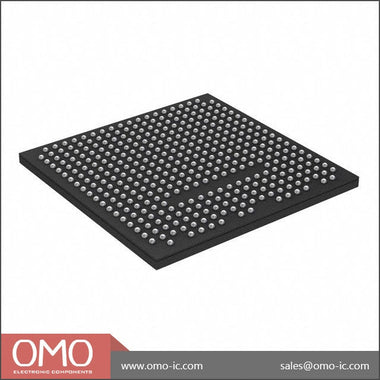
The XC7K480T is commonly available in a Flip-Chip Ball Grid Array (FCBGA) package, such as the FFG1156 (1156-ball, 35x35mm). This package provides a high density of I/O pins required for interfacing with other system components. The pinout includes numerous user-configurable I/O pins, dedicated clock inputs, configuration pins (for JTAG and bitstream loading), and multiple power and ground pins. Thermal management is critical; the package requires a robust PCB design with thermal vias under the device to dissipate heat effectively. Critical I/O pins are those associated with the multi-gigabit transceivers, which demand controlled impedance routing on the PCB to maintain signal integrity.
Core Architectural Features
- Logic Fabric: The device contains 477,760 logic cells, organized into 74,650 slices. Each slice is built around four 6-input LUTs and eight flip-flops, providing a flexible and dense fabric for implementing complex digital logic functions.
- DSP Slices: It integrates 1,800 DSP48E1 slices. These are dedicated hardware blocks capable of performing 25x18 multiplication, accumulation, and other arithmetic operations at high clock speeds, significantly offloading the logic fabric for signal processing tasks like FIR filters and FFTs.
- Block RAM (BRAM): The XC7K480T features a total of 34,560 Kb (33.75 Mb) of on-chip dual-port Block RAM. This memory is arranged in 36 Kb blocks and is essential for buffering data, implementing FIFOs, and creating on-chip memory subsystems.
- GTX Transceivers: The architecture includes up to 28 multi-gigabit transceivers (GTX), each capable of operating at data rates up to 12.5 Gb/s. These transceivers are used to implement standard high-speed serial interfaces such as PCI Express, 10 Gigabit Ethernet, Serial RapidIO, and CPRI.
Specifications Parameter Table
| Specification | Technical Details |
|---|---|
| Logic Cells | 477,760 |
| LUTs (6-input) | 298,600 |
| Total Block RAM | 34,560 Kb |
| DSP Slices (DSP48E1) | 1,800 |
| Number of GTX Transceivers | Up to 28 (at up to 12.5 Gb/s) |
| Maximum User I/O | 600 (in FFG1156 package) |
XC7K480T Equivalents, Cross Reference, and Lifecycle
The XC7K480T is an active production device from AMD/Xilinx. When sourcing, it is important to verify the specific speed grade and temperature range required for the application. Direct, pin-to-pin compatible drop-in replacements for FPGAs are rare due to the device-specific nature of the configuration bitstream. However, for new designs or board revisions, other devices within the Kintex-7 family that share the same package footprint (e.g., FFG1156) can be considered. The XC7K325T and XC7K410T offer lower logic density in the same package, potentially reducing cost if the full resources of the XC7K480T are not utilized. Conversely, the Virtex-7 XC7VX485T, also in an FFG1156 package, provides a significant increase in logic and DSP resources for designs needing a performance upgrade path. Functional equivalents from other manufacturers, such as the Intel Arria V or Arria 10 series, would require a complete redesign of the PCB and logic.
Typical Application & Circuit Considerations
The XC7K480T is typically used in applications requiring high-speed data acquisition, processing, and transmission. Common examples include wireless radio heads, medical ultrasound machines, broadcast video switchers, and data center acceleration cards. From a circuit design perspective, power integrity is paramount. The device requires multiple, well-regulated voltage rails (e.g., VCCINT for the core, VCCAUX for auxiliary logic, VCCO for I/O banks). A robust power distribution network (PDN) with extensive use of low-ESR decoupling capacitors placed directly adjacent to the BGA balls is necessary to manage transient current demands. For high-speed serial I/O, PCB layout must follow strict differential pair routing rules, including controlled impedance (typically 100 ohms), length matching, and isolation from noisy digital signals to ensure reliable communication.
Video Demonstration
Market Availability and Pricing Trends
High-performance FPGAs like the XC7K480T are subject to dynamic supply chain conditions, with lead times that can extend significantly based on global semiconductor demand. Allocation and pricing fluctuations are common for such specialized components. To check real-time stock, pricing, or to request a quote for the XC7K480T and its verified alternatives, upload your BOM to WWDParts for fast processing.

Alan Carter
Senior Hardware Engineer & Component Specialist
Alan has over 15 years of expertise in embedded systems design, FPGA architecture, and global semiconductor supply chains. He specializes in component cross-referencing, lifecycle management, and helping OEMs navigate supply shortages.